Academic Realism · 1893
Platon (Nikolaj Rerikh, 1893)
Nikolaj Rerikh (1874–1947) har skabt Platon. Det er fra 1893. Det tilhører Academic Realism-bevægelsen. Den er udført i Charcoal.
- 1893
- Charcoal

 Se i rummet

 Håndmalet oliemalerie
 Del som kort
 Del
 Faktablad


 Download
 Lignende værker
 Røntgenundersøgelse
 Diasshow
 Spørgsmål og svar

 Statistikker
Platon kort fortalt
- Titel
- Platon
- Kunstner
- Nikolaj Rerikh (1874–1947)
- Kunstner født i
- Sankt Petersborg, Rusland
- Dato
- 1893
- Medium
- Charcoal
- Bevægelse
- Academic Realism
- Periode
- 19th Century
- Motiv
- plato portrait, classical art, monochrome study, nicholas roerich, greek philosophy, hatching technique
Hvad forestiller Platon?
Platon – A Study in Classical Wisdom by Nicholas Roerich
Nicholas Roerich’s “Platon” is more than just a portrait; it's an immersion into the spirit of antiquity, rendered with a meticulous hand and imbued with the artist’s profound belief in the interconnectedness of art, history, and human consciousness. Completed in 1893, this monochrome study captures the essence of Plato, not as a historical figure frozen in time, but as a timeless embodiment of intellectual pursuit and contemplative serenity. The artwork speaks to a deep reverence for classical ideals, reflecting Roerich’s own multifaceted interests – his archaeological explorations, philosophical inquiries, and unwavering dedication to preserving cultural heritage.
Technical Mastery: Hatching and the Illusion of Form
The remarkable realism achieved in “Platon” stems from Roerich's masterful command of hatching and cross-hatching. Executed almost certainly with graphite or charcoal on paper, the image is built layer upon layer, creating a complex interplay of light and shadow that convincingly simulates the texture of Plato’s weathered skin, the dense flow of his beard, and the smooth surface of the stone base supporting his bust. The artist's deliberate use of fine lines generates a palpable sense of volume, drawing the viewer into the subject’s presence with an almost tactile quality. Note the subtle blending observed in areas like the face – a technique employed to soften transitions and further enhance the illusion of three-dimensional form, characteristic of academic drawing traditions.
Symbolism and Emotional Resonance: Echoes of Antiquity
The monochrome palette itself is profoundly significant. The absence of color lends an air of timelessness and gravitas, aligning with the artwork’s subject matter – Plato, a cornerstone of Western philosophy. The composition, centered on the bust from the chest up, facing slightly to the left, evokes a sense of introspection and quiet contemplation. The rectangular base, a deliberate geometric element, grounds the figure in the material world while simultaneously referencing classical sculpture, a dominant artistic form during Roerich’s time. The overall effect is one of profound intellectualism, inviting viewers to engage with Plato's enduring questions about truth, knowledge, and the nature of reality.
Historical Context and Artistic Influences
Created in 1893, “Platon” reflects the artistic currents of the late 19th century. Roerich’s training at St. Petersburg University and the Imperial Academy of Arts positioned him within a tradition deeply rooted in academic realism and a revival of interest in classical antiquity. This period witnessed a renewed appreciation for the works of ancient Greece and Rome, influencing artists to emulate their techniques and subject matter. Roerich's work aligns with this trend, demonstrating a commitment to precise observation, detailed rendering, and a profound respect for artistic heritage – qualities that would become hallmarks of his distinctive oeuvre. The piece stands as a testament to the enduring power of classical ideals and Roerich’s own dedication to preserving and celebrating them.
Højopløselige billeder af Platon

Public domain: kunstneren døde i 1947.
Andre størrelser, beskæringer og kildehenvisning →Nikolaj Rerikh, Platon (1893). Public domain
Spørgsmål om Platon besvaret
Hvornår blev "Platon" skabt?
"Platon" af Nikolaj Rerikh blev skabt i 1893.
Hvilken teknik er brugt til "Platon" af Nikolaj Rerikh?
Nikolaj Rerikh brugte Charcoal-teknikken til "Platon". Teknikken definerer det originale værks materielle karakter.
Hvad forestiller "Platon" af Nikolaj Rerikh?
Temaerne i "Platon" af Nikolaj Rerikh omfatter plato portrait, classical art, monochrome study, nicholas roerich, greek philosophy, hatching technique, academic drawing, som tilsammen udgør værkets motivverden.
Er "Platon" af Nikolaj Rerikh i det offentlige domæne?
Hvad angår ophavsret, er "Platon" i det offentlige domæne – ophavsretten er udløbet.
Hvem er kunstneren bag "Platon"?
"Platon" tilskrives Nikolaj Rerikh.
Hvilken kunstretning tilhører "Platon" af Nikolaj Rerikh?
Kunstretningen forbundet med "Platon" af Nikolaj Rerikh er Academic Realism. Denne klassificering placerer værket blandt relaterede kunstnere og kunstværker.
Hvilken periode i Nikolaj Rerikhs karriere tilhører "Platon"?
"Platon" repræsenterer Nikolaj Rerikhs Mature Period.
Hvor gammel var Nikolaj Rerikh, da "Platon" blev skabt i 1893?
Nikolaj Rerikh skabte "Platon" i en alder af 19. Kunstneren blev født i 1874, og værket er dateret 1893.
Er "Platon" af Nikolaj Rerikh i det offentlige domæne, og hvorfor?
Ophavsretsstatus for "Platon" – i det offentlige domæne – ophavsretten er udløbet – følger af kunstnerens død i 1947.
Om kunstneren, Nikolaj Rerikh

1874–1947, Rusland
Nikolaj Rerikh
Tidligt liv, familie og uddannelse Nikolaj Roerich blev født den 9. oktober 1874 i Sankt Petersborg, Rusland. Hans ophav forenede en baltisk-tysk far med en russisk mor, en baggrund der skabte en helt særlig intellektuel og kulturel ramme for hans senere virke. Denne dualistiske arv førte ikke til et ensidigt fokus; tværtimod nærede den en mangefacetteret karriere, der strakte sig over jura, arkæologi og filosofi ved siden af hans visuelle kunstneriske produktion.
Om Nikolaj Rerikh Bemærkelsesværdige værker af Nikolaj Rerikh
Også af Nikolaj Rerikh
 Agni Yoga1929
 Krishna (Forår i Kulu)
 Fairest City - the anger for enemies1914
 Great rider. Rigden Jyepo - Messenger of Shambhala1927

Essays om Platon
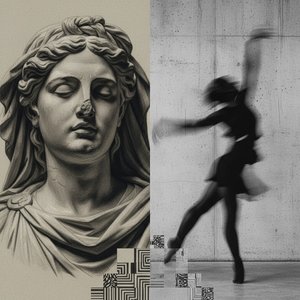 The Subtleties of Shade: Exploring Monochrome's Enduring Power in Art History & Contemporary PracticeExplore the captivating world of monochrome painting! Discover its rich history, from Renaissance chiaroscuro to contemporary minimalism. U…
 25 Masterpieces by Nicholas Roerich: A Journey Through Spirit and SymbolismExplore 25 iconic Nicholas Roerich masterpieces of Russian Symbolism. Discover the full collection online at OriginalUniqueArt.com.
 Tre Lærreder, Én Sjæl: Valgets Emotionelle Landskab i KunstoplevelsenUdforsk kunsten som et spejl af sjælen! Dyk ned i emotionernes historie, æstetisk oplevelse og kurateringens kunst. Få ekspertråd til at væ…