Expressionism · 1915
Marching (Marc Chagall, 1915)
Marching er et værk af Marc Chagall (1887–1985). Det er fra 1915. Det tilhører Expressionism-bevægelsen. Den er udført i Acrylic On Canvas.
- 1915
- Acrylic On Canvas

 Se i rummet

 Håndmalet oliemalerie
 Del som kort
 Del
 Guide


 Download
 Lignende værker
 Røntgenundersøgelse
 Diasshow
 Spørgsmål og svar

 Statistikker
Marching: det vigtigste
- Titel
- Marching
- Kunstner
- Marc Chagall (1887–1985)
- Kunstner født i
- Liozna, Belarus
- Dato
- 1915
- Medium
- Acrylic On Canvas
- Bevægelse
- Expressionism
- Motiv
- uniform, roof, sky, clock, figures, folklore
Se på Marching
A Symphony of Color and Memory: Exploring Marc Chagall's "I Am Alone"
Marc Chagall’s “I Am Alone,” painted in 1915, isn’t merely a depiction of solitude; it’s an embodiment of existential angst rendered in the breathtaking language of Expressionism. Created during the turbulent years preceding World War I—a period marked by anxieties about national identity and impending conflict—the painting transcends its immediate historical context to speak to universal themes of isolation and longing. It's housed in the Musée d'Orsay, Paris, a testament to Chagall’s enduring influence on modern art.- Subject Matter: The canvas portrays a man standing alone on a rooftop amidst a swirling panorama of fantastical figures—a woman with outstretched arms, a child perched precariously on the edge of the roof, and several other stylized individuals drifting upwards into the heavens.
- Style: Chagall’s style is unmistakably Expressionist. Rejecting representational accuracy in favor of emotional intensity, he employs bold colors—primarily yellows, blues, and reds—to convey mood and feeling rather than to faithfully reproduce reality. The figures themselves are distorted and stylized, imbued with a dreamlike quality that defies logical interpretation.
Technique: Bold Brushstrokes and Layered Color
Chagall’s technique is characterized by thick, impasto brushstrokes—meaning the paint is applied in layers so thickly that it stands up prominently from the surface of the canvas. This textural approach contributes significantly to the painting's dramatic impact, creating a palpable sense of movement and conveying the artist’s emotional state directly onto the artwork. The colors are blended strategically to create luminous washes and vibrant accents, enhancing the overall visual richness.- Color Palette: The dominant hues—golden yellows symbolizing warmth and optimism juxtaposed with deep blues representing melancholy and uncertainty—are deliberately chosen to evoke specific emotions. Chagall’s masterful use of color underscores the painting's psychological depth.
- Composition: The rooftop setting serves as a focal point, anchoring the swirling figures and emphasizing the man’s isolation. The upward trajectory of the figures symbolizes aspiration but also hints at vulnerability—a yearning for connection amidst overwhelming circumstances.
Symbolism: Folklore and Existential Concerns
“I Am Alone” is replete with symbolic references drawn from Jewish folklore and Kabbalah—the mystical tradition of Judaism. The woman with outstretched arms represents compassion and maternal care, while the child symbolizes innocence and vulnerability. The swirling figures embody the chaotic forces of fate and the anxieties surrounding impending war. More broadly, the painting explores profound existential questions about human existence—questions concerning identity, purpose, and the inevitability of suffering.Ultimately, Chagall’s “I Am Alone” transcends its historical origins to resonate with viewers across generations. It's a hauntingly beautiful meditation on solitude, loss, and the enduring quest for meaning—a masterpiece that continues to inspire awe and provoke contemplation decades after its creation.
Marching i høj opløsning

Beskyttet af ophavsret: billedet er kun vist som reference.
Flere størrelser, beskæringer og kildehenvisning →Marc Chagall, Marching (1915).
Spørgsmål om Marching
Har "Marching" stærke lys-mørke kontraster?
"Marching" af Marc Chagall fremviser en Statement kontrast mellem sine lyse og mørke områder.
Er "Marching" af Marc Chagall et lyst eller et mørkt kunstværk?
"Marching" har en overordnet lysstyrke på bright, og dens luminans er Bright Balance.
Hvad forestiller "Marching" af Marc Chagall, og hvilken stemning formidler det?
"Marching" af Marc Chagall skildrer uniform, roof, sky, clock, figures, folklore, dreams i en Romantic stemning. Motiv og atmosfære beskriver tilsammen værket.
Hvor mange ser "Marching"?
Statistikker for "Marching" af Marc Chagall findes på værkets Besøgsstatistik-side: månedlige besøg på værket, besøg på kunstnerens øvrige værker samt en opdeling af de seneste besøgende efter land og sprog.
Hvilket rum komplementerer farverne i "Marching" af Marc Chagall?
De Earthy farver i "Marching" af Marc Chagall matcher det anbefalede rum: et Living Room.
Fra hvilket land stammer Expressionism-værket "Marching"?
Det Expressionism værk "Marching" blev skabt af en kunstner født i Belarus.
Hvilken følelsesmæssig tone ledsager Expressionism-stilen i "Marching"?
Den Melancholic stemning i "Marching" ledsager dens Expressionism stil.
Hvorfor er ophavsretsstatus for "Marching" som den er?
"Marching" af Marc Chagall er stadig beskyttet af ophavsret. Ophavsretten løber fra kunstnerens dødsår, som var 1985.
Hvor i hjemmet vil en reproduktion af "Marching" passe godt ind?
"Marching" af Marc Chagall anbefales til et Living Room. Denne anbefaling er baseret på værkets motiv, farver og stemning.
Om kunstneren, Marc Chagall
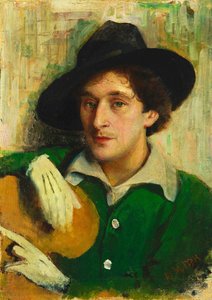
1887–1985, Belarus
Marc Chagall
Tidlige år, familie og uddannelse Marc Chagall træder ind i verden den 7. juli 1887 i Vitebsk i Det Russiske Imperium, født som Moishe Segal. Han er det første af ni børn i en beskedent stillelse jødisk familie. Livet er defineret af arbejdets rytmer og småskala handel.
Også af Marc Chagall
 Jeg og landsbyen1911
 Hvid Korsfæstelse1938
 Fødselsdag1915
 Over Værelset1918
Essays around Marching
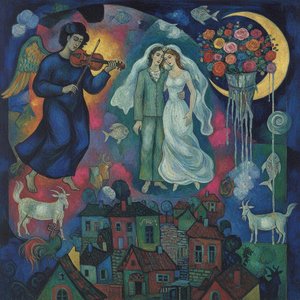 Marc Chagall’s Masterpieces: Exploring the Magic, Color, and Surrealist Legacy of a Modernist IconEmbark on a journey through the dreamlike masterpieces of Marc Chagall. Explore the profound symbolism and vibrant colors of this Surrealis…
 The Language of Brushstrokes: How Artistic Technique Expresses Emotion and EraExplore the profound connection between artistic technique and emotion. From the heavy impasto of Van Gogh to classical mastery, learn how …
 Dreaming in Color: The 25 Most Iconic Masterpieces by Marc ChagallStep into the dreamlike world of Marc Chagall. Explore 25 iconic masterpieces, from vibrant surrealist tales to soulful folklore. Find insp…