Realism · 1825
Self-Portrait (George Chinnery, 1825)
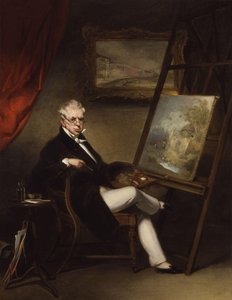
George Chinnery (1774–1852) har skabt Self-Portrait. Det er fra 1825. Det tilhører Realism-bevægelsen. Den er udført i Oil On Canvas. Det opbevares på Metropolitan Museum of Art i New York, USA. Målene er 22 × 18 cm.
- 1825
- Oil On Canvas
- 22 × 18 cm
- Metropolitan Museum of Art, New York

 Se i rummet

 Håndmalet oliemalerie
 Del som kort
 Del
 Faktablad


 Download
 Lignende værker
 Røntgenundersøgelse
 Diasshow
 Spørgsmål og svar

 Statistikker
Self-Portrait kort fortalt
- Titel
- Self-Portrait
- Kunstner
- George Chinnery (1774–1852)
- Kunstner født i
- Gough Square, Storbritannien
- Dato
- 1825
- Medium
- Oil On Canvas
- Dimensioner
- 22 × 18 cm
- Hvor det kan ses
- Metropolitan Museum of Art, New York, USA
- Bevægelse
- Realism
- Periode
- 19th Century
- Motiv
- portrait, self-reflection, spectacles, fur collar, china, 1825
Hvad forestiller Self-Portrait?
Identification of the Self-Portrait by George Chinnery
This work is a Self-Portrait by the artist George Chinnery. It represents a significant moment in his career, painted during his time in China between 1825 and 1828. Among the dozen self-portraits Chinnery produced throughout his life, this particular likeness is noted for being his most intimate and engaging. It offers a rare, personal glimpse into the character of a man known for his wit and his volatile, eccentric nature.
The piece was executed during a period of transition for the artist. Having moved to southern China due to mounting debts, Chinnery used his brush to document not only the landscapes and people of the region but also his own shifting circumstances. This specific portrait captures a sense of introspection that distinguishes it from his more formal commissions for the British community in India or the merchants of Macau.
Visual Composition and Subject Matter
The composition is centered on the subject's face and upper torso, presenting a middle-aged man in a moment of quiet introspection. He is positioned with his body turned slightly toward the viewer’s right, though his presence remains immediate and direct. A pair of spectacles rests upon his face, and a dark, textured fur collar frames his neck, adding a sense of weight and substance to his figure. His expression is serious, lending a somber quality to the encounter.
The color palette is restrained, relying heavily on a foundation of browns, ochres, and muted reds. These tones harmonize with the subject's warm brown skin tone, creating a cohesive and grounded atmosphere. Behind him, the background is intentionally blurred, suggesting the presence of a distant landscape without providing specific topographical detail. This lack of clarity in the distance pushes the figure forward, ensuring the viewer's attention remains fixed on the character of the man himself.
Technique and Artistic Style
This oil-on-canvas portrait is defined by a tactile, physical presence. The artist employs a technique characterized by loose brushwork and a heavy use of impasto, where the paint is applied thickly to build up the surface. This layered approach does more than just apply color; it creates a sense of volume and form, allowing the light to catch the ridges of the pigment. Such a method gives the work a textured, almost sculptural quality that emphasizes the physicality of the medium.
The style leans toward realism, yet it is executed through expressive brushstrokes that prioritize character over photographic precision. Rather than relying on smooth, blended transitions, the artist uses visible marks to define the contours of the face and the deep folds of the clothing. These lines work in tandem with the play of light and shadow to establish the subject's features. The result is a work that feels immediate and deeply personal, capturing a specific mood through the very texture of the paint itself.
History and Provenance of the Work
This intimate likeness was painted in China during the years 1825–28. It carries a distinguished lineage, having once belonged to Benjamin Chew Wilcox. A businessman involved in the opium trade, Wilcox was a prominent figure who also commissioned a full-length portrait of himself from the artist.
The provenance of the work connects it to the significant commercial history of the region. It is currently held within the collection of The Hong Kong and Shanghai Banking Corporation Ltd. This placement ensures the piece remains linked to the historical networks that the artist navigated throughout his residency in Asia.
Hvilket museum udstiller Self-Portrait?
Metropolitan Museum of Art
New York, USA
Oprindelse og historie for Metropolitan Museum of Art Metropolitan Museum of Art begyndte med en vision, der blev delt af en gruppe forretningsmænd, finansfolk samt førende kunstnere og tænkere. Efter institutionens stiftelse i 1870 søgte museet efter et permanent hjem til at huse sine stadigt voksende erhvervelser. Før det fandt sin nuværende placering, havde museet kortvarigt residens på Douglas Mansion-ejendommen på West 14th Street.


Højopløselige billeder af Self-Portrait

Public domain: kunstneren døde i 1852.
Andre størrelser, beskæringer og kildehenvisning →George Chinnery, Self-Portrait (1825), Metropolitan Museum of Art. Public domain
Spørgsmål om Self-Portrait besvaret
Hvilket museum udstiller det originale "Self-Portrait"?
"Self-Portrait" af George Chinnery er udstillet på Metropolitan Museum of Art, New York, USA. Museets fortegnelse henviser til det originale værk og ikke til reproduktioner.
Hvornår er "Self-Portrait" af George Chinnery skabt?
"Self-Portrait" af George Chinnery blev skabt i 1825.
Hvilken teknik er "Self-Portrait" udført med?
"Self-Portrait" af George Chinnery er udført i Oil On Canvas. Reproduktionerne har til formål at gengive denne tekniks visuelle udtryk.
Hvad er de faktiske mål på "Self-Portrait" af George Chinnery?
De registrerede mål for "Self-Portrait" af George Chinnery er 22 x 18 cm. Reproduktioner kan bestilles i andre størrelser, mens de samme proportioner bevares.
Hvad forestiller "Self-Portrait" af George Chinnery?
Temaerne i "Self-Portrait" af George Chinnery omfatter portrait, self-reflection, spectacles, fur collar, china, 1825, british art, eccentric figure, som tilsammen udgør værkets motivverden.
Er "Self-Portrait" af George Chinnery i det offentlige domæne?
Ophavsretsstatus for "Self-Portrait" af George Chinnery: værket er i det offentlige domæne – ophavsretten er udløbet. Dette afgør, om der frit må foretages reproduktioner af billedet.
Hvem har skabt "Self-Portrait"?
"Self-Portrait" blev skabt af George Chinnery. Informationen på denne side beskriver George Chinnerys originale værk.
Hvilken kunstretning tilhører "Self-Portrait" af George Chinnery?
"Self-Portrait" af George Chinnery tilhører Realism-bevægelsen. Denne bevægelse giver den stilistiske kontekst for værket.
Hvilken fase af George Chinnerys kunstneriske udvikling repræsenterer "Self-Portrait"?
"Self-Portrait" repræsenterer George Chinnerys Mature Period.
Om kunstneren, George Chinnery
1774–1852, Storbritannien
George Chinnery
Early Life and Training (1774-1801) George Chinnery, født i London i 1774, var en kunstner hvis liv og karriere blev dybt formet af hans tidlige år og den unikke baggrund, han tilhørte. Hans far, en begavet håndværker, var en pioner inden for Gurney-metoden for hurtig notatskrivning – et system, der revolutionerede dokumentation og observation i det 19. århundredes kunstneriske verden. Denne tidlige eksponering for effektiv notetagning ville senere blive afgørende for Chinnerys egen arbejdsstil, hvor han hurtigt kunne fange essensen af sine motiver og detaljer.
Om George Chinnery Bemærkelsesværdige værker af George Chinnery
Også af George Chinnery
 Portrait of Nathan Dunn1830
 Portrait of a Gentleman1800
 A Man Called W. C. Hunter1825
 Portrait of Harriet Low1833

Essays om Self-Portrait
 Reflecting the Self: A History of Portraiture & Psychological InsightExplore the fascinating history of self-portraiture from Renaissance masters like Dürer & Rembrandt to modern interpretations. Discover the…
 Masterpieces of Henri Fantin-Latour: The Top 25 Essential ArtworksExplore the top 25 masterpieces of Henri Fantin-Latour. From floral studies to realism, discover the full collection on OriginalUniqueArt.c…
 German artworks of the 1910sGerman Expressionism in the 1910s features powerful works by Franz Marc, Max Beckmann, and Ernst Ludwig Kirchner. View the collection at Or…