Symbolism
Spring (Ferdinand Hodler)
Ferdinand Hodler (1853–1918) har skabt Spring. Det tilhører Symbolism-bevægelsen. Den er udført i Acrylic On Canvas. Det opbevares på Museum Folkwang i Essen, Tyskland.
- Acrylic On Canvas
- Museum Folkwang, Essen

 Se i rummet

 Håndmalet oliemalerie
 Del som kort
 Del
 Faktablad


 Download
 Lignende værker
 Røntgenundersøgelse
 Diasshow
 Spørgsmål og svar

 Statistikker
Spring kort fortalt
- Titel
- Spring
- Kunstner
- Ferdinand Hodler (1853–1918)
- Kunstner født i
- Bern, Schweiz
- Materiale
- Acrylic On Canvas
- Hvor det kan ses
- Museum Folkwang, Essen, Tyskland
- Bevægelse
- Symbolism
- Motiv
- floral landscape, swiss countryside, female figures”, “pastoral scene”, “symbolist art”, "vintage painting"
Hvad forestiller Spring?
Ferdinand Hodler: Symbolism, Parallelism & The Quest for Universal Harmony
Ferdinand Hodler’s “Spring,” completed in 1901, stands as a cornerstone of Swiss Symbolist painting and embodies Hodler's singular artistic vision—a fusion of meticulous observation with profound psychological exploration. Exhibited simultaneously in Zurich’s Kunstverein and Vienna’s Secession, the artwork immediately captivated audiences and cemented Hodler’s reputation as a pioneer of ‘parallelism,’ a technique he championed to capture not merely visual appearances but also underlying emotional currents.
- Subject Matter: The painting depicts two women—a seated figure and one standing behind—within a vibrant meadow brimming with yellow wildflowers. This idyllic landscape serves as a backdrop for an intimate tableau of youthful affection.
- Style: “Spring” firmly establishes Hodler’s allegiance to Art Nouveau, characterized by flowing lines, organic forms, and a deliberate rejection of academic conventions. The artist eschewed rigid perspective in favor of a flattened plane that prioritizes expressive gesture over realistic representation.
- Technique: Hodler employed oil paint on canvas—a medium he favored throughout his career—applying it with remarkable precision and layering it to achieve subtle tonal gradations. His distinctive ‘parallelism’ technique involved juxtaposing two distinct planes of color, creating a visual dialogue that enhances the painting's emotional resonance.
- Historical Context: Created during Hodler’s formative years, “Spring” reflects the broader Symbolist movement’s preoccupation with exploring inner states and conveying spiritual truths through evocative imagery. It aligns with the Zeitgeist of Vienna Secession, where artists sought to liberate art from traditional restraints and embrace experimentation.
- Symbolism: The figures themselves are laden with symbolic significance. The standing woman—dressed in a simple necklace—represents idealized femininity, while her gaze directs towards the seated youth who embodies youthful vitality. The scattered wildflowers symbolize burgeoning life and renewal, mirroring the blossoming romance between the two subjects. Hodler’s masterful use of color contributes to the painting's emotional impact, conveying serenity and tenderness.
Hodler’s meticulous attention to detail—evident in the rendering of the flowers and the figures’ postures—underscores his commitment to capturing not just what is seen but also what is felt. “Spring” remains a testament to Hodler's ability to distill complex psychological ideas into visually arresting compositions, securing its place as an enduring emblem of Symbolist art.
Additional Research Links
Artist Information
Artist: Ferdinand Hodler
Birth Year: 1853
Death Year: 1918
Birth City: Bern
Birth Country: Switzerland
Biography: A Life Etched in Symbolism: The World of Ferdinand Hodler
Hodler’s early life was marked by profound loss—the untimely deaths of his father and two younger brothers instilled within him a deep contemplation of mortality. This formative experience profoundly shaped his artistic sensibility, propelling him toward formal training and fostering an unwavering fascination with the natural world.
Hvilket museum udstiller Spring?
Museum Folkwang
Essen, Tyskland
Oprindelse og historie for Museum Folkwang Historien om Museum Folkwang begynder med sammensmeltningen af to særskilte arvtagere. I 1902 grundlagde Karl Ernst Osthaus det private Folkwang Museum, en samling drevet af en specifik vision for moderne udtryk. Senere kom det Essener Kunstmuseum til, som var blevet stiftet i 1906.


Højopløselige billeder af Spring

Public domain: kunstneren døde i 1918.
Andre størrelser, beskæringer og kildeangivelse →Ferdinand Hodler, Spring, Museum Folkwang. Frit tilgængelig
Spørgsmål om Spring besvaret
Hvilket museum udstiller det originale "Spring"?
Originalen af "Spring" af Ferdinand Hodler opbevares på Museum Folkwang, Essen, Tyskland. En reproduktion gør det muligt at udstille værket i hjemmet.
Hvilket medie er "Spring" af Ferdinand Hodler udført i?
"Spring" er udført i Acrylic On Canvas.
Hvad forestiller "Spring" af Ferdinand Hodler?
"Spring" af Ferdinand Hodler forestiller: floral landscape, swiss countryside, female figures”, “pastoral scene”, “symbolist art”, "vintage painting", nature’s beauty”.
Er "Spring" fri for ophavsret?
Hvad angår ophavsret, er "Spring" i det offentlige domæne – ophavsretten er udløbet.
Hvem er kunstneren bag "Spring"?
"Spring" blev skabt af Ferdinand Hodler. Informationen på denne side beskriver Ferdinand Hodlers originale værk.
Hvilken stilart tilhører "Spring"?
Kunstretningen forbundet med "Spring" af Ferdinand Hodler er Symbolism. Denne klassificering placerer værket blandt relaterede kunstnere og kunstværker.
Hvilken periode i Ferdinand Hodlers karriere tilhører "Spring"?
"Spring" tilhører Late Medieval i Ferdinand Hodlers karriere. Denne klassificering knytter værket til kunstnerens udvikling.
Hvad er årsagen til ophavsretsstatus for "Spring" af Ferdinand Hodler?
Ophavsretsstatus for "Spring" – i det offentlige domæne – ophavsretten er udløbet – følger af kunstnerens død i 1918.
Opbevares "Spring" af Ferdinand Hodler i kunstnerens hjemland?
Nej – kunstværket opbevares i udlandet. "Spring" findes i Tyskland, mens Ferdinand Hodler blev født i Schweiz.
Om kunstneren, Ferdinand Hodler
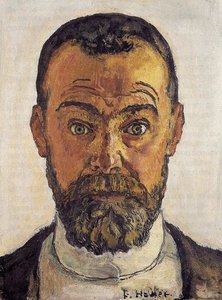
1853–1918, Schweiz
Ferdinand Hodler
Dødelighedens Arkitektur Født i Bern, Schweiz, i 1853, var Ferdinand Hodlers tidlige år præget af en stille, vedvarende sorg. Før han nåede ungdomsårene, efterlod tuberkulosen, som krævede hans far og to yngre brødre, et tomrum i hans hjem. Dette tidlige møde med tab blev et tilbagevendende motiv i hans værk, en skygge, der ville følge ham fra de beskedne begyndelser i hans læretid til højdepunkterne i hans professionelle karriere. Han påbegyndte sin uddannelse som dekorationsmaler og assisterede sin stedfar med kommercielt skiltemalerarbejde, en praktisk uddannelse, der indprentede ham en præcis beherskelse af linje og form.
Om Ferdinand Hodler Bemærkelsesværdige værker af Ferdinand Hodler
Også af Ferdinand Hodler
 Eiger, Monch and Jungfrau in Moonlight1908
 Woman in Ecstasy1911
 Sunset on Lake Geneva1915
 Study of two figures1897

Essays om Spring
 Framing the Past: How Impressionist Masterpieces Capture History's Most Pivotal MomentsDiscover how Impressionist masters captured history through light and color. Explore the profound legacy of Monet and Renoir with our exper…
 Mastering Parallelism: The Top 25 Essential Artworks by Ferdinand HodlerImmerse yourself in the rhythmic beauty of Ferdinand Hodler. Explore 25 iconic masterpieces of Swiss Symbolism and Parallelism. From emotiv…
 Italian early Renaissance paintersMasterpieces by Botticelli and Giotto define the Italian Early Renaissance. Explore the full collection online at OriginalUniqueArt.com.