Symbolism
Day (Truth) (Ferdinand Hodler)
Ferdinand Hodler (1853–1918) har skabt Day (Truth). Det tilhører Symbolism-bevægelsen. Den er udført i Oil On Canvas. Det opbevares på Art Institute of Chicago i Chicago, USA.
- Oil On Canvas
- Art Institute of Chicago

 Se i rummet

 Håndmalet oliemalerie
 Del som kort
 Del
 Faktablad


 Download
 Lignende værker
 Røntgenundersøgelse
 Diasshow
 Spørgsmål og svar

 Statistikker
Day (Truth) kort fortalt
- Titel
- Day (Truth)
- Kunstner
- Ferdinand Hodler (1853–1918)
- Kunstner født i
- Bern, Schweiz
- Medium
- Oil On Canvas
- Hvor det kan ses
- Art Institute of Chicago, Chicago, USA
- Bevægelse
- Symbolism
- Periode
- 19th Century
- Motiv
- man, nude figure, rock, landscape, sky, brown
Hvad forestiller Day (Truth)?
Identification of the Artwork and Artist
The canvas known as Day (Truth) emerges from the hand of Ferdinand Hodler, a significant figure in the evolution of Swiss art. Created about 1906, this work captures a moment of profound stillness. It exists at the intersection of Symbolism and Landscape Painting, reflecting the shifting tides of 19th-century artistic thought. The piece carries the weight of a specific era, where the boundaries between the physical world and the spiritual realm begin to blur.
Ferdinand Hodler brings a unique vision to this composition, moving away from the strictures of realism to explore deeper rhythms of existence. In Day (Truth), the artist seeks to translate the essence of a single moment into a visual language of form and light. The work belongs to a period where the landscape becomes a vessel for existential reflection, a place where the human presence and the natural environment are inextricably linked through a shared, rhythmic geometry.
Composition and Visual Elements
The canvas unfolds with a monumental presence, capturing a moment where the first light of dawn breathes life into the very concept of unity. A serene arrangement of figures mirrors the unfolding morning, creating a rhythmic, visual heartbeat that pulses through the scene. These figures, depicted in states of nakedness, move through the landscape in a way that suggests the unfolding stages of daybreak. Their postures, much like blossoming petals, seem to respond to the increasing brightness of the sky, weaving human form into the very rhythm of the natural world.
Symmetry governs the space, establishing a sense of cosmic harmony that feels both tranquil and profoundly powerful. This structural order is defined by rhythmic symmetry and deep, espresso-toned shadows that anchor the composition. The eye is guided by the horizon line and the movement of the clouds, leading toward a central focus that symbolizes a spiritual awakening. Through this deliberate arrangement, the painting transcends a simple landscape, becoming a meditation on existence itself, where the physical and the spiritual are bound together by a shared, geometric grace.
Technical Details and Medium
The medium of oil on canvas breathes life into this composition, allowing for a layering of thin washes that build an atmospheric effect. These layers create a soft, diffused light that wraps around the figure, casting a gentle glow that avoids harsh shadows. The texture of the work reveals a subtle interplay between the smooth, ethereal quality of the sky and the palpable roughness of the rocky base. Every brushstroke contributes to a sense of weight and permanence, grounding the spiritual essence of the scene in physical substance.
This work functions as a masterclass in Symbolism, where the artist employs his signature theory of parallelism to structure the visual experience. Rhythmic patterns emerge through the arrangement of forms, mirroring the natural order of the cosmos. The composition moves with a rhythmic, visual heartbeat, capturing the ephemeral beauty of daybreak and transforming it into a structured, eternal presence. Through this deliberate application of geometry and repetition, the painting transcends mere representation to touch upon the profound rhythms of existence.
Hvilket museum udstiller Day (Truth)?
Art Institute of Chicago
Chicago, USA
Art Institute of Chicago Oversigt Art Institute of Chicago er et privat, non-profit kunstmuseum beliggende i Chicago, Illinois, USA. Siden grundlæggelsen i 1879 har institutionen udviklet sig til en betydningsfuld kraft i hjertet af Grant Park. Museets fysiske rammer strækker sig nu over næsten en million kvadratfod og omfatter en række vidt forskellige rum, der huser en enorm samling af menneskelig udfoldelse.


Højopløselige billeder af Day (Truth)

Public domain: kunstneren døde i 1918.
Andre størrelser, beskæringer og kildehenvisning →Ferdinand Hodler, Day (Truth), Art Institute of Chicago. Public domain
Spørgsmål om Day (Truth) besvaret
Hvor kan man i dag se "Day (Truth)" af Ferdinand Hodler udstillet?
"Day (Truth)" af Ferdinand Hodler er udstillet på Art Institute of Chicago, Chicago, USA. Museets fortegnelse henviser til det originale værk og ikke til reproduktioner.
Hvilken teknik er brugt til "Day (Truth)" af Ferdinand Hodler?
"Day (Truth)" af Ferdinand Hodler er udført i Oil On Canvas. Reproduktionerne har til formål at gengive denne tekniks visuelle udtryk.
Hvad forestiller "Day (Truth)"?
Temaerne i "Day (Truth)" af Ferdinand Hodler omfatter man, nude figure, rock, landscape, sky, brown, tan, som tilsammen udgør værkets motivverden.
Er billedet af "Day (Truth)" af Ferdinand Hodler frit tilgængeligt i det offentlige domæne?
Ophavsretsstatus for "Day (Truth)" af Ferdinand Hodler: værket er i det offentlige domæne – ophavsretten er udløbet. Dette afgør, om der frit må foretages reproduktioner af billedet.
Hvilken kunstner tilskrives "Day (Truth)"?
"Day (Truth)" blev skabt af Ferdinand Hodler. Informationen på denne side beskriver Ferdinand Hodlers originale værk.
Hvilken kunstretning tilhører "Day (Truth)" af Ferdinand Hodler?
Kunstretningen forbundet med "Day (Truth)" af Ferdinand Hodler er Symbolism. Denne klassificering placerer værket blandt relaterede kunstnere og kunstværker.
Hvilken fase af Ferdinand Hodlers kunstneriske udvikling repræsenterer "Day (Truth)"?
"Day (Truth)" repræsenterer Ferdinand Hodlers Mature Period.
Hvad er årsagen til ophavsretsstatus for "Day (Truth)" af Ferdinand Hodler?
Ophavsretsstatus for "Day (Truth)" – i det offentlige domæne – ophavsretten er udløbet – følger af kunstnerens død i 1918.
Blev "Day (Truth)" i kunstnerens hjemland?
Nej – kunstværket opbevares i udlandet. "Day (Truth)" findes i USA, mens Ferdinand Hodler blev født i Schweiz.
Om kunstneren, Ferdinand Hodler
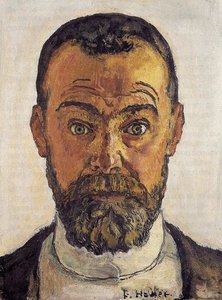
1853–1918, Schweiz
Ferdinand Hodler
Dødelighedens Arkitektur Født i Bern, Schweiz, i 1853, var Ferdinand Hodlers tidlige år præget af en stille, vedvarende sorg. Før han nåede ungdomsårene, efterlod tuberkulosen, som krævede hans far og to yngre brødre, et tomrum i hans hjem. Dette tidlige møde med tab blev et tilbagevendende motiv i hans værk, en skygge, der ville følge ham fra de beskedne begyndelser i hans læretid til højdepunkterne i hans professionelle karriere. Han påbegyndte sin uddannelse som dekorationsmaler og assisterede sin stedfar med kommercielt skiltemalerarbejde, en praktisk uddannelse, der indprentede ham en præcis beherskelse af linje og form.
Om Ferdinand Hodler Bemærkelsesværdige værker af Ferdinand Hodler
Også af Ferdinand Hodler
 Eiger, Monch and Jungfrau in Moonlight1908
 Woman in Ecstasy1911
 Sunset on Lake Geneva1915
 Study of two figures1897
Essays om Day (Truth)
 19th century Swiss painters19th-century Swiss painters like Arnold Böcklin, Ferdinand Hodler, and Henry Fuseli defined an era. Find museum-quality reproductions on Or…
 Mastering Parallelism: The 25 Most Iconic Artworks by Ferdinand HodlerImmerse yourself in the rhythmic beauty of Ferdinand Hodler. Explore 25 iconic masterpieces of Swiss Symbolism and Parallelism. From soulfu…
 Swiss artworks of the 1910sSwiss art from the 1910s featuring masterpieces by Paul Klee, Ferdinand Hodler, and Félix Vallotton. View the full collection on OriginalUn…