Baroque · 1611
Still Life with Nuts, Candy and Flowers (Clara Peeters, 1611)
Clara Peeters (1587–1657) har skabt Still Life with Nuts, Candy and Flowers. Det er fra 1611. Det tilhører Baroque-bevægelsen. Den er udført i Oil On Panel. Det opbevares på Museo del Prado i Madrid, Spanien. Målene er 52 × 73 cm.
- 1611
- Oil On Panel
- 52 × 73 cm
- Museo del Prado, Madrid

 Se i rummet

 Håndmalet oliemalerie
 Del som kort
 Del
 Faktablad


 Download
 Lignende værker
 Røntgenundersøgelse
 Diasshow
 Spørgsmål og svar

 Statistikker
Still Life with Nuts, Candy and Flowers kort fortalt
- Titel
- Still Life with Nuts, Candy and Flowers
- Kunstner
- Clara Peeters (1587–1657)
- Kunstner født i
- Antwerpen, Belgien
- Dato
- 1611
- Materiale
- Oil On Panel
- Dimensioner
- 52 × 73 cm
- Hvor det kan ses
- Museo del Prado, Madrid, Spanien
- Bevægelse
- Baroque
- Periode
- Early Modern
- Motiv
- food, flowers, fruit, bowl, candlelight, luxury
Hvad forestiller Still Life with Nuts, Candy and Flowers?
A Sensory Feast: The Opulence of Clara Peeters
In the quiet intimacy of a seventeenth-century tabletop, Clara Peeters invites us into a world where the mundane is elevated to the magnificent. Still Life with Nuts, Candy and Flowers is not merely a depiction of food; it is a masterclass in sensory storytelling. As one gazes upon this 1611 masterpiece, the eye is immediately drawn to the lush, tactile abundance of the arrangement. Polished bowls overflow with an assortment of nuts, while delicate candies and vibrant fruits—apples and oranges—rest alongside elegant glassware. There is a profound sense of weight and texture here; one can almost feel the rough shell of a walnut against the smooth, cool surface of a silver platter or the delicate, ephemeral softness of a flower petal. Peeters captures a moment of suspended animation, where the sweetness of life is presented in all its colorful, decadent glory.
The painting serves as a breathtaking window into the Baroque era, a period defined by its dramatic flair and intense realism. Moving away from the rigid, geometric constraints of earlier Mannerist traditions, Peeters embraces an asymmetrical composition that feels organic and alive. This deliberate lack of strict symmetry creates a dynamic energy, guiding the viewer’s gaze in a wandering, exploratory path across the table. The interplay of light and shadow—the hallmark of the Baroque style—is utilized with surgical precision. Light dances across the sheen of polished metal and the translucent skin of fruit, while deep, velvety shadows provide a sense of depth and mystery, grounding the vibrant colors in a space that feels both tangible and atmospheric.
Technique and the Art of Observation
To behold this work is to witness the extraordinary technical prowess of a true pioneer. Executed with oil on panel, Peeters employed sophisticated glazing techniques to build layers of luminous color, allowing light to penetrate the paint and reflect from within, much like the natural glow of ripe fruit. Her ability to render different materials—the glint of a wine glass, the matte surface of a nut, the organic texture of a potted plant—demonstrates an obsessive devotion to verisimilitude. Every brushstroke is subservient to the goal of absolute realism, making this piece a triumph of observational skill. For the collector or interior designer, such a work offers more than just decoration; it provides a focal point of profound complexity that rewards prolonged contemplation.
Beyond its physical beauty, the painting whispers of deeper, more contemplative themes. In the tradition of the Dutch ontbijtjes (breakfast pieces), such arrangements often functioned as subtle meditations on the fleeting nature of pleasure and the passage of time. The abundance of the feast stands in a delicate balance with the inherent fragility of the flowers and the perishable nature of the food. This tension between abundance and decay creates an emotional resonance that transcends the centuries, offering a poignant reminder to cherish the sensory richness of the present moment. It is this marriage of exquisite craftsmanship and soulful depth that makes Peeters’ vision an enduring inspiration for those seeking to bring a sense of history, elegance, and narrative weight into a contemporary space.
Hvilket museum udstiller Still Life with Nuts, Candy and Flowers?
Museo del Prado
Madrid, Spanien
Historien om Museo del Prado Rødderne til Museo del Prado er uløseligt knyttet til den spanske kongefamilies samlinger og strækker sig helt tilbage til det 18. århundrede. Det, der begyndte som en vision om et naturhistorisk kabinet under Ferdinand VII, udviklede sig gradvist til et dedikeret fristed for malerkunst og skulptur.


Højopløselige billeder af Still Life with Nuts, Candy and Flowers

Public domain: kunstneren døde i 1657.
Andre størrelser, beskæringer og kildeangivelse →Clara Peeters, Still Life with Nuts, Candy and Flowers (1611).
Clara Peeters (1587–1657), Still Life with Nuts, Candy and Flowers, 1611, oil on panel, Museo del Prado, Madrid, Spanien. Frit tilgængelig Billede: OriginalUniqueArt.com.
Spørgsmål om Still Life with Nuts, Candy and Flowers besvaret
Hvilket museum udstiller det originale "Still Life with Nuts, Candy and Flowers"?
"Still Life with Nuts, Candy and Flowers" af Clara Peeters er udstillet på Museo del Prado, Madrid, Spanien. Museets fortegnelse henviser til det originale værk og ikke til reproduktioner.
Hvornår blev "Still Life with Nuts, Candy and Flowers" skabt?
"Still Life with Nuts, Candy and Flowers" af Clara Peeters blev skabt i 1611.
Hvilket medie er "Still Life with Nuts, Candy and Flowers" af Clara Peeters udført i?
"Still Life with Nuts, Candy and Flowers" af Clara Peeters er udført i Oil On Panel. Reproduktionerne har til formål at gengive denne tekniks visuelle udtryk.
Hvad er de faktiske mål på "Still Life with Nuts, Candy and Flowers" af Clara Peeters?
"Still Life with Nuts, Candy and Flowers" måler 52 x 73 cm i sin oprindelige form. De originale dimensioner er en nyttig reference, når du skal vælge størrelsen på en reproduktion.
Hvad forestiller "Still Life with Nuts, Candy and Flowers" af Clara Peeters?
Temaerne i "Still Life with Nuts, Candy and Flowers" af Clara Peeters omfatter food, flowers, fruit, bowl, candlelight, luxury, texture, composition, som tilsammen udgør værkets motivverden.
Er "Still Life with Nuts, Candy and Flowers" fri for ophavsret?
Ophavsretsstatus for "Still Life with Nuts, Candy and Flowers" af Clara Peeters: værket er i det offentlige domæne – ophavsretten er udløbet. Dette afgør, om der frit må foretages reproduktioner af billedet.
Hvilken kunstner tilskrives "Still Life with Nuts, Candy and Flowers"?
Kunstneren bag "Still Life with Nuts, Candy and Flowers" er Clara Peeters. Værket er katalogiseret under Clara Peeterss navn.
Hvilken stilart tilhører "Still Life with Nuts, Candy and Flowers"?
Kunstretningen forbundet med "Still Life with Nuts, Candy and Flowers" af Clara Peeters er Baroque. Denne klassificering placerer værket blandt relaterede kunstnere og kunstværker.
Hvor i Clara Peeterss karriere placerer "Still Life with Nuts, Candy and Flowers" sig?
"Still Life with Nuts, Candy and Flowers" repræsenterer Clara Peeterss Mature Period.
Om kunstneren, Clara Peeters

1587–1657, Belgien
Clara Peeters
Clara Peeters: Pioner inden for hollandsk stilleben Clara Peeters (1594-efter 1657) står som en enestående skikkelse i det syttenende århundredes flamske kunst – en af de tidligste anerkendte kvindelige malere, der opererede inden for den blomstrende hollandske guldalder. På trods af samfundsmæssige begrænsninger, der i alvor indskrænkede kvinders adgang til kunstnerisk uddannelse og medlemskab af lav, skabte Peeters en bemærkelsesværdig karriere. Hun efterlod sig et oeuvre karakteriseret ved minutiøse detaljer, innovative kompositionsstrategier og en fascination af at indfange teksturerne og nuancerne i hverdagslivet – især maden. Hendes arv fortsætter med at inspirere både forskere og kunstnere, mens de kæmper med spørgsmål om hendes identitet, uddannelse og det gådefulde væsen af hendes kunstneriske virke.
Også af Clara Peeters
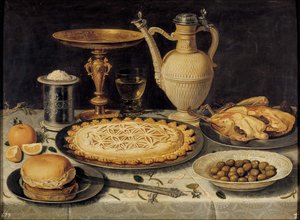 Table with Orange, Olives and Pie1611
 Still Life with Cheeses, Artichoke, and Cherries1625
 Madonna And Child Within A Floral Wreath1621
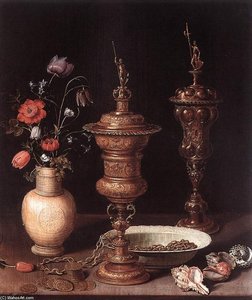 Still-Life with Flowers and Goblets1612

Essays om Still Life with Nuts, Candy and Flowers
 Luminous Vessels: The Transcendent Art of the Bottle in Impressionist Still LifeExplore how Impressionist masters captured light through glass and bottles. Discover the magic of light and texture today.
 18th century Dutch paintersJan van Huysum completed Flowers and Fruit in 1723. Compare his botanical precision with the maritime works of Willem van de Velde the Youn…
 Master of Abundance: The Top 25 Essential Artworks by Frans SnydersBorn in 1579, Snyders trained under Pieter Brueghel the Younger. Count the twenty-five works that define his Baroque mastery of texture and…