Expressionism · 1913
Circus (August Macke, 1913)
August Macke (1887–1914) har skabt Circus. Det er fra 1913. Det tilhører Expressionism-bevægelsen. Den er udført i Oil On Canvas. Det opbevares på Thyssen-Bornemisza Museum i Madrid, Spanien. Målene er 47 × 63.5 cm.
- 1913
- Oil On Canvas
- 47 × 63.5 cm
- Thyssen-Bornemisza Museum, Madrid

 Se i rummet

 Håndmalet oliemalerie
 Del som kort
 Del
 Faktablad


 Download
 Lignende værker
 Røntgenundersøgelse
 Diasshow
 Spørgsmål og svar

 Statistikker
Circus kort fortalt
- Titel
- Circus
- Kunstner
- August Macke (1887–1914)
- Kunstner født i
- Meschede, Tyskland
- Dato
- 1913
- Medium
- Oil On Canvas
- Dimensioner
- 47 × 63.5 cm
- Hvor det kan ses
- Thyssen-Bornemisza Museum, Madrid, Spanien
- Bevægelse
- Expressionism
- Periode
- Modern
- Motiv
- people, figures, horse, red poles, yellow, blue
Hvad forestiller Circus?
Identification of Circus by August Macke
The painting titled Circus was created by the artist August Macke in 1913. This work is executed in oil paint on a canvas. The physical dimensions of the piece are 47 x 63.5cm.
The composition depicts a circus setting through a series of fragmented shapes and geometric facets. Red poles form strong diagonal lines that divide the canvas into various planes. These lines create a sense of depth and movement within the structure. The subject matter includes several figures in circus attire grouped near the center, alongside a white horse positioned in the background.
The color palette utilizes warm yellows, golds, and reds. These tones contrast against cool blues, greens, and whites. Thick, painterly brushstrokes provide a tactile texture across the surface. The lighting is diffused throughout the scene, contributing to a flattened, rhythmic quality within the tent-like arrangement.
Composition and Visual Elements
The composition is structured by strong diagonal lines formed by red poles that divide the canvas into various planes. These lines create a sense of movement and depth within a shallow perspective. In the center, several figures in circus attire are grouped together. A white horse is positioned in the background, providing a focal point behind the central figures. The arrangement of these elements emphasizes a decorative quality within the tent-like structure.
The color palette relies on the contrast between warm and cool tones. Warm yellows, golds, and reds are set against cool blues, greens, and whites. Many of the forms are broken into geometric facets, a technique characteristic of Cubism and Expressionism. Thick, painterly brushstrokes create a tactile surface across the work. The lighting is diffused throughout the scene, with no single clear light source, contributing to a rhythmic and flattened quality.
Related Works by the Artist
The artist's output during this period includes several works that utilize similar geometric structures and color arrangements. In 1913, he produced Promenade and Hussars on a Sortie. These pieces demonstrate a focus on the rhythmic placement of figures within a defined space. Additionally, the 1913 work Coloured Forms I. emphasizes the use of distinct, segmented shapes to organize the composition. These works reflect a consistent interest in how light and form interact through broken planes of color.
Moving into the following year, the artist created Fashion Store in 1914. This work continues the exploration of modern life and the arrangement of objects and figures within a structured environment. The progression of his style shows a steady development in the way he handles the relationship between color and the physical world. His compositions frequently rely on the interplay of light and the division of the canvas into various planes to establish a sense of movement.
Hvilket museum udstiller Circus?
Thyssen-Bornemisza Museum
Madrid, Spanien
Historien om Thyssen-Bornemisza Museum Rødderne til Thyssen-Bornemisza Museum ligger langt fra dets nuværende placering i Madrid, Spanien. Samlingen har sit udspring i Lugano, Schweiz, hvor Baron Heinrich Thyssen-Bornemisza påbegyndte sin søgen efter europæiske kunstneriske højdepunkter. Hans mål var en bevidst handling for at bevare kulturarven; et forsøg på at beskytte eftermælet fra europæisk kunst mod den ustabilitet og eksil, der fulgte i kølvandet på Første Verdenskrig.


Højopløselige billeder af Circus

Public domain: kunstneren døde i 1914.
Andre størrelser, beskæringer og kildehenvisning →August Macke, Circus (1913), Thyssen-Bornemisza Museum. Public domain
Spørgsmål om Circus besvaret
Hvilket museum udstiller det originale "Circus"?
Originalen af "Circus" af August Macke opbevares på Thyssen-Bornemisza Museum, Madrid, Spanien. En reproduktion gør det muligt at udstille værket i hjemmet.
Hvornår blev "Circus" skabt?
"Circus" af August Macke blev skabt i 1913.
Hvilken teknik er brugt til "Circus" af August Macke?
"Circus" af August Macke er udført i Oil On Canvas. Reproduktionerne har til formål at gengive denne tekniks visuelle udtryk.
Hvad er målene på det originale værk "Circus"?
Det originale værk "Circus" af August Macke måler 47.0 x 63.5cm.
Hvad forestiller "Circus"?
Motiverne i "Circus" er people, figures, horse, red poles, yellow, blue, white, tent.
Er "Circus" af August Macke i det offentlige domæne?
Ophavsretsstatus for "Circus" af August Macke: værket er i det offentlige domæne – ophavsretten er udløbet. Dette afgør, om der frit må foretages reproduktioner af billedet.
Hvem er kunstneren bag "Circus"?
Kunstneren bag "Circus" er August Macke. Værket er katalogiseret under August Mackes navn.
Hvilken stilart tilhører "Circus"?
"Circus" er et værk fra Expressionism. Denne stilart angiver den kunstneriske tradition, som værket indgår i.
Hvor i August Mackes karriere placerer "Circus" sig?
"Circus" tilhører Mature Period i August Mackes karriere. Denne klassificering knytter værket til kunstnerens udvikling.
Om kunstneren, August Macke
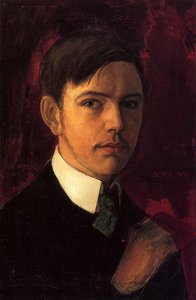
1887–1914, Tyskland
August Macke
Tidligt liv, familie og uddannelse Historien om August Macke begynder i den tyske by Meschede, hvor han blev født den 3. januar 1887. Han var den eneste søn af August Friedrich Hermann Macke, en entreprenør og amatørkunstner, og Maria Florentine. Hans barndom blev præget af de skiftende økonomiske kår i faderens virksomhed, hvilket førte familien til Köln og senere til Bonn.
Også af August Macke
 Kvinde i grøn jakke1913
 Baderpiger med by baggrund1913
 Hat Shop1913
 Portrait of the Artist's Wife with Hat1909

Essays om Circus
 Comparing Der Blaue Reiter and Die Brücke: Two Paths of German ExpressionismMaster the differences between Die Brücke and Der Blaue Reiter. Explore the roots of German Expressionism now.
 August Macke: Expressionist Visions of Harmony & Modern LifeExplore the vibrant Expressionist paintings of August Macke (1887-1914). Discover his key role in Der Blaue Reiter, Fauvist influences, and…
 Orphism vs Synchromism: Distinguishing Color, Light, and FormMaster the distinction between Orphism and Synchromism through expert analysis of color and form. Explore the roots of abstraction now.