Baroque Painting · 1601
Rinaldo and Armida (Annibale Carracci, 1601)
Annibale Carracci (1560–1609) har skabt Rinaldo and Armida. Det er fra 1601. Det tilhører Baroque Painting-bevægelsen. Det opbevares på Museo di Capodimonte i Napoli, Italien.

 Se i rummet

 Håndmalet oliemalerie
 Del som kort
 Del
 Faktablad


 Download
 Lignende værker
 Røntgenundersøgelse
 Diasshow
 Spørgsmål og svar

 Statistikker
Rinaldo and Armida kort fortalt
- Titel
- Rinaldo and Armida
- Kunstner
- Annibale Carracci (1560–1609)
- Kunstner født i
- Bologna, Italien
- Dato
- 1601
- Hvor det kan ses
- Museo di Capodimonte, Napoli, Italien
- Bevægelse
- Baroque Painting
- Motiv
- rinaldo, armida, love, romance, saracen, tasso
Hvad forestiller Rinaldo and Armida?
The Genesis of a Dramatic Narrative
Annibale Carracci’s “Rinaldo and Armida,” painted in 1601, isn't merely a depiction of a legendary tale; it’s a vibrant distillation of the late Renaissance’s fascination with classical mythology interwoven with burgeoning Baroque drama. Commissioned for the Palazzo Farnese in Rome, this monumental canvas embodies a pivotal moment within Tasso’s epic poem “Rinaldo,” a work that captivated audiences with its blend of chivalry, love, and perilous adventure. Carracci, along with his brother Agostino and cousin Ludovico, were tasked with transforming the complex narrative into a series of grand frescoes, aiming to revive the grandeur of High Renaissance ideals while injecting a palpable sense of dynamism – a hallmark of the emerging Baroque style. The painting itself is a testament to this ambition, radiating an energy that pulls the viewer directly into the heart of the scene.
A Symphony of Color and Movement
Carracci’s masterful technique is immediately apparent in the rich, layered application of paint. He employs a sophisticated *sfumato* – a subtle blurring of lines and edges – to create an atmosphere of both immediacy and depth. The figures are not rendered with sharp, precise outlines but rather emerge from a haze of color, lending them a sense of ethereal beauty and vulnerability. Notice the dramatic use of light; it’s not uniformly distributed but strategically employed to highlight key elements—Rinaldo's heroic stance, Armida’s sorrowful gaze, and the swirling vortex of the enchanted garden. The palette is dominated by warm reds, golds, and deep blues, creating a visual feast that mirrors the passionate emotions at play. The artist’s meticulous attention to detail extends to the intricate folds of their garments, the textures of the foliage, and even the subtle reflections in the water – all contributing to an astonishingly realistic effect for its time.
Symbolism Woven into a Romantic Scene
Beyond the immediate narrative, “Rinaldo and Armida” is laden with symbolic meaning. The scene itself—a passionate embrace amidst a fantastical garden—represents the precarious balance between love and duty, desire and obligation. Armida’s enchanted realm, filled with exotic birds and shimmering foliage, symbolizes her seductive power and the allure of escape from the constraints of war and responsibility. Rinaldo's struggle to resist her charms speaks to the internal conflict faced by heroes caught between their romantic passions and their sworn oaths. The presence of the two birds—one perched near the top left corner, the other towards the center-right—adds another layer of interpretation, perhaps representing messengers or omens, subtly guiding the viewer’s eye through the composition. The swords held by Rinaldo and his companions are not merely weapons but symbols of their commitment to Christian ideals and the defense of Jerusalem.
A Bridge Between Eras
“Rinaldo and Armida” stands as a crucial link between the High Renaissance’s emphasis on harmony and balance and the Baroque’s embrace of drama, emotion, and movement. Carracci skillfully synthesizes these influences, creating an artwork that is both formally sophisticated and emotionally resonant. His work profoundly impacted subsequent generations of artists, particularly influencing the development of illusionistic painting in Rome. Studying this masterpiece offers a valuable insight into the artistic currents of its time—a period of intense intellectual and creative ferment that ultimately shaped the course of Western art history. It’s a testament to Carracci's ability to capture not just a story but the very essence of human experience, rendered with breathtaking skill and profound beauty.
Hvilket museum udstiller Rinaldo and Armida?
Museo di Capodimonte
Napoli, Italien
Historien om Museo di Capodimonte Rødderne til Museo di Capodimonte strækker sig tilbage til det tidlige 18. århundrede. I 1738 beordrede kong Karl 7.


Højopløselige billeder af Rinaldo and Armida

Public domain: kunstneren døde i 1609.
Andre størrelser, beskæringer og kildehenvisning →Annibale Carracci, Rinaldo and Armida (1601), Museo di Capodimonte. Public domain
Spørgsmål om Rinaldo and Armida besvaret
Hvilket museum udstiller det originale "Rinaldo and Armida"?
Du kan se det originale værk "Rinaldo and Armida" på Museo di Capodimonte, Napoli, Italien.
I hvilket år blev "Rinaldo and Armida" af Annibale Carracci skabt?
"Rinaldo and Armida" af Annibale Carracci blev skabt i 1601.
Hvad forestiller "Rinaldo and Armida"?
"Rinaldo and Armida" af Annibale Carracci forestiller: rinaldo, armida, love, romance, saracen, tasso, italy, 1601.
Er "Rinaldo and Armida" af Annibale Carracci i det offentlige domæne?
Hvad angår ophavsret, er "Rinaldo and Armida" i det offentlige domæne – ophavsretten er udløbet.
Hvem er kunstneren bag "Rinaldo and Armida"?
"Rinaldo and Armida" blev skabt af Annibale Carracci. Informationen på denne side beskriver Annibale Carraccis originale værk.
Hvilken kunstretning tilhører "Rinaldo and Armida" af Annibale Carracci?
"Rinaldo and Armida" er et værk fra Baroque Painting. Denne stilart angiver den kunstneriske tradition, som værket indgår i.
Hvor i Annibale Carraccis karriere placerer "Rinaldo and Armida" sig?
Inden for Annibale Carraccis karriere tilhører "Rinaldo and Armida" perioden Late Renaissance, hvilket gør det muligt at sammenligne værket med kunstnerens øvrige værker.
Hvor gammel var Annibale Carracci, da "Rinaldo and Armida" blev skabt i 1601?
Da "Rinaldo and Armida" blev skabt i 1601, var Annibale Carracci – født i 1560 – 41 år gammel.
Hvorfor er ophavsretsstatus for "Rinaldo and Armida" som den er?
Ophavsretsstatus for "Rinaldo and Armida" – i det offentlige domæne – ophavsretten er udløbet – følger af kunstnerens død i 1609.
Om kunstneren, Annibale Carracci
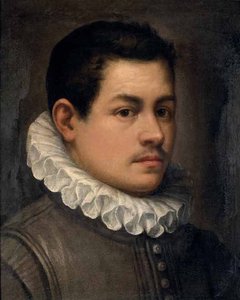
1560–1609, Italien
Annibale Carracci
Early Life and the Bolognese Roots Annibale Carracci, født i Bologna den 3. november 1560, trådte ind i en kunstnerisk familie med dybe rødder. Hans tidlige uddannelse fandt sandsynligvis sted i familiens værksted, hvor han lagde grundlaget for en karriere, der skulle forme det italienske maleri på en radikal måde. Bologna var i denne periode et pulserende centrum for intellekt og kunstnerisk aktivitet, men samtidig føltes den lidt afsides fra de dominerende strømme, der udgik fra Rom og Venedig.
Om Annibale Carracci Bemærkelsesværdige værker af Annibale Carracci
Også af Annibale Carracci
 Bønneæderen Sol
 Herkules' valg
 Hercules ved krydset1596
 Flodlandskab1589

Essays om Rinaldo and Armida
 Hollandsk Barok: Top 10 Mesterværker der Definerede en Æra – Kunst til Dit HjemOplev Hollandsk Barok's 10 mest ikoniske værker! Rembrandt, Vermeer & co. – dyk ned i historien bag mesterværkerne og find inspiration til …
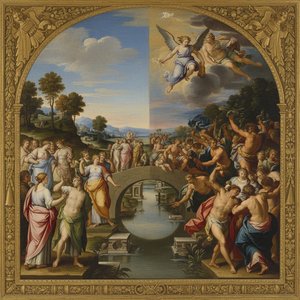 Annibale Carracci: Bridging Renaissance Ideals & Baroque InnovationExplore the life & art of Annibale Carracci, a pivotal figure bridging Renaissance ideals with Baroque innovation. Discover his masterpiece…
 Giorgione: Enigma and Innovation in Early Venetian Renaissance PaintingExplore the enigmatic world of Giorgione, a pivotal figure in the Venetian Renaissance. Discover his innovative techniques, iconic painting…