Kort sagt
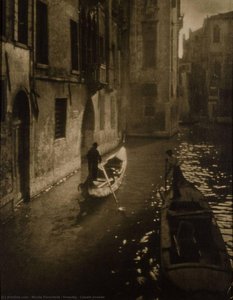
Af alle de originale værker, som Nicola Perscheid efterlod, er det mest berømte Venedig - Canale Grande (1929). Lige efter følger The Reaper (1901) og Heimwärts (1901). Vores katalog indeholder 5 værker af Nicola Perscheid; galleriet har bevaret de 5 værker, som verden beundrer mest, hver vist med sin dato, sit museum og sin historie.
Nicola Perscheids top 10 malerier: galleriets udvalg
The Reaper
Nicola Perscheid's "The Reaper," painted in 1901, isn’t merely a depiction of rural labor; it’s a profound meditation on time, mortality, and the enduring connection between humanity and the land. This evocative monochrome image, now housed within the State Art Collections of Dresden, immediately draws the viewer into a world steeped in quiet intensity – a world where the rhythmic cycle of harvest is inextricably linked to the inevitable passage…
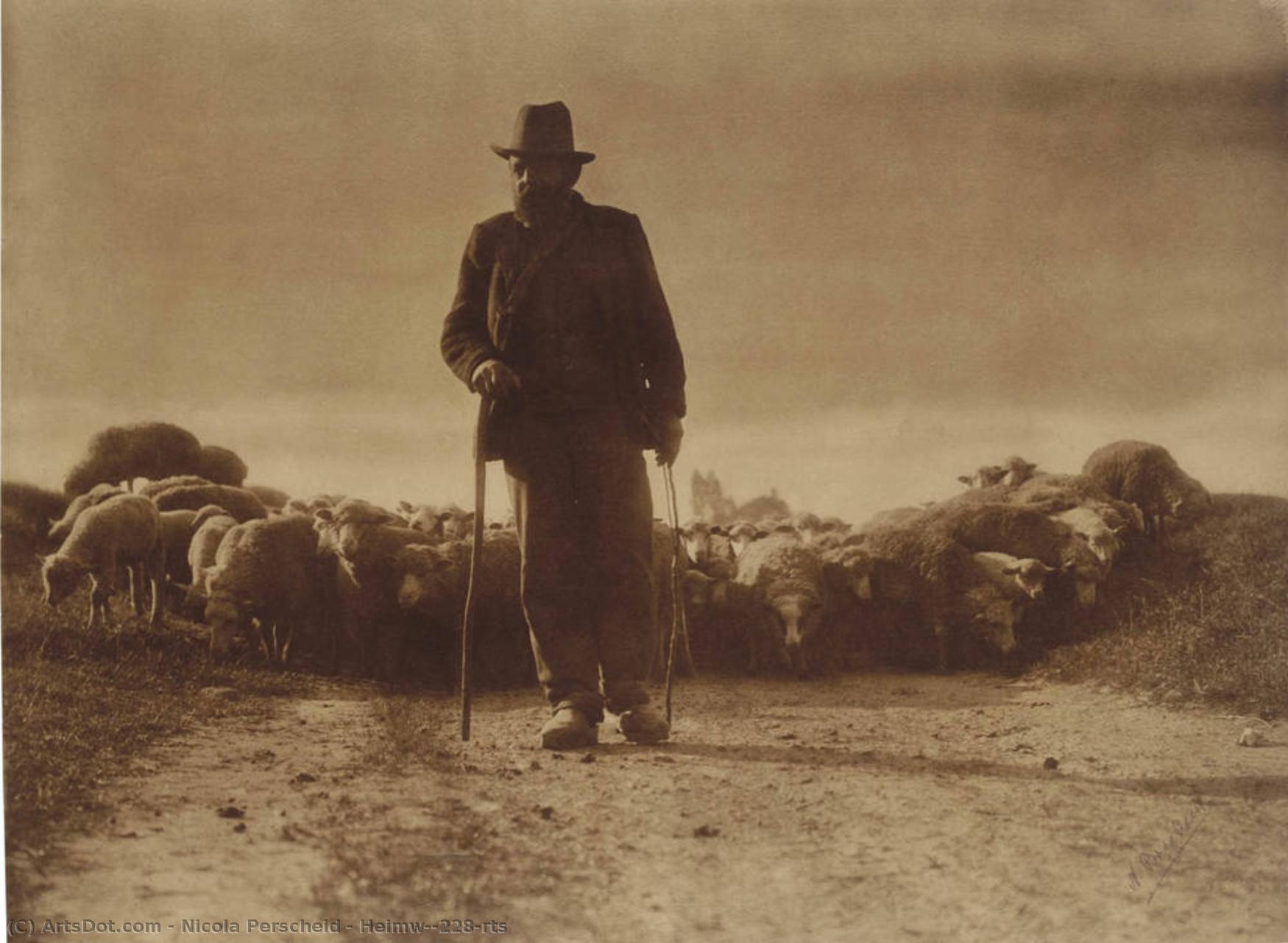
Heimwärts
The photograph Heimwärts was captured by Nicola Perscheid in 1901. It presents a quiet study of rural life, focusing on the rhythmic movement of a shepherd and his flock. The scene is frozen in a sepia-toned stillness, a moment caught in the soft light of an overcast day.
Arnold Schönberg
The opening of Nicola Perscheid’s studio at Bellevuestraße 6a, right near the Choralion hall (Bellevuestraße 4) where the world premiere of Pierrot lunaire, op. 21 took place in October 1912, was a major event in the press: “A magnificent space in colossal dimensions! No skylight! Smooth, green walls […] On the opposite wall facing the courtyard is an enormous window slanted inwards almost as wide as the wall, of the…
Motiverne, der fangede Nicola Perscheids blik
De fire motiver, der optræder hyppigst i disse originaler, hver med sit fineste eksempel.
Landscape 2 værker
De museer, der udstiller Nicola Perscheids originalværker
De 2 museer, der rummer flest af malerierne på denne side.
| Museum | By | Værker af Nicola Perscheid | Malerier fra denne liste |
|---|---|---|---|
| Dresden | 2 | The Reaper, Heimwärts | |
| Wien | 1 | Arnold Schönberg |
Nicola Perscheid årti for årti: det originale værk, der definerer hvert enkelt
Værker per årti
Vælg et årti for at se det originale værk, der definerer det.
The Reaper
Nicola Perscheid's "The Reaper," painted in 1901, isn’t merely a depiction of rural labor; it’s a profound meditation on time, mortality, and the enduring connection between humanity and the land. This evocative monochrome image, now housed within the State Art Collections of Dresden, immediately draws the viewer into a world steeped in quiet intensity – a world where the rhythmic cycle of harvest is inextricably linked to the inevitable passage…
Arnold Schönberg
The opening of Nicola Perscheid’s studio at Bellevuestraße 6a, right near the Choralion hall (Bellevuestraße 4) where the world premiere of Pierrot lunaire, op. 21 took place in October 1912, was a major event in the press: “A magnificent space in colossal dimensions! No skylight! Smooth, green walls […] On the opposite wall facing the courtyard is an enormous window slanted inwards almost as wide as the wall, of the…
Samleres spørgsmål om Nicola Perscheids malerier
Hvilket værk er Nicola Perscheid mest kendt for?Vis svaret
Venedig - Canale Grande (1929). Derefter følger The Reaper (1901) og Heimwärts (1901).
Hvor gammel var Nicola Perscheid, da Venedig - Canale Grande blev skabt?Vis svaret
65 år gammel: Venedig - Canale Grande er fra 1929, og Nicola Perscheid blev født i 1864.
Hvor mange malerier efterlod Nicola Perscheid?Vis svaret
Vores katalog indeholder 5 værker af Nicola Perscheid, dateret fra 1901 til 1929.
I hvilke museer udstilles Nicola Perscheid's mesterværker?Vis svaret
Primært i Staatliche Kunstsammlungen Dresden (Dresden) og Arnold Schönberg Center (Wien). Museumslisten ovenfor viser dem alle.
I hvilke år malede Nicola Perscheid sine mest berømte værker?Vis svaret
I 1900s: 2 af de 5 værker på denne side blev skabt dengang, herunder The Reaper.
Hvad er de første og de sidste berømte originaler af Nicola Perscheid?Vis svaret
På denne side er det tidligste The Reaper (1901) og det seneste Venedig - Canale Grande (1929).
Hvilke værker af Nicola Perscheid udstilles på Staatliche Kunstsammlungen Dresden?Vis svaret
The Reaper og Heimwärts: Staatliche Kunstsammlungen Dresden, Dresden har 2 af værkerne på denne side.
Nicola Perscheid: liv og værk
Nicola Perscheid: Pioneer of Artistic Portraiture and the Soft Focus Lens
Nicola Perscheid (3 December 1864 – 12 May 1930) stands as a singular figure in early 20th-century German photography, celebrated primarily for his masterful artistic portraits imbued with an ethereal quality achieved through innovative techniques. Born in Moselweiß near Koblenz, he embarked on a lifelong pursuit of visual storytelling, honing his craft across Europe – Saarbrücken, Trier, Colmar, Nice, Vienna and Budapest – demonstrating remarkable adaptability and dedication to his profession. His formative years instilled within him a deep appreciation for observation and meticulous detail, qualities that would subsequently define his artistic vision.- Early Life & Training: Perscheid’s formal education focused on classical studies, providing him with a foundational understanding of aesthetics and composition. However, it was his apprenticeship as a photographer under Wilhelm Schüle in Koblenz that truly ignited his passion for the medium and established him upon a path toward artistic expression.
- The Perscheid Lens: A Breakthrough in Portrait Photography: Perhaps Perscheid’s most enduring legacy rests on his invention of the “Perscheid lens,” a revolutionary soft focus apparatus specifically designed for large format portraiture. This ingenious device prioritized capturing subtle nuances of emotion and expression, rejecting the harsh realities of conventional photographic processes. It allowed photographers to achieve an unprecedented level of artistic control over image texture and tonal range.
Artistic Vision & Portrait Style
Perscheid’s approach to portraiture transcended mere documentation; he sought to convey the inner life of his subjects, prioritizing mood and atmosphere alongside precise likeness. Influenced by Impressionism and Symbolism – movements that championed subjective experience and evocative imagery – Perscheid skillfully employed lighting techniques and compositional choices to heighten emotional impact. His portraits are characterized by a contemplative stillness, reflecting a profound understanding of human psychology and an unwavering commitment to artistic integrity. He meticulously crafted images that captured not just appearance but also spirit.- Notable Works: Among his impressive oeuvre are captivating pieces such as ‘Dame Mit Japanischem Schirm’ (1925), where he expertly utilized platinum printing to produce a stunning black and white portrait brimming with texture and an otherworldly luminescence. Similarly, his depiction of Arnold Schönberg showcases the artist's ability to convey complex emotions through carefully considered framing and tonal gradation.
- Technique & Aesthetic Considerations: Perscheid’s dedication to artistic excellence extended beyond lens innovation; he embraced meticulous printing processes—particularly platinum printing—to maximize image depth and luminosity. This technique allowed him to achieve a remarkable level of tonal subtlety, mirroring the artist's desire to capture the essence of his subjects with profound sensitivity.