A Living Tapestry of Victorian Splendor
To step into Wilton’s Music Hall is to transcend the boundaries of a conventional museum and enter a living, breathing portal to London’s vibrant cultural past. Located tucked away in Graces Alley, this Grade II* listed treasure does not merely house history behind glass; it embodies it through every creaking floorboard and gilded ornament. Once known as the Prince of Denmark Public House in 1828, the venue evolved into Frederick’s Royal Palace of Varieties by 1878, mirroring the rapid industrial growth and the burgeoning thirst for spectacle that defined the Victorian era. For the art lover and the historian alike, Wilton’s offers a rare, immersive connection to an age where music, theatre, and social ritual converged in a singular, intoxicating atmosphere.
The architecture of the hall is a masterclass in Victorian industrial design, striking a delicate balance between functional robustness and opulent ornamentation. The auditorium, a magnificent space constructed primarily from rich mahogany, features tiered seating and intricate plasterwork that serves both an aesthetic and acoustic purpose. This "giant pub hall" design creates an intimate environment where the boundary between performer and spectator dissolves. For interior designers seeking inspiration, the hall’s use of organic forms and the interplay of light and shadow—remincent of the Art Nouveau movement—provides a profound study in how structural elements can evoke deep emotional resonance and a sense of timeless grandeur.
The Art of Performance and the Painted Page
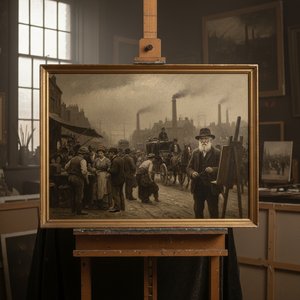
What truly distinguishes Wilton’s is its unique collection, which finds its essence not in static artifacts, but in the ephemeral beauty of performance itself. The hall remains a dedicated custodian of British music hall traditions, hosting everything from opera and puppetry to cabaret and magic. This dedication to the performing arts creates a continuous dialogue with art history, much like the works of Walter Richard Sickert, whose depictions of London interiors capture the psychological depth of urban life. To visit Wilton’s is to witness the very energy that inspired the masters of the era, seeing the same spirit of theatrical ambition that flows through canvases like his Gallery Box at Queen’s Hall .
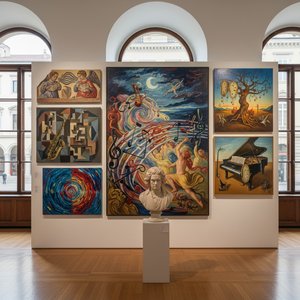
The cultural legacy of the venue is further enriched by its connection to the visual arts of the period. One cannot contemplate the hall without recalling the vibrant energy found in Everett Shinn’s London Music Hall , which captures the allure of urban entertainment with masterful brushstrokes. The hall also serves as a reminder of the era's fascination with popular culture, exemplified by the exquisite sheet music covers of Alfred Concanen, such as his 1882 depiction of Jenny Hill. Through its diverse programming and notable exhibitions—ranging from the delicate nuances of Impressionism to the dreamlike realms of Surrealism—Wilton’s continues to act as a vital conduit for artistic ideas, ensuring that the echoes of Victorian grandeur continue to resonate with contemporary audiences and collectors alike.