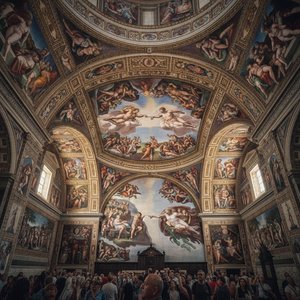


A Renaissance Heartbeat: Exploring San Giacomo Maggiore
Nestled within the vibrant tapestry of Bologna’s historic center, the Basilica di San Giacomo Maggiore stands as a testament to centuries of artistic evolution and spiritual devotion. More than just a church, it's a layered narrative etched in stone, paint, and intricate tilework – a captivating journey through Romanesque foundations, Gothic embellishments, and the radiant brilliance of the Renaissance. Founded initially as a humble hermitage in 1247, San Giacomo Maggiore has undergone transformations reflecting the shifting tides of Bolognese society and artistic trends, culminating in the magnificent structure we see today, consecrated in 1344.
The basilica’s architectural story is particularly compelling. It began with a Romanesque design, retaining a sturdy, almost austere quality that speaks to its early origins. However, over time, elements of Gothic style were incorporated – soaring arches, pointed windows, and intricate detailing – creating a harmonious blend of influences. A key moment in the basilica’s evolution arrived with the addition of a Renaissance dome by Antonio Morandi in the 16th century, dramatically altering the skyline and symbolizing a renewed artistic ambition. The portico, attributed to Tommaso Filippi, is an impressive example of late Romanesque architecture, boasting thirty-six Corinthian columns that draw the eye upwards towards the heavens.
Treasures Within: A Renaissance Chapel and Majolica Masterpiece
The true heart of San Giacomo Maggiore’s artistic legacy lies within its collection highlights. Undoubtedly, the Bentivoglio Chapel is a focal point, commissioned by the powerful Bentivoglio family between 1463 and 1468. This chapel represents a pinnacle of Renaissance art, showcasing a masterful blend of painting, sculpture, and decorative arts. The walls are adorned with frescoes by workshops led by Lorenzo Costa and Francesco Francia – scenes from the life of St. James, rendered in vibrant colors and imbued with a profound sense of realism. But it’s the Della Robbia majolica pavement that truly captivates; created in 1498, this intricate mosaic of glazed ceramic tiles depicts the family coat of arms, a testament to their patronage and a remarkable example of Renaissance craftsmanship.
Beyond the Bentivoglio Chapel, visitors can admire the Tomb of Anton Galeazzo Bentivoglio, sculpted by the renowned Jacopo della Quercia in 1438 – a poignant reminder of the family’s enduring presence. The Poggi Chapel offers another glimpse into Renaissance artistry, featuring works by Pellegrino Tibaldi, while the Oratory of Santa Cecilia houses frescoed panels by Francesco Francia, Lorenzo Costa, and Amico Aspertini, showcasing the diverse talents that shaped the basilica's artistic identity.
A Monastic Legacy and Architectural Context
San Giacomo Maggiore’s history is inextricably linked to the Augustinian friars who once called this space home. The monastery itself provides a fascinating backdrop to the art within, with cloisters dating back to the 15th and 16th centuries offering a serene escape from the bustling city streets. These cloisters, with their arched walkways and tranquil atmosphere, are a testament to the monastic life that once thrived here. The basilica’s location near Palazzo Malvezzi de' Medici further enriches its historical context, placing it within a broader narrative of Bolognese power and cultural influence.
Unique Experiences & A Journey Through Time
A visit to San Giacomo Maggiore is more than just an art appreciation experience; it’s an immersion in Italian religious history. The harmonious blend of architectural styles – Romanesque, Gothic, and Renaissance – creates a truly unique atmosphere, while the collection of masterpieces offers a tangible connection to the artistic geniuses who shaped the era. The basilica invites contemplation, offering a space for reflection amidst the beauty and grandeur of its surroundings. Don’t miss the opportunity to explore the Oratory of Santa Cecilia, a hidden gem within the monastery cloister, where you can marvel at the frescoes by masters like Francia and Costa.