Menu
BEZPLATNÉ UMĚLECKÉ PORADENSTVÍ

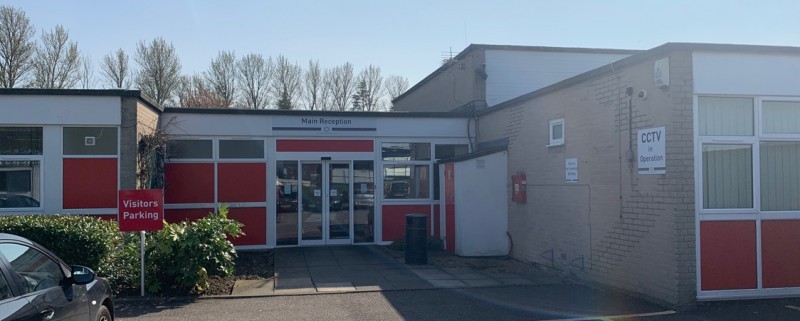
Hertfordshire Fire And Rescue Service Training And Development Centre

Základní informace

  • Alternate names: HFRS TDC
  • Movements: contemporary realism
  • Featured artists: paul lucien dessau
  • Works on APS: 1
  • Location: Stevenage, United Kingdom

Kvíz o umění

Pro každou otázku existuje pouze jedna správná odpověď.

Otázka 1:
What is the primary focus of the Hertfordshire Fire & Rescue Service Training and Development Centre?
Otázka 2:
The centre distinguishes itself by combining what two activities?
Otázka 3:
What type of artwork is featured at the centre?
Otázka 4:
How can visitors access the centre's facilities?

A Sanctuary of Service and Symbolism

In the heart of Stevenage, where the rigorous demands of modern emergency response meet the quiet reverence of historical preservation, lies the Hertfordshire Fire And Rescue Service Training And Development Centre. Far more than a mere instructional facility, this institution serves as a profound intersection of civic duty and artistic expression. It is a place where the chronicles of firefighting heritage are preserved through a curated lens, offering a rare glimpse into the evolution of community protection within the county. To step within its walls is to encounter a narrative that transcends simple training; it is an exploration of the very spirit of resilience that defines the Hertfordshire fire service, making it a destination of unexpected depth for those who find beauty in the intersection of history and utility.

The Art of Leadership and Legacy

The collection housed within this unique venue acts as a visual testament to the profound impact of leadership, most notably through its dedication to the memory of Chief Fire Officer G.V. Blackstone. One cannot traverse these halls without being arrested by the dignified presence of Paul Lucien Dessau’s oil portrait of Blackstone. A masterpiece of WWII-era realism, the painting captures not just a man, but an era, with meticulous attention to the medals and regalia that signify a lifetime of distinguished service. This sense of historical weight is beautifully contrasted by the contemporary contributions of Marilyn Martindale. Her work, prominently displayed, utilizes a sophisticated interplay of geometric forms and perhaps a muted, evocative palette to symbolize the structure and preparedness essential to the fire service. In her strokes, one finds an abstract representation of the unwavering commitment required to safeguard a community, making her art a vital, breathing component of the Centre’s architectural soul. For the interior designer or art lover, these pieces offer a masterclass in how commemorative art can embody the values of strength and stability.

A Chronological Tapestry of Bravery

The museum experience unfolds as a seamless journey through time, where the technological progression of firefighting is presented with the same care one might find in a gallery of industrial art. Visitors are invited to witness the metamorphosis of the service, tracing the lineage from the rudimentary, hand-pumped engines of the past to the highly sophisticated, modern appliances that define today’s response capabilities. This evolution is not merely a display of mechanical advancement but a story of human perseverance and adaptation. Alongside historical photographs and detailed illustrations, the exhibits illuminate the pivotal moments in local history, where bravery met innovation. For the collector or the historian, the Centre offers an inspiring study in how functional spaces can be transformed into repositories of culture, proving that even within the most practical of environments, the flame of artistic appreciation and historical memory continues to burn brightly.

