Portrét William Llewellyn

49 nejslavnějších obrazů autora William Llewellyn, každý naprosto unikátní

Aktualizováno listopad 2026 · seřazeno podle našeho skóre popularity (vyhledávání, návštěvy a objednávky u každého díla) · 63 děl umělce William Llewellyn v našem katalogu

Stručně řečeno

John Stone Wigg, Mayor of Tunbridge Wells (1889–1891) (1890) je obraz autora William Llewellyn, který přitahuje nejvíce pohledů; originál se nachází v Tunbridge Wells Museum And Art Gallery, Tunbridge Wells. Poté se zrak přesouvá k Christ crowned with thorns (1890) a Confirmation (1907). Z 63 děl umělce William Llewellyn v našem katalogu je těchto 49 těch nejznámějších; každé z nich je unikátním originálem s uvedením roku vzniku, muzea a důvodu jeho nesmrtelnosti.

1858 – 1941, London Nejvíce děl: Walker Art Gallery

Top 10 obrazů autora William Llewellyn podle výběru galerie

1
John Stone Wigg, Mayor of Tunbridge Wells (1889–1891) (1890) od William Llewellyn

John Stone Wigg, Mayor of Tunbridge Wells (1889–1891)

1890 · Oil On Canvas · Tunbridge Wells Museum And Art Gallery, Tunbridge Wells

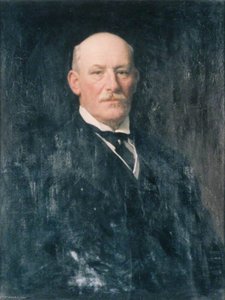
A man sits in the stillness of 1890. John Stone Wigg occupies a chair, his hands crossed in a gesture of quiet composure. He wears the heavy red robe of his office, a garment that holds the light and anchors him to the frame. The oil on canvas captures a moment of civic duty, frozen in the soft atmosphere of the late Victorian era. There is a stillness here, the…

2
Christ crowned with thorns (1890) od William Llewellyn

Christ crowned with thorns

1890 · Oil · National Library of Wales, Aberystwyth

This oil painting, executed in 1890, presents a close-up view of the upper torso and head of Christ. The figure is positioned slightly off-center, creating a sense of physical vulnerability. A single light source illuminates the subject, casting the face, shoulder, and hand in light while leaving the background and much of the body in deep shadow. This chiaroscuro effect establishes a strong sense of three-dimensionality. The color palette relies…

3
Confirmation (1907) od William Llewellyn

Confirmation

1907 · Oil · Auckland Art Gallery Toi o Tāmaki, Auckland

In the oil painting titled Confirmation by William Llewellyn, a young woman is presented in profile. She is dressed in bridal attire, characterized by a white gown and a translucent veil. The subject is positioned facing toward the right side of the frame, focused on a small book held in her hands. The scene is set against a muted background composed of olive greens, browns, and ochre tones.

4
Queen Mary (1867-1953) (1914) od William Llewellyn

Queen Mary (1867-1953)

1914 · Oil On Canvas · Royal Collection, Londýn

In this 1914 portrait, we encounter Queen Mary in a moment of profound stillness. The composition is vertical, positioning her with a stately presence that commands the space without needing to move. She is draped in a heavy navy velvet mantle, the deep tones of which provide a stark, dramatic contrast to the luminous white and silver of her gown. A hint of crimson red peeks through the lining of…

5
Sir William C. Gray (1867–1924) (1921) od William Llewellyn

Sir William C. Gray (1867–1924)

1921 · Oil On Canvas

This 1921 oil painting presents a formal bust-length portrait of Sir William C. Gray. The subject is positioned centrally, facing the viewer with a direct and steady gaze. He is dressed in formal attire consisting of a dark suit jacket, a vest, and a crisp white collar. The lighting is diffused, falling evenly across the planes of his face to define the contours of his features without creating deep shadows.…

6
Evening at Padstow, Cornwall (1890) od William Llewellyn

Evening at Padstow, Cornwall

1890 · Oil On Canvas

Evening at Padstow, Cornwall, by William Llewellyn, captures a bustling coastal harbor at dusk. Painted in 1890, the work focuses on the transitional light of the evening as it settles over the Cornish seaside. The scene centers on the activity surrounding a stone sea wall and the various vessels anchored in the water.

7
Landscape (1889) od William Llewellyn

Landscape

1889 · Oil

A solitary woman stands near a tree, her gaze directed toward an unseen point beyond the frame. The composition places her in the foreground, a human presence amidst a lush, verdant landscape. In the distance, a house is nestled among dense clusters of trees and open, grassy fields. A nearby pond reflects the stillness of the surroundings, contributing to a sense of profound tranquility. The scene captures a moment of…

8
Richard Thomas Wright, Secretary to the Syndicate (1892–1911) (1889) od William Llewellyn

Richard Thomas Wright, Secretary to the Syndicate (1892–1911)

1889 · Oil On Canvas · Cambridge University Press, Cambridge

In this 1889 portrait, we find ourselves in a private, contemplative space. The subject, Richard Thomas Wright, is captured in a moment of stillness, seated in a chair with his hands clasped. He is absorbed in a book resting upon his lap, his gaze directed toward the pages. A beard and mustache frame a face that suggests a life of intellect and steady purpose. The composition is intimate, placing the…

9
Christ Crowned with Thorns (1890) od William Llewellyn

Christ Crowned with Thorns

The heavy weight of history rests within Christ Crowned with Thorns, a work painted by William Llewellyn. Created around 1890, this oil painting captures a moment of profound stillness. The subject matter focuses on the themes of suffering, humility, and martyrdom, presenting a scene that feels deeply personal and immediate. Every detail of the figure invites a sense of quiet contemplation.

10
Alderman Thomas William Jacobs, Mayor of Cardiff (1887–1888) (1895) od William Llewellyn

Alderman Thomas William Jacobs, Mayor of Cardiff (1887–1888)

1895 · Oil

The painting depicts a man positioned centrally against a deep red background. He is shown from the chest up, facing the viewer with a steady, contemplative gaze. His hair is graying at the temples, and he possesses a full beard and mustache. He is dressed in a dark coat that features gold embroidery along the edges. Around his neck hangs a heavy chain of office, which includes a visible medallion.…

Slavná díla umělce William Llewellyn, čísla 11 až 49

11Field Marshal Sir George Stuart White (1835–1912), VC, OM (1893) od William LlewellynField Marshal Sir George Stuart White (1835–1912), VC, OM1893 12Old Whitby, North Yorkshire (1893) od William LlewellynOld Whitby, North Yorkshire1893 · Leeds Art Gallery 13Sir John Barnes, 1st Baron Gorrell (1848–1913), Judge (1896) od William LlewellynSir John Barnes, 1st Baron Gorrell (1848–1913), Judge1896 · Government Art Collection 14Sir Reginald Hardy (1848–1938), 2nd Bt, of Dunstall Park (1893) od William LlewellynSir Reginald Hardy (1848–1938), 2nd Bt, of Dunstall Park1893 · Staffordshire County Buildings Picture Collection 15Viscount Molyneux (1898–1972) (1903) od William LlewellynViscount Molyneux (1898–1972)1903 · Walker Art Gallery 16Sir Frederick Cawley (1850–1937), 1st Baron Cawley, MP od William LlewellynSir Frederick Cawley (1850–1937), 1st Baron Cawley, MPBerrington Hall 17Katherine Parr (c.1878–1966), Lady Herbert Archer Croft od William LlewellynKatherine Parr (c.1878–1966), Lady Herbert Archer Croft 18Sir Harcourt Everard Clare (1916) od William LlewellynSir Harcourt Everard Clare1916 19Irene Elizabeth Miller Mundy (d.1937), Countess of Enniskillen (1916) od William LlewellynIrene Elizabeth Miller Mundy (d.1937), Countess of Enniskillen1916 · Florence Court 20Queen Mary (1867–1953) (1912) od William LlewellynQueen Mary (1867–1953)1912 · Walker Art Gallery 21Gwendoline (d.1929), 14th Countess of Lauderdale (1913) od William LlewellynGwendoline (d.1929), 14th Countess of Lauderdale1913 22Herbert Francis Eaton (1848–1925), Lord Cheylesmore (1914) od William LlewellynHerbert Francis Eaton (1848–1925), Lord Cheylesmore1914 · Guildhall Art Gallery 23Ethel Mary (1891–1970), 15th Countess of Lauderdale (1913) od William LlewellynEthel Mary (1891–1970), 15th Countess of Lauderdale1913 24Anthony Bowlby (1855–1929), 1st Bt, KCB, KCMG, KCVC (1921) od William LlewellynAnthony Bowlby (1855–1929), 1st Bt, KCB, KCMG, KCVC1921 · St Bartholomew’s Hospital Museum And Archive 25Mary (1867–1953), Queen Consort of George V (1919) od William LlewellynMary (1867–1953), Queen Consort of George V1919 · The Queen's College 26Henry Thomas Hare (1861–1921), PRIBA (1919) od William LlewellynHenry Thomas Hare (1861–1921), PRIBA1919 · Riba Library Drawings And Archives Collections 27Sir Aston Webb (1921) od William LlewellynSir Aston Webb1921 28Sir William Davison (1872–1953), MP (1919) od William LlewellynSir William Davison (1872–1953), MP1919 29William Coles Pendarves (b.1841), JP, Chairman of the Council (1907–1919) (1918) od William LlewellynWilliam Coles Pendarves (b.1841), JP, Chairman of the Council (1907–1919)1918 · New County Hall 30Sir Aston Webb (1849–1930) (1921) od William LlewellynSir Aston Webb (1849–1930)1921 31Sir Evan Williams (1923) od William LlewellynSir Evan Williams1923 · Amgueddfa Cymru - National Museum of Wales 32The Bishop of Llandaff (1925) od William LlewellynThe Bishop of Llandaff1925 33Sir Ralph William Anstruther of Balcaskie (1858–1934), 6th Bt (1924) od William LlewellynSir Ralph William Anstruther of Balcaskie (1858–1934), 6th Bt1924 · Cupar County Buildings 34Robert Lloyd Kenyon (1848–1931) (1928) od William LlewellynRobert Lloyd Kenyon (1848–1931)1928 · Ludlow Museum Resource Centre 35David Lythel Hewitt, Mayor of Chester (1909–1910 1924) (1926) od William LlewellynDavid Lythel Hewitt, Mayor of Chester (1909–1910 1924)1926 · Chester Town Hall 36Sir David Mason, Lord Provost of Glasgow (1930) od William LlewellynSir David Mason, Lord Provost of Glasgow1930 · Glasgow Art Gallery and Museum 37Sir Alexander Grant (1864–1937) (1935) od William LlewellynSir Alexander Grant (1864–1937)1935 38Sailing at Blakeney (1938) od William LlewellynSailing at Blakeney1938 39Dubrovnik (Ragusa) Harbour (1938) od William LlewellynDubrovnik (Ragusa) Harbour1938 · Grundy Art Gallery 40The Right Honourable Lord Ashcombe (1939) od William LlewellynThe Right Honourable Lord Ashcombe1939 41A winter night od William LlewellynA winter night 42Sir Frederick Cawley od William LlewellynSir Frederick Cawley 43Pembroke Castle od William LlewellynPembroke Castle 44Sir Hugh Reid od William LlewellynSir Hugh ReidGlasgow Art Gallery and Museum 45Lady Edith Villiers (1878–1935), Wearing a Blue Satin Gown od William LlewellynLady Edith Villiers (1878–1935), Wearing a Blue Satin Gown 46Florence Piercy, Mrs Goddard (d.c.1956) od William LlewellynFlorence Piercy, Mrs Goddard (d.c.1956) 47James Bell Irvine (1859–1936) od William LlewellynJames Bell Irvine (1859–1936) 48Charlotte Anne Elizabeth Moberley (1846–1937), Principal (1886–1915) od William LlewellynCharlotte Anne Elizabeth Moberley (1846–1937), Principal (1886–1915)st Hugh's College 49Professor William Stroud, MA, DSc, Cavendish Professor of Physics at the University of Leeds (1885–1901) od William LlewellynProfessor William Stroud, MA, DSc, Cavendish Professor of Physics at the University of Leeds (1885–1901)The Stanley - Audrey Burton Gallery

Slavná díla William Llewellyn podle jednotlivých období

Motivy, které zaujaly William Llewellyn

Čtyři témata, která se v těchto originálech nejčastěji objevují, z nichž každé má svůj nejlepší příklad.

Muzea, v nichž jsou vystavena originálna umělce William Llewellyn

8 muzea, v nichž je umístěno nejvíce obrazů z této stránky.

Muzeum Město Díla autora William Llewellyn Obrazy z tohoto seznamu
Walker Art Gallery, LiverpoolWalker Art Gallery Liverpool 2 Viscount Molyneux (1898–1972), Queen Mary (1867–1953)
Glasgow Art Gallery and Museum, GlasgowGlasgow Art Gallery and Museum Glasgow 2 Sir David Mason, Lord Provost of Glasgow, Sir Hugh Reid
Tunbridge Wells Museum And Art Gallery, Tunbridge WellsTunbridge Wells Museum And Art Gallery Tunbridge Wells 1 John Stone Wigg, Mayor of Tunbridge Wells (1889–1891)
National Library of Wales, AberystwythNational Library of Wales Aberystwyth 1 Christ crowned with thorns
Auckland Art Gallery Toi o Tāmaki, AucklandAuckland Art Gallery Toi o Tāmaki Auckland 1 Confirmation
Royal Collection, LondýnRoyal Collection Londýn 1 Queen Mary (1867-1953)
Cambridge University Press, CambridgeCambridge University Press Cambridge 1 Richard Thomas Wright, Secretary to the Syndicate (1892–1911)
Llyfrgell Genedlaethol Cymru / The National Library of Wales, AberystwythLlyfrgell Genedlaethol Cymru / The National Library of Wales Aberystwyth 1 Christ Crowned with Thorns

William Llewellyn napříč desetiletími: jeden unikátní originál pro každou dekádu

Díla podle dekád

Vyberte si dekádu a prohlédněte si originál, který ji definuje.

Obrazy umělce William Llewellyn: dotazy pro galerii

Kterým nejznámějším dílem je William Llewellyn?Odhalit odpověď

John Stone Wigg, Mayor of Tunbridge Wells (1889–1891) (1890), Tunbridge Wells Museum And Art Gallery, Tunbridge Wells. Následují Christ crowned with thorns (1890) a Confirmation (1907).

V jakém věku vytvořil(a) William Llewellyn dílo John Stone Wigg, Mayor of Tunbridge Wells (1889–1891)?Odhalit odpověď

32 let: dílo John Stone Wigg, Mayor of Tunbridge Wells (1889–1891) pochází z roku 1890 a William Llewellyn se narodil/a v roce 1858.

Kterých deset obrazů autora William Llewellyn je nejznámějších?Odhalit odpověď

John Stone Wigg, Mayor of Tunbridge Wells (1889–1891), Christ crowned with thorns, Confirmation, Queen Mary (1867-1953), Sir William C. Gray (1867–1924), Evening at Padstow, Cornwall, Landscape, Richard Thomas Wright, Secretary to the Syndicate (1892–1911), Christ Crowned with Thorns a Alderman Thomas William Jacobs, Mayor of Cardiff (1887–1888). Hodnocení výše uvádí rok a muzeum pro každé z nich.

Kolik známých děl má autor William Llewellyn?Odhalit odpověď

Náš katalog obsahuje 63 děl umělce William Llewellyn z let 1889 až 1939.

Kde lze vidět nejznámější originály umělce William Llewellyn?Odhalit odpověď

Většinou v Walker Art Gallery (Liverpool), Glasgow Art Gallery and Museum (Glasgow) a Tunbridge Wells Museum And Art Gallery (Tunbridge Wells). V tabulce muzeí výše jsou vypsány všechny.

V jakém období vytvořil(a) William Llewellyn svá nejznámější obrazy?Odhalit odpověď

V období 1910s: 11 z celkem 49 děl na této stránce vzniklo právě tehdy, z toho Queen Mary (1867-1953) z nich.

Který slavný obraz od William Llewellyn je nejstarší a který nejnovější?Odhalit odpověď

Na této stránce je nejstarší dílo z Landscape (1889) a nejnovější z The Right Honourable Lord Ashcombe (1939).

Jakým tématům se William Llewellyn věnoval/a nejčastěji?Odhalit odpověď

Man (29), Chair (14) a Suit (13) napříč 49 díly na této stránce.

Jaké materiály používal(a) William Llewellyn nejčastěji?Odhalit odpověď

Oil On Canvas, u 29 z 49 děl na této stránce.

Jaká originální díla William Llewellyn mohu vidět v Walker Art Gallery?Odhalit odpověď

Viscount Molyneux (1898–1972) a Queen Mary (1867–1953): muzeum Walker Art Gallery, Liverpool má v obsluze 2 děl z této stránky.

William Llewellyn: portrét umělce

The Visionary Legacy of Sir Samuel Henry William Llewellyn

In the grand tapestry of late 19th and early 20th-century British art, few figures command as much quiet authority as Sir Samuel Henry William Llewellyng. Born on December 1st, 1858, in the picturesque setting of Cirencester, Gloucestershire, Llewellyn emerged from a lineage of precision and engineering, a heritage inherited from his father, Samuel Llewellyn. This early exposure to the meticulous nature of structural design would later manifest in his breathtakingly detailed canvases. While he is often celebrated for his monumental biblical landscapes that evoke a sense of profound spiritual reverence, his artistry was far more expansive, encompassing a mastery of portraiture and serene coastal scenes that captured the very essence of the British landscape.

Llewellyn’s artistic journey was one of continuous refinement and international exposure. His education took him from the rigorous academic training at the National Art Training School in South Kensington under Edward Poynter to the vibrant, light-drenched ateliers of Paris. Immersing himself in the works of masters such as Fernand Cormon, Jules Joseph Lefebvre, and Gabriel Ferrier, he absorbed the sophisticated techniques of the French school. This period was transformative; it allowed him to blend the disciplined precision of the Victorian academic tradition with a more expressive, atmospheric approach to light and color. His time in Germany, particularly his encounter with the burgeoning Impressionist movement, further enriched his palette, teaching him to capture the fleeting, ephemeral qualities of nature that would later breathe life into his religious compositions.

A Master of Light, Spirit, and Portraiture

The true brilliance of Llewellyn’s work lies in his ability to bridge the gap between the earthly and the divine. His biblical landscapes, such as “The Nativity” and “The Sermon on the Mount,” are not merely historical recreations but spiritual experiences rendered in oil. Through a masterful use of dramatic lighting and rich, textured brushwork, he imbued these sacred scenes with a palpable sense of awe. He possessed a rare gift for using atmospheric haze and soft, golden hues to suggest the presence of the miraculous within the natural world, making the landscapes themselves feel like characters in a divine narrative.

Beyond the spiritual realm, Llewellyn was a formidable portraitist, capable of capturing the psychological depth and social stature of his subjects. His ability to render texture—the heavy drape of a velvet robe or the weathered skin of an elderly gentleman—is evident in works like “Professor William Stroud.” His prestige was such that he was commissioned by King George V to paint the State Portrait of H.M. Queen Mary in 1912, a testament to his standing at the pinnacle of the British art establishment. Whether depicting the rugged coastlines of Cornwall in “Evening at Padstow” or the dignified presence of an admiral in “Sir Reginald Hardy,” Llewellyn’s hand was always marked by an unwavering commitment to academic excellence and emotional resonance.

Ascension within the Royal Academy and Historical Significance

Llewellyn’s career was defined by a series of prestigious milestones that saw him ascend to the highest echelons of the art world. After his first exhibition at the Royal Academy in 1884, he became a perennial presence in the most esteemed galleries of London and beyond, including the Grosvenor Gallery and the New English Art Club. His influence was not merely through his brush, but through his leadership; serving as the President of the Royal Academy from 1928 to 1938, he guided the direction of British art during a period of significant transition. His contributions were recognized with numerous honors, including the Albert Medal from the Royal Society of Arts in 1933 and a knighthood for his immense services to the arts.

Today, the legacy of Sir Samuel Henry William Llewellyn lives on through the many works held in prestigious national collections across the United Kingdom. His ability to synthesize the meticulousness of the Victorian era with the emotive power of modern light ensures that his paintings remain timeless. He remains a pivotal figure who bridged the gap between the rigid traditions of the past and the expressive possibilities of the future, leaving behind a body of work that continues to inspire wonder and contemplation in all who behold it.