Portrét Wilhelm Bendz

Obrazy autora Wilhelm Bendz: 36 nejznámějších díel podle pohledu galerie

Aktualizováno listopad 2026 · seřazeno podle našeho skóre popularity (vyhledávání, návštěvy a objednávky u každého díla) · 37 děl umělce Wilhelm Bendz v našem katalogu

Stručně řečeno

Z pohledu galerie je nejslavnějším dílem Wilhelm Bendz obrazem The German Painter Marcus Johann Heaselich (1831), jehož originál je vystaven v Statens Museum for Kunst v obci Kodaň. Countess Sophia Vilhelmine Moltke, née Levetzau (1831) a A Smoking Party (1828) doplňují trio, které každé oko okamžitě pozná. Z 37 děl umělce Wilhelm Bendz v našem katalogu představuje galerie níže 36 nejznámějších děl, z nichž každé je originálem s uvedením roku vzniku, muzea a toho, co jej činí jedinečným.

1804 – 1832, Odense Danish golden age Nejvíce děl: Statens Museum for Kunst

Top 10 obrazů umělce Wilhelm Bendz v naší galerii

1
The German Painter Marcus Johann Heaselich (1831) od Wilhelm Bendz

The German Painter Marcus Johann Heaselich

1831 · Oil On Paper · Statens Museum for Kunst, Kodaň

The light catches the side of a man's face, pulling him out of a deep, shadowy background. He sits in a moment of stillness, his gaze drifting toward the left of the frame as if lost in a thought that has nothing to do with the viewer. This is Marcus Johann Heaselich, captured in a way that feels less like a formal sitting and more like a sudden, fleeting glimpse…

2
Countess Sophia Vilhelmine Moltke, née Levetzau (1831) od Wilhelm Bendz

Countess Sophia Vilhelmine Moltke, née Levetzau

1831 · Oil · Nationalmuseum, Stockholm

The gaze of Countess Sophia Vilhelmine Moltke, née Levetzau, meets the viewer from within this 1831 portrait by Wilhelm Bendz. She sits with a quiet, composed dignity that speaks of her high social standing and noble lineage. Every detail of her presence suggests a moment of stillness in a life of structured elegance. The subject remains poised, her expression carrying an air of calm authority that defines her character.

3
A Smoking Party (1828) od Wilhelm Bendz

A Smoking Party

1828 · Oil On Canvas · Ny Carlsberg Glyptotek, Kodaň

by Wilhelm Bendz offers a glimpse into a private social gathering within a Copenhagen home during the Golden Age. Created about 1828, the work functions as an all-male genre grouping of tobacco addicts with a musical bent. The scene captures a moment of leisure and conversation among a circle of friends.

4
The Visit of the Beggar to the Artist (1829) od Wilhelm Bendz

The Visit of the Beggar to the Artist

1829 · Oil On Panel

In "The Visit of the Beggar to the Artist" by Wilhelm Bendz, we find ourselves observing a quiet, domestic interior from the early 19th century. The composition is vertically oriented, utilizing a doorway as a framing device to create a sense of depth and a transition between different spaces. This structural choice draws the eye toward the central narrative: an elderly woman and a young child entering a room, seemingly…

5
portrait of the painter Niels Peter Holbech (1824) od Wilhelm Bendz

portrait of the painter Niels Peter Holbech

1824 · Oil On Canvas · Fuglsang Art Museum, Guldborgsund

In the portrait of the painter Niels Peter Holbech, Wilhelm Bendz utilizes a vertical medium shot to position the subject slightly off-center to the left. The young man, characterized by wavy brown hair, leans against a desk within the quiet confines of an artist's studio. He is dressed in a black waistcoat worn over a voluminous white shirt and a dark necktie. To the right, an anatomical sculpture provides a…

6
The German Painter Heinrich Marr (1832) od Wilhelm Bendz

The German Painter Heinrich Marr

1832 · Oil On Canvas · Statens Museum for Kunst, Kodaň

The German Painter Heinrich Marr is a portrait by the Danish artist Wilhelm Bendz. This work captures the likeness of the German painter Heinrich Marr, a man whose presence is fixed within the frame. The artist, Wilhelm Bendz, rendered this image about 1832, a period marking the final chapter of his own creative life.

7
Christian IV på "Trefoldigheden" i slaget på Koldberger Heide 1644 (1828) od Wilhelm Bendz

Christian IV på "Trefoldigheden" i slaget på Koldberger Heide 1644

1828 · Oil · Statens Museum for Kunst, Kodaň

The composition is vertical and dynamic, organized around a pyramidal arrangement of figures that directs the eye from the fallen soldiers in the foreground toward a central protagonist. This central figure, King Christian IV, is positioned amidst a chaotic battle scene, his stature enhanced by a low-angle perspective. The scene depicts the naval and land-based turmoil of the Battle of Koldby Heath in 1644, specifically focusing on the King's presence…

8
Portræt af jomfru Nissen (1825) od Wilhelm Bendz

Portræt af jomfru Nissen

1825 · Oil · Statens Museum for Kunst, Kodaň

In Portræt af jomfru Nissen, Wilhelm Bendz presents a formal and dignified oil portrait of an elderly woman. The composition is a centered, bust-length study that focuses entirely on the subject's presence. She is positioned against a dark, muted background, which allows the viewer to focus on the quiet strength of her features. The color palette is dominated by deep, desaturated tones, creating a somber and classical atmosphere that feels…

10
Young Pan in a Grotto. Model (1825) od Wilhelm Bendz

Young Pan in a Grotto. Model

1825 · Oil On Canvas · Statens Museum for Kunst, Kodaň

This oil on canvas painting, titled Young Pan in a Grotto. Model, was executed by the Danish artist Wilhelm Bendz in 1825. It represents a significant moment in the artist's early development, created during a period when he was refining his command of classical and mythological themes. The work captures a specific, quiet moment of repose, moving away from the genre scenes for which he would later become widely recognized.

Obrazy autora Wilhelm Bendz, seřazeny od 11 do 36

11Male Model (1824) od Wilhelm BendzMale Model1824 · Statens Museum for Kunst 12Self-Portrait (1825) od Wilhelm BendzSelf-Portrait1825 · Statens Museum for Kunst 13The Raffenberg Family (1830) od Wilhelm BendzThe Raffenberg Family1830 · Statens Museum for Kunst 14Cathrine von Halle, née Nathanson (1830) od Wilhelm BendzCathrine von Halle, née Nathanson1830 · Statens Museum for Kunst 15Dame med strikketøj. En af kunstnerens søstre (?) (1827) od Wilhelm BendzDame med strikketøj. En af kunstnerens søstre (?)1827 · Statens Museum for Kunst 16Unknown Young Gentleman (1831) od Wilhelm BendzUnknown Young Gentleman1831 · Statens Museum for Kunst 17Marie Raffenberg, the Artist's Betrothed (1831) od Wilhelm BendzMarie Raffenberg, the Artist's Betrothed1831 · Statens Museum for Kunst 18The Actor Christoffer Hvid (1826) od Wilhelm BendzThe Actor Christoffer Hvid1826 · Statens Museum for Kunst 19The German Painter Herman Kaufmann (1831) od Wilhelm BendzThe German Painter Herman Kaufmann1831 · Statens Museum for Kunst 20A Sculptor in his Studio Working from the Life (1827) od Wilhelm BendzA Sculptor in his Studio Working from the Life1827 · Statens Museum for Kunst 21Interior with women and children around a table. (1827) od Wilhelm BendzInterior with women and children around a table.1827 22Outside the Odense poorhouse. (1831) od Wilhelm BendzOutside the Odense poorhouse.1831 · Hirschsprung Collection 23Portrait of a young man with a Phrygian cap (1825) od Wilhelm BendzPortrait of a young man with a Phrygian cap1825 · Ny Carlsberg Glyptotek 24Artists in Finck's Coffee House (1832) od Wilhelm BendzArtists in Finck's Coffee House1832 · Thorvaldsen Museum 25Portrait of the German Painter Wilhelm von Kaulbach (1832) od Wilhelm BendzPortrait of the German Painter Wilhelm von Kaulbach1832 · Statens Museum for Kunst 26Portrait of a girl in a black dress sitting at table (1837) od Wilhelm BendzPortrait of a girl in a black dress sitting at table1837 · Statens Museum for Kunst 27Portrait of a Man od Wilhelm BendzPortrait of a ManFitzwilliamovo muzeum 28A Coach House. Partenkirchen (1831) od Wilhelm BendzA Coach House. Partenkirchen1831 · Statens Museum for Kunst 29Parti ved Odense kanal (1825) od Wilhelm BendzParti ved Odense kanal1825 · Statens Museum for Kunst 30Mountain landscape (1831) od Wilhelm BendzMountain landscape1831 · Hirschsprung Collection 31The Church of Ramsau (1832) od Wilhelm BendzThe Church of Ramsau1832 · The Ashmolean Museum of Art and Archaeology 32Study of Light in a Vaulted Interior od Wilhelm BendzStudy of Light in a Vaulted Interior 33Portrait of a Woman od Wilhelm BendzPortrait of a WomanFitzwilliamovo muzeum 34A Young Artist (Ditlev Blunck) Examining a Sketch in a Mirror (1826) od Wilhelm BendzA Young Artist (Ditlev Blunck) Examining a Sketch in a Mirror1826 · Statens Museum for Kunst 35Familien Waagepetersen (1830) od Wilhelm BendzFamilien Waagepetersen1830 · Statens Museum for Kunst 36Interior from Amaliegade. Captain Carl Ludvig Bendz standing and Dr. Jacob Christian Bendz seated (1829) od Wilhelm BendzInterior from Amaliegade. Captain Carl Ludvig Bendz standing and Dr. Jacob Christian Bendz seated1829 · Hirschsprung Collection

Slavná díla Wilhelm Bendz podle jednotlivých období

Motivy, které zaujaly Wilhelm Bendz

Čtyři témata, která se v těchto originálech nejčastěji objevují, z nichž každé má svůj nejlepší příklad.

Muzea, v nichž jsou vystavena originálna umělce Wilhelm Bendz

8 muzea, v nichž je umístěno nejvíce obrazů z této stránky.

Muzeum Město Díla autora Wilhelm Bendz Obrazy z tohoto seznamu
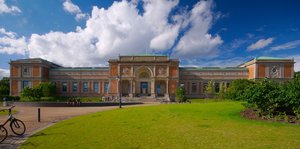
Statens Museum for Kunst, KodaňStatens Museum for Kunst Kodaň 22 The German Painter Marcus Johann Heaselich, The German Painter Heinrich Marr, Christian IV på "Trefoldigheden" i slaget på Koldberger Heide 1644
Hirschsprung Collection, KodaňHirschsprung Collection Kodaň 3 Outside the Odense poorhouse., Mountain landscape, Interior from Amaliegade. Captain Carl Ludvig Bendz standing and Dr. Jacob Christian Bendz seated
Ny Carlsberg Glyptotek, KodaňNy Carlsberg Glyptotek Kodaň 2 A Smoking Party, Portrait of a young man with a Phrygian cap
Fitzwilliamovo muzeum, CambridgeFitzwilliamovo muzeum Cambridge 2 Portrait of a Man, Portrait of a Woman
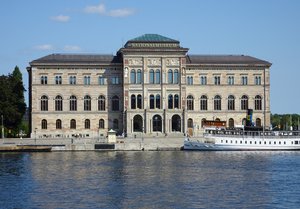
Nationalmuseum, StockholmNationalmuseum Stockholm 1 Countess Sophia Vilhelmine Moltke, née Levetzau
Fuglsang Art Museum, GuldborgsundFuglsang Art Museum Guldborgsund 1 portrait of the painter Niels Peter Holbech
Thorvaldsen Museum, KodaňThorvaldsen Museum Kodaň 1 Artists in Finck's Coffee House
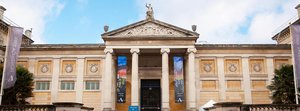
The Ashmolean Museum of Art and Archaeology, OxfordThe Ashmolean Museum of Art and Archaeology Oxford 1 The Church of Ramsau

Wilhelm Bendz, ikonická díla každého roku

Deset let, od 1824 do 1832, bylo pro Wilhelm Bendz dostatečných: galerie je prochází rok po roce, jeden slavný originál za druhým.

Díla podle roku

Vyberte rok a prohlédněte si originály.

Obrazy umělce Wilhelm Bendz: odpovědi galerie

Který obraz autora Wilhelm Bendz je nejslavnější ze všech?Odhalit odpověď

The German Painter Marcus Johann Heaselich (1831), Statens Museum for Kunst, Kodaň. Následují Countess Sophia Vilhelmine Moltke, née Levetzau (1831) a A Smoking Party (1828).

Kolik let bylo Wilhelm Bendz, když dokončil/a The German Painter Marcus Johann Heaselich?Odhalit odpověď

27 let: dílo The German Painter Marcus Johann Heaselich pochází z roku 1831 a Wilhelm Bendz se narodil/a v roce 1804.

Kterých 10 nejlepších obrazů má Wilhelm Bendz?Odhalit odpověď

The German Painter Marcus Johann Heaselich, Countess Sophia Vilhelmine Moltke, née Levetzau, A Smoking Party, The Visit of the Beggar to the Artist, portrait of the painter Niels Peter Holbech, The German Painter Heinrich Marr, Christian IV på "Trefoldigheden" i slaget på Koldberger Heide 1644, Portræt af jomfru Nissen, The Life Class at the Royal Academy of Fine Arts a Young Pan in a Grotto. Model. Hodnocení výše uvádí rok a muzeum pro každé z nich.

Kolik děl vytvořil/a Wilhelm Bendz?Odhalit odpověď

Náš katalog obsahuje 37 děl umělce Wilhelm Bendz z let 1824 až 1832.

Kde jsou vystavena nejznámější originály umělce Wilhelm Bendz?Odhalit odpověď

Většinou v Statens Museum for Kunst (Kodaň), Hirschsprung Collection (Kodaň) a Ny Carlsberg Glyptotek (Kodaň). V tabulce muzeí výše jsou vypsány všechny.

Kdy Wilhelm Bendz vytvořil své nejslavnější obrazy?Odhalit odpověď

V období 1831: 8 z celkem 36 děl na této stránce vzniklo právě tehdy, z toho The German Painter Marcus Johann Heaselich z nich.

Která jsou nejstarší a nejnovější slavná díla umělce Wilhelm Bendz?Odhalit odpověď

Na této stránce je nejstarší dílo z portrait of the painter Niels Peter Holbech (1824) a nejnovější z The German Painter Heinrich Marr (1832).

Kterým tématům se Wilhelm Bendz věnoval(a) nejčastěji?Odhalit odpověď

Man (14), Woman (11) a Portrait (10) napříč 36 díly na této stránce.

V jaké technice tvořil(a) Wilhelm Bendz nejčastěji?Odhalit odpověď

Oil On Canvas, u 19 z 36 děl na této stránce.

S jakým směrem je spojen(a) Wilhelm Bendz?Odhalit odpověď

Danish golden age, podle originálů na této stránce.

Jaká originální díla Wilhelm Bendz má v obsluze Statens Museum for Kunst?Odhalit odpověď

The German Painter Marcus Johann Heaselich, The German Painter Heinrich Marr a Christian IV på "Trefoldigheden" i slaget på Koldberger Heide 1644: muzeum Statens Museum for Kunst, Kodaň má v obsluze 22 děl z této stránky.

Wilhelm Bendz: umělec

Wilhelm Ferdinand Bendz: Krátký životopis

Narození: 20. března 1804, Odense, Dánsko
Úmrtí: 14. listopadu 1832, Vicenza, Rakouské impérium (dnešní Itálie)
Národnost: Dánská
Umělecké smetění: Dánské zlaté období

Raný život a umělecké vzdělání

Wilhelm Bendz se narodil ve Odense na dánském ostrově Fén. Již v raném věku projevoval mimořádný umělecký talent, který ho rychle dovedl do Kodaně, kde podstoupil formální umělecké vzdělání.
Mezi lety 1820 až 1825 studoval na Královské dánské akademii výtvarných umění pod vedením Christoffera Wilhelma Eckersberga, což byl klíčový představitel dánského malířství.
V roce 1825 se Bendz pokusil o získání prestižního zlatého medailonu za historické malování, ale jeho snaha neuspěla. Tato zkušenost jej však neporazila; místo toho se jeho zájmy začaly ubírat směrem k portrétnímu umění a žánrovým scénám.
Je velmi pravděpodobné, že jeho umělecký styl byl hluboce ovlivněn tehdejší německou malbou, zejména Mnichovskou školou, která zásadně formovala jeho budoucí tvůrčí vizi.

Kariérní vrcholy a umělecký rozvoj

Po ukončení studia začal Bendz pravidelně vystavovat v Charlottenborgu, kde si díky svým dílům vybudoval uznání. Královská malířská sbírka získala několik jeho obrazů, mezi které patří například „Modelová třída na umělecké akademii“, „Mladý umělec hledící na náčrt skrze zrcadlo“ a „Sochař pracující s živým modelem“. Jeho cesta k mistrovství byla podbarvena prací v ateliéru Eckersberga, kde působil jako asistent a věnoval se úkolům, jako bylo rekonstruování historických obrazů či vytváření jejich kopií.

Zlomový okamžik nastal v roce 1830, kdy Bendz získal stipendium na cestování, které mu umožnilo przeměřit Jižní Evropu. Cerca roku strávil v Mnichově, jež byl v té době pulzujícím uměleckým centrem. Jeho nejvýznamnějším dílem z tohoto období se stalo „Umělec večer v Mnichově v Finckově kavárně“, které funguje jako grupový portrét odhalující jeho neustále se vyvíjející styl a mimořádné schopnosti pozorování reality.

Artistic Style and Influences

Umělecký styl a vlivy
Bendz byl hluboce ovlivněn tvůrcem Christofferem Wilhelmem Eckersbergem, od něhož převzal důraz na přímou observaci, precizní vykreslování detailů a naprostou jasnost kompozice. Významnou roli v utváření jeho umělecké vize odehrála také Mnichovská škola, která mu pomohla definovat jeho unikátní pohled na svět.

Jeho malby jsou charakteristické sofistikovaným využitím světla, komplexními kompozicemi a realistickým ztvárněním každodenního života, zejména v scénách zachycujících umělce a jejich kolegy. Bendz vynikal především při zachycování interiérů, ke kterým přistupoval s neuvěřitelnou pečlivostí a citlivostí pro hru světla a stínu.

V jeho díle je patrná technická virtuozita, kterou demonstroval především při vykreslování světelných zdrojů a vznikajících stínů, což svým způsobem dodávalo jeho pracím hloubku a nevídaný realismus.

Odkaz a historický význam

I když byla jeho umělecká dráha relativně krátká a přerušena předčasným úmrtím ve věku 28 let, Wilhelm Bendz zůstává v dějinách umění zapamatován jako jeden z nejtalentovanějších umělců své generace. Jeho díla nejsou pouze estetickými unikáty, ale nabízejí i cenný pohled do uměleckých kroužků a každodenního života dánských malířů během Zlatého věku.

Bendzova schopnost mistrsky propojovat portrétní malbu, žánrové scény a alegorické prvky dokazuje jeho velkou uměleckou ambici a neuvěřitelnou všestrannost. Klíčová díla, jako například „Umělec večer v Mnichově kavárně Finck“, jsou i dnes předmětem obdivu díky své technické dokonalosti a intimnímu, hluboce lidskému zobrazení uměleckého života.