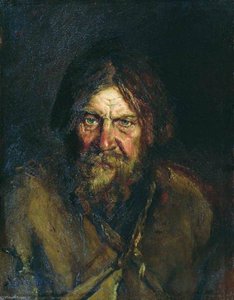
Portrét Vasilij Maximov

Obrazy autora Vasilij Maximov: 24 nejznámějších díel podle pohledu galerie

Aktualizováno listopad 2026 · seřazeno podle našeho skóre popularity (vyhledávání, návštěvy a objednávky u každého díla) · 24 děl umělce Vasilij Maximov v našem katalogu

Stručně řečeno

Z pohledu galerie je nejslavnějším dílem Vasilij Maximov obrazem The Diploma (1890), jehož originál je vystaven v Poltava Regional Art Museum v obci Poltava. Russian Hut Interior (1872) a Dividing the Property (1876) doplňují trio, které každé oko okamžitě pozná. Z 24 děl umělce Vasilij Maximov v našem katalogu představuje galerie níže 24 nejznámějších děl, z nichž každé je originálem s uvedením roku vzniku, muzea a toho, co jej činí jedinečným.

1844 – 1911, Lopino Nejvíce děl: Tretyakovská galerie

Top 10 obrazů umělce Vasilij Maximov v naší galerii

1
The Diploma (1890) od Vasilij Maximov

The Diploma

1890 · Oil On Canvas · Poltava Regional Art Museum, Poltava

A Quiet Interior The Diploma Two women occupy a domestic space, their presence defined by a stillness that permeates the room. On the left, one woman is absorbed in a book, her attention fixed upon the printed page. Beside her, the second woman watches, her gaze directed toward her companion. They sit in chairs positioned near one another, framed by the quiet geometry of a lived-in room. A window behind…

2
Russian Hut Interior (1872) od Vasilij Maximov

Russian Hut Interior

1872 · Oil · Finnish National Gallery, Helsinki

The oil painting depicts the interior of a Russian hut, defined by a heavy use of chiaroscuro. A large masonry stove, known as a pech, occupies the left side of the frame. This stove acts as the primary light source, emitting a warm, orange and yellow glow from its embers. This localized light falls upon a young woman seated in close proximity to the heat. The rest of the room…

3
Dividing the Property (1876) od Vasilij Maximov

Dividing the Property

1876 · Oil On Canvas

In "Dividing the Property," Vassily Maximov captures a heavy moment of human friction. Painted about 1876, this oil painting focuses on the stark, unvarnished realities of peasant life. A group of individuals is gathered within a dim, rustic interior, their bodies clustered around a table. They are locked in a tense and serious discussion, their faces etched with the weight of a difficult decision. The air in the room feels…

Obrazy autora Vasilij Maximov, seřazeny od 11 do 24

Motivy, které zaujaly Vasilij Maximov

Čtyři témata, která se v těchto originálech nejčastěji objevují, z nichž každé má svůj nejlepší příklad.

Muzea, v nichž jsou vystavena originálna umělce Vasilij Maximov

8 muzea, v nichž je umístěno nejvíce obrazů z této stránky.

Muzeum Město Díla autora Vasilij Maximov Obrazy z tohoto seznamu
Tretyakovská galerie, MoskvaTretyakovská galerie Moskva 3 A Sorcerer Comes to a Peasant Wedding, All in the past, Sick Husband
Finnish National Gallery, HelsinkiFinnish National Gallery Helsinki 2 Russian Hut Interior, Sledge, study
National Art Museum of The Republic of Belarus, MinskNational Art Museum of The Republic of Belarus Minsk 2 The Little Mechanic, The Future Artist
Irkutsk Regional Art Museum, IrkutskIrkutsk Regional Art Museum Irkutsk 2 Like the Adults, Frugal Dinner
Poltava Regional Art Museum, PoltavaPoltava Regional Art Museum Poltava 1 The Diploma
Taganrog Art Museum, TaganrogTaganrog Art Museum Taganrog 1 Motherhood
Vologda Regional Picture Gallery, VolgaVologda Regional Picture Gallery Volga 1 Interior of a Peasant House
Perm State Arts Gallery, PermPerm State Arts Gallery Perm 1 Girl at the Barn Door

Vasilij Maximov, jeden ikonický obraz na každé desetiletí

Díla podle dekád

Vyberte si dekádu a prohlédněte si originál, který ji definuje.

Obrazy umělce Vasilij Maximov: odpovědi galerie

Který obraz autora Vasilij Maximov je nejslavnější ze všech?Odhalit odpověď

The Diploma (1890), Poltava Regional Art Museum, Poltava. Následují Russian Hut Interior (1872) a Dividing the Property (1876).

Kolik let bylo Vasilij Maximov, když dokončil/a The Diploma?Odhalit odpověď

46 let: dílo The Diploma pochází z roku 1890 a Vasilij Maximov se narodil/a v roce 1844.

Kterých 10 nejlepších obrazů má Vasilij Maximov?Odhalit odpověď

The Diploma, Russian Hut Interior, Dividing the Property, Motherhood, Dreams of the Future, Grandmother's Tales, The Listeners, The Little Mechanic, Like the Adults a Interior of a Peasant House. Hodnocení výše uvádí rok a muzeum pro každé z nich.

Kolik děl vytvořil/a Vasilij Maximov?Odhalit odpověď

Náš katalog obsahuje 24 děl umělce Vasilij Maximov z let 1864 až 1903.

Kde jsou vystavena nejznámější originály umělce Vasilij Maximov?Odhalit odpověď

Většinou v Tretyakovská galerie (Moskva), Finnish National Gallery (Helsinki) a National Art Museum of The Republic of Belarus (Minsk). V tabulce muzeí výše jsou vypsány všechny.

Kdy Vasilij Maximov vytvořil své nejslavnější obrazy?Odhalit odpověď

V období 1870s: 7 z celkem 24 děl na této stránce vzniklo právě tehdy, z toho Russian Hut Interior z nich.

Která jsou nejstarší a nejnovější slavná díla umělce Vasilij Maximov?Odhalit odpověď

Na této stránce je nejstarší dílo z The Listeners (1864) a nejnovější z In the Rye Field (1903).

V jaké technice tvořil(a) Vasilij Maximov nejčastěji?Odhalit odpověď

Oil On Canvas, u 2 z 24 děl na této stránce.

Jaká originální díla Vasilij Maximov má v obsluze Tretyakovská galerie?Odhalit odpověď

A Sorcerer Comes to a Peasant Wedding, All in the past a Sick Husband: muzeum Tretyakovská galerie, Moskva má v obsluze 3 děl z této stránky.

Vasilij Maximov: umělec

The Luminous Soul of the Russian Landscape

Vasily Makimov, a name synonymous with the delicate interplay of light and shadow, remains one of the most evocative voices in late 19th-century landscape painting. Born in 1844 to a peasant family in the village of Lopino, his journey from the humble surroundings of the Saint Petersburg Governorate to the prestigious halls of the Imperial Academy of Arts is a testament to an extraordinary, innate talent. His early life, marked by the hardships of orphanhood and formative years spent working in an icon-painting shop, instilled in him a profound reverence for spiritual depth and meticulous detail—elements that would later become the hallmarks of his mature style. This foundation in iconography provided more than just technical skill; it gifted him with an understanding of how light can serve as a vessel for emotion and divinity.

As Makimov transitioned into formal academic training under the guidance of masters such as Ivan Kramskoi and Nikolai Dmitrievich Dmitriev, his work began to reflect a sophisticated synthesis of realism and atmospheric sensitivity. He became a prominent member of the Peredvizhniki, or the Wanderers, a group of Russian artists dedicated to bringing art to the people and depicting the true, unvarnished reality of Russian life. Yet, unlike some of his contemporaries who focused solely on social critique, Makimov sought the poetic essence within the mundane. His mastery of the luminist style allowed him to capture the ephemeral—the precise moment a dawn mist lifts from a Ukrainian field or the golden, heavy warmth of a summer dusk.

A Vision Forged in Light and Earth

The heart of Makimov’s artistry lies in his ability to translate the physical landscape into a psychological experience. His connection to his Ukrainian roots profoundly shaped his vision, leading him to paint the rural landscapes of the region with a tenderness that transc#t merely visual accuracy. In his hands, a simple field or a quiet woodland becomes a stage for subtle tonal variations that evoke a sense of nostalgia and peace. This technique, characterized by seamless brushstrokes and an intuitive grasp of tonal gradation, allowed him to recreate the ethereal quality of light with breathtaking precision, making the air itself feel palpable on the canvas.

His repertoire extends beyond pure landscape into poignant genre scenes that capture the human condition. In works such as “The Future Artist,” he captures a contemplative stillness through the portrait of Arkhip Kuindzhi, while in “Dividing the Property,” he explores the heavy, somber realities of peasant life with unflinching realism. Even his more intimate compositions, like “All in the Past,” demonstrate his ability to weave narrative into the environment; here, the neglected state of an estate serves as a silent witness to the passage of time and the fading of grandeur. Through these works, Makimov achieved a rare balance between the objective observation of the Realist movement and the subjective, emotional resonance of Impressionism.

Legacy of the Master

The historical significance of Vasily Makimov lies in his role as a bridge between tradition and modernity. By integrating the spiritual discipline of his iconographic roots with the burgeoning interest in light-driven Impressionism, he helped define a unique Russian luminism. His ability to find beauty in the quiet, often overlooked corners of the world—the threshold of an outhouse, a sun-drenched barn door, or a misty riverbank—continues to resonate with viewers seeking emotional truth in art. He did not merely paint what he saw; he painted how it felt to stand within the light, leaving behind a legacy of canvases that remain as luminous and breathing as the landscapes they depict.