


1


Aktualizováno listopad 2026 · seřazeno podle našeho skóre popularity (vyhledávání, návštěvy a objednávky u každého díla) · 28 děl umělce Valerius de Saedeleer v našem katalogu
Stručně řečeno
Z pohledu galerie je nejslavnějším dílem Valerius de Saedeleer obrazem Landscape in Lisseweghe (1895), jehož originál je vystaven v Museum van Deinze en de Leiestreek v obci Deinze. Thunderstorm over Sint-Martens-Latem (1904) a Geese on the Leie (1903) doplňují trio, které každé oko okamžitě pozná. Z 28 děl umělce Valerius de Saedeleer v našem katalogu představuje galerie níže 28 nejznámějších děl, z nichž každé je originálem s uvedením roku vzniku, muzea a toho, co jej činí jedinečným.


 Coastal Landscape near Aberystwyth1918 · Llyfrgell Genedlaethol Cymru / The National Library of Wales
12
 Mountains in Cardiganshire1920 · National Museum Cardiff
13
 Ystwyth Valley under Snow1918 · Aberystwyth University School of Art Museum And Galleries
14
 Winter Landscape near Aberystwyth1920
15
 Blue sky - yellow landscape, trees without leaves, small house1923
16
 A Winter Landscape1927
17
 Winter in Flanders1927 · Královské muzea krásných umění v Belgii
18
 Winter landscape1923 · Museum of Fine Arts Ghent (MSK)
19
 Before spring1923 · Královské muzeum výtvarného umění Antverpy
20
 Snow Landscape in Flanders1931 · Museum of Fine Arts Ghent (MSK)
21
 View of Tiegem in Winter1935
22
 Printemps1938 · The National Trust For Scotland
23
 Rheidol Valley
24
 Landscape with Windmill
25
 Landscape, towards Aberystwyth from Llanfarian
26
 Landscape with Apple TreeLaing Art Gallery
27
 The Windmill1920 · Aberystwyth University School of Art Museum And Galleries
28
 Snow in Flanders1928 · Královské muzeum výtvarného umění Antverpy
8 muzea, v nichž je umístěno nejvíce obrazů z této stránky.
| Muzeum | Město | Díla autora Valerius de Saedeleer | Obrazy z tohoto seznamu |
|---|---|---|---|
 Museum of Fine Arts Ghent (MSK) |
Ghent | 4 | Thunderstorm over Sint-Martens-Latem, End of a gloomy day, Winter landscape |
 Museum van Deinze en de Leiestreek |
Deinze | 3 | Landscape in Lisseweghe, Geese on the Leie, Landscape in Wales |
 Královské muzeum výtvarného umění Antverpy |
Antverpy | 3 | Orchard in winter, Before spring, Snow in Flanders |
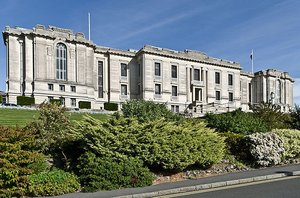 Llyfrgell Genedlaethol Cymru / The National Library of Wales |
Aberystwyth | 2 | Landscape, Coastal Landscape near Aberystwyth |
 Aberystwyth University School of Art Museum And Galleries |
Aberystwyth | 2 | Ystwyth Valley under Snow, The Windmill |
 Museum Boijmans Van Beuningen |
Rotterdam | 1 | Paysage en hiver |
 National Museum Cardiff |
Cardiff | 1 | Mountains in Cardiganshire |
 Královské muzea krásných umění v Belgii |
Brusel | 1 | Winter in Flanders |
Vyberte si dekádu a prohlédněte si originál, který ji definuje.
Landscape in Lisseweghe (1895), Museum van Deinze en de Leiestreek, Deinze. Následují Thunderstorm over Sint-Martens-Latem (1904) a Geese on the Leie (1903).
28 let: dílo Landscape in Lisseweghe pochází z roku 1895 a Valerius de Saedeleer se narodil/a v roce 1867.
Landscape in Lisseweghe, Thunderstorm over Sint-Martens-Latem, Geese on the Leie, A Panorama View of Tiegem, End of a gloomy day, Orchard in winter, Landscape in Wales, Paysage en hiver, Winter Landscape, Aberystwyth a Landscape. Hodnocení výše uvádí rok a muzeum pro každé z nich.
Náš katalog obsahuje 28 děl umělce Valerius de Saedeleer z let 1895 až 1938.
Většinou v Museum of Fine Arts Ghent (MSK) (Ghent), Museum van Deinze en de Leiestreek (Deinze) a Královské muzeum výtvarného umění Antverpy (Antverpy). V tabulce muzeí výše jsou vypsány všechny.
V období 1920s: 9 z celkem 28 děl na této stránce vzniklo právě tehdy, z toho Mountains in Cardiganshire z nich.
Na této stránce je nejstarší dílo z Landscape in Lisseweghe (1895) a nejnovější z Printemps (1938).
Thunderstorm over Sint-Martens-Latem, End of a gloomy day a Winter landscape: muzeum Museum of Fine Arts Ghent (MSK), Ghent má v obsluze 4 děl z této stránky.
Valerius de Saedeleer stands as a monumental figure in the tapestry of Belgian art, a painter whose brush captured not merely the physical contours of the earth, but the very spiritual essence of the landscape. Born in 1867 in Aalst, his early years were far removed from the serene, mystic vistas that would later define his legacy. The son of a small businessman involved in the soda and soap industry, De Saedeleer’s youth was marked by a tension between familial expectation and an irrepressible creative spirit. Forced by his father to abandon formal schooling at fifteen for a more practical vocation, he found himself apprenticed to a weaving workshop in Ghent. While this period of textile study seemed a detour from the fine arts, it instilled in him a profound, meticulous appreciation for texture and detail—a quality that would later breathe life into his sweeping landscapes.
Driven by an unyielding passion, De Saedeleer secretly pursued his true calling at the Academy of Fine Arts in Ghent. It was within these hallowed halls that he forged vital connections with fellow visionaries like Theo van Rysselberghe and George Minne, forming a nucleus of talent that would eventually challenge the academic status quo. Seeking greater creative freedom, he moved to Brussels to study under the Impressionist master Franz Courtens. This transition was transformative; through Courtens, De Saedeleer was introduced to the luminous, light-drenched techniques of Emile Claus, yet he resisted a simple imitation of Impressionism. Instead, he began to weave together the fleeting light of the modern era with a deeper, more permanent sense of Symbolist mystery and the enduring traditions of 16th-century Flemish landscape painting.
The trajectory of De Saedeleer’s life was as much defined by personal struggle as it was by artistic triumph. His marriage in 1889 to Clementina ‘Clemmeke’ Limpens brought with it a substantial dowry, which the young couple used to establish a grocery business in Blankenberge. However, the subsequent bankruptcy of this venture plunged them into a period of wandering and near-destitution. This era of instability, moving through towns like Damme and Ghent, perhaps deepened the artist's connection to the land, fostering a nomadic sensitivity that allowed him to observe the Belgian countryside with an unclouded, searching eye.
As his style matured, De Saedeleer became a cornerstone of the First School of Latem. His work moved away from the purely descriptive toward the evocative, characterized by:
In masterpieces such as The Windmill, one can witness this synthesis of technique and emotion. The painting showcases a serene landscape where the central subject is not merely a structure of wood and cloth, but a totem of tranquility amidst the vastness of nature. His ability to manipulate light to suggest a spiritual presence transformed the Belgian landscape into a stage for the sublime.
Valerius de Saedeleer’s contribution to art history extends far beyond the borders of Belgium. By bridging the gap between the traditionalism of the 16th century and the burgeoning modernism of the early 20th century, he provided a vital link in the evolution of European landscape painting. He did not merely paint trees, fields, or skies; he painted the silence, the weight of history, and the quietude of the soul. His influence can be seen in the way subsequent generations approached the concept of the "spiritual landscape," moving away from literal representation toward emotional truth.
Though his life was marked by the hardships of economic instability and the pressures of social conformity, his artistic output remained a steadfast pursuit of beauty and meaning. Today, De Saedeleer is remembered not just as a painter of the First School of Latem, but as a pioneer who taught us to look at the landscape and see the infinite. His works remain enduring testaments to the power of nature to reflect the deepest mysteries of human existence, ensuring his place in the pantheon of great masters of the Symbolist movement.

