Portrét Wang Meng

Obrazy autora Wang Meng: 10 nejznámějších díel podle pohledu galerie

Aktualizováno říjen 2026 · seřazeno podle našeho skóre popularity (vyhledávání, návštěvy a objednávky u každého díla) · 13 děl umělce Wang Meng v našem katalogu

Stručně řečeno

Z pohledu galerie je nejslavnějším dílem Wang Meng obrazem 元 王蒙 素庵圖 軸 The Simple Retreat (1370), jehož originál je vystaven v Metropolitan Museum of Art v obci New York. Writing Books under the Pine Trees (1323) a Ge Zhichuan Moving to the Mountains (1350) doplňují trio, které každé oko okamžitě pozná. Z 13 děl umělce Wang Meng v našem katalogu představuje galerie níže 10 nejznámějších děl, z nichž každé je originálem s uvedením roku vzniku, muzea a toho, co jej činí jedinečným.

1308 – 1385, Huzhou Nejvíce děl: Metropolitan Museum of Art

Top 10 obrazů umělce Wang Meng v naší galerii

1
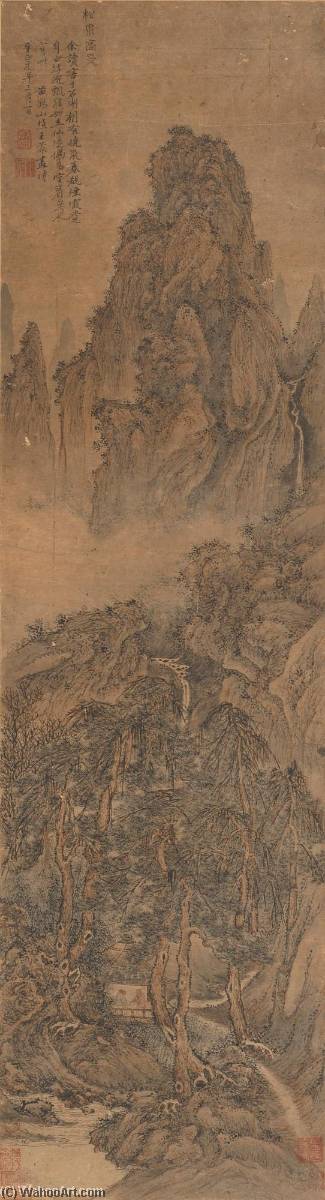
元 王蒙 素庵圖 軸 The Simple Retreat (1370) od Wang Meng

元 王蒙 素庵圖 軸 The Simple Retreat

1370 · Ink On Paper · Metropolitan Museum of Art, New York

We are looking at 元 王蒙 素庵圖 軸 The Simple Retreat, a significant ink and paper drawing from the Yuan Dynasty. This work was created by the artist Wang Meng about 1370. It is a hanging scroll that captures a specific vision of the natural world, presented through the delicate medium of ink and color on paper.

2
Writing Books under the Pine Trees (1323) od Wang Meng

Writing Books under the Pine Trees

1323 · Ink On Paper · Clevelandské muzeum umění, Cleveland

The ink on paper captures a quiet moment in 1323, titled Writing Books under the Pine Trees. This landscape emerges from the brush of Wang Meng, a man whose roots trace back to Huzhou, People's Republic of China. Within this scene, the stillness of the mountains meets the steady presence of the scholar, creating a space where the act of reading becomes part of the natural rhythm of the earth.

Motivy, které zaujaly Wang Meng

Čtyři témata, která se v těchto originálech nejčastěji objevují, z nichž každé má svůj nejlepší příklad.

Muzea, v nichž jsou vystavena originálna umělce Wang Meng

5 muzea, v nichž je umístěno nejvíce obrazů z této stránky.

Muzea Město Díla autora Wang Meng Obrazy z tohoto seznamu
Metropolitan Museum of Art, New YorkMetropolitan Museum of Art New York 3 元 王蒙 素庵圖 軸 The Simple Retreat, 元 王蒙 丹崖翠壑圖 軸 Red Cliffs and Green Valleys, 元 王蒙 蕭林寂亭圖 團扇 Sparse Trees and Pavilion
Clevelandské muzeum umění, ClevelandClevelandské muzeum umění Cleveland 1 Writing Books under the Pine Trees
The Palace Museum, BeijingThe Palace Museum Beijing 1 Ge Zhichuan Moving to the Mountains
Art Institute of Chicago, ChicagoArt Institute of Chicago Chicago 1 Quiet Life in a Wooded Glen
China Modern and Contemporary Art Document Research Center, PekinChina Modern and Contemporary Art Document Research Center Pekin 1 Seclusion in Green Bian Mountain

Wang Meng, jeden ikonický obraz na každé desetiletí

Díla podle dekád

Vyberte si dekádu a prohlédněte si originál, který ji definuje.

Obrazy umělce Wang Meng: odpovědi galerie

Který obraz autora Wang Meng je nejslavnější ze všech?Odhalit odpověď

元 王蒙 素庵圖 軸 The Simple Retreat (1370), Metropolitan Museum of Art, New York. Následují Writing Books under the Pine Trees (1323) a Ge Zhichuan Moving to the Mountains (1350).

Kolik let bylo Wang Meng, když dokončil/a 元 王蒙 素庵圖 軸 The Simple Retreat?Odhalit odpověď

62 let: dílo 元 王蒙 素庵圖 軸 The Simple Retreat pochází z roku 1370 a Wang Meng se narodil/a v roce 1308.

Kterých 10 nejlepších obrazů má Wang Meng?Odhalit odpověď

元 王蒙 素庵圖 軸 The Simple Retreat, Writing Books under the Pine Trees, Ge Zhichuan Moving to the Mountains, Quiet Life in a Wooded Glen, 元 王蒙 丹崖翠壑圖 軸 Red Cliffs and Green Valleys, 元 王蒙 蕭林寂亭圖 團扇 Sparse Trees and Pavilion, STUDIO SURROUNDED BY TEN THOUSAND PINE TREES, SECLUSION AMID PINES AND SPRINGS, LANDSCAPE a Seclusion in Green Bian Mountain. Hodnocení výše uvádí rok a muzeum pro každé z nich.

Kolik děl vytvořil/a Wang Meng?Odhalit odpověď

Náš katalog obsahuje 13 děl umělce Wang Meng z let 1323 až 1370.

Kde jsou vystavena nejznámější originály umělce Wang Meng?Odhalit odpověď

Většinou v Metropolitan Museum of Art (New York), Clevelandské muzeum umění (Cleveland) a The Palace Museum (Beijing). V tabulce muzeí výše jsou vypsány všechny.

Kdy Wang Meng vytvořil své nejslavnější obrazy?Odhalit odpověď

V období 1360s: 3 z celkem 10 děl na této stránce vzniklo právě tehdy, z toho Quiet Life in a Wooded Glen z nich.

Která jsou nejstarší a nejnovější slavná díla umělce Wang Meng?Odhalit odpověď

Na této stránce je nejstarší dílo z Writing Books under the Pine Trees (1323) a nejnovější z 元 王蒙 素庵圖 軸 The Simple Retreat (1370).

Kterým tématům se Wang Meng věnoval(a) nejčastěji?Odhalit odpověď

Mountains (2), Landscape (2) a Rocks (2) napříč 10 díly na této stránce.

V jaké technice tvořil(a) Wang Meng nejčastěji?Odhalit odpověď

Ink On Paper, u 2 z 10 děl na této stránce.

Jaká originální díla Wang Meng má v obsluze Metropolitan Museum of Art?Odhalit odpověď

元 王蒙 素庵圖 軸 The Simple Retreat, 元 王蒙 丹崖翠壑圖 軸 Red Cliffs and Green Valleys a 元 王蒙 蕭林寂亭圖 團扇 Sparse Trees and Pavilion: muzeum Metropolitan Museum of Art, New York má v obsluze 3 děl z této stránky.

Mohu si nechat ručně vypracovat obraz od Wang Meng?Odhalit odpověď

Ano, jako reprodukce: originál zůstává ve svém muzeu, ale jakýkoli obraz na této stránce může být pro vás ručně namalován na zakázku z jeho vlastní stránky.

Wang Meng: umělec

Wang Meng: The Ropy Brush and the Silent Landscape

Born in Wuxing, Zhejiang province – now Huzhou – around 1308, Wang Meng stands as a pivotal figure within the artistic landscape of the Yuan Dynasty (1271-1368). His life was marked by both privilege and profound misfortune; he descended from Zhao Mengfu, a prominent Song Dynasty official and artist, inheriting a lineage steeped in cultural significance. However, his later years were tragically consumed by false accusations of treason against the Ming Emperor Taizu, resulting in five years spent imprisoned – an experience that profoundly shaped his artistic vision and ultimately contributed to his unique style.

Wang Meng’s place within art history is firmly secured as one of the “Four Masters” of the Yuan Dynasty alongside Huang Gongwang, Wu Zhen, and Ni Zan. This esteemed group distinguished themselves by rejecting the patronage of the Mongol rulers who had conquered China, choosing instead to remain independent artists working primarily on paper rather than the traditional silk canvases favored by previous generations. This decision reflected a deep conviction that landscapes held the key to unlocking deeper truths – a philosophy central to their artistic practice.

A Style Defined by Texture and Movement

Unlike the more restrained approaches of his contemporaries, Wang Meng’s paintings are characterized by an extraordinary density and dynamism. His brushstrokes—often described as “ropy” or “layered”—were meticulously applied in thick, overlapping patterns, creating a palpable sense of texture and movement. This technique wasn't simply decorative; it was a deliberate attempt to capture the essence of nature – its complexity, its energy, and its inherent instability. He eschewed the smooth, polished surfaces favored by earlier landscape painters, embracing instead a more tactile and expressive approach.

Wang Meng’s compositions are often densely populated with elements—trees, rocks, mountains, streams—creating an immersive experience for the viewer. He avoided clear focal points or dramatic perspectives, preferring to present a holistic view of the natural world, inviting contemplation rather than immediate recognition. This deliberate ambiguity is a hallmark of his style and reflects his belief in the interconnectedness of all things.

Key Works and Artistic Influences

Among Wang Meng’s most celebrated works are “Ge Zhichuan Relocating” (a depiction of a scholar moving to a new location), “Forest Grotto at Juqu,” “Writing Books Under the Pine Trees,” “The Simple Retreat,” and “Dwelling in the Qingbian Mountains.” These paintings, now housed in prestigious museums worldwide – including the Palace Museum, National Palace Museum, Shanghai Museum, Cleveland Museum of Art, and the Metropolitan Museum of Art – demonstrate his mastery of technique and his profound understanding of landscape painting. Notably, "Ge Zhichuan Relocating" sold for an astonishing $62.1 million at auction in 2011, a testament to its artistic merit and historical significance.

Wang Meng’s style was profoundly influenced by the landscape painters who preceded him – Wang Wei, Dong Yuan, and Juran – but he developed his own distinctive voice through his innovative use of brushwork and composition. He also drew inspiration from the literati tradition, a movement that emphasized personal expression and intellectual engagement with nature. His work stands as a bridge between these traditions, forging a new path for Chinese landscape painting.

Legacy and Historical Significance

Despite his relatively obscure status during his lifetime, Wang Meng’s influence on subsequent generations of Chinese painters is undeniable. Dong Qichang, a prominent scholar-artist of the Southern Song Dynasty, greatly admired Wang Meng's style and incorporated elements of it into his own work. Wang Meng’s ropy brushstrokes and dense compositions became a defining characteristic of landscape painting for centuries to come.

His decision to reject court patronage and remain an independent artist also holds significant historical importance. It reflects a growing sense of artistic autonomy and a desire to preserve traditional values in the face of foreign rule. Wang Meng’s life and work serve as a powerful reminder of the enduring power of art to transcend political boundaries and express profound human truths. He remains a vital figure in understanding the evolution of Chinese landscape painting and its continuing relevance today.

Všechna díla od Wang Meng: 13 →