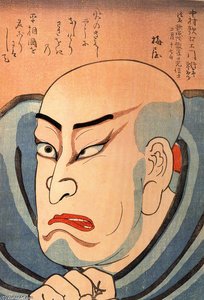
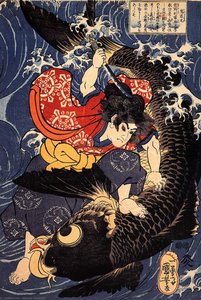
Portrét Kunijoši Utagawa

Obrazy autora Kunijoši Utagawa: 100 nejznámějších díel podle pohledu galerie

Aktualizováno listopad 2026 · seřazeno podle našeho skóre popularity (vyhledávání, návštěvy a objednávky u každého díla) · 329 děl umělce Kunijoši Utagawa v našem katalogu

Stručně řečeno

Z pohledu galerie je nejslavnějším dílem Kunijoši Utagawa obraz Musashi on the back of a whale. Shikamatsu Kanroku Yukishige (1847) a Hatakeyama sitting next to a Go board (1845) doplňují trio, které každé oko okamžitě pozná. Z 329 děl umělce Kunijoši Utagawa v našem katalogu představuje galerie níže 100 nejznámějších děl, z nichž každé je originálem s uvedením roku vzniku, muzea a toho, co jej činí jedinečným.

1798 – 1861, Tokyo Japanese ukiyo-e tradition Nejvíce děl: Keio University Library

Top 10 obrazů umělce Kunijoši Utagawa v naší galerii

1
Musashi on the back of a whale od Kunijoši Utagawa

Musashi on the back of a whale

Woodblock Print

This arresting image, a masterful execution of Ukiyo-e by the legendary artist Utagawa Kuniyoshi, transports us to 19th century Japan. Kuniyoshi, born Yoshisaburō in 1798 and tragically passing in 1861, was a pivotal figure at the close of the *ukiyo-e* movement – a vibrant artistic tradition that captured the essence of everyday life during the Edo period. This particular scene, depicting Musashi, the famed swordsman, astride a colossal whale, is…

2
Shikamatsu Kanroku Yukishige (1847) od Kunijoši Utagawa

Shikamatsu Kanroku Yukishige

1847 · Woodblock Print

Utagawa Kuniyoshi’s “Shikamatsu Kanroku Yukishige” (circa 1847) is more than a depiction of a samurai; it’s a potent distillation of Japanese heroism, loyalty, and the fleeting beauty of a moment captured in woodblock form. This iconic image, part of Kuniyoshi's celebrated series “Stories of the True Loyalty of the Faithful Samurai,” transports us to a pivotal scene from the classic tale of Suikoden – a story of betrayal, redemption, and…

3
Hatakeyama sitting next to a Go board (1845) od Kunijoši Utagawa

Hatakeyama sitting next to a Go board

1845 · Acrylic On Canvas

Utagawa Kuniyoshi’s “Hatakeyama Sitting Next to a Go Board” is more than just a depiction of a solitary figure; it's a window into the heart of 19th-century Japan. Painted in 1845, during a period of immense social and artistic change, this ukiyo-e masterpiece captures a quiet moment of contemplation – a scene imbued with layers of meaning reflecting the values and aesthetics of the Edo period. Kuniyoshi, one of the…

4
Yukukawa Sanpei Munenori (1848) od Kunijoši Utagawa

Yukukawa Sanpei Munenori

1848 · Acrylic

This exceptional ukiyo-e print, created in 1848 by the master artist Utagawa Kuniyoshi, offers a captivating glimpse into the world of Edo-period Japan. Depicting Yukukawa Sanpei Munenori, a figure likely rooted in historical or legendary lore, the artwork is far more than a simple portrait; it’s a dynamic tableau brimming with action, symbolism, and the raw energy of a warrior's spirit. Kuniyoshi’s skill lies not just in his technical prowess…

5
Dvacet čtyři vzory čestě k rodičům (1852) od Kunijoši Utagawa

Dvacet čtyři vzory čestě k rodičům

1852 · Dřevoryt · Keio University Library, Tokio

„Dvacet čtyři paragony úcty k rodičům“ představuje vrchol japonské tradiční grafiky *ukiyo-e*, vytvořeno Utagawou Kuniyoshiho, významným umělcem období Edo. Tento monumentální obraz zachycený v dřevěném blokové tisku (Ukiyo-e) vypráví komplexní příběh o skupině bohů a legendárních postav, kteří se věnují úctě k rodičům – základním hodnotám buddhistické filozofie a japonské kultury. Kuniyoshiho dílo je charakteristické pro svou dramatickou kompozici, která využívá silný diagonální os v hlavního aktéra, což vede oko…

6
Ôtaka Gengo Tadao (1848) od Kunijoši Utagawa

Ôtaka Gengo Tadao

1848 · Woodblock Print

Within the vibrant tapestry of Ukiyo-e prints, few images capture the raw power and stoic determination of a warrior quite like Utagawa Kuniyoshi's "Otaka Gengo Tadao," created in 1848. This remarkable woodblock print isn’t merely a depiction of a samurai; it’s a window into the heart of Edo-period Japan, brimming with tales of loyalty, honor, and the enduring spirit of martial prowess. Kuniyoshi, one of the last masters of this…

7
Oki no Jiro Hiroari killing a monstrous tengu od Kunijoši Utagawa

Oki no Jiro Hiroari killing a monstrous tengu

Woodblock Print

In the vibrant world of Ukiyo-e, few scenes command the eye with as much visceral intensity as Utagawa Kuniyoshi’s masterpiece, Oki no Jiro Hiroari killing a monstrous tengu. This dynamic mythological painting serves as a window into a moment of profound struggle, where the boundaries between the human and the supernatural blur amidst a backdrop of dark, foreboding shadows. The composition is anchored by the figure of Oki no Jiro…

8
Battle of Uji River. Uji kawa kassen no zu od Kunijoši Utagawa

Battle of Uji River. Uji kawa kassen no zu

Acrylic On Canvas · Hammer Museum, Los Angeles

Utagawa Kuniyoshi’s “Battle of Uji River,” painted between 1848 and 1850, stands as a quintessential example of *nishiki-e*, or polychrome woodblock printing, capturing the fervor and grandeur of samurai warfare against a backdrop of breathtaking natural beauty. This monumental print transcends mere depiction; it’s an immersive experience designed to evoke emotion and convey profound themes of courage, resilience, and the ephemeral nature of glory.

Obrazy autora Kunijoši Utagawa, seřazeny od 11 do 100

11The Twenty-four Paragons of Filial Piety in China , Script by Tanekazu : Ding Lan (Tei Ran) (1852) od Kunijoši UtagawaThe Twenty-four Paragons of Filial Piety in China , Script by Tanekazu : Ding Lan (Tei Ran)1852 · Keio University Library 12Thirty-six Famous Battles (1848) od Kunijoši UtagawaThirty-six Famous Battles1848 13Kiura Okaemon Sadayuki (1848) od Kunijoši UtagawaKiura Okaemon Sadayuki1848 14The Heavenly Weaver and the Heardsman (1842) od Kunijoši UtagawaThe Heavenly Weaver and the Heardsman1842 · Bristol Museum - Art Gallery 15Yata Gorôemon Suketake (1848) od Kunijoši UtagawaYata Gorôemon Suketake1848 16Oniwakamaru and the Giant Carp Fighting Underwater (1835) od Kunijoši UtagawaOniwakamaru and the Giant Carp Fighting Underwater1835 17A Votive Tablet with Masks of Kabuki Actors at Face Value od Kunijoši UtagawaA Votive Tablet with Masks of Kabuki Actors at Face ValueFukuoka City Museum 18The actor (12) od Kunijoši UtagawaThe actor (12) 19The Sixth Month (Right) (1849) od Kunijoši UtagawaThe Sixth Month (Right)1849 · British Museum 20Bon-bon Uta,Children od Kunijoši UtagawaBon-bon Uta,ChildrenFukuoka City Museum 21Scene from the play “The Life of Onoe Kikugorō III”\n\nScene from the play “The Life of Onoe Kikugorō III” (1847) od Kunijoši UtagawaScene from the play “The Life of Onoe Kikugorō III”\n\nScene from the play “The Life of Onoe Kikugorō III”1847 · Art Museum RIGA BOURSE 22Minamoto Yorimitsu also known as Raiko od Kunijoši UtagawaMinamoto Yorimitsu also known as Raiko 23Mount Fuji from the Sumida River embankment (1842) od Kunijoši UtagawaMount Fuji from the Sumida River embankment1842 24A record of origins of the great country of Japan od Kunijoši UtagawaA record of origins of the great country of Japan 25The actor (16) od Kunijoši UtagawaThe actor (16) 26Seaweed Gatherers at Omari (1833) od Kunijoši UtagawaSeaweed Gatherers at Omari1833 27The ghost of Taira Tomomori od Kunijoši UtagawaThe ghost of Taira Tomomori 28Thaishun with elephants od Kunijoši UtagawaThaishun with elephants 29Raiko tormented by the earth spider od Kunijoši UtagawaRaiko tormented by the earth spider 30Benkei holdin a halberd od Kunijoši UtagawaBenkei holdin a halberd 31A samurai overwhelming a giant serpent od Kunijoši UtagawaA samurai overwhelming a giant serpent 32The Famous Unrivalled Hidari Jingoro od Kunijoši UtagawaThe Famous Unrivalled Hidari Jingoro 33Samurai and the conquered od Kunijoši UtagawaSamurai and the conquered 34Kamigashihime stabbing a giant spider od Kunijoši UtagawaKamigashihime stabbing a giant spider 35Vesper bell at Todaiji od Kunijoši UtagawaVesper bell at Todaiji 36Oniwakamaru about to kill the giant carp od Kunijoši UtagawaOniwakamaru about to kill the giant carp 37Uneme is exorcising the monstrous serpent from the lake od Kunijoši UtagawaUneme is exorcising the monstrous serpent from the lake 38Shoki and Demon, Edo period (1850) od Kunijoši UtagawaShoki and Demon, Edo period1850 · Arthur M. Sackler Gallery 39Nichiren going into exile on the island of Sado od Kunijoši UtagawaNichiren going into exile on the island of Sado 40Uchiwakamaru fighting Benkei on Gojo bridge od Kunijoši UtagawaUchiwakamaru fighting Benkei on Gojo bridge 41The young Benkei holding a pole od Kunijoši UtagawaThe young Benkei holding a pole 42New edition of the life of a hundred generals od Kunijoši UtagawaNew edition of the life of a hundred generals 43Sharks od Kunijoši UtagawaSharks 44Koga Saburo, suspendeding a basket, watching a dragon od Kunijoši UtagawaKoga Saburo, suspendeding a basket, watching a dragon 45Kamei Rokuro and the Black Bear in the Snow (1849) od Kunijoši UtagawaKamei Rokuro and the Black Bear in the Snow1849 46Hattara Sonja with his white tiger od Kunijoši UtagawaHattara Sonja with his white tiger 47Ishi-jo, wife of Oboshi Yoshio, one of the loyal ronin (1848) od Kunijoši UtagawaIshi-jo, wife of Oboshi Yoshio, one of the loyal ronin1848 48Untitled (D2X8SB) (801) od Kunijoši UtagawaUntitled (D2X8SB)801 · Metropolitan Museum of Art 49Yoshida Sadaemon Kanesada (1848) od Kunijoši UtagawaYoshida Sadaemon Kanesada1848 50Hara Gôemon Mototoki (1848) od Kunijoši UtagawaHara Gôemon Mototoki1848 51Woodcut (1852) od Kunijoši UtagawaWoodcut1852 · Museum of Far Eastern Antiquities 52Woodcut (1852) od Kunijoši UtagawaWoodcut1852 · Museum of Far Eastern Antiquities 53Island Enoshima. The Fuji can be seen far away od Kunijoši UtagawaIsland Enoshima. The Fuji can be seen far away 54Hayano Kanpei Tsuneyo (1848) od Kunijoši UtagawaHayano Kanpei Tsuneyo1848 · Clevelandské muzeum umění 55In the Waves at Kakuda enroute to Sado Island, Edo period (1835) od Kunijoši UtagawaIn the Waves at Kakuda enroute to Sado Island, Edo period1835 · Arthur M. Sackler Gallery 56Woman selling decorative bowls od Kunijoši UtagawaWoman selling decorative bowls 57A fierce depiction of Uesugi Kenshin seated (1844) od Kunijoši UtagawaA fierce depiction of Uesugi Kenshin seated1844 58The Twenty-four Paragons of Filial Piety in China, Script by Tanekazu : Emperor Wen of Han (Kan no Buntei) (1852) od Kunijoši UtagawaThe Twenty-four Paragons of Filial Piety in China, Script by Tanekazu : Emperor Wen of Han (Kan no Buntei)1852 · Keio University Library 59The Twenty-four Paragons of Filial Piety in China , Script by Tanekazu : Cai Shun (Sai Jun) (1852) od Kunijoši UtagawaThe Twenty-four Paragons of Filial Piety in China , Script by Tanekazu : Cai Shun (Sai Jun)1852 · Keio University Library 60Isoai Jûroemon Masahisa (1848) od Kunijoši UtagawaIsoai Jûroemon Masahisa1848 61Tokuda Sadaemon Yukitaka (1848) od Kunijoši UtagawaTokuda Sadaemon Yukitaka1848 62Tamakatzura Tamatori attacked by the octopus od Kunijoši UtagawaTamakatzura Tamatori attacked by the octopus 63Bijin with a dog in the snow (1845) od Kunijoši UtagawaBijin with a dog in the snow1845 64From Suikoden of Japanese Heroes od Kunijoši UtagawaFrom Suikoden of Japanese Heroes 65Hatakeyama Shigetada od Kunijoši UtagawaHatakeyama Shigetada 66The sailor Tokuso and the sea monster od Kunijoši UtagawaThe sailor Tokuso and the sea monster 67Tokiwa Gozen in the snow od Kunijoši UtagawaTokiwa Gozen in the snow 68Mongaku doing penace at the Nachi waterfall od Kunijoši UtagawaMongaku doing penace at the Nachi waterfall 69Eight Hundred Heroes of Our Country od Kunijoši UtagawaEight Hundred Heroes of Our Country 70The suicide of morozumi Masakiyo od Kunijoši UtagawaThe suicide of morozumi Masakiyo 71Tametomo rescued from the sea monster by tengu od Kunijoši UtagawaTametomo rescued from the sea monster by tengu 72Miyamoto Musashi killing a giant od Kunijoši UtagawaMiyamoto Musashi killing a giant 73The Twenty-four Paragons of Filial Piety in China , Script by Tanekazu : Tanzi (Enshi) (1852) od Kunijoši UtagawaThe Twenty-four Paragons of Filial Piety in China , Script by Tanekazu : Tanzi (Enshi)1852 · Keio University Library 74The Twenty-four Paragons of Filial Piety in China , Script by Tanekazu : Jiang Shi (Kyo Shi) (1852) od Kunijoši UtagawaThe Twenty-four Paragons of Filial Piety in China , Script by Tanekazu : Jiang Shi (Kyo Shi)1852 · Keio University Library 75Hawk od Kunijoši UtagawaHawk 76Tengu od Kunijoši UtagawaTengu 77Otsu-e Paintings Coming Alive Triptych (1847) od Kunijoši UtagawaOtsu-e Paintings Coming Alive Triptych1847 78Lady-in-Waiting at Edo Castle (1854) od Kunijoši UtagawaLady-in-Waiting at Edo Castle1854 79Bando Shuka I as the courtesan Shiraito of Hashimoto-ya (1852) od Kunijoši UtagawaBando Shuka I as the courtesan Shiraito of Hashimoto-ya1852 · Art Gallery of New South Wales 80Self-portrait of the Shunga album od Kunijoši UtagawaSelf-portrait of the Shunga album 81Saitogo Kunitake, Japanese actor (1816) od Kunijoši UtagawaSaitogo Kunitake, Japanese actor1816 82Kuroda Ukinaga, Japanese actor (1816) od Kunijoši UtagawaKuroda Ukinaga, Japanese actor1816 83Sosan returning to his mother (1840) od Kunijoši UtagawaSosan returning to his mother1840 84Strings for night firing od Kunijoši UtagawaStrings for night firing 85Woman catching firefly by a stream od Kunijoši UtagawaWoman catching firefly by a stream 86Nakamura Kansuke Tadatoki (1848) od Kunijoši UtagawaNakamura Kansuke Tadatoki1848 87Yazama Shinroku Mitsukaze (1848) od Kunijoši UtagawaYazama Shinroku Mitsukaze1848 88Oribe Yasubei Taketsune (1848) od Kunijoši UtagawaOribe Yasubei Taketsune1848 89Katsuta Shin'emon Taketaka (1848) od Kunijoši UtagawaKatsuta Shin'emon Taketaka1848 90Senzaki Yagorô Noriyasu (1848) od Kunijoši UtagawaSenzaki Yagorô Noriyasu1848 91Ôboshi Rikiya Yoshikane (1848) od Kunijoši UtagawaÔboshi Rikiya Yoshikane1848 92Hayano Wasuke Tsunenari (1848) od Kunijoši UtagawaHayano Wasuke Tsunenari1848 93Writing a Label for Chrysanthemums (1844) od Kunijoši UtagawaWriting a Label for Chrysanthemums1844 94Shikamatsu Kanroku’s Manservant, Jinzaburô (1848) od Kunijoši UtagawaShikamatsu Kanroku’s Manservant, Jinzaburô1848 95Tokiwa-Gozen with her three children in the snow (1840) od Kunijoši UtagawaTokiwa-Gozen with her three children in the snow1840 96Neve, the moon is chilling (1845) od Kunijoši UtagawaNeve, the moon is chilling1845 97Shoriko kaei shooting a wild goose od Kunijoši UtagawaShoriko kaei shooting a wild goose 98One Hundred and Eight Heroes from the Chinese Tale, The Water Margin- Zhang Shun, alias White Stripe... od Kunijoši UtagawaOne Hundred and Eight Heroes from the Chinese Tale, The Water Margin- Zhang Shun, alias White Stripe...Tokyo National Museum 99Head of a Courtesan od Kunijoši UtagawaHead of a CourtesanHarvard Art Museums 100Ishiyakushi od Kunijoši UtagawaIshiyakushi

Slavná díla Kunijoši Utagawa podle jednotlivých období

Motivy, které zaujaly Kunijoši Utagawa

Čtyři témata, která se v těchto originálech nejčastěji objevují, z nichž každé má svůj nejlepší příklad.

Muzea, v nichž jsou vystavena originálna umělce Kunijoši Utagawa

8 muzea, v nichž je umístěno nejvíce obrazů z této stránky.

Muzeum Město Díla autora Kunijoši Utagawa Obrazy z tohoto seznamu
Keio University Library, TokioKeio University Library Tokio 8 Dvacet čtyři vzory čestě k rodičům, The Twenty-four Paragons of Filial Piety in China , Script by Tanekazu : Guo Ju (Kaku Kyo), The Twenty-four Paragons of Filial Piety in China , Script by Tanekazu : Lu Ji (Riku Seki)
Fukuoka City Museum, FukuokaFukuoka City Museum Fukuoka 4 A Votive Tablet with Masks of Kabuki Actors at Face Value, Bon-bon Uta,Children
Arthur M. Sackler Gallery, Washington, D.C.Arthur M. Sackler Gallery Washington, D.C. 2 Shoki and Demon, Edo period, In the Waves at Kakuda enroute to Sado Island, Edo period
Museum of Far Eastern Antiquities, StockholmMuseum of Far Eastern Antiquities Stockholm 2 Woodcut, Woodcut
Hammer Museum, Los AngelesHammer Museum Los Angeles 2 Battle of Uji River. Uji kawa kassen no zu
Tokyo National Museum, TokioTokyo National Museum Tokio 2 One Hundred and Eight Heroes from the Chinese Tale, The Water Margin- Zhang Shun, alias White Stripe...
Bristol Museum - Art Gallery, BristolBristol Museum - Art Gallery Bristol 1 The Heavenly Weaver and the Heardsman
British Museum, LondýnBritish Museum Londýn 1 The Sixth Month (Right)

Kunijoši Utagawa, jeden ikonický obraz na každé desetiletí

Díla podle dekád

Vyberte si dekádu a prohlédněte si originál, který ji definuje.

Obrazy umělce Kunijoši Utagawa: odpovědi galerie

Který obraz autora Kunijoši Utagawa je nejslavnější ze všech?Odhalit odpověď

Musashi on the back of a whale. Následují Shikamatsu Kanroku Yukishige (1847) a Hatakeyama sitting next to a Go board (1845).

Kterých 10 nejlepších obrazů má Kunijoši Utagawa?Odhalit odpověď

Musashi on the back of a whale, Shikamatsu Kanroku Yukishige, Hatakeyama sitting next to a Go board, Yukukawa Sanpei Munenori, Dvacet čtyři vzory čestě k rodičům, Ôtaka Gengo Tadao, Oki no Jiro Hiroari killing a monstrous tengu, Battle of Uji River. Uji kawa kassen no zu, The Twenty-four Paragons of Filial Piety in China , Script by Tanekazu : Guo Ju (Kaku Kyo) a The Twenty-four Paragons of Filial Piety in China , Script by Tanekazu : Lu Ji (Riku Seki). Hodnocení výše uvádí rok a muzeum pro každé z nich.

Kolik děl vytvořil/a Kunijoši Utagawa?Odhalit odpověď

Náš katalog obsahuje 329 děl umělce Kunijoši Utagawa z let 1816 až 1854.

Kde jsou vystavena nejznámější originály umělce Kunijoši Utagawa?Odhalit odpověď

Většinou v Keio University Library (Tokio), Fukuoka City Museum (Fukuoka) a Arthur M. Sackler Gallery (Washington, D.C.). V tabulce muzeí výše jsou vypsány všechny.

Kdy Kunijoši Utagawa vytvořil své nejslavnější obrazy?Odhalit odpověď

V období 1840s: 33 z celkem 100 děl na této stránce vzniklo právě tehdy, z toho Shikamatsu Kanroku Yukishige z nich.

Která jsou nejstarší a nejnovější slavná díla umělce Kunijoši Utagawa?Odhalit odpověď

Na této stránce je nejstarší dílo z Saitogo Kunitake, Japanese actor (1816) a nejnovější z Lady-in-Waiting at Edo Castle (1854).

Kterým tématům se Kunijoši Utagawa věnoval(a) nejčastěji?Odhalit odpověď

Warrior (14), Samurai (14) a Edo period (14) napříč 100 díly na této stránce.

V jaké technice tvořil(a) Kunijoši Utagawa nejčastěji?Odhalit odpověď

Woodblock Print, u 55 z 100 děl na této stránce.

S jakým směrem je spojen(a) Kunijoši Utagawa?Odhalit odpověď

Japanese ukiyo-e tradition, podle originálů na této stránce.

Jaká originální díla Kunijoši Utagawa má v obsluze Keio University Library?Odhalit odpověď

Dvacet čtyři vzory čestě k rodičům, The Twenty-four Paragons of Filial Piety in China , Script by Tanekazu : Guo Ju (Kaku Kyo) a The Twenty-four Paragons of Filial Piety in China , Script by Tanekazu : Lu Ji (Riku Seki): muzeum Keio University Library, Tokio má v obsluze 8 děl z této stránky.

Kunijoši Utagawa: umělec

A Life Immersed in the Floating World

Utagawa Kuniyoshi, born Yoshisaburō on January 1, 1798, in Edo (modern-day Tokyo), stands as a towering figure at the close of the *ukiyo-e* tradition – the “pictures of the floating world” that so vividly captured Japanese life during the Edo period. His journey began not amidst artistic circles, but within the practical realm of his father’s silk-dyeing business. This early exposure to color and pattern would subtly inform his later work, imbuing it with a distinctive vibrancy. Even as a young boy, however, Kuniyoshi was captivated by the dramatic world of *ukiyo-e*, particularly the heroic imagery of warriors and artisans that populated popular prints. These formative impressions ignited within him a passion that would define his life’s pursuit. He entered the studio of Utagawa Toyokuni I in 1811, adopting the name Kuniyoshi and embarking on a rigorous apprenticeship that honed his skills and introduced him to the conventions of the Utagawa school.

From Humble Beginnings to Masterful Innovation

Kuniyoshi’s early career was marked by a period of relative obscurity. While proficient in the established styles, he struggled to find his unique voice amidst the crowded landscape of Edo printmaking. His initial works largely mirrored those of his teacher, offering little that distinguished him from his contemporaries. However, this period of exploration proved crucial. He experimented with various genres and techniques, gradually developing a distinctive approach characterized by dynamic compositions, bold colors, and an increasingly sophisticated understanding of narrative storytelling. The breakthrough came in 1827 with the release of *The One Hundred and Eight Heroes of the Popular Suikoden*, a monumental series based on the Chinese novel *Shui Hu Zhuan*. This work catapulted Kuniyoshi to fame, establishing him as a master of *musha-e* – warrior prints. The series wasn’t merely an illustration of heroic tales; it was a showcase for Kuniyoshi's burgeoning talent for dramatic composition and characterization. He didn’t simply depict warriors; he brought them to life with compelling emotion and intricate detail. The sheer scale of the project, involving hundreds of individual prints, demonstrated his growing mastery of the woodblock printing process and his ability to manage a large-scale artistic undertaking.

A Synthesis of Tradition and Western Influence

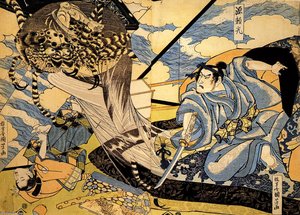
What truly sets Kuniyoshi apart is his willingness to embrace innovation while remaining deeply rooted in Japanese artistic traditions. As the Edo period drew to a close, Japan experienced increasing contact with the West, and Kuniyoshi was among the first *ukiyo-e* artists to incorporate elements of Western perspective and shading into his work. This wasn’t simply imitation; he skillfully integrated these techniques to enhance depth, realism, and dramatic impact. His landscapes, in particular, demonstrate a masterful command of atmospheric effects and spatial relationships, often evoking a sense of grandeur and awe. He didn't abandon the established conventions of *ukiyo-e*, such as bold outlines and flat colors, but rather layered them with subtle Western influences to create a unique visual style. Beyond technique, Kuniyoshi expanded the subject matter of *ukiyo-e*. While traditional themes like beautiful women and Kabuki actors remained popular, he ventured into new territory, depicting historical scenes, mythological creatures, and even satirical commentaries on contemporary society. His triptych *In Minamoto’s Residence the Earth Spider Appears as a Monster* (1843) is a prime example of this daring approach, cleverly disguising political criticism within a fantastical narrative.
The Suikoden Series: A Defining Achievement

Kuniyoshi's most celebrated work, *The One Hundred and Eight Heroes of the Popular Suikoden*, solidified his reputation as a master artist. Based on the classic Chinese novel *Shui Hu Zhuan* (also known as *Outlaws of the Marsh*), this epic series depicted the adventures of a band of heroic outlaws who battled against corrupt officials and monstrous demons. Kuniyoshi’s interpretation was far from a straightforward illustration; he infused each scene with dynamic action, dramatic lighting, and compelling characterization. The prints are renowned for their energy, their vibrant colors, and their skillful use of perspective to create a sense of depth and movement. The series demonstrated Kuniyoshi's ability to synthesize traditional Japanese storytelling with Western artistic techniques, resulting in a work that was both visually stunning and emotionally engaging. It remains one of the most influential and beloved *ukiyo-e* prints ever created.

Legacy and Influence

Kuniyoshi’s influence on subsequent generations of artists is undeniable. He left behind a vast and diverse body of work – estimated to number over 5,000 designs – that continues to inspire awe and admiration today. His innovative blending of traditional Japanese aesthetics with Western techniques paved the way for new artistic possibilities, while his willingness to challenge conventions broadened the scope of *ukiyo-e*. He trained numerous students, including Yoshitoshi, who would carry on his legacy into the Meiji period. His work is held in major museums worldwide and continues to be studied by art historians and enthusiasts alike. Kuniyoshi’s art serves as a testament to the enduring power of imagination, skill, and artistic innovation. He remains a pivotal figure in the history of Japanese art, whose work continues to resonate with audiences around the world. He passed away on April 14, 1861, leaving behind a legacy that firmly cemented his place as one of the last great masters of *ukiyo-e*.