Portrét Hirošige

Obrazy autora Hirošige: 100 nejznámějších díel podle pohledu galerie

Aktualizováno říjen 2026 · seřazeno podle našeho skóre popularity (vyhledávání, návštěvy a objednávky u každého díla) · 353 děl umělce Hirošige v našem katalogu

Stručně řečeno

Z pohledu galerie je nejslavnějším dílem Hirošige obrazem Early Department from a Daimyo, jehož originál je vystaven v Nakagawa-machi Bato Hiroshige Museum of Art v obci Nagasaki. The maple leaves of Mama, Tekona shrine and Tsugi bridge (1857) a Hakone (1834) doplňují trio, které každé oko okamžitě pozná. Z 353 děl umělce Hirošige v našem katalogu představuje galerie níže 100 nejznámějších děl, z nichž každé je originálem s uvedením roku vzniku, muzea a toho, co jej činí jedinečným.

1797 – 1858, Edo Japanese landscape painting Nejvíce děl: Nakagawa-machi Bato Hiroshige Museum of Art

Top 10 obrazů umělce Hirošige v naší galerii

1
Early Department from a Daimyo od Hirošige

Early Department from a Daimyo

Woodblock Print · Nakagawa-machi Bato Hiroshige Museum of Art, Nagasaki

In the delicate dance of lines and muted pigments, Utagawa Hiroshige’s Early Department from a Daimyo invites us to step through a portal into the heart of Edo-period Japan. This exquisite woodblock print captures a moment of vibrant communal life along a bustling riverside, where the rigid structures of social hierarchy melt into the shared leisure of a sunny afternoon. As we gaze upon the scene, we are not merely…

2
The maple leaves of Mama, Tekona shrine and Tsugi bridge (1857) od Hirošige

The maple leaves of Mama, Tekona shrine and Tsugi bridge

1857 · Woodblock Print · Van Goghovo muzeum, Amsterdam

Utagawa Hiroshige (1797-1858), arguably the last titan of *ukiyo-e*, didn't merely depict landscapes; he crafted them into meditations on beauty and impermanence. “The Maple Leaves of Mama, Tekona Shrine and Tsugi Bridge,” created in 1857 during a period of significant societal transformation—the waning influence of feudal Japan as Western ideas crept in—stands as a testament to his enduring artistic legacy. More than just a visual record, it’s an embodiment of…

3
Hakone (1834) od Hirošige

Hakone

1834 · Woodblock Print · Indianapolis Museum of Art, Indianapolis

Utagawa Hiroshige’s “Hakone,” created in 1834, is more than just a landscape; it's a poetic meditation on the beauty and transience of nature within Edo-period Japan. This woodblock print, part of his renowned series "The Fifty-three Stations of the Tōkaidō," captures a specific moment along the vital trade route connecting Tokyo (then Edo) with Kyoto. However, Hiroshige elevates this seemingly simple depiction of a mountain pass into something profoundly evocative,…

4
Station 36, Goyu; Kyoka Tokaido Series (1855) od Hirošige

Station 36, Goyu; Kyoka Tokaido Series

1855 · Woodblock Print · Indianapolis Museum of Art, Indianapolis

In the delicate interplay of ink and paper, Utagawa Hiroshige’s "Station 36, Goyu; Kyoka Tokaido Series" offers much more than a mere topographical record of a journey. Completed in 1855, this exquisite woodblock print serves as a profound distillation of Edo-period sensibilities, capturing a yearning for tranquility amidst the burgeoning dynamism of a Japan in transition. As the nation stood at a pivotal crossroads between ancient feudal traditions and the…

5
Fushimi, Číslo 51 (1842) od Hirošige

Fushimi, Číslo 51

1842 · Akryl na plátně · Indianapolis Museum of Art, Indianapolis

Fushimi, Station # 51 – Hiroshige’s Poetic Echoes of Edo Japan Utagawa Hiroshige (1797–1858) stands as a monumental figure in Japanese art history, specifically within the realm of *ukiyo-e*, or “pictures of the floating world.” More than just aesthetically pleasing depictions of daily life and landscapes, his prints encapsulate a profound understanding of Japanese culture and psychology—a perspective that captivated audiences both domestically and subsequently influenced artists across continents. This…

6
Ichikoku Bridge in the Eastern Capital (Tōto: Ichikoku bashi) (1858) od Hirošige

Ichikoku Bridge in the Eastern Capital (Tōto: Ichikoku bashi)

1858 · Woodblock Print · Indianapolis Museum of Art, Indianapolis

The Ichikoku Bridge spans a quiet stretch of water in the Eastern Capital. Beneath its wooden arch, two boats drift through the current. People move across the structure, some carrying backpacks and others clutching small handbags. A mountain rises in the distance, watching over the scene. Trees frame the edges of the view, their leaves casting shadows near the water's edge.

7
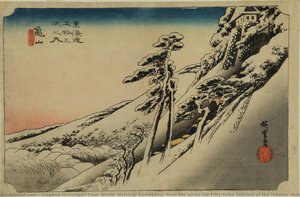
Shinagawa Sunrise from the series Fifty-three Stations on the Tokaido Road (1834) od Hirošige

Shinagawa Sunrise from the series Fifty-three Stations on the Tokaido Road

1834 · Woodblock Print · Hill-Stead Museum, Farmington

In the soft, burgeoning light of a nineteenth-century morning, Utagawa Hiroshige invites us to witness a moment of profound stillness along the Tōkaidō road. Shinagawa Sunrise is not merely a depiction of a coastal village; it is a masterclass in the art of atmosphere. As the sun begins its ascent, the boundary between the heavens and the earth dissolves into a luminous haze. The water of the bay reflects a…

8
The Rokugo River Ferry, Kawasaki, from the series the Fifty-three Stations of the Tokaido (Hoeido edition ) od Hirošige

The Rokugo River Ferry, Kawasaki, from the series the Fifty-three Stations of the Tokaido (Hoeido edition )

Woodblock Print · Nakagawa-machi Bato Hiroshige Museum of Art, Nagasaki

In the delicate dance of woodblock printing, few masters captured the ephemeral beauty of Japanese life as profoundly as Utagawa Hiroshige. His masterpiece, The Rokugo River Ferry, Kawasaki, serves as a breathtaking window into the Edo period, inviting the viewer to step onto the bustling banks of one of the most vital crossings on the Tokaido road. This evocative scene from his legendary series, The Fifty-three Stations of the Tokaido,…

9
Itsukushima in Aki Province (1858) od Hirošige

Itsukushima in Aki Province

1858 · Woodblock Print · Brooklynské muzeum, Brooklyn

In the delicate interplay of mist and water, Itsukushima in Aki Province offers more than a mere glimpse of a Japanese landmark; it provides a profound meditation on the ephemeral nature of existence. Created by the legendary ukiyo-e master Ando Hiroshige in 1858, this woodcut print captures the spiritual essence of the Itsukushima shrine area with a poetic sensitivity that remains unparalleled. As one gazes upon the composition, the eye…

10
Tenryu River Ferry Crossing, Mitsuke, from the series The Fifty-three Stations of the Tokaido (Gyosho Edition) od Hirošige

Tenryu River Ferry Crossing, Mitsuke, from the series The Fifty-three Stations of the Tokaido (Gyosho Edition)

Woodblock Print · Nakagawa-machi Bato Hiroshige Museum of Art, Nagasaki

The woodblock print depicts a section of the Tenryu River near the station of Mitsuke. In the center of the composition, a large sandbank divides the water into two distinct currents. Several small wooden boats occupy the river, with figures positioned within them to manage the crossing. Some vessels are moored directly against the central sandbank, while others navigate the moving water. The far shore is visible in the distance,…

Obrazy autora Hirošige, seřazeny od 11 do 100

11Papoušek a hroznové větvě (1800) od HirošigePapoušek a hroznové větvě1800 · Indianapolis Museum of Art 12The Pine Woods of Miho in Suruga Province (Suruga Miho no matsubara) (1858) od HirošigeThe Pine Woods of Miho in Suruga Province (Suruga Miho no matsubara)1858 · Indianapolis Museum of Art 1362 (55) Komakata Hall and Azuma Bridge (1857) od Hirošige62 (55) Komakata Hall and Azuma Bridge1857 · Brooklynské muzeum 14Evening Snow at Kanbara (1834) od HirošigeEvening Snow at Kanbara1834 · Los Angeles County Museum of Art 15Dawn in the licensed quarters (1857) od HirošigeDawn in the licensed quarters1857 · Art Gallery of New South Wales 16Noční pohled na Saruwakacho od HirošigeNoční pohled na Saruwakacho 17Station 28, Fukuroi (1855) od HirošigeStation 28, Fukuroi1855 · Indianapolis Museum of Art 18Evening Snow at Asakusa or Woman with Umbrella from the series Eight Views of the Environs of Edo (1800) od HirošigeEvening Snow at Asakusa or Woman with Umbrella from the series Eight Views of the Environs of Edo1800 · Hill-Stead Museum 19Keishi (Kyoto), Capital (1834) od HirošigeKeishi (Kyoto), Capital1834 · Indianapolis Museum of Art 20Hara: View of Ashitakayama and Fuji (1855) od HirošigeHara: View of Ashitakayama and Fuji1855 · Indianapolis Museum of Art 21Yokkaichi (Station #44) (1834) od HirošigeYokkaichi (Station #44)1834 · Indianapolis Museum of Art 22Desolate Wintry Scene, Hamamatsu, from the series the Fifty-three Stations of the Tokaido (Hoeido edition) od HirošigeDesolate Wintry Scene, Hamamatsu, from the series the Fifty-three Stations of the Tokaido (Hoeido edition)Nakagawa-machi Bato Hiroshige Museum of Art 23Noge and Yokohama in Musashi Province (Musashi, Noge, Yokohama) (1858) od HirošigeNoge and Yokohama in Musashi Province (Musashi, Noge, Yokohama)1858 · Indianapolis Museum of Art 24Wild sea breaking on the rocks (1856) od HirošigeWild sea breaking on the rocks1856 25Výhled na Shiomi údolí (1833) od HirošigeVýhled na Shiomi údolí1833 · Indianapolis Museum of Art 26Mt.Fuji on the Left, Yoshiwara, from the series the Fifty-three Stations of the Tokaido (Hoeido edition) od HirošigeMt.Fuji on the Left, Yoshiwara, from the series the Fifty-three Stations of the Tokaido (Hoeido edition)Nakagawa-machi Bato Hiroshige Museum of Art 27Tsukuda Offing in the Eastern Capital (Tōto: Tsukuda oki) (1858) od HirošigeTsukuda Offing in the Eastern Capital (Tōto: Tsukuda oki)1858 · Indianapolis Museum of Art 28Kawachi (1853) od HirošigeKawachi1853 · Indianapolis Museum of Art 29The Dye Craft Shops of Arimatsu, Narumi, from the series The Fifty-three Stations of the Tokaido (Gyosho edition) od HirošigeThe Dye Craft Shops of Arimatsu, Narumi, from the series The Fifty-three Stations of the Tokaido (Gyosho edition)Nakagawa-machi Bato Hiroshige Museum of Art 30View of Shiomi Slope, Shirasuka, from the series The Fifty-three Stations of the Tokaido (Gyosho edition) od HirošigeView of Shiomi Slope, Shirasuka, from the series The Fifty-three Stations of the Tokaido (Gyosho edition)Nakagawa-machi Bato Hiroshige Museum of Art 31Entrance to Enoshima in Sagami Province (Sagami Enoshima iriguchi) (1858) od HirošigeEntrance to Enoshima in Sagami Province (Sagami Enoshima iriguchi)1858 · Indianapolis Museum of Art 32Morning Mist, Mishima, from the series the Fifty-three Stations of the Tokaido (Hoeido edition ) od HirošigeMorning Mist, Mishima, from the series the Fifty-three Stations of the Tokaido (Hoeido edition )Nakagawa-machi Bato Hiroshige Museum of Art 33The Imagire Sea Ferry, Maisaka, from the series The Fifty-three Stations of the Tokaido (Gyosho edition) od HirošigeThe Imagire Sea Ferry, Maisaka, from the series The Fifty-three Stations of the Tokaido (Gyosho edition)Nakagawa-machi Bato Hiroshige Museum of Art 34Sukiya Riverbank in the Eastern Capital (Tōto sukiya kaigan) (1858) od HirošigeSukiya Riverbank in the Eastern Capital (Tōto sukiya kaigan)1858 · Indianapolis Museum of Art 35Satta Pass, Yui, from the series the Fifty-three Stations of the Tokaido (Hoeido edition) od HirošigeSatta Pass, Yui, from the series the Fifty-three Stations of the Tokaido (Hoeido edition)Nakagawa-machi Bato Hiroshige Museum of Art 36True View of Imagire, Maisaka, from the series the Fifty-three Stations of the Tokaido (Hoeido edition) od HirošigeTrue View of Imagire, Maisaka, from the series the Fifty-three Stations of the Tokaido (Hoeido edition)Nakagawa-machi Bato Hiroshige Museum of Art 37Kanbara, nocní sníh (1834) od HirošigeKanbara, nocní sníh1834 · Indianapolis Museum of Art 38Clear Winter Morning, Kameyama, from the series the Fifty-three Stations of the Tokaido (Hoeido edition) od HirošigeClear Winter Morning, Kameyama, from the series the Fifty-three Stations of the Tokaido (Hoeido edition)Nakagawa-machi Bato Hiroshige Museum of Art 39The Tenryu River, Mitsuke, from the series the Fifty-three Stations of the Tokaido (Hoeido edition) od HirošigeThe Tenryu River, Mitsuke, from the series the Fifty-three Stations of the Tokaido (Hoeido edition)Nakagawa-machi Bato Hiroshige Museum of Art 40The Seven-ri Ferry Crossing, Kuwana, from the series the Fifty-three Stations of the Tokaido (Hoeido edition) od HirošigeThe Seven-ri Ferry Crossing, Kuwana, from the series the Fifty-three Stations of the Tokaido (Hoeido edition)Nakagawa-machi Bato Hiroshige Museum of Art 41Aronia and Bullfinch od HirošigeAronia and Bullfinch 42Sýčky vracející se na Katata (1834) od HirošigeSýčky vracející se na Katata1834 · Indianapolis Museum of Art 43Yugyoji Temple, Fujisawa, from the series the Fifty-three Stations of the Tokaido (Hoeido edition) od HirošigeYugyoji Temple, Fujisawa, from the series the Fifty-three Stations of the Tokaido (Hoeido edition)Nakagawa-machi Bato Hiroshige Museum of Art 44Travellers and Soliciting Women, Goyu, from the series the Fifty-three Stations of the Tokaido (Hoeido edition) od HirošigeTravellers and Soliciting Women, Goyu, from the series the Fifty-three Stations of the Tokaido (Hoeido edition)Nakagawa-machi Bato Hiroshige Museum of Art 45The Totoumi Bank of the Oi River, Kanaya, from the series the Fifty-three Stations of the Tokaido (Hoeido edition) od HirošigeThe Totoumi Bank of the Oi River, Kanaya, from the series the Fifty-three Stations of the Tokaido (Hoeido edition)Nakagawa-machi Bato Hiroshige Museum of Art 46The Suruga Bank of the Oi River, Shimada, from the series the Fifty-three Stations of the Tokaido (Hoeido edition) od HirošigeThe Suruga Bank of the Oi River, Shimada, from the series the Fifty-three Stations of the Tokaido (Hoeido edition)Nakagawa-machi Bato Hiroshige Museum of Art 47Kyoka Tokaido Series, Kanagawa (Yokohama) od HirošigeKyoka Tokaido Series, Kanagawa (Yokohama)Indianapolis Museum of Art 48Distant View of Miho, Ejiri, from the series the Fifty-three Stations of the Tokaido (Hoeido edition) od HirošigeDistant View of Miho, Ejiri, from the series the Fifty-three Stations of the Tokaido (Hoeido edition)Nakagawa-machi Bato Hiroshige Museum of Art 49Mt. Fuji in the Morning, Hara, from the series the Fifty-three Stations of the Tokaido (Hoeido edition) od HirošigeMt. Fuji in the Morning, Hara, from the series the Fifty-three Stations of the Tokaido (Hoeido edition)Nakagawa-machi Bato Hiroshige Museum of Art 50A Horse Fair, Chiriu, from the series the Fifty-three Stations of the Tokaido (Hoeido edition) od HirošigeA Horse Fair, Chiriu, from the series the Fifty-three Stations of the Tokaido (Hoeido edition)Nakagawa-machi Bato Hiroshige Museum of Art 51Wakasa (1853) od HirošigeWakasa1853 · Indianapolis Museum of Art 52Distant View of Mt.Akiba, Kakegawa, from the series the Fifty-three Stations of the Tokaido (Hoeido edition) od HirošigeDistant View of Mt.Akiba, Kakegawa, from the series the Fifty-three Stations of the Tokaido (Hoeido edition)Nakagawa-machi Bato Hiroshige Museum of Art 53The Ichiri-Han Sea Ferry, Arai, from the series The Fifty-three Stations of the Tokaido (Gyosho edition) od HirošigeThe Ichiri-Han Sea Ferry, Arai, from the series The Fifty-three Stations of the Tokaido (Gyosho edition)Nakagawa-machi Bato Hiroshige Museum of Art 54Gateway Entrance to the Atsuta Shrine on the Beach, Miya, from the series The Fifty-three Stations of the Tokaido (Gyosho edition) od HirošigeGateway Entrance to the Atsuta Shrine on the Beach, Miya, from the series The Fifty-three Stations of the Tokaido (Gyosho edition)Nakagawa-machi Bato Hiroshige Museum of Art 55Akasaka, from the series The Fifty-three Stations of the Tokaido (Gyosho edition) od HirošigeAkasaka, from the series The Fifty-three Stations of the Tokaido (Gyosho edition)Nakagawa-machi Bato Hiroshige Museum of Art 56The Sakawa River, Odawara, from the series the Fifty-three Stations of the Tokaido (Hoeido edition) od HirošigeThe Sakawa River, Odawara, from the series the Fifty-three Stations of the Tokaido (Hoeido edition)Nakagawa-machi Bato Hiroshige Museum of Art 57A Footpath between Ricefield, Hiratsuka, from the series the Fifty-three Stations of the Tokaido (Hoeido edition) od HirošigeA Footpath between Ricefield, Hiratsuka, from the series the Fifty-three Stations of the Tokaido (Hoeido edition)Nakagawa-machi Bato Hiroshige Museum of Art 58Awa Province: Whirlpool at Naruto (1853) od HirošigeAwa Province: Whirlpool at Naruto1853 5973 The City Flourishing, the Tanabata Festival (1857) od Hirošige73 The City Flourishing, the Tanabata Festival1857 60Sarugababa Plain, Futagawa, from the series the Fifty-three Stations of the Tokaido (Hoeido edition) od HirošigeSarugababa Plain, Futagawa, from the series the Fifty-three Stations of the Tokaido (Hoeido edition)Nakagawa-machi Bato Hiroshige Museum of Art 61Local Specialty Teahouse, Mariko, from the series the Fifty-three Stations of the Tokaido (Hoeido edition) od HirošigeLocal Specialty Teahouse, Mariko, from the series the Fifty-three Stations of the Tokaido (Hoeido edition)Nakagawa-machi Bato Hiroshige Museum of Art 62Sakanoshita od HirošigeSakanoshitaIndianapolis Museum of Art 63Stanice 23, Fujieda od HirošigeStanice 23, FujiedaIndianapolis Museum of Art 64Marsh Grasses and Mandarin Ducks od HirošigeMarsh Grasses and Mandarin Ducks 6550th station, Minakuchi od Hirošige50th station, Minakuchi 66Sakanoshita: the Throwing Away the Brush Peak (1834) od HirošigeSakanoshita: the Throwing Away the Brush Peak1834 · Brooklynské muzeum 67Shibaura Bay of Musashi Province (801) od HirošigeShibaura Bay of Musashi Province801 · Metropolitan Museum of Art 68Koyurugi Beach of Sagami Province (801) od HirošigeKoyurugi Beach of Sagami Province801 · Metropolitan Museum of Art 69Honmoku Bay of Musashi Province (801) od HirošigeHonmoku Bay of Musashi Province801 · Metropolitan Museum of Art 70Untitled (Two Rabbits, Pampas Grass, and Full Moon) (1851) od HirošigeUntitled (Two Rabbits, Pampas Grass, and Full Moon)1851 7111. Kiyomizu Hall and Shinobazu Pond at Ueno (1857) od Hirošige11. Kiyomizu Hall and Shinobazu Pond at Ueno1857 7285. Kinokuni Hill and Distant View of Akasaka and the Tameike Pond (1857) od Hirošige85. Kinokuni Hill and Distant View of Akasaka and the Tameike Pond1857 7376 Bamboo Quay by Kyōbashi Bridge (1857) od Hirošige76 Bamboo Quay by Kyōbashi Bridge1857 7458 (52) Sudden Shower over Shin-Ōhashi bridge and Atake (1857) od Hirošige58 (52) Sudden Shower over Shin-Ōhashi bridge and Atake1857 · Tokyo Fuji Art Museum 75103. Senju Great Bridge (1857) od Hirošige103. Senju Great Bridge1857 7618. The Ōji Inari Shrine (1857) od Hirošige18. The Ōji Inari Shrine1857 77113. Aoi Slope Outside Toranomon Gate (1857) od Hirošige113. Aoi Slope Outside Toranomon Gate1857 78114. Bikuni Bridge in Snow (1857) od Hirošige114. Bikuni Bridge in Snow1857 7970 (60) The Mouth of the Nakagawa River (1857) od Hirošige70 (60) The Mouth of the Nakagawa River1857 802. Kasumigaseki (1857) od Hirošige2. Kasumigaseki1857 8115. Suwa Bluff in Nippori (1857) od Hirošige15. Suwa Bluff in Nippori1857 8263 (69) The Ayase River and Kanegafuchi (1857) od Hirošige63 (69) The Ayase River and Kanegafuchi1857 83115. The Takata Riding Grounds (1857) od Hirošige115. The Takata Riding Grounds1857 8486. Naitō Shinjuku in Yotsuya (1857) od Hirošige86. Naitō Shinjuku in Yotsuya1857 8516. Flower Park and Dangozaka Slope in Sendagi (1857) od Hirošige16. Flower Park and Dangozaka Slope in Sendagi1857 8668 (59) Open Garden at the Hachiman Shrine in Fukagawa (1857) od Hirošige68 (59) Open Garden at the Hachiman Shrine in Fukagawa1857 8710. Sunrise at Kanda Myōjin Shrine (1857) od Hirošige10. Sunrise at Kanda Myōjin Shrine1857 88Peach and Long-tailed Bird od HirošigePeach and Long-tailed Bird 89Golden Pheasant in Bracken od HirošigeGolden Pheasant in Bracken 90The Imado Bridge at the Foot of Mount Matsuchi (801) od HirošigeThe Imado Bridge at the Foot of Mount Matsuchi801 · Metropolitan Museum of Art 91Dog (1858) od HirošigeDog1858 · Indianapolis Museum of Art 92118. Kitsunebi on New Year's Night Under the Enoki Tree near Ōji (1857) od Hirošige118. Kitsunebi on New Year's Night Under the Enoki Tree near Ōji1857 93109. Minami Shinagawa and Samezu Coast (1857) od Hirošige109. Minami Shinagawa and Samezu Coast1857 94Night View of Matsuchiyama and the San (1857) od HirošigeNight View of Matsuchiyama and the San1857 · Los Angeles County Museum of Art 95Akasaka od HirošigeAkasakaIndianapolis Museum of Art 96Shiojiri Pass in Shinano Province (Shinano Shiojiritōge) (1858) od HirošigeShiojiri Pass in Shinano Province (Shinano Shiojiritōge)1858 · Indianapolis Museum of Art 97Yoshiwara od HirošigeYoshiwaraIndianapolis Museum of Art 98Fuchu, No. 20 od HirošigeFuchu, No. 20Indianapolis Museum of Art 99Woman Walking in the Snow (1850) od HirošigeWoman Walking in the Snow1850 · Metropolitan Museum of Art 10082. Moon Viewing (1857) od Hirošige82. Moon Viewing1857

Slavná díla Hirošige podle jednotlivých období

Motivy, které zaujaly Hirošige

Čtyři témata, která se v těchto originálech nejčastěji objevují, z nichž každé má svůj nejlepší příklad.

Muzea, v nichž jsou vystavena originálna umělce Hirošige

8 muzea, v nichž je umístěno nejvíce obrazů z této stránky.

Muzea Město Díla autora Hirošige Obrazy z tohoto seznamu
Nakagawa-machi Bato Hiroshige Museum of Art, NagasakiNakagawa-machi Bato Hiroshige Museum of Art Nagasaki 30 Early Department from a Daimyo, The Rokugo River Ferry, Kawasaki, from the series the Fifty-three Stations of the Tokaido (Hoeido edition ), Tenryu River Ferry Crossing, Mitsuke, from the series The Fifty-three Stations of the Tokaido (Gyosho Edition)
Indianapolis Museum of Art, IndianapolisIndianapolis Museum of Art Indianapolis 36 Hakone, Station 36, Goyu; Kyoka Tokaido Series, Fushimi, Číslo 51
Metropolitan Museum of Art, New YorkMetropolitan Museum of Art New York 8 Shibaura Bay of Musashi Province, Koyurugi Beach of Sagami Province, Honmoku Bay of Musashi Province
Brooklynské muzeum, BrooklynBrooklynské muzeum Brooklyn 4 Itsukushima in Aki Province, 62 (55) Komakata Hall and Azuma Bridge, Sakanoshita: the Throwing Away the Brush Peak
Hill-Stead Museum, FarmingtonHill-Stead Museum Farmington 3 Shinagawa Sunrise from the series Fifty-three Stations on the Tokaido Road, Evening Snow at Asakusa or Woman with Umbrella from the series Eight Views of the Environs of Edo
Los Angeles County Museum of Art, Los AngelesLos Angeles County Museum of Art Los Angeles 2 Evening Snow at Kanbara, Night View of Matsuchiyama and the San
Van Goghovo muzeum, AmsterdamVan Goghovo muzeum Amsterdam 1 The maple leaves of Mama, Tekona shrine and Tsugi bridge
Art Gallery of New South Wales, SydneyArt Gallery of New South Wales Sydney 1 Dawn in the licensed quarters

Hirošige, jeden ikonický obraz na každé desetiletí

Díla podle dekád

Vyberte si dekádu a prohlédněte si originál, který ji definuje.

Obrazy umělce Hirošige: odpovědi galerie

Který obraz autora Hirošige je nejslavnější ze všech?Odhalit odpověď

Early Department from a Daimyo, Nakagawa-machi Bato Hiroshige Museum of Art, Nagasaki. Následují The maple leaves of Mama, Tekona shrine and Tsugi bridge (1857) a Hakone (1834).

Kterých 10 nejlepších obrazů má Hirošige?Odhalit odpověď

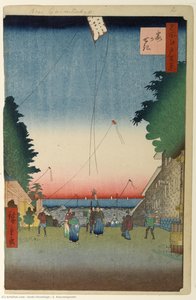
Early Department from a Daimyo, The maple leaves of Mama, Tekona shrine and Tsugi bridge, Hakone, Station 36, Goyu; Kyoka Tokaido Series, Fushimi, Číslo 51, Ichikoku Bridge in the Eastern Capital (Tōto: Ichikoku bashi), Shinagawa Sunrise from the series Fifty-three Stations on the Tokaido Road, The Rokugo River Ferry, Kawasaki, from the series the Fifty-three Stations of the Tokaido (Hoeido edition ), Itsukushima in Aki Province a Tenryu River Ferry Crossing, Mitsuke, from the series The Fifty-three Stations of the Tokaido (Gyosho Edition). Hodnocení výše uvádí rok a muzeum pro každé z nich.

Kolik děl vytvořil/a Hirošige?Odhalit odpověď

Náš katalog obsahuje 353 děl umělce Hirošige z let 1833 až 1858.

Kde jsou vystavena nejznámější originály umělce Hirošige?Odhalit odpověď

Většinou v Nakagawa-machi Bato Hiroshige Museum of Art (Nagasaki), Indianapolis Museum of Art (Indianapolis) a Metropolitan Museum of Art (New York). V tabulce muzeí výše jsou vypsány všechny.

Kdy Hirošige vytvořil své nejslavnější obrazy?Odhalit odpověď

V období 1850s: 43 z celkem 100 děl na této stránce vzniklo právě tehdy, z toho The maple leaves of Mama, Tekona shrine and Tsugi bridge z nich.

Která jsou nejstarší a nejnovější slavná díla umělce Hirošige?Odhalit odpověď

Na této stránce je nejstarší dílo z Výhled na Shiomi údolí (1833) a nejnovější z Ichikoku Bridge in the Eastern Capital (Tōto: Ichikoku bashi) (1858).

Kterým tématům se Hirošige věnoval(a) nejčastěji?Odhalit odpověď

Edo period (32), Ukiyo-e (23) a Woodblock print (22) napříč 100 díly na této stránce.

V jaké technice tvořil(a) Hirošige nejčastěji?Odhalit odpověď

Woodblock Print, u 61 z 100 děl na této stránce.

S jakým směrem je spojen(a) Hirošige?Odhalit odpověď

Japanese landscape painting, podle originálů na této stránce.

Jaká originální díla Hirošige má v obsluze Nakagawa-machi Bato Hiroshige Museum of Art?Odhalit odpověď

Early Department from a Daimyo, The Rokugo River Ferry, Kawasaki, from the series the Fifty-three Stations of the Tokaido (Hoeido edition ) a Tenryu River Ferry Crossing, Mitsuke, from the series The Fifty-three Stations of the Tokaido (Gyosho Edition): muzeum Nakagawa-machi Bato Hiroshige Museum of Art, Nagasaki má v obsluze 29 děl z této stránky.

Mohu si nechat ručně vypracovat obraz od Hirošige?Odhalit odpověď

Ano, jako reprodukce: originál zůstává ve svém muzeu, ale jakýkoli obraz na této stránce může být pro vás ručně namalován na zakázku z jeho vlastní stránky.

Hirošige: umělec

A Poetic Vision of Edo Japan: The Life and Art of Utagawa Hiroshige

Utagawa Hiroshige, narozený Andō Tokutarō v roce 1797 v rušném městě Edo (moderní Tokio), se jeví jako klíčová postava světa *ukiyo-e*, nebo “obrazů plovoucího světa”. I když je hluboce zakořeněn v tradicích japonského dřevokutí, Hiroshige překonal pouhé replikování a obdařil své krajiny poetickým citlivostí, která rezonovala hluboko jak v samotné Japonsku, tak později napříč západním uměleckým světem. Jeho život se odehrával za období relativního míru a prosperity pod Tokugawa šogunátu, přesto i za doby, která byla poznamenána rostoucím společenským vývojem a konečným západním vlivem – síly, které nakonec přispěly k úpadku *ukiyo-e*, i když zároveň zesilovaly jeho trvalé dědictví. Původně určený pro konvenčnější cestu do samurajské rodiny – jeho otec sloužil jako strážce ohně –, Hiroshigeho umělecké sklony ho vedly k stáže u Utagawy Toyohiro, mistra školy Utagawa. To se ukázalo jako klíčový obrat, který ho odklonil od populárních vyobrazení kurtek a herců, které preferovali mnozí *ukiyo-e* umělci, směrem k krajině, žánru, který nakonec přetvořil.

Od Žánrových Scén Obdařujících Krajiny

Hiroshigeho rané dílo bylo v souladu s konvencemi jeho školy a zahrnovalo portréty a scény z každodenního života. Nicméně, jeho přijetí krajiny skutečně odlišilo jeho práci. Vlivem byli dřívější mistři jako Hokusai – jehož *Třicet šest výhledů na horu Fujijama* již okouzalo publikum – Hiroshige vyvinul jedinečný styl charakterizovaný atmosférickou perspektivou, jemnými barevnými paletami a hlubokou citlivostí k měnícím se ročním obdobím. Nevytvářel jen místa; evokoval jejich atmosféru, zachycoval podstatu konkrétního okamžiku v čase. Série *Pedesát tři stanice Tokaidó* (1833–1834), možná jeho nejvýznamnější dílo, ilustruje tento přístup. Tato monumentální práce dokumentovala cestu po Tokaidó, hlavní trase spojující Edo a Kjóto, nikoli jako prostou cestopisnou knihu, ale jako sérii sugestivních vize – náhlá dešťová bouře ve Shono, vzdálený pohled na horu Fujijama z Kanaya, rušná aktivita na Odawar. Každé tisknutí je nabité pocitem mezitímosti a klidu, vyzývá diváky, aby se vydali na cestu společně s cestovateli. Mistr Hiroshige často využíval *bokashi*, techniku zahrnující více tisků pro jedinou barvu, což mu umožňovalo vytvářet jemné gradace barev a atmosférické efekty, které bylo velmi obtížné napodobit.

Mistr Atmosféry a Techniky

Hiroshigeho technická zručnost byla stejně pozoruhodná jako jeho umělecké vize. Nevytvářel jen přesnou reprezentaci; hledal zachycení *pocitu* místa. Jeho používání barev, i když často restriktivní ve srovnání s některými jeho současníky, bylo zásadní pro dosažení tohoto efektu. Často využíval více bloků pro jednu barvu, což mu umožňovalo vytvářet nuancované odstíny a atmosférické efekty, které byly velmi obtížné napodobit. Jemné modré tóny v jeho vyobrazeních deště nebo mlhy, teplé tóny podzimní pampelišek – to nebylo náhodné; byly pečlivě promyšlenými prvky navrženými k evokaci specifických emocí a pocitů. Kromě *bokashi* byl Hiroshige zručný v používání volného prostoru – *ma*, konceptu klíčového pro japonské estetiku, který umožňoval oblastím tisku „dýchat“ a zvyšoval celkový pocit klidu. Jeho série *Sto slavných výhledů na Edo* (1856–1858) dále ukázala jeho mistrovství, nabízejíc intimní pohledy do života a krajin svého milovaného města.

Vliv a Trvalé Dědictví

I když tradice *ukiyo-e* začínala ustupovat po Hiroshigeově smrti v roce 1858 – úpadek zrychlený Meijiho restrikcí a následným přílivem západní kultury – jeho vliv na umělecké svět se ukázal být překvapivě trvalý. V pozdních 19. letech japonské tisky zaplavily Evropu, což vyvolalo jev známý jako *Japonisme*. Umělci jako Édouard Manet, Claude Monet a Edgar Degas byli okouzleni odvážnými kompozicemi, zploštělou perspektivou a nekonvenčními barevnými paletami *ukiyo-e*, které začali integrovat do své vlastní tvorby. Vincent van Gogh byl zvláště nadšený Hiroshigeho tisky, vytvořil kopie několika z nich, včetně „Plum Park in Kameido“, demonstrujíc tak hluboké obdiv k Hiroshigeově mistrovství v používání barev a kompozice. Hiroshigeho vliv se rozprostřel za hranice malby; lze jej vidět v architektuře, designu a dokonce i literatuře. Dnes je Utagawa Hiroshige zapamatován nejen jako brilantní umělec, ale také jako kulturní ambasador, který pomohl most mezi východem a západem, zanechávaje nezapomenutelný odkaz v historii umění.

Významné díla

  • Pedesát tři stanice Tokaidó: Hiroshigeho nejznámější série, zobrazující cestu po hlavní trase spojující Edo a Kjóto.
  • Sto slavných výhledů na Edo: Zaujetý pohled do života a krajin jeho milovaného města.
  • Vliv na sérii Japonaiserie Vincenta van Gogha: Včetně „Plum Park in Kameido“, demonstrující Van Goghův hluboký obdiv k Hiroshigeově mistrovství v používání barev a kompozice.

Všechna díla od Hirošige: 353 →