Portrét Max Weber

Obrazy autora Max Weber: 75 nejznámějších díel podle pohledu galerie

Aktualizováno říjen 2026 · seřazeno podle našeho skóre popularity (vyhledávání, návštěvy a objednávky u každého díla) · 76 děl umělce Max Weber v našem katalogu

Stručně řečeno

Z pohledu galerie je nejslavnějším dílem Max Weber obraz Gauguin Girl (1907). Figures in a Landscape (1911) a Woman Reading (1916) doplňují trio, které každé oko okamžitě pozná. Z 76 děl umělce Max Weber v našem katalogu představuje galerie níže 75 nejznámějších děl, z nichž každé je originálem s uvedením roku vzniku, muzea a toho, co jej činí jedinečným.

1881 – 1961, Bělostok Cubism Nejvíce děl: The Phillips Collection

Top 10 obrazů umělce Max Weber v naší galerii

Obrazy autora Max Weber, seřazeny od 11 do 75

Slavná díla Max Weber podle jednotlivých období

Motivy, které zaujaly Max Weber

Čtyři témata, která se v těchto originálech nejčastěji objevují, z nichž každé má svůj nejlepší příklad.

Muzea, v nichž jsou vystavena originálna umělce Max Weber

8 muzea, v nichž je umístěno nejvíce obrazů z této stránky.

Muzea Město Díla autora Max Weber Obrazy z tohoto seznamu
The Phillips Collection, Washington, D.C.The Phillips Collection Washington, D.C. 5 High Noon, Colonial Bowl, Rabbi
Brooklynské muzeum, BrooklynBrooklynské muzeum Brooklyn 2 The Visit, The Cellist
Muzeum umění Johna a Mable Ringlingových, SarasotaMuzeum umění Johna a Mable Ringlingových Sarasota 1 Untitled (Still Life)
Muzeum umění v Bostonu, BostonMuzeum umění v Bostonu Boston 1 Path in the Woods
Whitney Museum of American Art, New YorkWhitney Museum of American Art New York 1 Adoration of the Moon
Art Institute of Chicago, ChicagoArt Institute of Chicago Chicago 1 Still Life
Metropolitan Museum of Art, New YorkMetropolitan Museum of Art New York 1 Pacific Coast
Smithsonian American Art Museum, Washington, D.C.Smithsonian American Art Museum Washington, D.C. 1 Summer

Max Weber, jeden ikonický obraz na každé desetiletí

Díla podle dekád

Vyberte si dekádu a prohlédněte si originál, který ji definuje.

Obrazy umělce Max Weber: odpovědi galerie

Který obraz autora Max Weber je nejslavnější ze všech?Odhalit odpověď

Gauguin Girl (1907). Následují Figures in a Landscape (1911) a Woman Reading (1916).

Kolik let bylo Max Weber, když dokončil/a Gauguin Girl?Odhalit odpověď

26 let: dílo Gauguin Girl pochází z roku 1907 a Max Weber se narodil/a v roce 1881.

Kterých 10 nejlepších obrazů má Max Weber?Odhalit odpověď

Gauguin Girl, Figures in a Landscape, Woman Reading, Untitled (Still Life), Path in the Woods, untitled (1109), untitled (2416), untitled (5652), untitled (8675) a untitled (7238). Hodnocení výše uvádí rok a muzeum pro každé z nich.

Kolik děl vytvořil/a Max Weber?Odhalit odpověď

Náš katalog obsahuje 76 děl umělce Max Weber z let 1907 až 1952.

Kde jsou vystavena nejznámější originály umělce Max Weber?Odhalit odpověď

Většinou v The Phillips Collection (Washington, D.C.), Brooklynské muzeum (Brooklyn) a Muzeum umění Johna a Mable Ringlingových (Sarasota). V tabulce muzeí výše jsou vypsány všechny.

Kdy Max Weber vytvořil své nejslavnější obrazy?Odhalit odpověď

V období 1940s: 5 z celkem 75 děl na této stránce vzniklo právě tehdy, z toho Untitled (Still Life) z nich.

Která jsou nejstarší a nejnovější slavná díla umělce Max Weber?Odhalit odpověď

Na této stránce je nejstarší dílo z Gauguin Girl (1907) a nejnovější z Pacific Coast (1952).

Kterým tématům se Max Weber věnoval(a) nejčastěji?Odhalit odpověď

Nude figures (3), Melancholy mood (2) a American art (2) napříč 75 díly na této stránce.

S jakým směrem je spojen(a) Max Weber?Odhalit odpověď

Cubism, podle originálů na této stránce.

Jaká originální díla Max Weber má v obsluze The Phillips Collection?Odhalit odpověď

High Noon, Colonial Bowl a Rabbi: muzeum The Phillips Collection, Washington, D.C. má v obsluze 5 děl z této stránky.

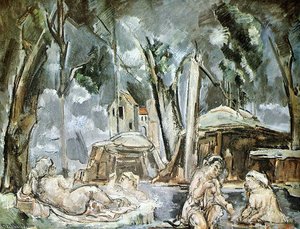
Max Weber: umělec

Early Life and the Seeds of Modernism

Max Weber, born in Białystok, Poland in 1881, embarked on a journey that would indelibly mark the landscape of American art. His formative years were steeped in the traditions of Orthodox Judaism, a heritage that would later profoundly influence his artistic expression. The family’s emigration to Brooklyn, New York, when Weber was just ten years old, proved pivotal. This relocation thrust him into a vibrant, rapidly changing society—a crucible where Old World roots and New World aspirations collided. It was at the Pratt Institute in Brooklyn that Weber first formally engaged with art, studying under the influential Arthur Wesley Dow. Dow’s unwavering conviction in innovative artistic approaches – rejecting traditional perspective and embracing simplified forms – coupled with his exposure to Japanese aesthetics and connections to Paul Gauguin, ignited within Weber a nascent modernist sensibility. This encounter would prove transformative, shaping his artistic worldview for decades to come.

The Parisian Awakening and Introduction of Cubism

In 1905, Weber ventured to Europe, specifically Paris, the epicenter of avant-garde thought. His initial enrollment at the Académie Julian served merely as a stepping stone; it was his immersion in the city’s artistic milieu that truly propelled him forward. He forged enduring friendships with Henri Rousseau, whose evocative depictions of nature captivated him, and found himself drawn into the orbit of luminaries like Henri Matisse and Pablo Picasso—artists who were bravely dismantling centuries-old conventions of representation. Weber frequented Gertrude Stein's salon, a legendary gathering place for artists, writers, and intellectuals, absorbing the latest currents in poetry and art theory. This exposure to the School of Paris fundamentally altered his artistic trajectory. The influence of Picasso’s fractured planes and Georges Braque’s meticulous geometric constructions became palpable in his early canvases. He experimented with collage techniques, incorporating fragments of printed matter into his compositions—a bold gesture that mirrored the broader intellectual ferment of the era.

Bold Early Works and Critical Reception

Weber's artistic output during this period yielded remarkable results. Notable pieces include *Chinese Restaurant* (1915), a striking depiction of urban life rendered in Cubist fragmentation, demonstrating his masterful grasp of geometric abstraction. However, Weber’s pioneering spirit was met not with universal acclaim but with vehement opposition from segments of the art establishment. The 1911 exhibition at the 291 Gallery, organized by Alfred Stieglitz, served as a watershed moment—and a deeply disheartening one for Weber. Critics leveled accusations of barbarity and vulgarity against his paintings, dismissing them as utterly devoid of artistic merit. The public struggled to comprehend the radical departure from traditional perspective, perceiving it as incomprehensible and unsettling. This uncompromising stance solidified Weber’s reputation as an artist who dared to challenge accepted norms—a courageous defiance that nonetheless resulted in profound personal hardship.

A Return to Figuration and Jewish Heritage

Around 1920, Weber recalibrated his artistic focus, abandoning the rigid constraints of Cubism for a more expressive figurative style. This deliberate shift wasn’t an outright rejection of Modernism but rather a purposeful exploration of new avenues for conveying emotion and spiritual depth. His later canvases frequently depicted scenes from Jewish life—families gathered in intimate domestic settings, rabbis engaged in Talmudic study, and portraits imbued with palpable reverence – reflecting his unwavering connection to his heritage. These paintings were characterized by meticulous detail and subtle tonal gradations, demonstrating Weber’s mastery of traditional techniques while simultaneously embracing a humanist sensibility.

Legacy and Recognition

Weber's contribution to American art history is undeniable. By the 1940s and 50s, his expressionist figurative paintings garnered considerable admiration from fellow artists and critics alike. A monumental retrospective at the Jewish Museum in 1982 cemented his place among the foremost figures of Modern Art, securing his enduring legacy as an artist who bravely championed innovation while simultaneously honoring profound cultural roots. His unwavering conviction in artistic experimentation—combined with a deep empathy for human experience—continues to inspire artists and scholars today.

Všechna díla od Max Weber: 76 →
