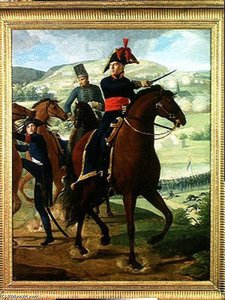
Portrét Louis Hersent

37 nejslavnějších obrazů autora Louis Hersent, výběr z galerie

Aktualizováno říjen 2026 · seřazeno podle našeho skóre popularity (vyhledávání, návštěvy a objednávky u každého díla) · 37 děl umělce Louis Hersent v našem katalogu

Stručně řečeno

Z všech originálů, které Louis Hersent zanechal, je nejslavnější Sophie Crouzet (1801), který se nachází ve sbírce Clevelandské muzeum umění, Cleveland. Hned za ním následují Henri-Charles-Ferdinand of Artois Duke of Bordeaux and his Sister Louise-Marie-Therese of (1820) a Portrait of Madame Le Doyen (1825). Náš katalog obsahuje 37 děl umělce Louis Hersent; galerie si zachovala 37 děl, která obdivuje celý svět, přičemž každé je znázorněno s datem vzniku, názevem muzea a jeho příběhem.

1777 – 1860, Paříž Neoclassicism Nejvíce děl: Musée Carnavalet

10 nejlepších obrazů umělce Louis Hersent: výběr galerie

Výběr umělce Louis Hersent pokračuje, od 11 do 37

Motivy, které zaujaly Louis Hersent

Čtyři témata, která se v těchto originálech nejčastěji objevují, z nichž každé má svůj nejlepší příklad.

Muzea, v nichž jsou vystavena originálna umělce Louis Hersent

8 muzea, v nichž je umístěno nejvíce obrazů z této stránky.

Muzea Město Díla autora Louis Hersent Obrazy z tohoto seznamu
Musée Carnavalet, PařížMusée Carnavalet Paříž 3 Portrait of Madame Arachequesne, Portrait of Romain de Bourge, General Louis Marie Turreau De Garambouville At The Gravieres Affair
Opera House, VersaillesOpera House Versailles 3 Louise-Adélaïde Desnos, Queen Maria Amalia Of The French, Delphine De Girardin
Clevelandské muzeum umění, ClevelandClevelandské muzeum umění Cleveland 1 Sophie Crouzet
Musée de la Vie Romantique, ParisMusée de la Vie Romantique Paris 1 Portrait of Madame Le Doyen
Château de Versailles, VersaillesChâteau de Versailles Versailles 1 Portrait of Sophie Gay
Museum of the French Revolution, VizilleMuseum of the French Revolution Vizille 1 The Battle Of Landschut, 21st April
Musée Condé, ChantillyMusée Condé Chantilly 1 Marie-amelie De Bourbon -
Nationalmuseum, StockholmNationalmuseum Stockholm 1 Fénélon Returns A Stolen Cow To A Peasant

Louis Hersent dekáda po dekádě: originální díla, která definují každou z nich

Díla podle dekád

Vyberte si dekádu a prohlédněte si originál, který ji definuje.

Otázky sběratelů o obrazech umělce Louis Hersent

Kterým dílem je Louis Hersent nejznámější?Odhalit odpověď

Sophie Crouzet (1801), Clevelandské muzeum umění, Cleveland. Následují Henri-Charles-Ferdinand of Artois Duke of Bordeaux and his Sister Louise-Marie-Therese of (1820) a Portrait of Madame Le Doyen (1825).

Kolik let bylo Louis Hersent, když bylo vytvořeno dílo Sophie Crouzet?Odhalit odpověď

24 let: dílo Sophie Crouzet pochází z roku 1801 a Louis Hersent se narodil/a v roce 1777.

Kterých deset nejslavnějších obrazů má Louis Hersent?Odhalit odpověď

Sophie Crouzet, Henri-Charles-Ferdinand of Artois Duke of Bordeaux and his Sister Louise-Marie-Therese of, Portrait of Madame Le Doyen, Portrait of Madame Arachequesne, Portrait of Sophie Gay, Portrait of Madame Demetz in a red sofa, Religieux de l'hospice du mont Saint Gothard, Portrait of Sophie Legrand, comtesse Walsh de Serrant, and her children, Self-portrait a Louise-Adélaïde Desnos. Hodnocení výše uvádí rok a muzeum pro každé z nich.

Kolik obrazů zanechal(a) Louis Hersent?Odhalit odpověď

Náš katalog obsahuje 37 děl umělce Louis Hersent z let 1801 až 1854.

Ve kterých muzeích jsou vystavena díla mistrovská umělce Louis Hersent?Odhalit odpověď

Většinou v Musée Carnavalet (Paříž), Opera House (Versailles) a Clevelandské muzeum umění (Cleveland). V tabulce muzeí výše jsou vypsány všechny.

V jakých letech namaloval Louis Hersent svá nejznámější díla?Odhalit odpověď

V období 1820s: 5 z celkem 37 děl na této stránce vzniklo právě tehdy, z toho Henri-Charles-Ferdinand of Artois Duke of Bordeaux and his Sister Louise-Marie-Therese of z nich.

Jaká jsou první a poslední slavná originální díla umělce Louis Hersent?Odhalit odpověď

Na této stránce je nejstarší dílo z Sophie Crouzet (1801) a nejnovější z Self-portrait (1854).

Jaká témata si Louis Hersent vybíral nejčastěji?Odhalit odpověď

Portraiture (4), Royalty (3) a Neoclassical style (2) napříč 37 díly na této stránce.

K kterému uměleckému směru patří Louis Hersent?Odhalit odpověď

Neoclassicism, podle originálů na této stránce.

Která díla umělce Louis Hersent jsou vystavena v Musée Carnavalet?Odhalit odpověď

Portrait of Madame Arachequesne, Portrait of Romain de Bourge a General Louis Marie Turreau De Garambouville At The Gravieres Affair: muzeum Musée Carnavalet, Paříž má v obsluze 3 děl z této stránky.

Mohu si nechat vyrobit reprodukci obrazu od Louis Hersent?Odhalit odpověď

Ano, jako reprodukce: originál zůstává ve svém muzeu, ale jakýkoli obraz na této stránce může být pro vás ručně namalován na zakázku z jeho vlastní stránky.

Louis Hersent: život a dílo

Louis Hersent (1777-1860): French Neoclassicism and the Spirit of Restoration

Louis Hersent, a name resonating with the elegance of the French Restoration era, was more than just a painter; he was a chronicler of his time. Born in Paris in 1777, Hersent’s artistic journey unfolded against a backdrop of revolutionary upheaval and imperial grandeur, ultimately solidifying his place as a master of Neoclassical portraiture and historical painting. His canvases offer not merely likenesses but insightful glimpses into the personalities and societal currents of early 19th-century France—a testament to an artist who skillfully blended tradition with psychological depth.

Early Influences and Artistic Training

From an early age, Hersent demonstrated a remarkable aptitude for art, attracting the attention of Jacques-Louis David – arguably the most influential figure in Neoclassicism and official artist of Napoleon Bonaparte. This formative encounter proved pivotal, instilling in Hersent a rigorous approach to draftsmanship, composition, and form that would characterize his entire oeuvre. David’s unwavering commitment to classical ideals—clarity, balance, and restraint—served as an indelible blueprint for Hersent's artistic sensibilities. Winning the prestigious Prix de Rome in 1797 further cemented his dedication to these principles, providing him with invaluable exposure to the artistic heritage of Italy and equipping him with the technical skills necessary to excel within the established artistic framework.

The Embrace of Neoclassicism: Style and Technique

Hersent’s work embodies the core tenets of Neoclassicism: a reverential return to antiquity, an insistence on order and reason, and a meticulous attention to detail—all underpinned by a masterful command of technique. Unlike many artists of his era who embraced Romanticism's expressive fervor, Hersent maintained a restrained palette and favored compositions that prioritized clarity and balance. This stylistic preference is evident in his portraits – particularly those depicting members of the French aristocracy and military leaders – where he meticulously rendered fabrics and textures to convey both status and dignity. The resulting images are imbued with an understated elegance that speaks volumes about the sitter’s character and aspirations. Consider The Duc D'Orléans, for example; Hersent captures the nobleman’s commanding presence with remarkable precision, conveying not only his physical stature but also his inner composure—a hallmark of Neoclassical portraiture.

Notable Achievements: Portraits and Historical Scenes

Hersent achieved considerable renown throughout his lifetime, securing commissions from prominent patrons and earning recognition at the Paris Salon – France's premier artistic exhibition. His portraits were particularly sought after by members of the royal family, reflecting the artist’s ability to portray individuals with sensitivity and accuracy. However, Hersent wasn’t solely focused on portraiture; he also produced compelling historical paintings that captured pivotal moments in French history. Marshal André Masséna exemplifies this dual talent—a dramatic depiction of a celebrated military figure imbued with both grandeur and psychological nuance. Similarly, Louis XVI relieving the Afflicted showcases Hersent's skill in conveying emotion and narrative through visual imagery, cementing his place as one of the foremost artists of his time.

Legacy and Enduring Influence

Hersent’s contribution to French art extends beyond individual masterpieces; he fostered artistic education and mentored aspiring painters—including Marie Virginie Boquet, who herself achieved considerable success in porcelain painting. His unwavering dedication to classical ideals and meticulous technique ensured that his work would endure, serving as an inspiration for subsequent generations of artists. Though perhaps overshadowed by the towering figures of David and Ingres, Louis Hersent’s legacy resides in his ability to synthesize tradition with psychological insight—creating paintings that continue to captivate audiences today and offering invaluable glimpses into the spirit of the Restoration era. His canvases stand as enduring symbols of Neoclassicism's pursuit of beauty and truth, securing his place within the annals of French art history.

Všechna díla od Louis Hersent: 37 →