Portrét José Clemente Orozco

86 nejslavnějších obrazů autora José Clemente Orozco, každý naprosto unikátní

Aktualizováno listopad 2026 · seřazeno podle našeho skóre popularity (vyhledávání, návštěvy a objednávky u každého díla) · 88 děl umělce José Clemente Orozco v našem katalogu

Stručně řečeno

Father Hidalgo (1949) je obraz autora José Clemente Orozco, který přitahuje nejvíce pohledů. Poté se zrak přesouvá k Catharsis (1934) a Ženy (1935). Z 88 děl umělce José Clemente Orozco v našem katalogu je těchto 86 těch nejznámějších; každé z nich je unikátním originálem s uvedením roku vzniku, muzea a důvodu jeho nesmrtelnosti.

1883 – 1949, Ciudad Guzmán Realism Nejvíce děl: Museo Nacional de Arte

Top 10 obrazů autora José Clemente Orozco podle výběru galerie

1
Father Hidalgo (1949) od José Clemente Orozco

Father Hidalgo

1949 · Fresco

The mural titled Father Hidalgo is a significant work by the Mexican muralist José Clemente Orozco. Located within the Palacio de Gobierno de Jalisco in Guadalajara, Jalisco, Mexico, this large-scale piece was commissioned by Governor Everardo Topete. It occupies a prominent position in the building's architecture, specifically within the staircase area.

2
Catharsis (1934) od José Clemente Orozco

Catharsis

1934 · Fresco

The fresco titled Catharsis was executed by the Mexican artist José Clemente Orozco. Created in 1934, the work captures a moment of profound tension. It exists as a heavy presence within the Museo del Palacio de Bellas Artes in Mexico City, Mexico. The pigment clings to the walls of this institution, marking a specific chapter of the Mexican Mural Renaissance.

3
Ženy (1935) od José Clemente Orozco

Ženy

1935 · Kresba · Inter-American Development Bank, Washington, D.C.

Ženy – José Clemente Orozco: Výrazný obraz revoluce a lidské kondice José Clemente Orozco byl významným představitelem mexického muralismu, jehož dílo zůstává inspirací pro umělce po celém světě. Tento obraz „Ženy“ vytvořil v roce 1935 jako součást monumentální fresky „Catharsis“, která byla umístěna ve Výstavním paláci Mexika a věnována oslavě mexické revoluce. Orozco byl fascinován konfliktem mezi společenskými hodnotami a lidskou bolestí, což se odráží v jeho tvorbě. Jeho práce…

4
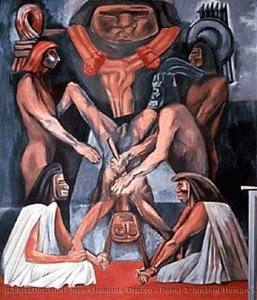
Panel 3. Ancient Human Sacrifice - The Epic of American Civilization (1934) od José Clemente Orozco

Panel 3. Ancient Human Sacrifice - The Epic of American Civilization

1934 · Acrylic On Canvas · Baker-Berry Library, Hanover

José Clemente Orozco's "Panel 3. Ancient Human Sacrifice – The Epic of American Civilization," a monumental fresco residing within the hallowed halls of Dartmouth College’s Baker Memorial Library, isn’t merely a depiction of ritual; it’s an immersive plunge into the primal anxieties and enduring questions that have haunted humanity since its earliest days. Painted between 1932 and 1934 during a period of intense social and political upheaval in Mexico –…

5
Panel 19. Modern Migration of the Spirit - The Epic of American Civilization (1934) od José Clemente Orozco

Panel 19. Modern Migration of the Spirit - The Epic of American Civilization

1934 · Fresco · Baker-Berry Library, Hanover

In the vast, sweeping history of Mexican Muralism, few works command the visceral attention of José Clemente Orozco’s Panel 19. Modern Migration of the Spirit - The Epic of American Civilization. Created in 1934 for Dartmouth College, this monumental fresco is far more than a mere wall painting; it is a profound psychological landscape that captures the turbulent heartbeat of an era. As one gazes upon the work, they are…

6
The trench od José Clemente Orozco

The trench

Fresco

The artwork, known as The Trench or La Trinchera, was executed by the Mexican artist José Clemente Orozco in 1926. This fresco is situated within the Courtyard of the National Preparatory School in Mexico City, Mexico. It offers a somber presentation of soldiers during the Mexican Revolution, capturing a moment of profound human struggle.

7
Figure with Hands Clasped before Face od José Clemente Orozco

Figure with Hands Clasped before Face

Charcoal

In this intimate portrait study, titled Figure with Hands Clasped before Face, the Mexican muralist José Clemente Orozco turns his attention away from the vast scale of public walls toward a more private, singular moment. The work focuses on a human figure, capturing a specific state of mind through a singular, heavy gesture. There is a quiet intensity in how the subject is rendered, moving beyond mere likeness to explore…

8
Wheel (1939) od José Clemente Orozco

Wheel

1939 · Fresco

In "Wheel" by José Clemente Orozco, a massive metal wheel dominates the frame. The object possesses a heavy, industrial presence, its large scale suggesting a weight that anchors the entire composition. Above this metallic structure, a sun sits in the background, positioned directly over the rim. This celestial placement creates a stark contrast between the cold, hard surface of the machine and the light of the sky.

9
The Clowns of War Arguing in Hell (1944) od José Clemente Orozco

The Clowns of War Arguing in Hell

1944 · Fresco

The Clowns of War Arguing in Hell is a work by José Clemente Orozco. Created about 1944, the mural captures a chaotic descent. It presents Nazi clowns of war in hell, locked in a struggle over politics, philosophies, and religion. The figures exist in a state of perpetual friction.

10
Omnisciencia (1925) od José Clemente Orozco

Omnisciencia

1925 · Fresco

In 1925, within the bustling atmosphere of Mexico City, Mexico, José Clemente Orozco breathes life into Omnisciencia. This work emerges as a powerful expression of the Muralism movement, a period where art seeks to speak directly to the soul of a nation. Through the ancient and demanding technique of fresco, the artist applies pigment to wet plaster, ensuring the imagery becomes a permanent part of the very walls it inhabits.

Slavná díla umělce José Clemente Orozco, čísla 11 až 86

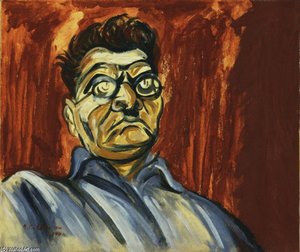
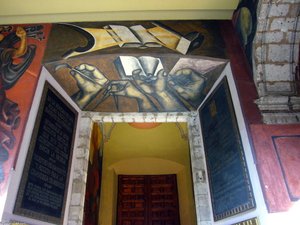
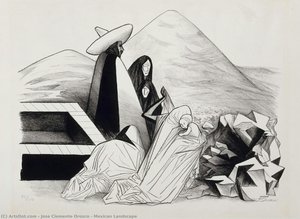
11The Rich People (detail) (1924) od José Clemente OrozcoThe Rich People (detail)1924 12Sleeping (The Family) od José Clemente OrozcoSleeping (The Family) 13Cortés and La Malinche (1926) od José Clemente OrozcoCortés and La Malinche1926 14The Subway (1928) od José Clemente OrozcoThe Subway1928 · MoMA - Museum of Modern Art 15Youth (1924) od José Clemente OrozcoYouth1924 16Barricade (1931) od José Clemente OrozcoBarricade1931 · MoMA - Museum of Modern Art 17La Conquete od José Clemente OrozcoLa Conquete 18The Dismembered Man, from the Los teules series (1947) od José Clemente OrozcoThe Dismembered Man, from the Los teules series1947 · Museo Nacional de Arte 19The Demagogue (1946) od José Clemente OrozcoThe Demagogue1946 · Museo Nacional de Arte 20Indian Women, from the Los teules series (1947) od José Clemente OrozcoIndian Women, from the Los teules series1947 · Museo Nacional de Arte 21Head Pierced with Arrows, from the Los teules series (1947) od José Clemente OrozcoHead Pierced with Arrows, from the Los teules series1947 · Museo Nacional de Arte 22Title translation: Buffoons (1946) od José Clemente OrozcoTitle translation: Buffoons1946 · Museum of Latin American Art 23Ceiling of Colegio de San Ildefonso (1926) od José Clemente OrozcoCeiling of Colegio de San Ildefonso1926 24Mexican Peasants Working od José Clemente OrozcoMexican Peasants Working 25American Civilization-The Gods of the Modern World od José Clemente OrozcoAmerican Civilization-The Gods of the Modern World 26The Rich People (detail) (1924) od José Clemente OrozcoThe Rich People (detail)1924 27The Bedroom (1910) od José Clemente OrozcoThe Bedroom1910 · Museo Nacional de Arte 28Proletarians od José Clemente OrozcoProletarians 29Head of Quetzalcoatl od José Clemente OrozcoHead of Quetzalcoatl 30Dead Woman od José Clemente OrozcoDead Woman 31The Flag od José Clemente OrozcoThe Flag 32Mexican Landscape od José Clemente OrozcoMexican Landscape 33Marching Women od José Clemente OrozcoMarching Women 34Three Generations od José Clemente OrozcoThree Generations 35Grief od José Clemente OrozcoGrief 36Leaders od José Clemente OrozcoLeaders 37The Masses od José Clemente OrozcoThe Masses 38The Franciscan and the Indian od José Clemente OrozcoThe Franciscan and the Indian 39Vaudeville od José Clemente OrozcoVaudeville 40Requiem od José Clemente OrozcoRequiem 41Untitled od José Clemente OrozcoUntitled 42strippers od José Clemente Orozcostrippers 43Hangman od José Clemente OrozcoHangman 44Revolution od José Clemente OrozcoRevolution 45Mexican Woman od José Clemente OrozcoMexican Woman 46The Hanged Man od José Clemente OrozcoThe Hanged Man 47the Canteen od José Clemente Orozcothe Canteen 48Tourists od José Clemente OrozcoTourists 49Composition study for Gods of the Modern World od José Clemente OrozcoComposition study for Gods of the Modern World 50Wounded Soldier od José Clemente OrozcoWounded Soldier 51Mexican Pulquería od José Clemente OrozcoMexican Pulquería 52Zapata od José Clemente OrozcoZapata 53Self-Portrait od José Clemente OrozcoSelf-Portrait 54Mexican soldiers (1928) od José Clemente OrozcoMexican soldiers1928 55The White House (1925) od José Clemente OrozcoThe White House1925 56Prometheanist (1924) od José Clemente OrozcoPrometheanist1924 57Soldiers (1926) od José Clemente OrozcoSoldiers1926 58Combat (1927) od José Clemente OrozcoCombat1927 59Entrance of Colegio de San Ildefonso (1926) od José Clemente OrozcoEntrance of Colegio de San Ildefonso1926 60Reaching out (1924) od José Clemente OrozcoReaching out1924 61The Franciscans (1926) od José Clemente OrozcoThe Franciscans1926 62Farewell (1926) od José Clemente OrozcoFarewell1926 63Revolutionaries on the march (1924) od José Clemente OrozcoRevolutionaries on the march1924 64Call to Revolution and Table of Universal Brotherhood (Table of Universal Brotherhood) (1931) od José Clemente OrozcoCall to Revolution and Table of Universal Brotherhood (Table of Universal Brotherhood)1931 65Mexican Landscape (1930) od José Clemente OrozcoMexican Landscape1930 66Winter (1932) od José Clemente OrozcoWinter1932 67Zapata, The Art Institute of Ch (1930) od José Clemente OrozcoZapata, The Art Institute of Ch1930 · Art Institute of Chicago 68Prometheus (1930) od José Clemente OrozcoPrometheus1930 69Self-portrait (1937) od José Clemente OrozcoSelf-portrait1937 70Death and Resurrection (1943) od José Clemente OrozcoDeath and Resurrection1943 · Museo Nacional de Arte 71Dive Bomber and Tank (1940) od José Clemente OrozcoDive Bomber and Tank1940 72Ceiling mural of Hospicio Cabanas (1939) od José Clemente OrozcoCeiling mural of Hospicio Cabanas1939 73Advance (1940) od José Clemente OrozcoAdvance1940 74Man of Fire (1939) od José Clemente OrozcoMan of Fire1939 75Parte central de la Capilla Mayor del Museo Cabañas (1939) od José Clemente OrozcoParte central de la Capilla Mayor del Museo Cabañas1939 76Man with Crutches (dedicated to photographer Leo Matiz) (1944) od José Clemente OrozcoMan with Crutches (dedicated to photographer Leo Matiz)1944 · Inter-American Development Bank 77Nude and Dressed Figure (1945) od José Clemente OrozcoNude and Dressed Figure1945 · colección-blaisten 78Mexican Landscape \n[Paisaije Mexicano] (1932) od José Clemente OrozcoMexican Landscape \n[Paisaije Mexicano]1932 · Nagoya City Art Museum 79Allegory of Mexico (1948) od José Clemente OrozcoAllegory of Mexico1948 · colección-blaisten 80Agreed (Cowboys And Zapatistas) od José Clemente OrozcoAgreed (Cowboys And Zapatistas) 81The Maguey od José Clemente OrozcoThe Maguey 82Ruined House (Casa Arruinada) od José Clemente OrozcoRuined House (Casa Arruinada) 83Rear Guard od José Clemente OrozcoRear Guard 84Zapatistas od José Clemente OrozcoZapatistasMoMA - Museum of Modern Art 85Mexican Soldiers (1930) od José Clemente OrozcoMexican Soldiers1930 86The Poor (1926) od José Clemente OrozcoThe Poor1926

Slavná díla José Clemente Orozco podle jednotlivých období

Motivy, které zaujaly José Clemente Orozco

Čtyři témata, která se v těchto originálech nejčastěji objevují, z nichž každé má svůj nejlepší příklad.

Muzea, v nichž jsou vystavena originálna umělce José Clemente Orozco

8 muzea, v nichž je umístěno nejvíce obrazů z této stránky.

Muzeum Město Díla autora José Clemente Orozco Obrazy z tohoto seznamu
Museo Nacional de Arte, Mexico CityMuseo Nacional de Arte Mexico City 6 The Dismembered Man, from the Los teules series, The Demagogue, Indian Women, from the Los teules series
MoMA - Museum of Modern Art, New YorkMoMA - Museum of Modern Art New York 3 The Subway, Barricade, Zapatistas
Inter-American Development Bank, Washington, D.C.Inter-American Development Bank Washington, D.C. 2 Ženy, Man with Crutches (dedicated to photographer Leo Matiz)
Baker-Berry Library, HanoverBaker-Berry Library Hanover 2 Panel 3. Ancient Human Sacrifice - The Epic of American Civilization, Panel 19. Modern Migration of the Spirit - The Epic of American Civilization
colección-blaisten, Mexico Citycolección-blaisten Mexico City 2 Nude and Dressed Figure, Allegory of Mexico
Museum of Latin American Art, Long BeachMuseum of Latin American Art Long Beach 1 Title translation: Buffoons
Art Institute of Chicago, ChicagoArt Institute of Chicago Chicago 1 Zapata, The Art Institute of Ch
Nagoya City Art Museum, NagoyaNagoya City Art Museum Nagoya 1 Mexican Landscape \n[Paisaije Mexicano]

José Clemente Orozco napříč desetiletími: jeden unikátní originál pro každou dekádu

Díla podle dekád

Vyberte si dekádu a prohlédněte si originál, který ji definuje.

Obrazy umělce José Clemente Orozco: dotazy pro galerii

Kterým nejznámějším dílem je José Clemente Orozco?Odhalit odpověď

Father Hidalgo (1949). Následují Catharsis (1934) a Ženy (1935).

V jakém věku vytvořil(a) José Clemente Orozco dílo Father Hidalgo?Odhalit odpověď

66 let: dílo Father Hidalgo pochází z roku 1949 a José Clemente Orozco se narodil/a v roce 1883.

Kterých deset obrazů autora José Clemente Orozco je nejznámějších?Odhalit odpověď

Father Hidalgo, Catharsis, Ženy, Panel 3. Ancient Human Sacrifice - The Epic of American Civilization, Panel 19. Modern Migration of the Spirit - The Epic of American Civilization, The trench, Figure with Hands Clasped before Face, Wheel, The Clowns of War Arguing in Hell a Omnisciencia. Hodnocení výše uvádí rok a muzeum pro každé z nich.

Kolik známých děl má autor José Clemente Orozco?Odhalit odpověď

Náš katalog obsahuje 88 děl umělce José Clemente Orozco z let 1910 až 1949.

Kde lze vidět nejznámější originály umělce José Clemente Orozco?Odhalit odpověď

Většinou v Museo Nacional de Arte (Mexico City), MoMA - Museum of Modern Art (New York) a Inter-American Development Bank (Washington, D.C.). V tabulce muzeí výše jsou vypsány všechny.

V jakém období vytvořil(a) José Clemente Orozco svá nejznámější obrazy?Odhalit odpověď

V období 1920s: 18 z celkem 86 děl na této stránce vzniklo právě tehdy, z toho Omnisciencia z nich.

Který slavný obraz od José Clemente Orozco je nejstarší a který nejnovější?Odhalit odpověď

Na této stránce je nejstarší dílo z The Bedroom (1910) a nejnovější z Father Hidalgo (1949).

Jakým tématům se José Clemente Orozco věnoval/a nejčastěji?Odhalit odpověď

Symbols (11), Figures (8) a People (7) napříč 86 díly na této stránce.

Jaké materiály používal(a) José Clemente Orozco nejčastěji?Odhalit odpověď

Fresco, u 11 z 86 děl na této stránce.

K kterému směru patří dílo umělce José Clemente Orozco?Odhalit odpověď

Realism a Mexican muralism, podle originálů na této stránce.

Jaká originální díla José Clemente Orozco mohu vidět v Museo Nacional de Arte?Odhalit odpověď

The Dismembered Man, from the Los teules series, The Demagogue a Indian Women, from the Los teules series: muzeum Museo Nacional de Arte, Mexico City má v obsluze 6 děl z této stránky.

José Clemente Orozco: portrét umělce

José Clemente Orozco (1883–1949): A Life Forged in Revolution

José Clemente Orozco, born November 23, 1883, in Zapotlán el Grande (now Ciudad Guzmán), Jalisco, Mexico, stands as a monumental figure in the pantheon of Mexican muralists. His life was inextricably linked to the tumultuous currents of his nation’s history—a period defined by revolution, social upheaval, and a fervent search for national identity. Orozco wasn't merely a painter; he was a visual chronicler of Mexico’s soul, translating its struggles, hopes, and contradictions onto vast canvases that continue to resonate with power today. From an early age, the vibrant yet often harsh realities of Mexican life captivated him. His initial artistic awakening occurred during his school years in Mexico City, where he became enthralled by the work of José Guadalupe Posada, a master engraver whose satirical depictions of death and daily life challenged societal norms. This exposure instilled in Orozco a commitment to art as a vehicle for social commentary—a principle that would define his entire career. A youthful accident, losing his left hand at seventeen while experimenting with explosives, did not deter him; instead, it seemed to fuel an even greater determination to overcome adversity and express himself through artistic creation.

Early Life & Artistic Influences

Orozco’s formative years were marked by a profound engagement with Mexican culture and folklore. His fascination began during his schooling in Mexico City where he encountered the influential work of José Guadalupe Posada, whose engravings—particularly *La Malinche*—challenged conventional representations of history and celebrated indigenous traditions. Posada's bold imagery and satirical critique profoundly impacted Orozco’s artistic sensibilities, shaping his approach to visual storytelling and fostering a deep appreciation for social commentary. Recognizing the importance of formal training, he enrolled at the Academy of San Carlos in 1906 where he encountered David Alfaro Siqueiros, another visionary artist who would become a lifelong collaborator. This encounter solidified Orozco’s belief that art could serve as a catalyst for societal transformation—a conviction that would permeate his entire oeuvre. The tragic loss of his left hand during an experiment with explosives at seventeen served as a crucible for resilience and determination, propelling him to pursue artistic endeavors despite significant physical limitations.

The Birth of Mexican Muralism & Orozco’s Distinct Voice

The Mexican Revolution (1910–1920) unleashed a torrent of creative energy across the nation—a movement fueled by aspirations for social justice and a desire to forge a uniquely Mexican aesthetic that honored indigenous heritage while confronting pressing challenges. Amidst this fervor, Orozco emerged as one of the “big three” muralists alongside Diego Rivera and Siqueiros—artists who championed a revolutionary vision of art as a tool for social change. Unlike Rivera’s optimistic portrayal of Mexico's past and future, or Siqueiros’ dynamic celebration of revolution, Orozco adopted a darker, more introspective stance. His artistic explorations focused on the brutal realities of conflict, the suffering endured by marginalized communities, and the inherent contradictions within human nature—themes that would become central to his distinctive style. He rejected simplistic narratives in favor of complex allegories designed to provoke contemplation and inspire action.

Technique & Symbolism: A Language of Walls

Orozco’s mastery lay not only in conveying powerful emotions but also in innovating fresco technique—a method of painting directly onto wet plaster that ensured remarkable durability and allowed for monumental canvases. His palette was often subdued—dominated by earthy tones, grays, and blacks—reflecting the gravity of his subjects and mirroring the psychological depth he sought to convey. He eschewed conventional artistic conventions, favoring fragmented figures and distorted perspectives to express alienation and turmoil. Furthermore, Orozco’s compositions were rarely straightforward; instead, they functioned as intricate allegories demanding careful interpretation. Recurring motifs—such as machines—were employed not merely for decorative effect but as symbols of dehumanization and the destructive consequences of technological advancement. His artistic vision was profoundly influenced by Symbolism—a movement that prioritized emotional expression over realistic representation—and he skillfully utilized symbolic imagery to communicate profound ideas about human existence.

Legacy & Enduring Impact

José Clemente Orozco’s influence extends far beyond the confines of Mexico, inspiring artists worldwide with his unwavering commitment to social realism and his groundbreaking exploration of fresco technique. His monumental murals—including *Omnisciencia*, *The Poor*, *Cortés & La Malinche*, *Mexican Soldiers*—remain powerful testaments to his artistic genius and intellectual depth. They continue to be studied and debated for their emotional resonance, technical innovation, and enduring relevance—serving as reminders of the transformative potential of art as a force for social change. The Museum of the Arts of the University of Guadalajara houses a workshop-museum dedicated to Orozco’s life and work—preserving his legacy for future generations. Artists like Gustavo Arias Murueta and Óscar Salas Moya acknowledge Orozco's profound influence in their own artistic endeavors, demonstrating the enduring power of his vision. His contribution to Mexican art history is undeniable, cementing his place as one of the most significant figures of the 20th century.