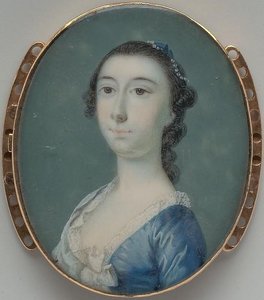
Portrét Jeremiah Theus

Obrazy autora Jeremiah Theus: 28 nejznámějších díel podle pohledu galerie

Aktualizováno listopad 2026 · seřazeno podle našeho skóre popularity (vyhledávání, návštěvy a objednávky u každého díla) · 29 děl umělce Jeremiah Theus v našem katalogu

Stručně řečeno

Z pohledu galerie je nejslavnějším dílem Jeremiah Theus obrazem Captain William Richardson (1743-1786) (1757), jehož originál je vystaven v Yale University Art Gallery v obci New Haven. William Wragg (1750) a Portrait of Amarinthia Elliott (1748) doplňují trio, které každé oko okamžitě pozná. Z 29 děl umělce Jeremiah Theus v našem katalogu představuje galerie níže 28 nejznámějších děl, z nichž každé je originálem s uvedením roku vzniku, muzea a toho, co jej činí jedinečným.

1716 – 1774, Chur Rococo Nejvíce děl: Metropolitan Museum of Art

Top 10 obrazů umělce Jeremiah Theus v naší galerii

1
Captain William Richardson (1743-1786) (1757) od Jeremiah Theus

Captain William Richardson (1743-1786)

1757 · Oil On Canvas · Yale University Art Gallery, New Haven

A formal 18th-century portrait of a young man, presented within an oval vignette against a dark, monochromatic background. Captain William Richardson is depicted from the waist up, positioned at a slight angle while looking toward the viewer. The composition relies on a restrained color palette, dominated by the creamy white of his waistcoat and jacket, which contrasts sharply against a deep blue trim. This trim features intricate silver or gold…

2
William Wragg (1750) od Jeremiah Theus

William Wragg

1750 · Watercolor · Detroit Institute of Arts, Detroit

In this intimate portrait of William Wragg, the sitter meets our gaze from a time long passed. Painted around 1750, the work captures a man of status through a refined, oval-shaped bust-length composition. He sits slightly off-center, his body turned toward the right while his eyes remain fixed forward, creating a sense of quiet presence. The subject wears a cool lavender-grey frock coat that contrasts against the warm, shimmering gold…

3
Portrait of Amarinthia Elliott (1748) od Jeremiah Theus

Portrait of Amarinthia Elliott

1748 · Painting · Detroit Institute of Arts, Detroit

Portrait of Amarinthia Elliott, painted by Jeremiah Theus in 1748, captures a young woman in a formal, medium close-up composition. The subject is positioned slightly off-center, holding a small sprig of blue flowers against a muted, atmospheric background. This work originates from the mid-18th century, a period when Theus was establishing his presence within the colonial social hierarchy.

4
Mrs. Thomas Lynch (Elizabeh Allston Lynch) (1755) od Jeremiah Theus

Mrs. Thomas Lynch (Elizabeh Allston Lynch)

1755 · Oil On Canvas

In this oil on canvas portrait, we encounter Mrs. Thomas Lynch (Elizabeth Allston Lynch), a figure captured by the Swiss-American painter Jeremiah Theus. Created in 1755, the work offers a direct look at a woman of the colonial era. Theus, who established himself in Charleston, South Carolina, brought a refined sensibility to his depictions of the local elite. This specific piece reflects the quiet dignity of his portraiture from that…

5
Mrs. Peter Manigault (1757) od Jeremiah Theus

Mrs. Peter Manigault

1757 · Oil On Canvas

In this 1757 portrait, we encounter Elizabeth Wragg Manigault, a woman whose presence defines the social hierarchy of colonial South Carolina. She is captured in a full-length vertical composition, her figure positioned with a poised, slight offset that suggests both grace and a quiet, commanding authority. The light, descending from the upper left, catches the luminous sheen of her white and silver satin gown, creating a play of light and…

6
Portrait of John Faucheraud Grimké (1762) od Jeremiah Theus

Portrait of John Faucheraud Grimké

The mid-18th century in Charleston was a time of burgeoning commercial and social complexity. Theus arrived in the colony from Switzerland, contributing to a growing artistic community that sought to mirror European sophistication. His work provides a visual record of the individuals who shaped the social fabric of South Carolina. This portrait remains a specific window into the life of a man who navigated the legal and political intricacies of…

7
Portrait of Mrs. John Champneys (Anne Livingston, born 1746) (1763) od Jeremiah Theus

Portrait of Mrs. John Champneys (Anne Livingston, born 1746)

1763 · Oil On Canvas · Muzeum umění Houston, Houston

In this 1763 oil portrait, we encounter Mrs. John Champneys, known to history as Anne Livingston, captured in a moment of quiet contemplation. She is presented in a three-quarter view, her form emerging from a deep, atmospheric brown background that lends a sense of weight and presence to her figure. The lighting, descending softly from the upper left, traces the contours of her face and neck, creating a gentle play…

8
Mrs. Lionel Chalmers (Martha Logan) (1756) od Jeremiah Theus

Mrs. Lionel Chalmers (Martha Logan)

1756 · Oil On Canvas · Muzeum umění v Bostonu, Boston

Jeremiah Theus presents Mrs. Lionel Chalmers (Martha Logan) within a formal oval composition. The arrangement focuses on the subject's head and upper torso, utilizing a straight-on, medium close-up perspective to establish a sense of intimacy. The single female figure is captured with a calm, dignified expression, projecting an air of poise and social standing. This portrait, executed about 1756, centers the viewer's attention on the sitter's steady gaze and composed…

9
Dr. Lionel Chalmers (1756) od Jeremiah Theus

Dr. Lionel Chalmers

1756 · Oil On Canvas · Muzeum umění v Bostonu, Boston

The gaze of Dr. Lionel Chalmers meets the viewer from across the centuries, preserved within this 1756 oil portrait. Jeremiah Theus, a Swiss-born American painter, captures the man in a moment of quiet, professional dignity. The subject sits with a composed presence, his features rendered with a clarity that suggests a life of intellect and social standing. Every line of his expression seems to hold a silent story of the…

10
Mrs. Samuel Carne (1740-1805) (1765) od Jeremiah Theus

Mrs. Samuel Carne (1740-1805)

1765 · Oil On Canvas · New York Historical Society, New York

The sitter gazes out from an oval frame, her presence steady and quiet against a dark, muted background. She is a woman of the mid-eighteenth century, captured in a moment of formal repose. Her attire speaks of a specific social standing, defined by the delicate translucency of a lace collar that rests against her neck. A dark choker encircles her throat, drawing the eye upward toward the soft features of…

Obrazy autora Jeremiah Theus, seřazeny od 11 do 28

Motivy, které zaujaly Jeremiah Theus

Čtyři témata, která se v těchto originálech nejčastěji objevují, z nichž každé má svůj nejlepší příklad.

Muzea, v nichž jsou vystavena originálna umělce Jeremiah Theus

8 muzea, v nichž je umístěno nejvíce obrazů z této stránky.

Muzeum Město Díla autora Jeremiah Theus Obrazy z tohoto seznamu
Metropolitan Museum of Art, New YorkMetropolitan Museum of Art New York 4 Mrs. Jacob Motte (Rebecca Brewton), Mrs. John Dart, Gabriel Manigault
National Gallery of Art, WashingtonNational Gallery of Art Washington 3 James Cuthbert (?), Mr. Motte, Mrs. Cuthbert
Gibbes Museum of Art, CharlestonGibbes Museum of Art Charleston 3 Benjamin Smith, Kolonel Barnvard Elliott Jr., Mrs. Barnard Elliott, Jr. (Mary Elizabeth Bellinger Elliott)
Detroit Institute of Arts, DetroitDetroit Institute of Arts Detroit 2 William Wragg, Portrait of Amarinthia Elliott
Muzeum umění v Bostonu, BostonMuzeum umění v Bostonu Boston 2 Mrs. Lionel Chalmers (Martha Logan), Dr. Lionel Chalmers
New York Historical Society, New YorkNew York Historical Society New York 2 Mrs. Samuel Carne (1740-1805), Samuel Carne, MD (1725-1780)
Yale University Art Gallery, New HavenYale University Art Gallery New Haven 1 Captain William Richardson (1743-1786)
Muzeum umění Johna a Mable Ringlingových, SarasotaMuzeum umění Johna a Mable Ringlingových Sarasota 1 Portrait of John Faucheraud Grimké

Jeremiah Theus, jeden ikonický obraz na každé desetiletí

Díla podle dekád

Vyberte si dekádu a prohlédněte si originál, který ji definuje.

Obrazy umělce Jeremiah Theus: odpovědi galerie

Který obraz autora Jeremiah Theus je nejslavnější ze všech?Odhalit odpověď

Captain William Richardson (1743-1786) (1757), Yale University Art Gallery, New Haven. Následují William Wragg (1750) a Portrait of Amarinthia Elliott (1748).

Kolik let bylo Jeremiah Theus, když dokončil/a Captain William Richardson (1743-1786)?Odhalit odpověď

41 let: dílo Captain William Richardson (1743-1786) pochází z roku 1757 a Jeremiah Theus se narodil/a v roce 1716.

Kterých 10 nejlepších obrazů má Jeremiah Theus?Odhalit odpověď

Captain William Richardson (1743-1786), William Wragg, Portrait of Amarinthia Elliott, Mrs. Thomas Lynch (Elizabeh Allston Lynch), Mrs. Peter Manigault, Portrait of John Faucheraud Grimké, Portrait of Mrs. John Champneys (Anne Livingston, born 1746), Mrs. Lionel Chalmers (Martha Logan), Dr. Lionel Chalmers a Mrs. Samuel Carne (1740-1805). Hodnocení výše uvádí rok a muzeum pro každé z nich.

Kolik děl vytvořil/a Jeremiah Theus?Odhalit odpověď

Náš katalog obsahuje 29 děl umělce Jeremiah Theus z let 1748 až 1772.

Kde jsou vystavena nejznámější originály umělce Jeremiah Theus?Odhalit odpověď

Většinou v Metropolitan Museum of Art (New York), National Gallery of Art (Washington) a Gibbes Museum of Art (Charleston). V tabulce muzeí výše jsou vypsány všechny.

Kdy Jeremiah Theus vytvořil své nejslavnější obrazy?Odhalit odpověď

V období 1760s: 13 z celkem 28 děl na této stránce vzniklo právě tehdy, z toho Portrait of John Faucheraud Grimké z nich.

Která jsou nejstarší a nejnovější slavná díla umělce Jeremiah Theus?Odhalit odpověď

Na této stránce je nejstarší dílo z Portrait of Amarinthia Elliott (1748) a nejnovější z Mrs. John Dart (1772).

Kterým tématům se Jeremiah Theus věnoval(a) nejčastěji?Odhalit odpověď

Woman (8), Man (7) a 18th century (4) napříč 28 díly na této stránce.

V jaké technice tvořil(a) Jeremiah Theus nejčastěji?Odhalit odpověď

Oil On Canvas, u 16 z 28 děl na této stránce.

S jakým směrem je spojen(a) Jeremiah Theus?Odhalit odpověď

Rococo, podle originálů na této stránce.

Jaká originální díla Jeremiah Theus má v obsluze Metropolitan Museum of Art?Odhalit odpověď

Mrs. Jacob Motte (Rebecca Brewton), Mrs. John Dart a Gabriel Manigault: muzeum Metropolitan Museum of Art, New York má v obsluze 4 děl z této stránky.

Jeremiah Theus: umělec

Jeremiah Theus: Charleston’s Rococo Portraitist

Jeremiah Theus (1716 – 1774) stands as a singular figure in the annals of early American art, primarily recognized for his prolific output of portraits executed during the flourishing Rococo period in Charleston, South Carolina. Born in Chur, Switzerland, he arrived in America with his family around 1740, driven by the promise of land grants and colonial opportunity offered by the British Crown. This migration marked the beginning of a career dedicated to capturing the elegance and sophistication of Charleston’s elite society—a remarkable feat considering the artistic landscape of the time.

Early Life & Training

Little is definitively known about Theus' formative years beyond his Swiss birthplace. However, circumstantial evidence suggests exposure to European artistic traditions, particularly Rococo style, which would profoundly influence his subsequent work. His family’s relocation to Charleston was driven by a desire for prosperity and security—a common aspiration among Protestants seeking refuge from persecution in Europe during this era. The precise details of his artistic training remain elusive, reflecting the limitations imposed upon artistic education in colonial America. Nevertheless, it is plausible that he honed his skills through observation and apprenticeship—skills essential for mastering the stylistic conventions of his time.

Charleston Studio & Patronage

By 1740, Theus established a studio in Charleston’s bustling commercial district—a strategic location that ensured access to influential patrons and fueled his artistic endeavors. Advertisements in the *South Carolina Gazette* showcased his skills as a “limner,” or portrait painter, highlighting his commitment to serving the burgeoning colonial community. This proactive approach to marketing demonstrated Theus' understanding of the social dynamics of Charleston and underscored the importance of securing commissions from wealthy families—a cornerstone of success for artists operating within the colonial framework. His studio served not only as a workspace but also as a hub for artistic exchange, fostering connections between aspiring painters and established patrons alike.

A Master of Rococo Style & Technique

Theus’ distinctive style is characterized by its adherence to Rococo principles—a movement originating in France that prioritized grace, ornamentation, and pastel hues. He skillfully adapted English artistic conventions prevalent during the era, resulting in portraits imbued with a sense of refined elegance and meticulous detail. His canvases frequently employed geometric shapes and subtle tonal variations to create atmospheric depth and convey emotion—techniques honed through observation and experience. Rococo’s emphasis on illusionistic perspective and delicate color palettes mirrored the aesthetic sensibilities of European aristocracy, influencing Theus' artistic vision and shaping his approach to portraiture. He meticulously rendered textures and draperies, capturing the nuances of light and shadow with remarkable precision—a testament to his technical prowess and unwavering dedication to artistic excellence.

Notable Commissions & Artistic Legacy

Theus undertook numerous commissions throughout his career, demonstrating versatility and responsiveness to client needs. Among his accomplishments were the gilded steeple of St. Michael’s Episcopal Church (1756), a job for which the congregation's commissioners paid him 77 pounds and 10 shillings for his labor and supplies. He also painted the weather vane for Charleston’s City Hall; and contributed 50 pounds towards the building fund for a new structure; he later owned a selection of mezzotints derived from portraits of the English gentry. His most ambitious portraits are the three-quarter-length portrayals of Colonel and Mrs. Barnard Elliott (Gibbes Museum of Art in Charleston) and Mrs. Peter Manigault (Charleston Museum). For the high-style dresses of many female sitters Theus copied outfits worn in contemporary English portraits. These works stand as enduring symbols of Charleston’s social prestige—a testament to Theus' ability to capture not only physical likeness but also the spirit and character of his subjects. His paintings reside in prominent museums across America, ensuring that his artistic legacy continues to inspire admiration and scholarly inquiry for generations to come. ### Historical Significance & Enduring Influence Jeremiah Theus’ contribution to American art history extends beyond his individual achievements; he represents a crucial link between European artistic traditions and the nascent cultural identity of the United States. His work serves as a compelling visual record of Charleston’s social landscape—a testament to the dynamism and sophistication of colonial America. He elevated portraiture to an art form, transforming it from mere likeness into a vehicle for conveying emotion and expressing social status. Today, reproductions of his portraits continue to captivate audiences worldwide, ensuring that Theus' legacy persists as one of Charleston’s most distinguished artistic figures—a beacon of Rococo elegance in the formative years of American culture.