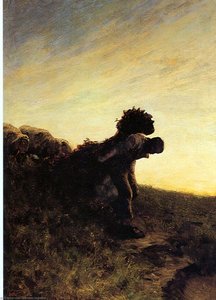
Portrét Giovanni Segantini

Obrazy autora Giovanni Segantini: 100 nejznámějších díel podle pohledu galerie

Aktualizováno listopad 2026 · seřazeno podle našeho skóre popularity (vyhledávání, návštěvy a objednávky u každého díla) · 101 děl umělce Giovanni Segantini v našem katalogu

Stručně řečeno

Z pohledu galerie je nejslavnějším dílem Giovanni Segantini obraz Dvě matky (také známé jako Le due Madri) (1899). Midday in the Alps (1891) a Life (La Vita) (1898) doplňují trio, které každé oko okamžitě pozná. Z 101 děl umělce Giovanni Segantini v našem katalogu představuje galerie níže 100 nejznámějších děl, z nichž každé je originálem s uvedením roku vzniku, muzea a toho, co jej činí jedinečným.

1858 – 1899, Arco Symbolism Nejvíce děl: Szépművészeti Múzeum

Top 10 obrazů umělce Giovanni Segantini v naší galerii

1
Dvě matky (také známé jako Le due Madri) (1899) od Giovanni Segantini

Dvě matky (také známé jako Le due Madri)

1899 · Olej na plátně

V tomto díle z roku 1889 se ocitáme v vysokohorské krajině, kde se hranice mezi lidským duchem a přírodním světem začíná rozpouštět. Scéna je zasazena na sesedlý svah, kde jsou dvě ženy umístěny uprostřed drsného terénu tvořeného skalami a balvany. Jedna z nich je plně soustředěna na své ovce, její pozornost je ukotvena v živých tvorech, kteří sdílejí její prostor, zatímco druhá stojí v tiché blízkosti. Atmosféra je prosycena hlubokým…

2
Midday in the Alps (1891) od Giovanni Segantini

Midday in the Alps

1891 · Oil On Canvas

The sun reaches its zenith in Midday in the Alps, a work by Giovanni Segantini. Created in 1891, this oil on canvas captures a moment where the light of the high altitudes makes the entire landscape shimmer. The scene breathes with the energy of a specific atmosphere, known by its original title, Giornata Ventosa, or Windy Day. One can almost feel the air moving through the mountain passes as the…

3
Life (La Vita) (1898) od Giovanni Segantini

Life (La Vita)

1898

Introduction to Giovanni Segantini and the Post-Impressionism Movement Giovanni Segantini, an Italian painter, was a prominent figure in the Post-Impressionism movement. His later works became more Divisionist with symbolist images of nature, which he referred to as "Naturalist Symbolism." He is renowned for his portrayal of pastoral life and people's connection with nature. Life (La Vita): A Visual Symphony of Nature and Humanity In Life (La Vita), Segantini masterfully captures…

4
Vacche aggiogate (1888) od Giovanni Segantini

Vacche aggiogate

1888 · Oil

The mountain air feels heavy with the scent of earth and hay as two horses strain against their harness. They stand side by side, muscles taut, pulling a wooden cart through a rugged landscape where the peaks reach toward a soft sky. Around them, the world breathes in a quiet, rhythmic pulse. People move through the scene, some gathered near the animals and others drifting toward the distance, their presence…

5
Il ritorno al paese natio (1895) od Giovanni Segantini

Il ritorno al paese natio

1895 · Oil On Canvas · Alte Nationalgalerie, Berlín

In this 1895 oil on canvas, we find ourselves amidst the rugged, high-altitude terrain of the Alps. The scene captures a group of travelers moving through a mountainous landscape, their progress marked by the steady gait of horses and the presence of carts laden with belongings. There is a quiet sense of movement here, a collective migration through the peaks. Two horses occupy the foreground, their forms rendered with a…

6
A messa prima (1885) od Giovanni Segantini

A messa prima

1885 · Oil

In the quiet, silvered depths of Giovanni Segantini’s 1885 masterpiece, A messa prima, we are invited into a world where the boundaries between reality and dream begin to dissolve. This post-impressionist gem captures a profound moment of human connection—or perhaps, more poignantly, a moment of departure. At the heart of the composition stands a woman perched upon a staircase, her silhouette marked by an elegant ponytail, gazing downward with an…

7
A cow drinking water od Giovanni Segantini

A cow drinking water

Oil On Canvas

The painting titled A cow drinking water is a work by the Italian artist Giovanni Segantini. This piece, also known as At the watering place (cows in yoke), captures a quiet moment of rural existence. It was created about 1888.

8
L'aratura (1890) od Giovanni Segantini

L'aratura

1890 · Olej na plátně · Neue Pinakothek, Mnichov

Giovanni Segantini: Pionýr Alpéské Pastelové Malířství Giovanni Segantini byl italský malíř známý svými rozsáhlými pastelskými krajinami Alp. Jeho životní příběh je poznamenán těžkostmi a následným uměleckým triumfem, který vrcholí jedinečným stylem kombinujícím divizionismus se symbolistickou obrazností. **Rané Životy a Bojové Výzvy** Segantiniho počátky života byly charakterizovány chudobou. Jeho otec byl cestující obchodník, což jeho matku ponechalo výchovu syna téměř sama. Po smrti jeho matky se nezůstal doma a vypravil se…

9
Cow at a Water Trough (1892) od Giovanni Segantini

Cow at a Water Trough

1892 · Oil On Canvas

A brown cow bows its head toward a wooden trough. The animal is anchored in the grass, its heavy form a quiet weight against the earth. Nearby, other cattle graze or rest in the stillness of the field. People move through the scene, some close to the foreground and others drifting into the distance, observing the simple necessity of the herd. Above, a cloudy sky hangs over the open landscape,…

10
Return to the homeland (1895) od Giovanni Segantini

Return to the homeland

1895 · Oil On Canvas

The oil on canvas painting titled Return to the homeland was created by the artist Giovanni Segantini. This work is dated 1895. The composition focuses on a migration through mountains, depicting a group of travelers navigating a high-altitude landscape.

Obrazy autora Giovanni Segantini, seřazeny od 11 do 100

11La vanita (1897) od Giovanni SegantiniLa vanita1897 12Coro di St.Antonio (1879) od Giovanni SegantiniCoro di St.Antonio1879 13Costume Grigionese (also known as Bündnerin am Brunnen) (1887) od Giovanni SegantiniCostume Grigionese (also known as Bündnerin am Brunnen)1887 14Mountain Landscape (1898) od Giovanni SegantiniMountain Landscape1898 15Springtime in the Alps (1897) od Giovanni SegantiniSpringtime in the Alps1897 16Dead hero (1878) od Giovanni SegantiniDead hero1878 17The Sheepshearing (1883) od Giovanni SegantiniThe Sheepshearing1883 · Národní muzeum západního umění 18Bagpipers of Brianza (1883) od Giovanni SegantiniBagpipers of Brianza1883 · Národní muzeum západního umění 19The blackcaps (1884) od Giovanni SegantiniThe blackcaps1884 20Pastorello con agnellino (1885) od Giovanni SegantiniPastorello con agnellino1885 21Self portrait (1882) od Giovanni SegantiniSelf portrait1882 22High Noon in the Alps (1892) od Giovanni SegantiniHigh Noon in the Alps1892 · Ohara Museum of Art 23The worker of the field (1886) od Giovanni SegantiniThe worker of the field1886 24The Pumpkin Harvest (1897) od Giovanni SegantiniThe Pumpkin Harvest1897 · Minneapolis Institute of Art 25Self portrait (1893) od Giovanni SegantiniSelf portrait1893 26Barbara Uffer Im Profil (1899) od Giovanni SegantiniBarbara Uffer Im Profil1899 27L. ultima fatica del giorno (1884) od Giovanni SegantiniL. ultima fatica del giorno1884 · Szépművészeti Múzeum 28The Angel of Life (1895) od Giovanni SegantiniThe Angel of Life1895 · Szépművészeti Múzeum 29La Spina od Giovanni SegantiniLa Spina 30Still Life with White Goose od Giovanni SegantiniStill Life with White Goose 31The Angel of Life (1895) od Giovanni SegantiniThe Angel of Life1895 · Szépművészeti Múzeum 32Lago di Lecco (1875) od Giovanni SegantiniLago di Lecco1875 33The Choir of the Chiesa di Abate in Milano (1879) od Giovanni SegantiniThe Choir of the Chiesa di Abate in Milano1879 · Gallerie d'Italia – Milano 34Portrait of Signora Torelli (1885) od Giovanni SegantiniPortrait of Signora Torelli1885 35Paesaggio con donna su un albero (1881) od Giovanni SegantiniPaesaggio con donna su un albero1881 36Still life with carrots (1884) od Giovanni SegantiniStill life with carrots1884 37Self portrait (1879) od Giovanni SegantiniSelf portrait1879 38La benedizione delle pecore (1884) od Giovanni SegantiniLa benedizione delle pecore1884 39Sundown at Pusian (1883) od Giovanni SegantiniSundown at Pusian1883 40La falconiera (1880) od Giovanni SegantiniLa falconiera1880 41Pantura sull.imbrunire (1885) od Giovanni SegantiniPantura sull.imbrunire1885 42Spinning (1891) od Giovanni SegantiniSpinning1891 · Art Gallery of South Australia 43Goats against landscape (1891) od Giovanni SegantiniGoats against landscape1891 · Národní muzeum ve Varšavě 44La portatrice d.aqua (1886) od Giovanni SegantiniLa portatrice d.aqua1886 45Il bagno del bambino (1886) od Giovanni SegantiniIl bagno del bambino1886 46Il frutto dell'amore (1889) od Giovanni SegantiniIl frutto dell'amore1889 47Still life (1886) od Giovanni SegantiniStill life1886 48Vittore Grubicy (1887) od Giovanni SegantiniVittore Grubicy1887 49La tosatura delle pecore (1886) od Giovanni SegantiniLa tosatura delle pecore1886 50Pesci (1886) od Giovanni SegantiniPesci1886 51Capriolo morto (1892) od Giovanni SegantiniCapriolo morto1892 52Riposo all.ombra (1892) od Giovanni SegantiniRiposo all.ombra1892 53Ragazza che fa la calza (1888) od Giovanni SegantiniRagazza che fa la calza1888 54Sul balcone (1892) od Giovanni SegantiniSul balcone1892 55La raccolta del fieno (1890) od Giovanni SegantiniLa raccolta del fieno1890 56I miei modelli (1888) od Giovanni SegantiniI miei modelli1888 57The Snowmelt in Savognin (1888) od Giovanni SegantiniThe Snowmelt in Savognin1888 58Le due madri (1889) od Giovanni SegantiniLe due madri1889 59Alpine Landscape at Sunset (1896) od Giovanni SegantiniAlpine Landscape at Sunset1896 · Städel Museum 60Death (1898) od Giovanni SegantiniDeath1898 61La Natura (1898) od Giovanni SegantiniLa Natura1898 62Landscape (1896) od Giovanni SegantiniLandscape1896 63Pascoli alpini (1895) od Giovanni SegantiniPascoli alpini1895 64L.angelo della vita (1894) od Giovanni SegantiniL.angelo della vita1894 65L.amore alla fonte della vita (1896) od Giovanni SegantiniL.amore alla fonte della vita1896 66The pain of mourning (also known as Il dolore confortato dalla fede) (1895) od Giovanni SegantiniThe pain of mourning (also known as Il dolore confortato dalla fede)1895 67Landscape with two figures (1897) od Giovanni SegantiniLandscape with two figures1897 68La signora Gaetana Casiraghi Oriani (1894) od Giovanni SegantiniLa signora Gaetana Casiraghi Oriani1894 69L.angelo della vita (1894) od Giovanni SegantiniL.angelo della vita1894 70Pascoli di primavera (also known as Spring Pastures) (1896) od Giovanni SegantiniPascoli di primavera (also known as Spring Pastures)1896 71Goddess of love (1894) od Giovanni SegantiniGoddess of love1894 72Lavandaia od Giovanni SegantiniLavandaia 73Donna alla fonte (also known as Alpenlandschaft mit Frau am Brunnen) (1893) od Giovanni SegantiniDonna alla fonte (also known as Alpenlandschaft mit Frau am Brunnen)1893 74Il camoscio morto od Giovanni SegantiniIl camoscio mortoGalleria d'Arte Moderna 75Basket of figs (1882) od Giovanni SegantiniBasket of figs1882 · Collezione Fondazione Cariparma 76Natura morta con fiori e pesce (1882) od Giovanni SegantiniNatura morta con fiori e pesce1882 77Still Life with Turkey od Giovanni SegantiniStill Life with Turkey 78Swiss Stone Pine od Giovanni SegantiniSwiss Stone PineClevelandské muzeum umění 79Still life with S. Cecilia od Giovanni SegantiniStill life with S. Cecilia 80The Sad Hour od Giovanni SegantiniThe Sad Hour 81Prosciutto od Giovanni SegantiniProsciutto 82Idyll od Giovanni SegantiniIdyll 83Gli orfani od Giovanni SegantiniGli orfani 84Picture of Carlo Rotta od Giovanni SegantiniPicture of Carlo Rotta 85Dopo il temporale od Giovanni SegantiniDopo il temporale 86Funghi od Giovanni SegantiniFunghi 87Il castigo delle lussuriose od Giovanni SegantiniIl castigo delle lussuriose 88Canal Naviglio with Two Fishing Boys od Giovanni SegantiniCanal Naviglio with Two Fishing Boys 89Still Life with Vegetables od Giovanni SegantiniStill Life with Vegetables 90Contrasto di luce od Giovanni SegantiniContrasto di luce 91Mountain Pasture in May od Giovanni SegantiniMountain Pasture in MayRijksmuseum 92Taking a Drink od Giovanni SegantiniTaking a Drink 93Cavallo al galoppo (also known as Running Horse) od Giovanni SegantiniCavallo al galoppo (also known as Running Horse) 94The Source od Giovanni SegantiniThe Source 95Bogyně Paganu nebo Bogyní Miłości od Giovanni SegantiniBogyně Paganu nebo Bogyní MiłościGalleria d'Arte Moderna 96The Evil Mothers (1894) od Giovanni SegantiniThe Evil Mothers1894 97Love at the Fountain of Life (1896) od Giovanni SegantiniLove at the Fountain of Life1896 98Return of the Wood (1890) od Giovanni SegantiniReturn of the Wood1890 99The Punishment of the Voluptuaries (also known as Il castigo delle lussuriose) (1891) od Giovanni SegantiniThe Punishment of the Voluptuaries (also known as Il castigo delle lussuriose)1891 · Walker Art Gallery 100Savognin winter od Giovanni SegantiniSavognin winter

Slavná díla Giovanni Segantini podle jednotlivých období

Motivy, které zaujaly Giovanni Segantini

Čtyři témata, která se v těchto originálech nejčastěji objevují, z nichž každé má svůj nejlepší příklad.

Muzea, v nichž jsou vystavena originálna umělce Giovanni Segantini

8 muzea, v nichž je umístěno nejvíce obrazů z této stránky.

Muzeum Město Díla autora Giovanni Segantini Obrazy z tohoto seznamu
Szépművészeti Múzeum, BudapešťSzépművészeti Múzeum Budapešť 3 L. ultima fatica del giorno, The Angel of Life, The Angel of Life
Národní muzeum západního umění, TokyoNárodní muzeum západního umění Tokyo 2 The Sheepshearing, Bagpipers of Brianza
Galleria d'Arte Moderna, MilanoGalleria d'Arte Moderna Milano 2 Il camoscio morto, Bogyně Paganu nebo Bogyní Miłości
Alte Nationalgalerie, BerlínAlte Nationalgalerie Berlín 1 Il ritorno al paese natio
Neue Pinakothek, MnichovNeue Pinakothek Mnichov 1 L'aratura
Ohara Museum of Art, KurashikiOhara Museum of Art Kurashiki 1 High Noon in the Alps
Minneapolis Institute of Art, MinneapolisMinneapolis Institute of Art Minneapolis 1 The Pumpkin Harvest
Gallerie d'Italia – Milano, MilanGallerie d'Italia – Milano Milan 1 The Choir of the Chiesa di Abate in Milano

Giovanni Segantini, jeden ikonický obraz na každé desetiletí

Díla podle dekád

Vyberte si dekádu a prohlédněte si originál, který ji definuje.

Obrazy umělce Giovanni Segantini: odpovědi galerie

Který obraz autora Giovanni Segantini je nejslavnější ze všech?Odhalit odpověď

Dvě matky (také známé jako Le due Madri) (1899). Následují Midday in the Alps (1891) a Life (La Vita) (1898).

Kolik let bylo Giovanni Segantini, když dokončil/a Dvě matky (také známé jako Le due Madri)?Odhalit odpověď

41 let: dílo Dvě matky (také známé jako Le due Madri) pochází z roku 1899 a Giovanni Segantini se narodil/a v roce 1858.

Kterých 10 nejlepších obrazů má Giovanni Segantini?Odhalit odpověď

Dvě matky (také známé jako Le due Madri), Midday in the Alps, Life (La Vita), Vacche aggiogate, Il ritorno al paese natio, A messa prima, A cow drinking water, L'aratura, Cow at a Water Trough a Return to the homeland. Hodnocení výše uvádí rok a muzeum pro každé z nich.

Kolik děl vytvořil/a Giovanni Segantini?Odhalit odpověď

Náš katalog obsahuje 101 děl umělce Giovanni Segantini z let 1875 až 1899.

Kde jsou vystavena nejznámější originály umělce Giovanni Segantini?Odhalit odpověď

Většinou v Szépművészeti Múzeum (Budapešť), Národní muzeum západního umění (Tokyo) a Galleria d'Arte Moderna (Milano). V tabulce muzeí výše jsou vypsány všechny.

Kdy Giovanni Segantini vytvořil své nejslavnější obrazy?Odhalit odpověď

V období 1890s: 40 z celkem 100 děl na této stránce vzniklo právě tehdy, z toho Dvě matky (také známé jako Le due Madri) z nich.

Která jsou nejstarší a nejnovější slavná díla umělce Giovanni Segantini?Odhalit odpověď

Na této stránce je nejstarší dílo z Lago di Lecco (1875) a nejnovější z Dvě matky (také známé jako Le due Madri) (1899).

Kterým tématům se Giovanni Segantini věnoval(a) nejčastěji?Odhalit odpověď

Pastoral scene (7), Mountains (7) a Woman (7) napříč 100 díly na této stránce.

V jaké technice tvořil(a) Giovanni Segantini nejčastěji?Odhalit odpověď

Oil On Canvas, u 15 z 100 děl na této stránce.

S jakým směrem je spojen(a) Giovanni Segantini?Odhalit odpověď

Symbolism a Post-impressionist landscape, podle originálů na této stránce.

Jaká originální díla Giovanni Segantini má v obsluze Szépművészeti Múzeum?Odhalit odpověď

L. ultima fatica del giorno, The Angel of Life a The Angel of Life: muzeum Szépművészeti Múzeum, Budapešť má v obsluze 3 děl z této stránky.

Giovanni Segantini: umělec

Giovanni Segantini: A Master of Alpine Landscapes and Symbolist Visions

Giovanni Segantini, born in Arco, Trentino, on January 15, 1858, was an Italian painter whose evocative depictions of the Alps and profound symbolic explorations cemented his place as a pivotal figure in late 19th-century art. His life story is one interwoven with hardship, artistic discovery, and a relentless pursuit of capturing both the physical beauty and spiritual essence of the mountainous landscape he called home. Segantini’s journey began amidst poverty; his father, a traveling merchant, left his mother to raise him largely alone after her untimely death. This early experience instilled in him a deep appreciation for resilience and a yearning for stability – qualities that would profoundly shape his artistic vision. Following his mother's passing, young Giovanni found himself adrift, eventually landing in a Milanese reformatory. It was within these walls that a sympathetic chaplain recognized his innate talent for drawing and encouraged its development—a crucial turning point that set him on the path to becoming an artist. He taught himself to read and write later in life, demonstrating remarkable self-discipline and determination. Initially working as a photographer’s assistant, Segantini honed his observational skills and developed a keen eye for detail, which would later inform his distinctive painting style.

Early Artistic Training and Influences

Segantini's artistic education began at the Brera Academy in Milan, where he immersed himself in the works of Italian naturalists like Tranquillo Cremona, absorbing their techniques for capturing light and atmosphere. However, it was through the guidance of Vittorio Grubicy de Dragon that Segantini truly embraced a new direction. Grubicy introduced him to the revolutionary Divisionist technique—a method of painting that involved applying small dots or strokes of pure color side-by-side on the canvas, allowing the viewer’s eye to blend them optically and create vibrant, luminous effects. Simultaneously, he was exposed to the works of Anton Mauve and Jean-François Millet, artists who championed realism and depictions of rural life—influences that would shape Segantini's early style. The Scapigliatura movement, with its rejection of academic conventions and embrace of raw emotion, also resonated deeply with his artistic sensibilities.

The Engadin Years: Divisionism and Symbolism Converge

In 1886, a pivotal moment arrived when Segantini moved to the Engadin valley in Switzerland—a region that would become inextricably linked to his life and art. The dramatic landscapes of the Engadine, with its towering peaks, expansive valleys, and crystal-clear lakes, captivated him utterly. It was here that he fully embraced Divisionism, developing a unique style characterized by intense color contrasts and shimmering light effects. He also began incorporating Symbolist elements into his work—allegorical figures, evocative symbolism, and explorations of themes like life, death, and spirituality. His paintings during this period, such as “Ave Maria at the Crossing” (1886-1888), are testaments to this masterful fusion of techniques.

Key Works and Recurring Themes

Segantini’s oeuvre is rich with iconic works that continue to resonate with viewers today. “The Two Mothers,” a poignant depiction of maternal love and rural life, stands as one of his most celebrated paintings. “Life (La Vita)” captures the essence of Alpine beauty and human connection through its luminous colors and dynamic composition. "Donna alla fonte" – a serene scene of a woman by a fountain in the Alps - exemplifies his ability to convey tranquility and harmony with nature. “Ragazza che fa la calza” is another notable work, showcasing his skill in portraying figures within a natural setting. Later in his career, he created powerful works like “Il castigo delle lussuriose,” exploring themes of morality and the consequences of excess, and "Capriolo morto," a deeply moving meditation on mortality.

Legacy and Enduring Significance

Giovanni Segantini died tragically on September 28, 1899, at the age of 41, while working on his ambitious “Alpine Triptych” – a monumental work that embodied his lifelong fascination with the mountains and his exploration of spiritual themes—on the Schafberg mountain above Pontresina. Despite his untimely death, Segantini’s legacy endures. His innovative use of color and light, combined with his profound symbolic explorations, established him as one of the most important painters of Alpine landscapes and a significant figure in Symbolist art. His works are now exhibited in major museums around the world, and his unique vision continues to inspire artists and captivate audiences with its beauty and depth. Segantini remains an artist who successfully captured not only the physical grandeur of the Alps but also their spiritual essence—a testament to his artistic genius and enduring legacy.