Portrét George Catlin

100 nejslavnějších obrazů autora George Catlin, každý naprosto unikátní

Aktualizováno říjen 2026 · seřazeno podle našeho skóre popularity (vyhledávání, návštěvy a objednávky u každého díla) · 908 děl umělce George Catlin v našem katalogu

Stručně řečeno

Say-say-gon, Hail Storm, War Chief (1845) je obraz autora George Catlin, který přitahuje nejvíce pohledů; originál se nachází v Smithsonian American Art Museum, Washington, D.C.. Poté se zrak přesouvá k La dóo ke a, Buffalo Bull, a Grand Pawnee Warrior (1832) a Sky se ró ka, Second Chief of the Tribe (1834). Z 908 děl umělce George Catlin v našem katalogu je těchto 100 těch nejznámějších; každé z nich je unikátním originálem s uvedením roku vzniku, muzea a důvodu jeho nesmrtelnosti.

1796 – 1872, Wilkes-Barre American romanticism Nejvíce děl: Smithsonian American Art Museum

Top 10 obrazů autora George Catlin podle výběru galerie

1
Say-say-gon, Hail Storm, War Chief (1845) od George Catlin

Say-say-gon, Hail Storm, War Chief

1845 · Oil On Canvas · Smithsonian American Art Museum, Washington, D.C.

George Catlin’s arresting oil on canvas, "Say-say-gon, Hail Storm, War Chief," is far more than a mere portrait; it is a profound historical document rendered with the immediacy of a living memory. Created in 1845, this work plunges the viewer directly into the dramatic confluence of cultures at the American frontier. The subject—a Native American man adorned with feathers and bearing an air of solemn authority—commands attention through his unwavering,…

2
La dóo ke a, Buffalo Bull, a Grand Pawnee Warrior (1832) od George Catlin

La dóo ke a, Buffalo Bull, a Grand Pawnee Warrior

1832 · Oil On Canvas

To stand before George Catlin’s depiction of La dóo ke a, Buffalo Bull, a Grand Pawnee Warrior is to step across the threshold of time itself. This painting from 1832 is far more than a mere portrait; it is a profound historical document rendered with breathtaking artistic skill. Catlin, the artist who dedicated his life to chronicling cultures on the cusp of dramatic change, captured not just the likeness of…

3
Sky se ró ka, Second Chief of the Tribe (1834) od George Catlin

Sky se ró ka, Second Chief of the Tribe

1834 · Oil On Canvas · Smithsonian American Art Museum, Washington, D.C.

To stand before this portrait of Sky se ró ka, Second Chief of the Tribe, is to encounter not merely paint on canvas, but a profound echo from a bygone era. George Catlin’s masterful rendering captures more than just a likeness; it arrests a moment in time—a moment steeped in dignity, contemplation, and the quiet weight of history. The subject dominates the composition with an undeniable presence. His gaze, seemingly…

4
Né hee ó ee wóo tis, Wolf on the Hill, Chief of the Tribe (1832) od George Catlin

Né hee ó ee wóo tis, Wolf on the Hill, Chief of the Tribe

1832 · Oil On Canvas · Smithsonian American Art Museum, Washington, D.C.

This evocative portrait, dating from 1832, presents us with an arresting vision of an Indigenous man, likely hailing from the Plains tribes. The work immediately draws the viewer into a moment of profound stillness and quiet authority. George Catlin, the masterful chronicler of American frontier life, has captured more than just a likeness; he has preserved a presence. The subject is rendered in a style deeply rooted in early American…

5
Ee mat lá , King Phillip, Second Chief (1838) od George Catlin

Ee mat lá , King Phillip, Second Chief

1838 · Oil On Canvas · Smithsonian American Art Museum, Washington, D.C.

Before us rests a profoundly moving portrait, George Catlin’s evocative depiction of Ee mat lá , King Phillip, Second Chief. This 1838 work transcends mere representation; it is a solemn meditation on culture, resilience, and the passing of time. The subject commands attention with an undeniable dignity that seems to emanate from within the very texture of the paint. Catlin has gifted us not just a likeness, but a window…

6
Eeh nís kim, Crystal Stone, Wife of the Chief (1832) od George Catlin

Eeh nís kim, Crystal Stone, Wife of the Chief

1832 · Oil On Canvas · Smithsonian American Art Museum, Washington, D.C.

To stand before George Catlin’s portrait, Eeh nís kim, Crystal Stone, Wife of the Chief, is to step across the threshold of time itself. This 1832 oil painting is far more than a mere likeness; it is a profound historical document rendered with the delicate touch of an artist obsessed with preservation. Catlin, whose life spanned the collision of two worlds—the burgeoning American frontier and the ancient cultures of Native…

7
Steeh tcha kó me co, Great King (called Ben Perryman), a Chief (1834) od George Catlin

Steeh tcha kó me co, Great King (called Ben Perryman), a Chief

1834 · Oil On Canvas · Smithsonian American Art Museum, Washington, D.C.

To stand before George Catlin’s Steeh tcha kó me co, Great King (called Ben Perryman), a Chief is to step across the threshold of time itself. This arresting portrait, executed in 1834, is far more than a mere likeness; it is a profound historical document rendered with the passionate brushstrokes of Romanticism. Catlin, forever drawn to the edges of civilization, captured here the dignity and complex spirit of an Indigenous…

8
Cáh be múb bee, He Who Sits Everywhere, a Brave (1835) od George Catlin

Cáh be múb bee, He Who Sits Everywhere, a Brave

1835 · Oil On Canvas · Smithsonian American Art Museum, Washington, D.C.

To stand before George Catlin’s depiction of Cáh be múb bee, He Who Sits Everywhere, a Brave is to step across the threshold of time and into a world both vividly real and deeply mythic. Painted in 1835, this work transcends mere portraiture; it is an eloquent testament to a vanishing culture, rendered with the passionate intensity characteristic of Romanticism blended seamlessly with meticulous Realism. The central figure commands attention,…

9
Os ce o lá, The Black Drink, a Warrior of Great Distinction (1838) od George Catlin

Os ce o lá, The Black Drink, a Warrior of Great Distinction

1838 · Oil On Canvas · Smithsonian American Art Museum, Washington, D.C.

To stand before George Catlin’s Os ce o lá, The Black Drink, a Warrior of Great Distinction is not merely to observe a painting; it is to step across the threshold of time. This arresting portrait, executed in 1838, captures more than just the likeness of an Indigenous man, believed to be from the Shawnee tribe—it arrests the viewer with the profound weight of cultural memory. Catlin, forever positioned as…

10
Stán au pat, Bloody Hand, Chief of the Tribe (1832) od George Catlin

Stán au pat, Bloody Hand, Chief of the Tribe

1832 · Oil On Canvas · Smithsonian American Art Museum, Washington, D.C.

To stand before George Catlin’s portrait, Stán au pat, Bloody Hand, Chief of the Tribe, is to step across the threshold of time itself. Painted in 1832, this work transcends mere depiction; it is a profound act of witnessing. Catlin, whose life spanned the tumultuous collision between burgeoning American civilization and the ancient ways of the Native American peoples, captured more than just a likeness on canvas. He immortalized a…

Slavná díla umělce George Catlin, čísla 11 až 100

11Wa kon chásh kaw, He Who Comes on the Thunder (1828) od George CatlinWa kon chásh kaw, He Who Comes on the Thunder1828 · Smithsonian American Art Museum 12Wah chee háhs ka, Man Who Puts All Out of Doors (1835) od George CatlinWah chee háhs ka, Man Who Puts All Out of Doors1835 · Smithsonian American Art Museum 13Né-hee-ó-ee-wóo-tis, Wolf on the Hill, Chief of the Tribe (1832) od George CatlinNé-hee-ó-ee-wóo-tis, Wolf on the Hill, Chief of the Tribe1832 · Smithsonian American Art Museum 14Mún ne o ye, a Woman (1832) od George CatlinMún ne o ye, a Woman1832 · Smithsonian American Art Museum 15Mah táhp ta a, Rushes through the Middle, a Brave (1832) od George CatlinMah táhp ta a, Rushes through the Middle, a Brave1832 · Smithsonian American Art Museum 16A'h tee wát o mee, a Woman (1830) od George CatlinA'h tee wát o mee, a Woman1830 · Smithsonian American Art Museum 17Sha có pay, The Six, Chief of the Plains Ojibwa (1832) od George CatlinSha có pay, The Six, Chief of the Plains Ojibwa1832 18Chin cha pee, Fire Bug That Creeps, Wife of Pigeon's Egg Head (1832) od George CatlinChin cha pee, Fire Bug That Creeps, Wife of Pigeon's Egg Head1832 · Smithsonian American Art Museum 19A'h sha la cóots ah, Mole in the Forehead, Chief of the Republican Pawnee (1832) od George CatlinA'h sha la cóots ah, Mole in the Forehead, Chief of the Republican Pawnee1832 · Smithsonian American Art Museum 20Stu mick o súcks, Buffalo Bull's Back Fat, Head Chief, Blood Tribe (1832) od George CatlinStu mick o súcks, Buffalo Bull's Back Fat, Head Chief, Blood Tribe1832 21Du cór re a, Chief of the Tribe, and His Family (1830) od George CatlinDu cór re a, Chief of the Tribe, and His Family1830 · Smithsonian American Art Museum 22Ish a ró yeh, He Who Carries a Wolf, a Distinguished Brave (1834) od George CatlinIsh a ró yeh, He Who Carries a Wolf, a Distinguished Brave1834 · Smithsonian American Art Museum 23Mun ne pús kee, He Who Is Not Afraid Ko ha túnk a, Big Crow and Nah cóm ee shee, Man of the Bed, Three Young Warriors (1834) od George CatlinMun ne pús kee, He Who Is Not Afraid Ko ha túnk a, Big Crow and Nah cóm ee shee, Man of the Bed, Three Young Warriors1834 · Smithsonian American Art Museum 24Hidatsa Village, Earth covered Lodges, on the Knife River, 1810 Miles above St. Louis (1832) od George CatlinHidatsa Village, Earth covered Lodges, on the Knife River, 1810 Miles above St. Louis1832 · Smithsonian American Art Museum 25Two Comanche Girls (1834) od George CatlinTwo Comanche Girls1834 · Smithsonian American Art Museum 26Náh se ús kuk, Whirling Thunder, Eldest Son of Black Hawk (1832) od George CatlinNáh se ús kuk, Whirling Thunder, Eldest Son of Black Hawk1832 · Smithsonian American Art Museum 27Le sháw loo láh le hoo, Big Elk, Chief of the Skidi (Wolf) Pawnee (1832) od George CatlinLe sháw loo láh le hoo, Big Elk, Chief of the Skidi (Wolf) Pawnee1832 · Smithsonian American Art Museum 28Wash ka mon ya, Fast Dancer, a Warrior (1844) od George CatlinWash ka mon ya, Fast Dancer, a Warrior1844 · Smithsonian American Art Museum 29No ho mun ya, One Who Gives No Attention (1844) od George CatlinNo ho mun ya, One Who Gives No Attention1844 · Smithsonian American Art Museum 30Shón ka ki he ga, Horse Chief, Grand Pawnee Head Chief (1832) od George CatlinShón ka ki he ga, Horse Chief, Grand Pawnee Head Chief1832 · Smithsonian American Art Museum 31Kid á day, a Distinguished Brave (1834) od George CatlinKid á day, a Distinguished Brave1834 · Smithsonian American Art Museum 32Tchán dee, Tobacco, an Oglala Chief (1832) od George CatlinTchán dee, Tobacco, an Oglala Chief1832 · Smithsonian American Art Museum 33Tóh to wah kón da pee, Blue Medicine, a Medicine Man of the Ting ta to ah Band (1835) od George CatlinTóh to wah kón da pee, Blue Medicine, a Medicine Man of the Ting ta to ah Band1835 · Smithsonian American Art Museum 34Hee láh dee, Pure Fountain, Wife of The Smoke (1832) od George CatlinHee láh dee, Pure Fountain, Wife of The Smoke1832 · Smithsonian American Art Museum 35Lay láw she kaw, Goes Up the River, an Aged Chief (1830) od George CatlinLay láw she kaw, Goes Up the River, an Aged Chief1830 · Smithsonian American Art Museum 36Wá nah de túnk ah, Big Eagle (or Black Dog), Chief of the O hah kas ka toh y an te Band (1835) od George CatlinWá nah de túnk ah, Big Eagle (or Black Dog), Chief of the O hah kas ka toh y an te Band1835 · Smithsonian American Art Museum 37Shon ta yi ga, Little Wolf, a Famous Warrior (1844) od George CatlinShon ta yi ga, Little Wolf, a Famous Warrior1844 · Smithsonian American Art Museum 38Big Bend on the Upper Missouri, 1900 Miles above St. Louis (1832) od George CatlinBig Bend on the Upper Missouri, 1900 Miles above St. Louis1832 · Smithsonian American Art Museum 39Battle Between Sioux and Sac and Fox (1848) od George CatlinBattle Between Sioux and Sac and Fox1848 · Smithsonian American Art Museum 40H'co a h'co a h'cotes min, No Horns on His Head, a Brave (1832) od George CatlinH'co a h'co a h'cotes min, No Horns on His Head, a Brave1832 · Smithsonian American Art Museum 41Eé shah kó nee, Bow and Quiver, First Chief of the Tribe (1834) od George CatlinEé shah kó nee, Bow and Quiver, First Chief of the Tribe1834 · Smithsonian American Art Museum 42Fort Pierre, Mouth of the Teton River, 1200 Miles above Saint Louis (1832) od George CatlinFort Pierre, Mouth of the Teton River, 1200 Miles above Saint Louis1832 · Smithsonian American Art Museum 43Lay lóo ah pee ái shee kaw, Grass, Bush, and Blossom, Semicivilized (1830) od George CatlinLay lóo ah pee ái shee kaw, Grass, Bush, and Blossom, Semicivilized1830 · Smithsonian American Art Museum 44Mah kée mee teuv, Grizzly Bear, Chief of the Tribe (1831) od George CatlinMah kée mee teuv, Grizzly Bear, Chief of the Tribe1831 · Smithsonian American Art Museum 45Ha na tá nu maúk, Wolf Chief, Head Chief of the Tribe (1832) od George CatlinHa na tá nu maúk, Wolf Chief, Head Chief of the Tribe1832 · Smithsonian American Art Museum 46Prairie Bluffs Burning (1832) od George CatlinPrairie Bluffs Burning1832 · Smithsonian American Art Museum 47Hard Hickory, an Amiable Man (1831) od George CatlinHard Hickory, an Amiable Man1831 · Smithsonian American Art Museum 48Bread, Chief of the Tribe (1831) od George CatlinBread, Chief of the Tribe1831 · Smithsonian American Art Museum 49On sáw kie, The Sauk, in the Act of Praying (1830) od George CatlinOn sáw kie, The Sauk, in the Act of Praying1830 · Smithsonian American Art Museum 50Ye hów lo gee, The Cloud, a Chief (1838) od George CatlinYe hów lo gee, The Cloud, a Chief1838 · Smithsonian American Art Museum 51Wá hón ga shee, No Fool, a Great Fop (1832) od George CatlinWá hón ga shee, No Fool, a Great Fop1832 · Smithsonian American Art Museum 52Máh to tóh pa, Four Bears, Second Chief in Mourning (1832) od George CatlinMáh to tóh pa, Four Bears, Second Chief in Mourning1832 · Smithsonian American Art Museum 53Oó je en á he a, Woman Who Lives in a Bear's Den (1832) od George CatlinOó je en á he a, Woman Who Lives in a Bear's Den1832 54W'y ee yogh, Man of Sense, a Brave (1832) od George CatlinW'y ee yogh, Man of Sense, a Brave1832 · Smithsonian American Art Museum 55Is sa wáh tám ah, Wolf Tied with Hair, a Chief (1834) od George CatlinIs sa wáh tám ah, Wolf Tied with Hair, a Chief1834 · Smithsonian American Art Museum 56Ru ton ye wee ma, Strutting Pigeon, Wife of White Cloud (1844) od George CatlinRu ton ye wee ma, Strutting Pigeon, Wife of White Cloud1844 · Smithsonian American Art Museum 57Meach o shín gaw, Little White Bear, a Distinguished Brave (1832) od George CatlinMeach o shín gaw, Little White Bear, a Distinguished Brave1832 · Smithsonian American Art Museum 58Mandan Dance (also known as The Last Race, Mandan O-kee-pa Ceremony) (1832) od George CatlinMandan Dance (also known as The Last Race, Mandan O-kee-pa Ceremony)1832 59Tul lock chísh ko, Drinks the Juice of the Stone, in Ball player's Dress (1834) od George CatlinTul lock chísh ko, Drinks the Juice of the Stone, in Ball player's Dress1834 · Smithsonian American Art Museum 60Há-tchoo-túc-knee, Snapping Turtle, a Half-breed (1834) od George CatlinHá-tchoo-túc-knee, Snapping Turtle, a Half-breed1834 · Smithsonian American Art Museum 61White Sand Bluffs, on Santa Rosa Island, Near Pensacola (1835) od George CatlinWhite Sand Bluffs, on Santa Rosa Island, Near Pensacola1835 62Little Wolf (Shon-ta-ye-ga) (1846) od George CatlinLittle Wolf (Shon-ta-ye-ga)1846 63La-dóo-ke-a, Buffalo Bull, a Grand Pawnee Warrior (1832) od George CatlinLa-dóo-ke-a, Buffalo Bull, a Grand Pawnee Warrior1832 · Smithsonian American Art Museum 64Hón-je-a-pút-o, Wife of Bear-catcher (1832) od George CatlinHón-je-a-pút-o, Wife of Bear-catcher1832 · Smithsonian American Art Museum 65Tuch-ee, A Celebrated War Chief of the Cherokees (1834) od George CatlinTuch-ee, A Celebrated War Chief of the Cherokees1834 · Virginia Museum of Fine Arts 66Múk-a-tah-mish-o-káh-kaik, Black Hawk, Prominent Sac Chief (1832) od George CatlinMúk-a-tah-mish-o-káh-kaik, Black Hawk, Prominent Sac Chief1832 · Smithsonian American Art Museum 67The White Cloud, Head Chief of the Iowas (1844) od George CatlinThe White Cloud, Head Chief of the Iowas1844 · National Gallery of Art 68Bird (1839) od George CatlinBird1839 · Smithsonian American Art Museum 69Háw che ke súg ga, He Who Kills the Osages, Chief of the Tribe (1832) od George CatlinHáw che ke súg ga, He Who Kills the Osages, Chief of the Tribe1832 · Smithsonian American Art Museum 70Mó-sho-la-túb-bee, He Who Puts Out and Kills, Chief of the Tribe (1834) od George CatlinMó-sho-la-túb-bee, He Who Puts Out and Kills, Chief of the Tribe1834 · Smithsonian American Art Museum 71Portrait of a Gentleman (1827) od George CatlinPortrait of a Gentleman1827 · Metropolitan Museum of Art 72Boy Chief - Ojibbeway (1843) od George CatlinBoy Chief - Ojibbeway1843 · National Gallery of Art 73Mounted War Party Scouring a Thicket (1848) od George CatlinMounted War Party Scouring a Thicket1848 · Smithsonian American Art Museum 74See-non-ty-a, an Iowa Medicine Man (1844) od George CatlinSee-non-ty-a, an Iowa Medicine Man1844 · National Gallery of Art 75The Cheyenne Brothers Starting on Their Fall Hunt (1861) od George CatlinThe Cheyenne Brothers Starting on Their Fall Hunt1861 · National Gallery of Art 76Tul lock chísh ko, Drinks the Juice of the Stone (1834) od George CatlinTul lock chísh ko, Drinks the Juice of the Stone1834 · Smithsonian American Art Museum 77Wah pón jee a, The Swan, a Warrior (1830) od George CatlinWah pón jee a, The Swan, a Warrior1830 · Smithsonian American Art Museum 78Nóm ba mon nee, Double Walker, a Brave (1832) od George CatlinNóm ba mon nee, Double Walker, a Brave1832 · Smithsonian American Art Museum 79Naugh háigh hee kaw, He Who Moistens the Wood (1828) od George CatlinNaugh háigh hee kaw, He Who Moistens the Wood1828 · Smithsonian American Art Museum 80Turtle Hunt (1869) od George CatlinTurtle Hunt1869 81Ru-ton-wee-me, Pigeon on the Wing (1844) od George CatlinRu-ton-wee-me, Pigeon on the Wing1844 · Smithsonian American Art Museum 82William Clark (1832) od George CatlinWilliam Clark1832 · National Portrait Gallery 83Peh-tó-pe-kiss, Eagle's Ribs, a Piegan Chief (1832) od George CatlinPeh-tó-pe-kiss, Eagle's Ribs, a Piegan Chief1832 · Smithsonian American Art Museum 84Canoe Race Near Sault Ste. Marie (1837) od George CatlinCanoe Race Near Sault Ste. Marie1837 · Smithsonian American Art Museum 85Elk and Buffalo Grazing among Prairie Flowers, Texas (1848) od George CatlinElk and Buffalo Grazing among Prairie Flowers, Texas1848 · Smithsonian American Art Museum 86Túnk aht óh ye, Thunderer, a Boy, and Wun pán to mee, White Weasel, a Girl (1834) od George CatlinTúnk aht óh ye, Thunderer, a Boy, and Wun pán to mee, White Weasel, a Girl1834 · Smithsonian American Art Museum 87An Old Nayas Indian, His Granddaughter, and a Boy (1875) od George CatlinAn Old Nayas Indian, His Granddaughter, and a Boy1875 · National Gallery of Art 88Mrs. George Catlin (Clara Bartlet Gregory) (1830) od George CatlinMrs. George Catlin (Clara Bartlet Gregory)1830 · Metropolitan Museum of Art 89Theodore Burr Catlin, in Indian Costume (1840) od George CatlinTheodore Burr Catlin, in Indian Costume1840 · Smithsonian American Art Museum 90Háh nee, The Beaver, a Warrior (1834) od George CatlinHáh nee, The Beaver, a Warrior1834 · Smithsonian American Art Museum 91Pash ee pa hó, Little Stabbing Chief, the Younger, One of Black Hawk's Braves (1832) od George CatlinPash ee pa hó, Little Stabbing Chief, the Younger, One of Black Hawk's Braves1832 · Smithsonian American Art Museum 92Kotz a tó ah, Smoked Shield, a Distinguished Warrior (1834) od George CatlinKotz a tó ah, Smoked Shield, a Distinguished Warrior1834 · Smithsonian American Art Museum 93Eé hee a duck cée a, He Who Ties His Hair Before (1832) od George CatlinEé hee a duck cée a, He Who Ties His Hair Before1832 · Smithsonian American Art Museum 94Three Blackfoot Men (1862) od George CatlinThree Blackfoot Men1862 · National Gallery of Art 95Pash ee pa hó, Little Stabbing Chief, a Venerable Sauk Chief (1835) od George CatlinPash ee pa hó, Little Stabbing Chief, a Venerable Sauk Chief1835 · Smithsonian American Art Museum 96View on the Missouri, Alluvial Banks Falling in, 600 Miles above St. Louis (1832) od George CatlinView on the Missouri, Alluvial Banks Falling in, 600 Miles above St. Louis1832 · Smithsonian American Art Museum 97Two Apachee Warriors and a Woman (1862) od George CatlinTwo Apachee Warriors and a Woman1862 · National Gallery of Art 98Camanchees Lancing a Buffalo Bull (1865) od George CatlinCamanchees Lancing a Buffalo Bull1865 · National Gallery of Art 99Lengua Indians Ascending the Rapids of the Rio Uruguay (1861) od George CatlinLengua Indians Ascending the Rapids of the Rio Uruguay1861 · National Gallery of Art 100Mauhees Encampment (1869) od George CatlinMauhees Encampment1869 · National Gallery of Art

Slavná díla George Catlin podle jednotlivých období

Motivy, které zaujaly George Catlin

Čtyři témata, která se v těchto originálech nejčastěji objevují, z nichž každé má svůj nejlepší příklad.

Muzea, v nichž jsou vystavena originálna umělce George Catlin

5 muzea, v nichž je umístěno nejvíce obrazů z této stránky.

Muzea Město Díla autora George Catlin Obrazy z tohoto seznamu
Smithsonian American Art Museum, Washington, D.C.Smithsonian American Art Museum Washington, D.C. 479 Say-say-gon, Hail Storm, War Chief, Sky se ró ka, Second Chief of the Tribe, Né hee ó ee wóo tis, Wolf on the Hill, Chief of the Tribe
National Gallery of Art, WashingtonNational Gallery of Art Washington 345 The White Cloud, Head Chief of the Iowas, Boy Chief - Ojibbeway, See-non-ty-a, an Iowa Medicine Man
Metropolitan Museum of Art, New YorkMetropolitan Museum of Art New York 4 Portrait of a Gentleman, Mrs. George Catlin (Clara Bartlet Gregory)
Virginia Museum of Fine Arts, RichmondVirginia Museum of Fine Arts Richmond 1 Tuch-ee, A Celebrated War Chief of the Cherokees
National Portrait Gallery, Washington, D.C.National Portrait Gallery Washington, D.C. 1 William Clark

George Catlin napříč desetiletími: jeden unikátní originál pro každou dekádu

Díla podle dekád

Vyberte si dekádu a prohlédněte si originál, který ji definuje.

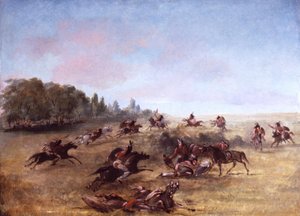
Obrazy umělce George Catlin: dotazy pro galerii

Kterým nejznámějším dílem je George Catlin?Odhalit odpověď

Say-say-gon, Hail Storm, War Chief (1845), Smithsonian American Art Museum, Washington, D.C.. Následují La dóo ke a, Buffalo Bull, a Grand Pawnee Warrior (1832) a Sky se ró ka, Second Chief of the Tribe (1834).

V jakém věku vytvořil(a) George Catlin dílo Say-say-gon, Hail Storm, War Chief?Odhalit odpověď

49 let: dílo Say-say-gon, Hail Storm, War Chief pochází z roku 1845 a George Catlin se narodil/a v roce 1796.

Kterých deset obrazů autora George Catlin je nejznámějších?Odhalit odpověď

Say-say-gon, Hail Storm, War Chief, La dóo ke a, Buffalo Bull, a Grand Pawnee Warrior, Sky se ró ka, Second Chief of the Tribe, Né hee ó ee wóo tis, Wolf on the Hill, Chief of the Tribe, Ee mat lá , King Phillip, Second Chief, Eeh nís kim, Crystal Stone, Wife of the Chief, Steeh tcha kó me co, Great King (called Ben Perryman), a Chief, Cáh be múb bee, He Who Sits Everywhere, a Brave, Os ce o lá, The Black Drink, a Warrior of Great Distinction a Stán au pat, Bloody Hand, Chief of the Tribe. Hodnocení výše uvádí rok a muzeum pro každé z nich.

Kolik známých děl má autor George Catlin?Odhalit odpověď

Náš katalog obsahuje 908 děl umělce George Catlin z let 1827 až 1869.

Kde lze vidět nejznámější originály umělce George Catlin?Odhalit odpověď

Většinou v Smithsonian American Art Museum (Washington, D.C.), National Gallery of Art (Washington) a Metropolitan Museum of Art (New York). V tabulce muzeí výše jsou vypsány všechny.

V jakém období vytvořil(a) George Catlin svá nejznámější obrazy?Odhalit odpověď

V období 1830s: 75 z celkem 100 děl na této stránce vzniklo právě tehdy, z toho La dóo ke a, Buffalo Bull, a Grand Pawnee Warrior z nich.

Který slavný obraz od George Catlin je nejstarší a který nejnovější?Odhalit odpověď

Na této stránce je nejstarší dílo z Portrait of a Gentleman (1827) a nejnovější z Turtle Hunt (1869).

Jakým tématům se George Catlin věnoval/a nejčastěji?Odhalit odpověď

Indigenous culture (29), Portrait (28) a Portraiture (26) napříč 100 díly na této stránce.

Jaké materiály používal(a) George Catlin nejčastěji?Odhalit odpověď

Oil On Canvas, u 69 z 100 děl na této stránce.

K kterému směru patří dílo umělce George Catlin?Odhalit odpověď

American romanticism, podle originálů na této stránce.

Jaká originální díla George Catlin mohu vidět v Smithsonian American Art Museum?Odhalit odpověď

Say-say-gon, Hail Storm, War Chief, Sky se ró ka, Second Chief of the Tribe a Né hee ó ee wóo tis, Wolf on the Hill, Chief of the Tribe: muzeum Smithsonian American Art Museum, Washington, D.C. má v obsluze 78 děl z této stránky.

Kde si mohu objednat ručně malovanou reprodukci George Catlin?Odhalit odpověď

Ano, jako reprodukce: originál zůstává ve svém muzeu, ale jakýkoli obraz na této stránce může být pro vás ručně namalován na zakázku z jeho vlastní stránky.

George Catlin: portrét umělce

Raný život a právnické vzdělání

George Catlin se narodil v roce 1796 v Wilkes-Barre v Pensylvánii jako páté z čtrnácti dětí. Jeho rané okolí bylo formováno drsnou realitou americké pohraniční linie, a to zejména prostřednictvím příběhů jeho matky, Polly Suttonové. Ta přežila zajetí během indiánského nájezdu, což byl fakt, který mu poskytoval neustálou, hluboce vnímanou vazbu k původním kulturám, které bude později dokumentovat. Tato osobní historie ukotvila jeho zájem o Západ dávno předtím, než vůbec poprvé vzal štětec do rukou za profesní účely.

Jeho cesta však nebyla původně směřována k plátnu. V sedmnácti letech nastoupil do právnické školy Litchfield, aby se připravil na právnickou kariéru, což byl směr, který mu prosazili rodiče. Nakonec získal profesní status, když byl v roce 1819 přijat ke studiu advokátské praxe. Právnický obor však nedokázal udržet jeho pozornost. Advokátní praxi věnoval pouze dva roky, protože soudní síň byla pro jeho skutečné zájmy jen mizernou náhradou. V době, kdy už opouštěl své právnické knihy, se pudel k uměleckému studiu a cestování již stal jeho hlavním životním impulsem.

Expedice a Indická galerie

Dílo George Catlina získává svou nevážnost především díky neuvěřitelnému rozsahu jeho cest po americkém Západě. Během 30. let 19. století podnikl pět rozsáhlých expedic, kdy se vydal po řece Missouri, aby pronikl do území kmenů Mandan, Sioux, Blackfeet a Choctaw. Neby to však jen pouhé prohlídkové cestování; jeho pohyb těmito pustinami byl motivován hlubokou potřebou dokumentovat specifický životní styl jednotlivých kmenů. Během svých cest sbíral nejen plátna svých obrazů, ale i fyzické artefakty, které svědčily o minulé éře. Tato masivní akumulace vizuálních i materiálních důkazů nakonec vytvořila jeho Indickou galerii, unikátní sbírku zahrnující přes 500 obrazů.

Právě tato monumentálnost sbírky činí jeho tvorbu historicky zásadnou. Catlin nemaloval pouze z paměti; on systematicky sbíral výsledky svých cest do jedné, obrovské a ucelené totality. Tento ambiciózní pokus o vytvoření komplexní kroniky hranic byl později rozšířen jeho cestami střední a jižní Amerikou v letech 1852 až 1857. Jeho pozornost však vždy zůstávala upřena na etnografickou realitu lidí, které potkával – dokumentování jejich tradic, rituálů a vzhledu bylo pro něj vždy důležitější než pouhé malování krajin.

Artistický styl a dokumentace

Catlinův přístup byl poháněn specifickou, naléhavou potřebou: dokumentováním životního stylu, který věřil, že mizí. Nespokojil se pouhou karikaturou či povrchními stereotypy, které byly v 19. století běžné. Místo toho se soustředil na jednotlivce a snažil se zachytit specifickou důstojnost kmenových vůdců i kinetickou energii, kterou vyzařovaly tradiční obřady. Jeho tahy štětcem upřednostňovaly precizní detail, díky čemuž byly textury ceremoniálních rituálních oděvů i specifika každodenního života zaznamenány s etnografickou přesností. Byl to vědomý pokus zachovat podstatu těchto kultur dříve, než je expanze na západ nevratně změnila.

Vizuální dopad jeho díla stojí na bohatém využití barvy a detailním environmentálním kontextu. Subjekty málokdy maloval v izolaci; místo toho je umisťoval do složitých pozadí, která poskytovala nezbytné situační informace. Tato prostředí často zahrnovala specifické krajiny, tipi nebo ceremoniální předměty, které zakotvovaly jeho subjekty v jejich skutečném okolí. Zapojením těchto prvků se posunul nad rámec prostého portrétního malování a vytvořil komplexní vizuální záznam americké hranice. Jeho schopnost vykreslit atmosféru scény – od prachu na prachové pláni až po strukturu tábora – proměnila jeho obrazy v historické důkazy, nikoliv jen v estetické cvičení.

  • Mó-sho-la-túb-bee, He Who Puts Out and Kills, Chief of the Tribe (1834)
  • Ball-play of the Choctaw--Ball Up (1850)

Klíčová díla a významné obrazy

Catlinovo dílo funguje spíše jako vizuální záznam konkrétních, prožitých okamžiků než jako pouhé portrétní malířství. Jeho portrét z roku 1834, Mó-sho-la-túb-bee, He Who Puts Out and Kills, Chief of the Tribe, zachycuje vůdce s neochvějným pohledem, který vyzařuje autoritu skrze svou přímou a nezdobnou přítomnost. Podobně Ball-play of the Choctaw se vyhýbá statickému pózování a dokumentuje kinetickou energii tradiční hry. Tato díla poskytují detailní vhled nezbytný pro pochopení kmenových sociálních struktur a komunitních aktivit.

Umělec se rovněž soustředil na průnik člověka a jeho prostředí. Prairie Meadows Burning zaznamenává kontrolované vypalování travin doprovázené jezdci, čímž zachycuje specifickou ekologickou i společenskou praxi. Jeho zobrazení Pipestone Quarry, Coteau Des Prairies identifikuje místo hlubokého duchovního významu pro mnoho kmenů. I jeho intimnější nebo neobvyklejší motivy mají velkou váhu; Oó-je-en-á-he-a, Woman Who Lives in a Bear, namalovaná kolem roku 1832, nabízí náhled do specifického kulturního narativu, zatímco Little Wolf (Shon-ta-ye-ga), vytvořená v roce 1846, zůstává významným kouskem jeho pozdější dokumentace.

  • Mó-sho-la-túb-bee, He Who Puts Out and Kills, Chief of the Tribe (1834)
  • Little Wolf (Shon-ta-ye-ga) (1846)

Publikace a světové turneje

Catlinovo usilování o zajištění trvalého domova pro jeho Indickou galerii vyžadovalo mnohem více než jen vizuální důkazy; vyžadovalo to silnou veřejnou přítomnost. V letech 40. a 50. 19. století vyrazil se svou kolekcí na turneje skrze hlavní evropská centra, kde vystavoval v Londýně, Paříži i Berleştir. Tyto výstavy však nebyly pouhým pasivním předváděním obrazů. S každým dílem šel i on sám, doprovázel své obrazy veřejnými přednáškami a využíval své osobní vzpomínky na život mezi americkými indiány, aby obrazům vtiskl živý, mluvený kontext. Tato synergie zraku a slova byla promyšleným pokusem o to, aby se realita pohraničí stala hmatatelnou pro diváky, kteří byli od řeky Missouri vzdaleni celé kontinenty.

Jeho literární tvorba pak poskytla intelektuální rámec celé této vizuální dokumentaci. V roce 1841 vydal dílo Manners, Customs, and Condition of the North American Indians, text, který se snažil kodifikovat pozorování, jež nasbíral během svých náročných expedic. Později, v roce 1868, představil Last Rambles amongst the Indians of the Rocky Mountains and the Andes. Tyto publikace nebyly pouze cestopisem; byly to pokusy zachránit a upevnit v trvalé historické paměti specifický, mizící společenský řád. George Catlin využil psané slovo k posílení legitimity svých obrazů a zajistil tím, že jeho pozorování přežije i v době, kdy jeho vlastní finanční stabilita již nebyla zajištěna.

Pozdní roky a smrt

Poslední desetiletí života George Catlin definovala finanční nejistota. Navzdory veškerému úsilí, které vložil do zajištění národního dědictví pro svou sbírku, strávil umělec velkou část svých pozdních let neúnavným bojem o návrat investic. V pragmatické snaze o záchranu svých prostředků vytvořil přes 400 menších kopií svých děl, známých jako „kreslená sbírka“. Tento krok byl promyšleným pokusem o monetizaci díla jeho života, který však přesto nedokázal zajistit stabilitu, kterou tak naléhavě potřeboval.

Boj o přežití a solventnost pokračoval až do jeho posledního výdechu. George Catlin zemřel 23. prosince 1872 v Jersey City v New Jersey. Byl pohřben na hřbitově Green-Wood v Brooklynu. Jeho odchod znamenal konec životní cesty zasvěcené dokumentování hranice, kterou tak rychle nahrazovalo právě to osídlování, které on sám předpovídal.

Dědictví a historický význam

Catlinova důležitost spočívá v jeho roli jako primárního vizuálního zdroje. Byl prvním bílým mužem, který zachytil indiánské kmeny z roviny přímo v jejich domovině, čímž poskytl přímý záznam o životě před plným dopadem západní expanze. Jeho obrazy nabízejí pohled do kultur, které byly v hlavních narativy devatenáctého století často zkreslovány nebo zcela ignorovány. Místo aby se spoléhal na nepřímé svědectví, jeho dílo zachycuje specifika kmenových obvyklostí a sociálních struktur prostřednictvím přímého pozorování.

Historická hodnota jeho tvorby je zcela konkrétní. Jeho dokumentace poskytuje vhled do náboženských přesvědčení a ceremoniálních tradic, které by jinak mohly být historií zapomenuty. Tato archivní kvalita mu v pozdějších letech vynesla významné uznání. V roce 2001 byl uveden do Národní síně slávy řek (National Rivers Hall of Fame) a v roce 2023 do Síně slávy umění a zábavy okrese Luzerne. Tyto pocty uznávají váhu jeho přínosu k americkým historickým a kulturním záznamům.

Kde dnes spatřit jeho díla

Catlinův vizuální záznam je dnes rozptýlen v několika významných institucích, což znamená, že komplexní studium jeho tvorby vyžaduje návštěvu konkrétních sbírek. Nejsilnější soustředění jeho díla se nachází ve Washingtonu, D.C. Smithsonian American Art Museum uchovává 25 jeho obrazů, které nabízejí nejrozsáhlejší pohled na jeho etnografickou dokumentaci. V blízkosti se nachází i National Gallery of Art ve Washingtonu, která ve své sbírce udržuje jedno z jeho děl.

Mimo hlavní město je jeho přítomnost cítit i v jiných regionálních muzeích, která vlastní jednotlivé kusy jeho tvorby. Denver Art Museum obsahuje jedno dílo, zatímco Virginia Museum of Fine Arts v Richmondu uchovává další. Tento rozptýlený stav sbírek odráží fragmentovaný charakter jeho původní Indické galerie a obtíže, kterým čelil při snaze zajistit své kolekci jediný trvalý domov během svého života.

Všechna díla od George Catlin: 908 →