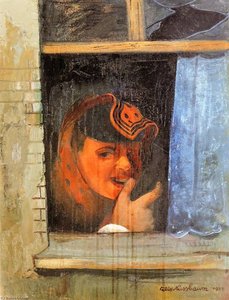
Portrét Felix Nussbaum

Obrazy autora Felix Nussbaum: 49 nejznámějších díel podle pohledu galerie

Aktualizováno říjen 2026 · seřazeno podle našeho skóre popularity (vyhledávání, návštěvy a objednávky u každého díla) · 49 děl umělce Felix Nussbaum v našem katalogu

Stručně řečeno

Z pohledu galerie je nejslavnějším dílem Felix Nussbaum obrazem Fish Market (1936), jehož originál je vystaven v Kulturgeschichtliche Museum Osnabrück v obci Osnabrück. Fishing Boats with Island (1933) a Loneliness (1942) doplňují trio, které každé oko okamžitě pozná. Z 49 děl umělce Felix Nussbaum v našem katalogu představuje galerie níže 49 nejznámějších děl, z nichž každé je originálem s uvedením roku vzniku, muzea a toho, co jej činí jedinečným.

1904 – 1944, Osnabrück Surrealist expressionism Nejvíce děl: Kulturgeschichtliche Museum Osnabrück

Top 10 obrazů umělce Felix Nussbaum v naší galerii

5
Memory of Norderney (1929) od Felix Nussbaum

Memory of Norderney

1929 · Oil On Canvas · Kulturgeschichtliche Museum Osnabrück, Osnabrück

In the hauntingly beautiful oil on canvas, Memory of Norderney, Felix Nussbaum invites us into a world that feels simultaneously vibrant and ghostly. Painted in 1929, this large-scale masterpiece captures a moment of serene leisure, yet it is imbued with a profound sense of nostalgia that transcends its literal subject matter. The scene unfolds before a stately building, perhaps a grand hotel or a coastal mansion, characterized by its classical…

Obrazy autora Felix Nussbaum, seřazeny od 11 do 49

11Self-Portrait in a Shroud (Group picture) (1942) od Felix NussbaumSelf-Portrait in a Shroud (Group picture)1942 · Berlinische Galerie 12Self-Portrait with Jewish Identity Card (1943) od Felix NussbaumSelf-Portrait with Jewish Identity Card1943 13Man with Flower (1939) od Felix NussbaumMan with Flower1939 14Evening (unfinished) (also known as Self Portrait with Felka Platek) (1942) od Felix NussbaumEvening (unfinished) (also known as Self Portrait with Felka Platek)1942 · Kulturgeschichtliche Museum Osnabrück 15Jaqui in the Street (1944) od Felix NussbaumJaqui in the Street1944 · Kulturgeschichtliche Museum Osnabrück 16Drawbridge across a Moorland Ditch (1927) od Felix NussbaumDrawbridge across a Moorland Ditch1927 · Kulturgeschichtliche Museum Osnabrück 17Gypsy Woman (1927) od Felix NussbaumGypsy Woman1927 · Kulturgeschichtliche Museum Osnabrück 18The Hakenhof in Kommenderiestrasse in Onasbrück (1927) od Felix NussbaumThe Hakenhof in Kommenderiestrasse in Onasbrück1927 19Men Mending Nets in a Street in Ostend (1928) od Felix NussbaumMen Mending Nets in a Street in Ostend1928 20Fairground (1925) od Felix NussbaumFairground1925 21Group Portrait (1930) od Felix NussbaumGroup Portrait1930 22Gallows (also known as Funeral) (1930) od Felix NussbaumGallows (also known as Funeral)1930 · Berlinische Galerie 23Fisherman's House (1933) od Felix NussbaumFisherman's House1933 · Kulturgeschichtliche Museum Osnabrück 24The Hurdy Gurdy Man (1931) od Felix NussbaumThe Hurdy Gurdy Man1931 · Berlinische Galerie 25Narcussus (1932) od Felix NussbaumNarcussus1932 · Kulturgeschichtliche Museum Osnabrück 26Harbor Scene (1935) od Felix NussbaumHarbor Scene1935 · Kulturgeschichtliche Museum Osnabrück 27Interior with Still Life (1935) od Felix NussbaumInterior with Still Life1935 28Landscape (also known as Tree Behind a Wall) (1935) od Felix NussbaumLandscape (also known as Tree Behind a Wall)1935 29Locomotive (1936) od Felix NussbaumLocomotive1936 · Kulturgeschichtliche Museum Osnabrück 30Man behind the Window (also known as Self Portrait after Adriaen van Ostade) (1937) od Felix NussbaumMan behind the Window (also known as Self Portrait after Adriaen van Ostade)1937 · Kulturgeschichtliche Museum Osnabrück 31Don Quixote and the Windmills (1938) od Felix NussbaumDon Quixote and the Windmills1938 · Kulturgeschichtliche Museum Osnabrück 32Dover Ferry (1935) od Felix NussbaumDover Ferry1935 · Kulturgeschichtliche Museum Osnabrück 33Nightly view from the workshop with dishcloth. (1940) od Felix NussbaumNightly view from the workshop with dishcloth.1940 34The Refugee (1939) od Felix NussbaumThe Refugee1939 35The Kitchen in Hiding (1943) od Felix NussbaumThe Kitchen in Hiding1943 · Kulturgeschichtliche Museum Osnabrück 36Man with Withered Leaf (1941) od Felix NussbaumMan with Withered Leaf1941 37Stillleben mit Schachteln (Still life with boxes) (1941) od Felix NussbaumStillleben mit Schachteln (Still life with boxes)1941 38Hurdy Gurdy Man in a Surreal Landscape (1939) od Felix NussbaumHurdy Gurdy Man in a Surreal Landscape1939 · Kulturgeschichtliche Museum Osnabrück 39Jew by the Window (1943) od Felix NussbaumJew by the Window1943 · Niedersächsisches Landesmuseum Für Kunst Und Kulturgeschichte Oldenburg 40Manikins (1943) od Felix NussbaumManikins1943 · Kulturgeschichtliche Museum Osnabrück 41Group of Three (1944) od Felix NussbaumGroup of Three1944 42Felka Platek Painting (1935) od Felix NussbaumFelka Platek Painting1935 · Jüdisches Museum Rendsburg 43In the camp (1940) od Felix NussbaumIn the camp1940 · Deutsches Historisches Museum 44Gypsy (1928) od Felix NussbaumGypsy1928 · Kulturgeschichtliche Museum Osnabrück 45Moje Matka (1926) od Felix NussbaumMoje Matka1926 · Kulturgeschichtliche Museum Osnabrück 46Untitled (AQQJ26) od Felix NussbaumUntitled (AQQJ26) 47Masquerade (1927) od Felix NussbaumMasquerade1927 48Death Triumphant (1944) od Felix NussbaumDeath Triumphant1944 49Self-Portrait in the Camp (1940) od Felix NussbaumSelf-Portrait in the Camp1940 · Neue Galerie New York

Motivy, které zaujaly Felix Nussbaum

Čtyři témata, která se v těchto originálech nejčastěji objevují, z nichž každé má svůj nejlepší příklad.

Muzea, v nichž jsou vystavena originálna umělce Felix Nussbaum

7 muzea, v nichž je umístěno nejvíce obrazů z této stránky.

Muzea Město Díla autora Felix Nussbaum Obrazy z tohoto seznamu
Kulturgeschichtliche Museum Osnabrück, OsnabrückKulturgeschichtliche Museum Osnabrück Osnabrück 21 Fish Market, Fear (also known as Self Portrait with His Niece Marianna), Memory of Norderney
Berlinische Galerie, BerlínBerlinische Galerie Berlín 4 The mad square, Self-Portrait in a Shroud (Group picture), Gallows (also known as Funeral)
Židovské muzeum v Berlíně, BerlínŽidovské muzeum v Berlíně Berlín 2 Loneliness, Self-Portrait With Painters Cloth
Niedersächsisches Landesmuseum Für Kunst Und Kulturgeschichte Oldenburg, OldenburgNiedersächsisches Landesmuseum Für Kunst Und Kulturgeschichte Oldenburg Oldenburg 1 Jew by the Window
Jüdisches Museum Rendsburg, RendsburgJüdisches Museum Rendsburg Rendsburg 1 Felka Platek Painting
Deutsches Historisches Museum, BerlínDeutsches Historisches Museum Berlín 1 In the camp
Neue Galerie New York, New YorkNeue Galerie New York New York 1 Self-Portrait in the Camp

Felix Nussbaum, jeden ikonický obraz na každé desetiletí

Díla podle dekád

Vyberte si dekádu a prohlédněte si originál, který ji definuje.

Obrazy umělce Felix Nussbaum: odpovědi galerie

Který obraz autora Felix Nussbaum je nejslavnější ze všech?Odhalit odpověď

Fish Market (1936), Kulturgeschichtliche Museum Osnabrück, Osnabrück. Následují Fishing Boats with Island (1933) a Loneliness (1942).

Kolik let bylo Felix Nussbaum, když dokončil/a Fish Market?Odhalit odpověď

32 let: dílo Fish Market pochází z roku 1936 a Felix Nussbaum se narodil/a v roce 1904.

Kterých 10 nejlepších obrazů má Felix Nussbaum?Odhalit odpověď

Fish Market, Fishing Boats with Island, Loneliness, Fear (also known as Self Portrait with His Niece Marianna), Memory of Norderney, Entombment (also known as Organ Grinders at the Roman Forum), Lovers, The mad square, Self-Portrait With Painters Cloth a Masks and Cat. Hodnocení výše uvádí rok a muzeum pro každé z nich.

Kolik děl vytvořil/a Felix Nussbaum?Odhalit odpověď

Náš katalog obsahuje 49 děl umělce Felix Nussbaum z let 1925 až 1944.

Kde jsou vystavena nejznámější originály umělce Felix Nussbaum?Odhalit odpověď

Většinou v Kulturgeschichtliche Museum Osnabrück (Osnabrück), Berlinische Galerie (Berlín) a Židovské muzeum v Berlíně (Berlín). V tabulce muzeí výše jsou vypsány všechny.

Kdy Felix Nussbaum vytvořil své nejslavnější obrazy?Odhalit odpověď

V období 1930s: 22 z celkem 49 děl na této stránce vzniklo právě tehdy, z toho Fish Market z nich.

Která jsou nejstarší a nejnovější slavná díla umělce Felix Nussbaum?Odhalit odpověď

Na této stránce je nejstarší dílo z Fairground (1925) a nejnovější z Jaqui in the Street (1944).

Kterým tématům se Felix Nussbaum věnoval(a) nejčastěji?Odhalit odpověď

Men (5), Woman (3) a Buildings (3) napříč 49 díly na této stránce.

V jaké technice tvořil(a) Felix Nussbaum nejčastěji?Odhalit odpověď

Oil, u 2 z 49 děl na této stránce.

S jakým směrem je spojen(a) Felix Nussbaum?Odhalit odpověď

Surrealist expressionism, podle originálů na této stránce.

Jaká originální díla Felix Nussbaum má v obsluze Kulturgeschichtliche Museum Osnabrück?Odhalit odpověď

Fish Market, Fear (also known as Self Portrait with His Niece Marianna) a Memory of Norderney: muzeum Kulturgeschichtliche Museum Osnabrück, Osnabrück má v obsluze 21 děl z této stránky.

Mohu si nechat ručně vypracovat obraz od Felix Nussbaum?Odhalit odpověď

Ano, jako reprodukce: originál zůstává ve svém muzeu, ale jakýkoli obraz na této stránce může být pro vás ručně namalován na zakázku z jeho vlastní stránky.

Felix Nussbaum: umělec

A Life Etched in Exile: The Haunting Vision of Felix Nussbaum

Felix Nussbaum’s story is a stark and profoundly moving testament to the power of art born from unimaginable suffering. Born in Osnabrück, Germany, in 1904, his life unfolded against the backdrop of rising nationalism and escalating persecution, culminating in the horrors of the Holocaust. He wasn't simply a victim *of* history; he was an artist who meticulously documented its impact on his soul, creating a body of work that stands as both a personal lament and a universal warning. Nussbaum’s paintings offer a rare, unflinching glimpse into the psychological landscape of displacement, fear, and ultimately, annihilation – a perspective often absent from broader historical narratives. His father, Philipp Nussbaum, a World War I veteran with an early passion for painting himself, recognized and nurtured his son's talent, providing encouragement that would prove vital in the darkening years to come. This initial support fostered a lifelong dedication to art, even as political realities increasingly constricted his path.

Formative Years and Artistic Influences

Nussbaum’s artistic journey began with formal studies in Hamburg and Berlin in 1920, continuing for as long as circumstances allowed. His early work reveals a clear debt to the Post-Impressionist masters, particularly Vincent van Gogh and Henri Rousseau. The vibrant colors and expressive brushwork of these artists provided a foundation upon which Nussbaum would later build his unique style. However, he wasn’t content with mere imitation. He actively sought out new influences, drawn to the unsettling dreamscapes of Giorgio de Chirico and Carlo Carrà, pioneers of the *pittura metafisica* movement. The careful attention to color demonstrated by Carl Hofer's expressionist paintings also left a lasting impression on Nussbaum’s approach. These diverse inspirations coalesced into what would become known as his “New Objectivity” style – a blend of realism and surrealism, characterized by precise detail, unsettling compositions, and a pervasive sense of alienation. This period was marked by experimentation and growth, but the looming shadow of Nazi ideology soon threatened to extinguish his artistic promise.

Exile, Isolation, and the Shadow of War

The ascent of the Nazis in 1933 irrevocably altered Nussbaum’s life. Studying on a scholarship in Rome at the Berlin Academy of the Arts, he witnessed firsthand the chilling pronouncements of Hitler's propaganda minister, outlining the tenets of Nazi art – glorification of heroism and the Aryan race. It became painfully clear that as a Jew, his place within the German artistic establishment was untenable. This realization forced him into exile, first to Paris and then to Belgium, where he married Felka Platek in 1937. The following decade was defined by fear and isolation. Despite finding some measure of safety, Nussbaum lived under constant threat, haunted by the knowledge of his parents’ perilous situation back in Germany. They had initially resisted his pleas to join them in exile, clinging to a misguided hope that things would improve, but ultimately returned home only to face the full force of Nazi persecution. This loss – the severing of his spiritual and financial support – deeply impacted Nussbaum's work, infusing it with an increasingly desperate and melancholic tone. He continued to paint prolifically during this period, finding solace and purpose in his art even as his world crumbled around him.

A Testament to Suffering: Late Works and Lasting Legacy

The Nazi invasion of Belgium in 1940 marked a turning point. Nussbaum was arrested as a “hostile alien” and interned at the Saint-Cyprien camp in France, an experience that profoundly shaped his artistic vision. He managed to escape and went into hiding with Felka, relying on the generosity of friends for shelter and supplies. The final years of his life were spent in constant danger, producing some of his most powerful and haunting works. Self-Portrait with Jewish Identity Card (1943) is perhaps his most iconic painting – a stark and unflinching depiction of dehumanization, showing Nussbaum clutching the document that marked him as an outcast. Triumph of Death (1944), another masterpiece from this period, is filled with symbolic details—a crumpled music score playing “The Lambeth Walk,” a poignant reminder of what was lost—revealing Nussbaum’s meticulous attention to detail and his ability to imbue even mundane objects with profound meaning. Tragically, in 1944, Nussbaum's parents were murdered at Auschwitz. Shortly after, he and Felka were discovered by German forces, deported to Mechelen transit camp, and ultimately sent to Auschwitz themselves, where Felix was murdered upon arrival in August of that year. His brother and sister-in-law followed soon after, completing the annihilation of his family within a single year. Despite this unimaginable loss, Nussbaum’s art endures as a powerful testament to the resilience of the human spirit and a chilling reminder of the horrors of the Holocaust. The Felix Nussbaum Haus in Osnabrück stands as a fitting tribute to his life and work, ensuring that his voice continues to resonate for generations to come. His inclusion in documentaries like *Eyewitness* further solidifies his place among those artists who bore witness to history’s darkest chapters.

Všechna díla od Felix Nussbaum: 49 →