Portrét Ernst Barlach

12 nejslavnějších obrazů autora Ernst Barlach, každý naprosto unikátní

Aktualizováno říjen 2026 · seřazeno podle našeho skóre popularity (vyhledávání, návštěvy a objednávky u každého díla) · 12 děl umělce Ernst Barlach v našem katalogu

Stručně řečeno

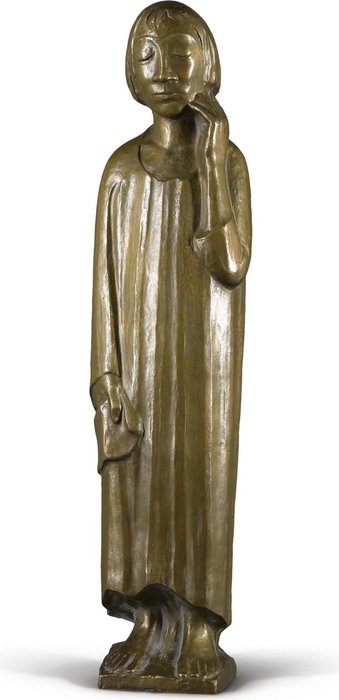
Frenzy (Der Berserker) (1910) je obraz autora Ernst Barlach, který přitahuje nejvíce pohledů; originál se nachází v Nelson-Atkins Museum of Art, Kansas City. Poté se zrak přesouvá k Man in Ecstasy (1912) a The Flutist (1936). Z 12 děl umělce Ernst Barlach v našem katalogu je těchto 12 těch nejznámějších; každé z nich je unikátním originálem s uvedením roku vzniku, muzea a důvodu jeho nesmrtelnosti.

1870 – 1938 Expressionism Nejvíce děl: Nelson-Atkins Museum of Art

Top 10 obrazů autora Ernst Barlach podle výběru galerie

1
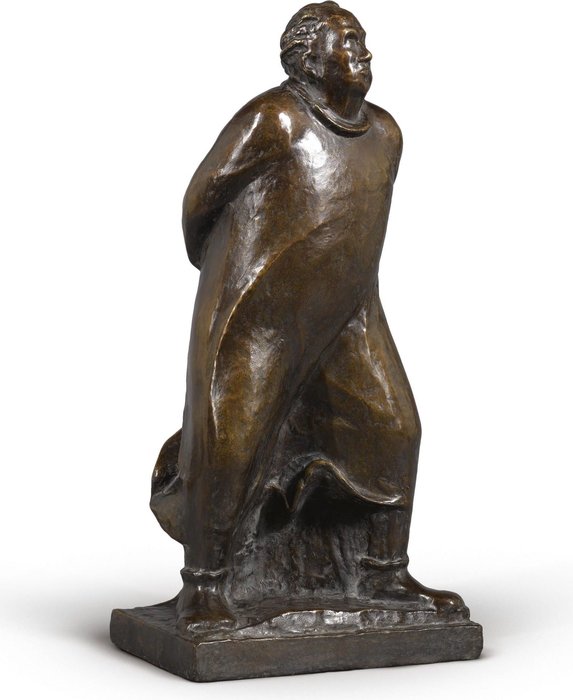
Frenzy (Der Berserker) (1910) od Ernst Barlach

Frenzy (Der Berserker)

1910 · Bronze · Nelson-Atkins Museum of Art, Kansas City

In the heavy, bronze contours of Ernst Barlach’s Frenzy (Der Berserker), one does not merely observe a sculpture; one encounters a visceral eruption of human emotion. Created in 1910, this masterpiece stands as a profound testament to the power of German Expressionism, capturing a moment where physical form and psychological turmoil become indistinguishable. The figure, cast in enduring bronze, presents a powerful, solid silhouette that seems to vibrate with an…

4
Panic Terror (1912) od Ernst Barlach

Panic Terror

1912 · Wood · Staatliche Kunsthalle Karlsruhe, Karlsruhe

In 1912, the sculptor Ernst Barlach carved a moment of raw friction into Baltic birch. The work, titled Panic Terror, captures a sudden, violent collision between two human forms. It is a physical knot of resistance and weight. The wood bears the marks of a struggle that feels both immediate and ancient.

5
The Singing Man (1928) od Ernst Barlach

The Singing Man

1928

Ernst Barlach ist einer der bedeutendsten Bildhauer des deutschen Expressionismus. Geprägt durch die erschütternden Erfahrungen des Ersten Weltkriegs und später in radikaler Opposition zur rassistisch definierten nationalsozialistischen Propaganda einer Volksgemeinschaft befasste er sich mit dem Individuum, häufig in dessen existenzieller Einsamkeit und Not, aber auch in Momenten des unmittelbaren und als glücklich erlebten Daseins. Der singende Mann wirkt in seiner zurückgelehnten Haltung gelöst und lauscht mit Freude und ein wenig…

7
Shepherd in a Storm (1908) od Ernst Barlach

Shepherd in a Storm

1908 · Wood · Kunsthalle Bremen, Bremen

In the evocative sculpture Shepherd in a Storm, created in 1908 by the German Expressionist master Ernst Barlach, we encounter a profound meditation on human resilience. The piece captures a moment of intense struggle, where a shepherd, with his head bowed and hat pulled low against the elements, battles an unseen, relentless wind. This atmospheric tension serves as a powerful metaphor for the adversities and tempests that define the human…

Slavná díla umělce Ernst Barlach, čísla 11 až 12

Motivy, které zaujaly Ernst Barlach

Čtyři témata, která se v těchto originálech nejčastěji objevují, z nichž každé má svůj nejlepší příklad.

Muzea, v nichž jsou vystavena originálna umělce Ernst Barlach

5 muzea, v nichž je umístěno nejvíce obrazů z této stránky.

Muzea Město Díla autora Ernst Barlach Obrazy z tohoto seznamu
Nelson-Atkins Museum of Art, Kansas CityNelson-Atkins Museum of Art Kansas City 1 Frenzy (Der Berserker)
Aichi Prefectural Museum of Art, NagoyaAichi Prefectural Museum of Art Nagoya 1 Man in Ecstasy
Lehmbruck Museum, DüsseldorfLehmbruck Museum Düsseldorf 1 The Flutist
Staatliche Kunsthalle Karlsruhe, KarlsruheStaatliche Kunsthalle Karlsruhe Karlsruhe 1 Panic Terror
Kunsthalle Bremen, BremenKunsthalle Bremen Bremen 1 Shepherd in a Storm

Ernst Barlach napříč desetiletími: jeden unikátní originál pro každou dekádu

Díla podle dekád

Vyberte si dekádu a prohlédněte si originál, který ji definuje.

Obrazy umělce Ernst Barlach: dotazy pro galerii

Kterým nejznámějším dílem je Ernst Barlach?Odhalit odpověď

Frenzy (Der Berserker) (1910), Nelson-Atkins Museum of Art, Kansas City. Následují Man in Ecstasy (1912) a The Flutist (1936).

V jakém věku vytvořil(a) Ernst Barlach dílo Frenzy (Der Berserker)?Odhalit odpověď

40 let: dílo Frenzy (Der Berserker) pochází z roku 1910 a Ernst Barlach se narodil/a v roce 1870.

Kterých deset obrazů autora Ernst Barlach je nejznámějších?Odhalit odpověď

Frenzy (Der Berserker), Man in Ecstasy, The Flutist, Panic Terror, The Singing Man, Untitled (727), Shepherd in a Storm, Untitled (305), Untitled (207) a Untitled (902). Hodnocení výše uvádí rok a muzeum pro každé z nich.

Kolik známých děl má autor Ernst Barlach?Odhalit odpověď

Náš katalog obsahuje 12 děl umělce Ernst Barlach z let 1908 až 1936.

Kde lze vidět nejznámější originály umělce Ernst Barlach?Odhalit odpověď

Většinou v Nelson-Atkins Museum of Art (Kansas City), Aichi Prefectural Museum of Art (Nagoya) a Lehmbruck Museum (Düsseldorf). V tabulce muzeí výše jsou vypsány všechny.

V jakém období vytvořil(a) Ernst Barlach svá nejznámější obrazy?Odhalit odpověď

V období 1910s: 3 z celkem 12 děl na této stránce vzniklo právě tehdy, z toho Frenzy (Der Berserker) z nich.

Který slavný obraz od Ernst Barlach je nejstarší a který nejnovější?Odhalit odpověď

Na této stránce je nejstarší dílo z Shepherd in a Storm (1908) a nejnovější z The Flutist (1936).

Jaké materiály používal(a) Ernst Barlach nejčastěji?Odhalit odpověď

Wood, u 2 z 12 děl na této stránce.

K kterému směru patří dílo umělce Ernst Barlach?Odhalit odpověď

Expressionism, podle originálů na této stránce.

Kde si mohu objednat ručně malovanou reprodukci Ernst Barlach?Odhalit odpověď

Ano, jako reprodukce: originál zůstává ve svém muzeu, ale jakýkoli obraz na této stránce může být pro vás ručně namalován na zakázku z jeho vlastní stránky.

Ernst Barlach: portrét umělce

Ernst Barlach: Life and Legacy

Early Life and Education

  • Born in Wedel, Holstein (Germany) on January 2nd, 1870, Ernst Heinrich Barlach was the eldest of four sons.
  • His father, Dr. Georg Barlach, was a physician who died when Ernst was fourteen, leading to a move with his family.
  • He received his early education in Ratzeburg and Schönberg, growing up in a devout Lutheran household.
  • Barlach began his artistic training at the Gewerbeschule Hamburg (Hamburg School of Applied Arts) from 1888 to 1891.
  • He continued his studies at the Königliche Akademie der bildenden Künste zu Dresden (Royal Academy of Fine Arts in Dresden) between 1891 and 1895, creating his first major sculpture, Die Krautpflückerin (The Herb Plucker).
  • He briefly studied at the Académie Julian in Paris from 1895 to 1897 but remained critical of simply copying French styles.

Artistic Development and Influences

  • Initially, Barlach worked in an Art Nouveau style, creating illustrations for the magazine Jugend and ceramic sculptures.
  • A pivotal trip to Russia in 1906 profoundly influenced his artistic direction, exposing him to new perspectives and a more expressive aesthetic.
  • Financial support from art dealer Paul Cassirer allowed Barlach to develop his unique style, focusing on the emotional intensity of human figures.
  • He drew inspiration from early Gothic art, particularly its dramatic drapery and spiritual yearning.
  • Barlach’s work also reflects influences from Russian folk art and a growing interest in portraying the lives of ordinary people.

Key Themes and Artistic Style

  • Barlach's sculptures, prints, and writings often explored themes of human suffering, spiritual longing, and social injustice.
  • His figures are characterized by their elongated forms, expressive gestures, and a sense of inner turmoil.
  • He frequently used wood carving and bronze as his primary mediums, emphasizing the tactile qualities of these materials.
  • The Singing Man, Frenzy (Der Berserker), and Shepherd in a Storm are examples of his emotionally charged and symbolic works.

World War I and its Aftermath

  • Initially, Barlach was a patriotic supporter of World War I, anticipating artistic renewal through conflict.
  • His experience as an infantry soldier from 1915 to 1916 profoundly changed his views, transforming him into a staunch pacifist.
  • The horrors of war became a central theme in his subsequent work, leading to powerful anti-war sculptures like Der Rächer (The Avenger).

Recognition and Controversy

  • Barlach gained significant recognition after the war, becoming a member of prestigious art academies in Prussia and Munich.
  • However, his anti-war stance and expressive style drew criticism during the rise of Nazism.
  • His works were labeled as “degenerate art” by the Nazi regime and confiscated from museums.
  • The Magdeburg Cenotaph, a WWI memorial depicting the pain and futility of war, sparked intense controversy and was temporarily removed.

Legacy and Historical Significance

  • Ernst Barlach died in Güstrow, Mecklenburg, on October 24th, 1938, but his artistic legacy endures.
  • He is considered one of the most important German Expressionist sculptors of the 20th century.
  • His work continues to resonate with audiences today, offering a powerful commentary on the human condition and the devastating consequences of war.
  • Barlach’s commitment to artistic integrity in the face of political oppression makes him an important figure in art history.

Všechna díla od Ernst Barlach: 12 →