Portrét Edgar Degas

Edgar Degas Paintings: The 100 Most Famous, Through a Gallery's Eye

Aktualizováno říjen 2026 · seřazeno podle našeho skóre popularity (vyhledávání, návštěvy a objednávky u každého díla) · 1 074 děl umělce Edgar Degas v našem katalogu

In short

To the gallery's eye, Edgar Degas's most famous painting is "Absinthe Drinker" – Žvýkající Absint (1876), whose original hangs in the Musée d'Orsay, Paříž. Woman Drying Herself and The Dance Class (1873) complete the trio every eye recognises. Of the 1,074 works by Edgar Degas in our catalog, the gallery presents the 100 most famous below, each original with its year, its museum and what makes it unique.

1834 – 1917, Paříž Impresionismus Nejvíce děl: Metropolitan Museum of Art

The gallery's top 10 Edgar Degas paintings

1
"Absinthe Drinker" – Žvýkající Absint (1876) od Edgar Degas

"Absinthe Drinker" – Žvýkající Absint

1876 · Olej na plátně · Musée d'Orsay, Paříž

Edgar Degasův „Absinthe Drinker“ (1876) představuje ikonickou scénu z pařížské kavárny, která zachycuje samotnou podstatu městského života v pozdní dekádě 19. století. Tento mistrovský dílo vyvolává u diváka klidné úvahové cítění, kde dva muži sedí vedle sebe, přestože zůstávají od sebe vzdálení – každý je ponořený do vlastních myšlenek. Je to obraz, který si vyžaduje pozornost a otevřenou mysl.

2
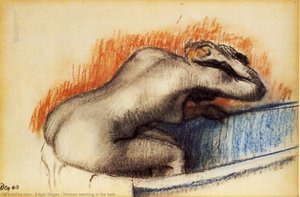
Woman Drying Herself od Edgar Degas

Woman Drying Herself

Acrylic On Canvas · National Gallery, Londýn

A Moment of Intimate Repose: Exploring Degas’ “Woman Drying Herself” Edgar Degas's "Woman Drying Herself" is a captivating pastel drawing that embodies the spirit of Impressionism and, more specifically, the *Intimist* movement. This work isn’t merely a depiction of a nude; it’s an exploration of private moments, vulnerability, and the quiet beauty of everyday life – themes central to Degas' artistic vision. The artwork invites us into a fleeting, personal…

3
The Dance Class (1873) od Edgar Degas

The Dance Class

1873 · Oil On Canvas · Musée d'Orsay, Paříž

To step into Edgar Degas’s “The Dance Class” is to transcend the boundaries of time and enter a sanctuary of disciplined grace. Painted around 1873, this masterpiece does not merely present a scene of balletic rehearsal; it offers an intimate, almost voyeuristic window into the quiet intensity of the dance studio. Unlike the grand, staged spectacles often associated with the opera, Degas directs our gaze toward the unvarnished reality of…

4
The Bellelli Family od Edgar Degas

The Bellelli Family

Oil On Canvas · Musée d'Orsay, Paříž

In the quiet, shadowed corners of a Parisian room, Edgar Degas captures something far more profound than a mere family gathering. The Bellelli Family, painted between 1858 and 1867, stands as an exquisite masterwork that transcends the boundaries of traditional portraiture. It is not simply a record of faces, but a psychological landscape where every gaze and posture whispers of unspoken tensions and deep-seated emotions. As one gazes upon this…

5
Interior (also known as The Rape) (1868) od Edgar Degas

Interior (also known as The Rape)

1868 · Olej na plátně · Philadelphia Museum of Art, Philadelphia

Edgar Degas’s “Interior,” often referred to as “The Rape,” is not merely a painting; it's an experience—a carefully constructed tableau of psychological tension and unspoken drama. Completed in 1868, this grisaille masterpiece resides within the Philadelphia Museum of Art, yet its power transcends its physical location, resonating with viewers long after they’ve turned away. It’s a work that invites speculation, prompting us to confront uncomfortable truths about human relationships and…

6
Portraits in a New Orleans Cotton Office od Edgar Degas

Portraits in a New Orleans Cotton Office

Portraits in a New Orleans Cotton Office Edgar Degas, one of the most celebrated artists of the Impressionist movement, gifted us Portraits in a New Orleans Cotton Office, an oil painting that encapsulates the very essence of his uncle’s cotton brokerage business during its calamitous bankruptcy. Completed in 1873, this masterpiece transcends mere visual representation; it stands as a testament to Degas' unparalleled skill and occupies a significant place within…

7
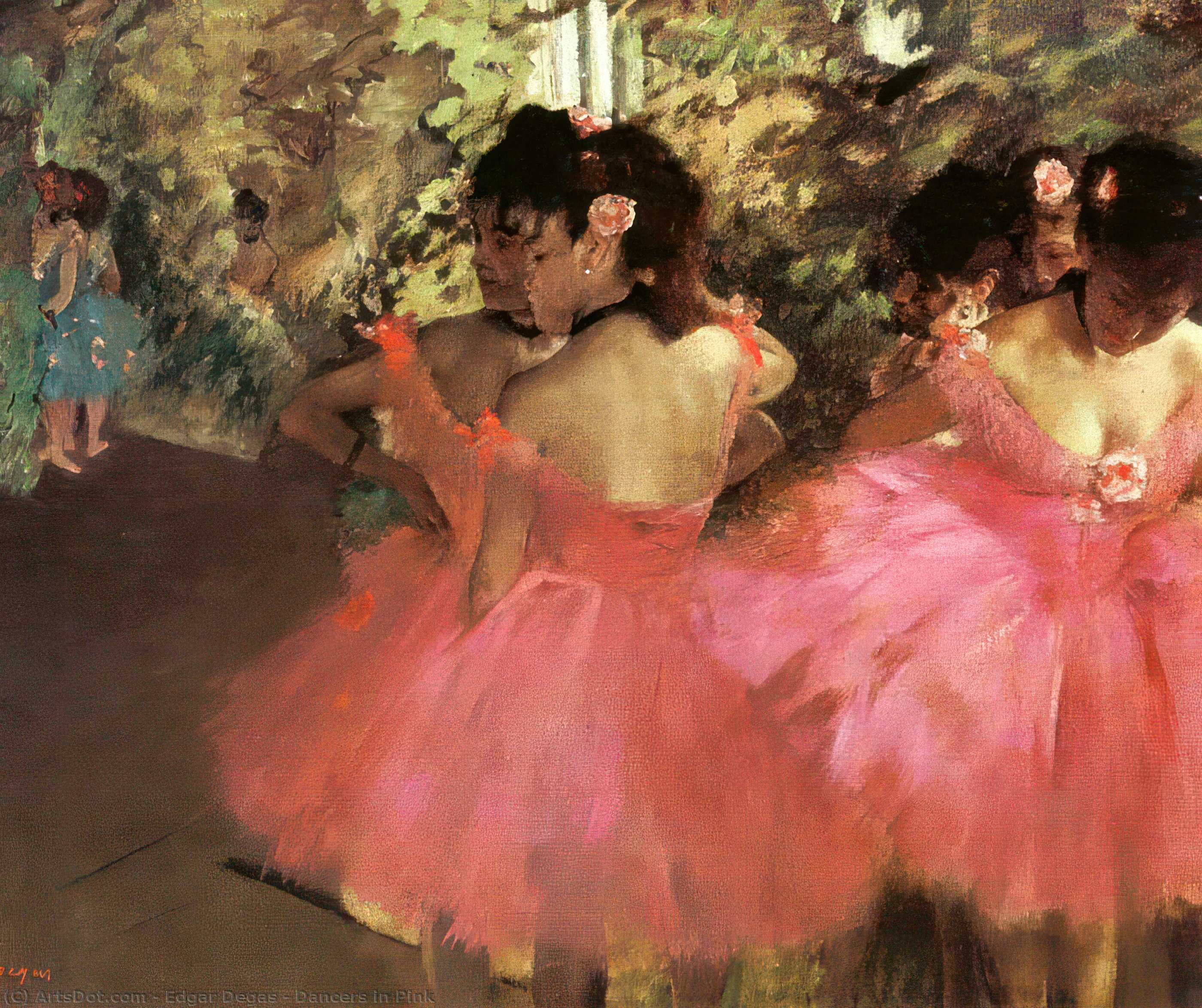
Tänčíky v růžové barvě (1885) od Edgar Degas

Tänčíky v růžové barvě

1885 · Olej na plátně · Hill-Stead Museum, Farmington

Zrození a Kontext: Degasův Pohled na Svět Baletu Edgar Degas, muž protichůdný a fascinující, se narodil v Paříži roku 1834 jako Hilaire-Germain-Edgar De Gas. Ačkoli je často spojen s impresionisty – Monetem, Renoirrem a dalšími, kteří v pozdní devatenáctém století revolučně změnili malířství – sám se této kategorii odmítal přisuzovat. Jeho odhodlání k přesnosti a detailu, jeho pečlivé pozorování světa kolem sebe, vedly k tomu, že se identifikoval spíše jako…

8
Tanečnice s květinovým věncem (Hvězda baletu) (1878) od Edgar Degas

Tanečnice s květinovým věncem (Hvězda baletu)

1878 · Akryl na plátně

Edgar Degas, jeden z nejvýznamnějších umělců 19. století, se proslavil především svými obrazy tanečnic, živoucích scén v Pařížském baletu a portréty vysoké společnosti. Jeho dílo není jen dokumentací krásy, ale i hlubokým zkoumáním lidské povahy, pohybu a chvilky, která se zdá být navždy zachycena na plátně. „Tanec s květem“ (The Star of the Ballet), vytvořený v roce 1878, je mistrovským příkladem jeho umění – obrazu, který uchvává oko svou dynamickou…

9
Miss Lola, au Cirque Fernando, NG L (1879) od Edgar Degas

Miss Lola, au Cirque Fernando, NG L

1879 · Olej na plátně

Edgar Degas, jeden z nejvýznamnějších umělců 19. století, se proslavil svými obrazy tanečnic, živoucím panoramatem pařížské společnosti a neotřelým pohledem na moderní život. Mezi jeho díla patří mistrská práce, "Mist Lola v cirkusu Fernando" (Miss Lola at the Cirque Fernando), malba z roku 1879, která uchvátí diváka svou dynamickou energií, bohatými barvami a hlubokým emocionálním podtextem. Tento obraz není jen zachycením cirkusového akrobata, ale spíše portrét odvahy, krásy a nebezpečí,…

10
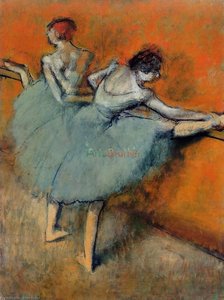
Tänčíci u čar (1888) od Edgar Degas

Tänčíci u čar

1888 · Olej na plátně · The Phillips Collection, Washington, D.C.

Edgar Degasův obraz „Dancers at the Barre 1“ není jenom reprodukce dvou tanečnic; je to zachycená atmosféra, pulzující život baletního studia. Je to pohled do intimního světa, kde se elegance a disciplína splývají v harmonii pohybu. Degas, mistr detailu a pozorovatel lidské podstaty, zde neponižuje tanečnice na pouhé objekty, ale vykresluje je jako živé, dynamické bytosti, plné síly a krásy. Obraz evokuje pocit klidné intenzity, tiché koncentrace a zároveň jemného…

Edgar Degas paintings, ranked 11 to 100

11Tanec v kavárně (Pes píská) (1877) od Edgar DegasTanec v kavárně (Pes píská)1877 12Žena oplavující vanu (1892) od Edgar DegasŽena oplavující vanu1892 13Sestra (1873) od Edgar DegasSestra1873 14V kavárně, také známé jako od Edgar DegasV kavárně, také známé jakoGrand Palais 15Důvěrný pohled za kulisy: Degasův „Tančíři“ (1898) (1898) od Edgar DegasDůvěrný pohled za kulisy: Degasův „Tančíři“ (1898)1898 16Taneční hodina (1874) od Edgar DegasTaneční hodina1874 · Metropolitan Museum of Art 17Závodní koně v Longchampu (1874) od Edgar DegasZávodní koně v Longchampu1874 · Muzeum umění v Bostonu 18Tančící na scéně (1880) od Edgar DegasTančící na scéně1880 · Hamburger Kunsthalle 19Two Dancers in Their Dressing Room (1880) od Edgar DegasTwo Dancers in Their Dressing Room1880 · National Gallery 20The Star od Edgar DegasThe Star 21Two Dancers Entering the Stage (1878) od Edgar DegasTwo Dancers Entering the Stage1878 22Ballerina a dáma s ventilátorem (1885) od Edgar DegasBallerina a dáma s ventilátorem1885 23The Ballet Rehearsal on Stage (1874) od Edgar DegasThe Ballet Rehearsal on Stage1874 24Head of a Woman (1874) od Edgar DegasHead of a Woman1874 · National Gallery 25Two harlequins (1886) od Edgar DegasTwo harlequins1886 26Fan Mount: Ballet Girls (1879) od Edgar DegasFan Mount: Ballet Girls1879 · Metropolitan Museum of Art 27Sedící žena češící si vlasy (1890) od Edgar DegasSedící žena češící si vlasy1890 · Musée d'Orsay 28Yellow Dancers (In the Wings) (1875) od Edgar DegasYellow Dancers (In the Wings)1875 · Art Institute of Chicago 29Café Singer (1879) od Edgar DegasCafé Singer1879 · Art Institute of Chicago 30The Milliners (1882) od Edgar DegasThe Milliners1882 · J. Paul Getty Museum 31Women Combing Their Hair (1876) od Edgar DegasWomen Combing Their Hair1876 · The Phillips Collection 32Three Dancers Preparing for Class (1878) od Edgar DegasThree Dancers Preparing for Class1878 · Metropolitan Museum of Art 33A Roman Beggar Woman (1857) od Edgar DegasA Roman Beggar Woman1857 · Birmingham Museum and Art Gallery 34At the Ballet (1881) od Edgar DegasAt the Ballet1881 35Dancer in Her Dressing Room (1879) od Edgar DegasDancer in Her Dressing Room1879 36The Blue Dancers od Edgar DegasThe Blue Dancers 37Seated Nude Combing Her Hair (1890) od Edgar DegasSeated Nude Combing Her Hair1890 38Dancer in her dressing room (1879) od Edgar DegasDancer in her dressing room1879 · Norton Simon Museum 39Tuileries, the woman with a parasol (1877) od Edgar DegasTuileries, the woman with a parasol1877 · Burrell Collection 40Orchestra of the Opera (1869) od Edgar DegasOrchestra of the Opera1869 41The Bather (La Baigneuse) (1895) od Edgar DegasThe Bather (La Baigneuse)1895 · Reading Public Museum 42Russian Dancers (1899) od Edgar DegasRussian Dancers1899 43A Cotton Office in New Orleans (1873) od Edgar DegasA Cotton Office in New Orleans1873 44Woman in Blue (Portrait of Mlle. Helene Rouart) (1886) od Edgar DegasWoman in Blue (Portrait of Mlle. Helene Rouart)1886 45Manet at the Races (1870) od Edgar DegasManet at the Races1870 46Singer in Green (1884) od Edgar DegasSinger in Green1884 · Metropolitan Museum of Art 47Tři tanečnice, modré šaty, červené halenky (1903) od Edgar DegasTři tanečnice, modré šaty, červené halenky1903 48Žena Česáním Vlasů (1894) od Edgar DegasŽena Česáním Vlasů1894 · Metropolitan Museum of Art 49Danseuse rajustant son chausson (1880) od Edgar DegasDanseuse rajustant son chausson1880 50Three Dancers in Purple Skirts (1898) od Edgar DegasThree Dancers in Purple Skirts1898 51Woman at a Window (1872) od Edgar DegasWoman at a Window1872 · Courtauld Gallery 52Ballet Scene (1880) od Edgar DegasBallet Scene1880 · Dixon Gallery and Gardens 53Four Dancers (1902) od Edgar DegasFour Dancers1902 54A Carriage at the Races (1872) od Edgar DegasA Carriage at the Races1872 · Muzeum umění v Bostonu 55Lady with a Parasol (1871) od Edgar DegasLady with a Parasol1871 · Courtauld Gallery 56Ballet Rehearsal on Stage, oil on canvas, Musée (1874) od Edgar DegasBallet Rehearsal on Stage, oil on canvas, Musée1874 57Singer with a glove (1878) od Edgar DegasSinger with a glove1878 58Mme Jacques Fourchy (1883) od Edgar DegasMme Jacques Fourchy1883 59Field of Flax (1892) od Edgar DegasField of Flax1892 60The Return of the Herd (1896) od Edgar DegasThe Return of the Herd1896 · New Walk Museum - Art Gallery 61Žena sedící na křesle (1872) od Edgar DegasŽena sedící na křesle1872 62Výcvik tanečníka ve studiu opery (1895) od Edgar DegasVýcvik tanečníka ve studiu opery1895 · Norton Simon Museum 63Woman Tying the Ribbons of Her Hat (1882) od Edgar DegasWoman Tying the Ribbons of Her Hat1882 64Group of Dancers (1905) od Edgar DegasGroup of Dancers1905 65Standing Female Figure with Bared Torso (1868) od Edgar DegasStanding Female Figure with Bared Torso1868 · Kunstmuseum Basel 66Dancer with Bouquet (1877) od Edgar DegasDancer with Bouquet1877 67Conversation (1895) od Edgar DegasConversation1895 · Yale University Art Gallery 68The Rehearsal of the Ballet on Stage (1874) od Edgar DegasThe Rehearsal of the Ballet on Stage1874 · Metropolitan Museum of Art 69Two Dancers (1898) od Edgar DegasTwo Dancers1898 · Staatliche Kunstsammlungen Dresden 70Spanish dance (2018) od Edgar DegasSpanish dance2018 · Asociación Española de Pintores y Escultores 71On the Stage (1880) od Edgar DegasOn the Stage1880 72Horses and Jockeys (1886) od Edgar DegasHorses and Jockeys1886 73The Dancers (1885) od Edgar DegasThe Dancers1885 · Metropolitan Museum of Art 74Four dancers, ca National Galler (1899) od Edgar DegasFour dancers, ca National Galler1899 · National Gallery of Art 75Dancer Tilting (1883) od Edgar DegasDancer Tilting1883 76Ballet Scene od Edgar DegasBallet SceneDixon Gallery and Gardens 77Melancholy (1874) od Edgar DegasMelancholy1874 78Dancer's Dressing Room (1878) od Edgar DegasDancer's Dressing Room1878 79Tři baletní tanečníci s červenou páskou (1899) od Edgar DegasTři baletní tanečníci s červenou páskou1899 80M. and Mme Edouard Manet (1869) od Edgar DegasM. and Mme Edouard Manet1869 81Dancers Practicing at the Barre (1877) od Edgar DegasDancers Practicing at the Barre1877 · Metropolitan Museum of Art 82Woman in a Café (1877) od Edgar DegasWoman in a Café1877 83Dancers (1895) od Edgar DegasDancers1895 84Dancer Looking at the Sole of Her Right Foot (1921) od Edgar DegasDancer Looking at the Sole of Her Right Foot1921 · Tel Aviv Museum of Art 85Žena Česání Se V Zrcadle před Žirnou (1877) od Edgar DegasŽena Česání Se V Zrcadle před Žirnou1877 · Norton Simon Museum 86Dancers in the Wings (1885) od Edgar DegasDancers in the Wings1885 87Čtyři tanečníčky (1900) od Edgar DegasČtyři tanečníčky1900 · National Gallery of Art 88Nádrž (1889) od Edgar DegasNádrž1889 89Before the Curtain Call (1892) od Edgar DegasBefore the Curtain Call1892 90Dancer on Stage with a Bouquet (1876) od Edgar DegasDancer on Stage with a Bouquet1876 91Woman with a Bandage (1873) od Edgar DegasWoman with a Bandage1873 · Detroit Institute of Arts 92Dancers (8) (1900) od Edgar DegasDancers (8)1900 93Cafe-Concert Singer (1878) od Edgar DegasCafe-Concert Singer1878 94The Rehearsal (1878) od Edgar DegasThe Rehearsal1878 · Dumbarton Oaks 95Dancers Practicing at the Barre (1877) od Edgar DegasDancers Practicing at the Barre1877 96Russian Dancer (1895) od Edgar DegasRussian Dancer1895 97Olive Trees against a Mountainous Background (1893) od Edgar DegasOlive Trees against a Mountainous Background1893 98View of Saint-Valery-sur-Somme (1898) od Edgar DegasView of Saint-Valery-sur-Somme1898 · Metropolitan Museum of Art 99Leon Bonnat (1863) od Edgar DegasLeon Bonnat1863 100Two Dancers in the Studio (Dance School) (1875) od Edgar DegasTwo Dancers in the Studio (Dance School)1875

Edgar Degas's famous paintings, period by period

The subjects that held Edgar Degas's eye

The four subjects that come back most often in these originals, each with its finest example.

The museums that keep Edgar Degas's originals

8 muzea, v nichž je umístěno nejvíce obrazů z této stránky.

Muzea Město Díla autora Edgar Degas Obrazy z tohoto seznamu
Metropolitan Museum of Art, New YorkMetropolitan Museum of Art New York 52 Taneční hodina, Fan Mount: Ballet Girls, Three Dancers Preparing for Class
Musée d'Orsay, PařížMusée d'Orsay Paříž 55 "Absinthe Drinker" – Žvýkající Absint, The Dance Class, The Bellelli Family
National Gallery, LondýnNational Gallery Londýn 18 Woman Drying Herself, Two Dancers in Their Dressing Room, Head of a Woman
Norton Simon Museum, PasadenaNorton Simon Museum Pasadena 5 Dancer in her dressing room, Výcvik tanečníka ve studiu opery, Žena Česání Se V Zrcadle před Žirnou
National Gallery of Art, WashingtonNational Gallery of Art Washington 28 Four dancers, ca National Galler, Čtyři tanečníčky
Muzeum umění v Bostonu, BostonMuzeum umění v Bostonu Boston 10 Závodní koně v Longchampu, A Carriage at the Races
Art Institute of Chicago, ChicagoArt Institute of Chicago Chicago 8 Yellow Dancers (In the Wings), Café Singer
Courtauld Gallery, LondýnCourtauld Gallery Londýn 7 Woman at a Window, Lady with a Parasol

Edgar Degas, one signature painting per decade

Díla podle dekád

Pick a decade to see the original that defines it.

Edgar Degas's paintings: the gallery answers

Which Edgar Degas painting is the most famous of all?Reveal the answer

"Absinthe Drinker" – Žvýkající Absint (1876), Musée d'Orsay, Paříž. Woman Drying Herself and The Dance Class (1873) come next.

How old was Edgar Degas on completing "Absinthe Drinker" – Žvýkající Absint?Reveal the answer

42 years old: "Absinthe Drinker" – Žvýkající Absint dates from 1876, and Edgar Degas was born in 1834.

Which are Edgar Degas's top 10 paintings?Reveal the answer

"Absinthe Drinker" – Žvýkající Absint, Woman Drying Herself, The Dance Class, The Bellelli Family, Interior (also known as The Rape), Portraits in a New Orleans Cotton Office, Tänčíky v růžové barvě, Tanečnice s květinovým věncem (Hvězda baletu), Miss Lola, au Cirque Fernando, NG L a Tänčíci u čar. The ranking above gives each one's year and museum.

How many works did Edgar Degas create?Reveal the answer

Our catalog holds 1,074 works by Edgar Degas, dated from 1857 to 1905.

Where do Edgar Degas's most famous originals hang?Reveal the answer

Mostly in Metropolitan Museum of Art (New York), Musée d'Orsay (Paříž) a National Gallery (Londýn). The museum table above lists them all.

When did Edgar Degas create the most famous paintings?Reveal the answer

In 1870s: 40 of the 100 works on this page were made then, "Absinthe Drinker" – Žvýkající Absint among them.

Which are Edgar Degas's earliest and latest famous works?Reveal the answer

On this page, the earliest is A Roman Beggar Woman (1857) and the latest Group of Dancers (1905).

Which subjects did Edgar Degas return to most?Reveal the answer

Ballet (21), Dancers (14) a Dance (14), across the 100 works on this page.

Which medium did Edgar Degas work in most?Reveal the answer

Oil On Canvas, for 27 of the 100 works on this page.

Which movement is Edgar Degas associated with?Reveal the answer

Impresionismus, judging by the originals on this page.

Which Edgar Degas originals does the Metropolitan Museum of Art hold?Reveal the answer

Taneční hodina, Fan Mount: Ballet Girls a Three Dancers Preparing for Class: the Metropolitan Museum of Art, New York holds 9 of the works on this page.

Can I have a Edgar Degas painting reproduced by hand?Reveal the answer

Yes, as a reproduction: the original stays in its museum, but any painting on this page can be painted by hand for you, made to order one at a time, from the painting's own page.

Edgar Degas: the artist

Život Edgara Degase

Paříž, 1834. V rodině s poměrně značným majetkem se narodí syn Hilaire-Germain-Edgar De Gas. Jméno, které si později zjednoduší na Edgar Degas, naznačuje začátek života definovaného napětím mezi společenskými očekáváními a uměleckou posedlostí. Vyroste v sofistikované atmosféře francouzské metropole, v prostředí, které mu později poslouží jako kulisa pro jeho pozorování moderního života.

Léta plynou v neustálém proudu studií a proměňujících se zájmů. Jeho cesta vede od strukturovaného prostředí výchovy k syrovosti pracovních prostor města. Nehledá sluneční světlo venkovní přírody, ale preferuje kontrolované, umělé osvětlení ateliéru a divadla. Jeho pohled se usadí na tanečníky, pralyčky a závodní koně Paříže, přičemž zachycuje fyzickou námahu práce i pomíjivé pohyby scény. Zůstává mužem protikladů, který se často brání nálepám, jež mu jeho současníci přisuzují, a místo toho trvá na své identitě realismu.

Konec přichází v Paříži 27. září 1917. Zanechává za sebou obrovské dílo zahrnující mnoho desetiletí, mezi které patří například:

Rané období, rodina a vzdělání

Paříž, rok 1834. Hilaire-Germain-Edgar De Gas, syn bankéře a Célestine Musson De Gas, kreolky z Nového Orleanu, vstupuje do světa buržoazní stability. V jedenácti letech je zapsán na Lycée Louis-le-Grand. Akademická dráha je jasně vytyčená, a přesto se mladíkův pohled neustále upírá k síním Louvru. Do roku 1853, kdy absolvuje Lycée s maturitou v literatuře, se rozhodne ignorovat otcova očekávání ohledně právnické kariéry. Místo toho se zapisuje jako kopista do Louvru, kde tráví celé hodiny přetvářením linií mistrů.

Učení se prohlubuje v Pařížské École des Beaux-Arts. Skrze přísný program klasického výcviku si buduje preciznost, která bude definovat jeho pozdější dílo. V roce 1855 nastává setkání, které zanechá v jeho rozvoji trvalou stopu: potkává Jeana-Auguste-Dominique Ingrese. Toto setkání v něm upevní hlubokou úctu k kresbě a významu čisté linie, i když on sám už začíná směřovat k moderním tématům, která mu v budoucnu přinesou věčnou slávu.

Technika a umělecký styl

Edgar Degas odmítá nálepku impresionisty. Raději volí termín „realista“, což je volba, která diktuje celý jeho přístup k plátnu. Vyhýbá se venkovní krajině a volným, míhavým tahům štětcem, které preferovali jeho současníci. Místo toho se stahuje do kontrolovaného prostředí ateliéru. Zde ovládl lidskou formu prostřednictvím precizního kreslení. Je vynikajícím kreslčákem, který disponuje specifickou, technickou zručností při zachycování pohybu. Nečeká, až slunce dopadne na motiv; své scény konstruuje prostřednictvím pečlivého studia v olověnce nebo pastelu. Tato příprava mu umožňuje zmrazit prchavý okamžik pohybu s anatomickou přesností.

Světlo v Degasových kompozicích je málokdy přirozené. Využívá umělé osvětlení k zdůraznění postav, čímž vytváří pocit teatrálnosti a hloubky. Jednou z jeho pozoruhodných metod je contre-jour, kdy umístí svůj motiv do stínu, zatímco pozadí zůstává jasně osvětleno. Tato technika izoluje postavu a vytrhává ji z okolí. Výsledkem je napětí mezi subjektem a prostorem, který obývá, což často odhaluje fyzické vyčerpání nebo tichou, nepozornou realitu moderního života.

Klíčová díla a témata

Scéna i stáj dominují jeho vizuálnímu světu. Více než polovina jeho tvorby se soustředí na tanečníky, které zachycuje v intimitních okamžicích zkoušek i během vystoupení. Pohybuje se mezi elegancí piruety a fyzickým vyčerpáním, které vyzařuje taneční hodina. Mimo divadelní prostory pak obrací svůj pohled k rychlosti závodní dráhy, kde dokumentuje závodní koně a žokeje, kteří na nich sedí. Tato témata nejsou pouze dekorativní; jsou to hluboké studie napětí a pohybu.

Jeho působiště sahá až do sféry soukromí a psychologie. Vytváří portréty, které odhalují komplexní vnitřní život, často využívá nekonvenční úhly pohledu, aby izoloval své subjekty. Tento důraz na lidskou formu není omezen pouze na olej na plátně. Experimentuje s řadou médií, včetně grafik, kreseb a voskových soch. Jeho schopnost vykreslit lidskou postavu je zřejmá v mnoha studiích žen, které se často zaměřují na tělo v soukromých, nepozorovaných okamžicích.

  • The Dancing Class, kolem roku 1874
  • The Dance Class, 1874
  • The Ballet Class, 1874–1876
  • Interior, 1868–1869
  • Scéna ze steeples: The Fallen Jockey, 1866

Odkaz a trvalý dopad

Změna paradigmatu v umění pozdního 19. století našla svou ústřední postavu v Edgar Degas. Ačkoliv se vyhnul nálepce impresionisty, jeho přítomnost pomohla položit základy tohoto hnutí. Odklonem od rigidních, historických témat akademické školy se rozhodl dokumentovat syrovost i eleganci moderního pařížského života. Tento odchod od tradice připravil cestu budoucím generacím umělců k prozkoumávání nefalšované reality lidské existence.

Jeho vliv sahá daleko za původní impresionistické kruhy. Strukturální inovace a nekonvenční kompozice, které vyvinul, zanechaly nesmazatelnou stopu v trajektorii moderního umění. Konkrétně jeho přístup k formě a pohybu lze spatřit v pozdějších dílech umělců jako Pablo Picasso a Henri Matisse. Naučil umělecký svět dívat se na svět skrze asymetrické úhly a nečekané střihy, čímž proměnil soukromé, pomíjivé okamžiky tanečnice či pralyčky v trvalé studie pohybu.

  • The Dance Class
  • The Ballet Class
  • Interior

Kde dnes spatřit jeho díla

Stopy Degasova pozorování zůstávají rozptýleny v najważnějších institucích, zachovány v tichých síních Paříže i daleko za ní. Ve Francii hostí významné sbírky jeho děl Musée d'Orsay, které zachycují pohyb, jehož studiem zasvětil celý svůj život. Umění Edgar Degas naleznete také v Louvru, zatímco Bibliothèque Nationale de France v Paříži uchovává jeho díla ve svých archivech. Tyto sbírky nabízejí přímý pohled na technickou preciznost a studium formy, které definovaly jeho celou kariéru.

Za Atlantik se dosah jeho vize sahá až do Spojených států. Metropolitan Museum of Art v New Yorku uchovává jeho obrazy, které slouží jako okno do moderního života, jež vykresloval s tak neuvěřitelnou pečlivostí. V Philadelfii pak Philadelphia Museum of Art hostí jeho díla, čímž zajišťuje, že jeho vliv zůstává přístupný mezinárodnímu publiku. Tato místa fungují jako fyzické kotvy jeho odkazu, kde jsou linie a světlo, které Edgar Degas ovládl, stále viditelné i pro moderního diváka.

Všechna díla od Edgar Degas: 1074 →