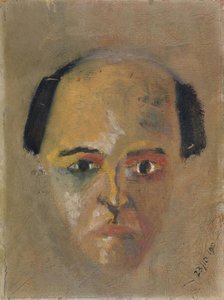
Portrét Arnold Schönberg

65 nejslavnějších obrazů autora Arnold Schönberg, každý naprosto unikátní

Aktualizováno říjen 2026 · seřazeno podle našeho skóre popularity (vyhledávání, návštěvy a objednávky u každého díla) · 65 děl umělce Arnold Schönberg v našem katalogu

Stručně řečeno

Pierrot lunaire, op. 21 - Night (1912) je obraz autora Arnold Schönberg, který přitahuje nejvíce pohledů; originál se nachází v Arnold Schönberg Center, Vídeň. Poté se zrak přesouvá k Arnold Schönbergův kalendář (1935) a Suite, op. 29 - Bi-directional twelve-tone row chart (1924). Z 65 děl umělce Arnold Schönberg v našem katalogu je těchto 65 těch nejznámějších; každé z nich je unikátním originálem s uvedením roku vzniku, muzea a důvodu jeho nesmrtelnosti.

1874 – 1951, Vídeň Expressionism Nejvíce děl: Arnold Schönberg Center

Top 10 obrazů autora Arnold Schönberg podle výběru galerie

1
Pierrot lunaire, op. 21 - Night (1912) od Arnold Schönberg

Pierrot lunaire, op. 21 - Night

1912 · Acrylic On Canvas · Arnold Schönberg Center, Vídeň

Arnold Schönberg’s *Pierrot lunaire*, op. 21, stands as a monumental achievement in the evolution of modern music, a work born from the anxieties and aesthetic explorations of early 20th-century Europe. This particular rendition, “Night,” meticulously captured in this evocative photographic reproduction, offers a profound glimpse into Schönberg’s expressionistic vision – a world of fractured emotion, haunting beauty, and unsettling psychological depth. Composed in Berlin in 1912, the piece was commissioned…

2
Arnold Schönbergův kalendář (1935) od Arnold Schönberg

Arnold Schönbergův kalendář

1935 · Černobílá fotografie · Arnold Schönberg Center, Vídeň

Arnold Schönbergův kalendář – Pohled do života skladatele v Hollywoodu Arnold Schönbergův kalendář z roku 1935 představuje fascinující dokument o každodenních rutinách skladatele Arnolda Schönberga během jeho krátkodobého pobytu ve filmu v Hollywoodu. Tento obraz vytvořil Gertrud Schoenbergová, manželka Schönberga a významná libretistka, která zachycovala životní styl svého manžela a rodiny v Kalifornii mezi září 1934 a květnem 1936. Fotografie byla vytvořena pomocí inkoustu na papír a získala své místo…

3
Suite, op. 29 - Bi-directional twelve-tone row chart (1924) od Arnold Schönberg

Suite, op. 29 - Bi-directional twelve-tone row chart

1924 · Acrylic On Canvas · Arnold Schönberg Center, Vídeň

Arnold Schönberg's "Suite, op. 29 – Bi-directional twelve-tone row chart" isn’t merely a musical score; it’s a visual manifestation of radical innovation, a testament to the composer’s relentless pursuit of sonic and artistic boundaries. Created in 1924, during a period of intense experimentation within his own compositional methods—specifically, his “Method of composing with twelve tones which are related only with one another”—this work represents a pivotal moment in 20th-century music…

4
Peace on Earth, op. 13 (1907) od Arnold Schönberg

Peace on Earth, op. 13

1907 · Black and White Photography · Arnold Schönberg Center, Vídeň

To gaze upon this depiction of Arnold Schoenberg's "Peace on Earth, op. 13" is not merely to look at an aged sheet of music; it is to encounter a preserved echo of profound human yearning. This composition, born from the charged atmosphere of early twentieth-century Europe, transcends its musical notation to become a tangible artifact of hope. The visual evidence—the sepia tones, the delicate creases, the faint patina of time…

5
Phantasy for Violin with Piano Accompaniment, op. 47 (1949) od Arnold Schönberg

Phantasy for Violin with Piano Accompaniment, op. 47

1949 · Acrylic On Canvas · Arnold Schönberg Center, Vídeň

This meticulously crafted hand-painted reproduction captures a pivotal moment in the oeuvre of Arnold Schoenberg, a composer who irrevocably altered the landscape of 20th-century music. The piece, “Phantasy for Violin with Piano Accompaniment,” op. 47, born from a commission in 1949, represents more than just a musical composition; it’s a tangible link to a brilliant mind grappling with radical innovation and profound personal transformation. The photograph itself – a stark…

6
Accompaniment to a Cinematographic Scene, op. 34 - Doprovod hudební skladby k filmu (1929) od Arnold Schönberg

Accompaniment to a Cinematographic Scene, op. 34 - Doprovod hudební skladby k filmu

1929 · Akryl na plátně · Arnold Schönberg Center, Vídeň

Accompaniment to a Cinematographic Scene, op. 34 – Významná skladba Arnolda Schönberga Arnold Schoenbergův Opus 34 představuje fascinující dílo hudebního impresionismu, které vyčnívá z pozadí německého avantgardního období dvacátých let. Tento projekt vznikl na objednávku Heinrichshofen Verlagu v Magdeburku a odráží Schönbergovu osobní filozofii umění – odmítání spolupráce s režisérem či producentem a důraz na nezávislost interpreta. Složka skladby „Drohende Gefahr, Angst, Katastrophe“ byla inspirována vyobrazením filmu, který však zůstal…

7
Blue Gaze (1910) od Arnold Schönberg

Blue Gaze

1910 · Oil On Board · Arnold Schönberg Center, Vídeň

“Blue Gaze,” painted in 1910 by the titan of musical innovation, Arnold Schoenberg, is more than just a portrait; it's a visceral manifestation of artistic struggle and a testament to the burgeoning power of abstraction. Created during a pivotal period in Schoenberg’s life – a time when he was simultaneously wrestling with the radical new techniques of atonality in music and exploring the uncharted territories of visual expression – this…

8
Transfer ticket for public transport in Berlin (1927) od Arnold Schönberg

Transfer ticket for public transport in Berlin

1927 · Acrylic On Canvas · Arnold Schönberg Center, Vídeň

This meticulously crafted hand-painted reproduction captures a pivotal moment in design history – the 1927 transfer ticket for the Berlin tram system, conceived by the visionary composer Arnold Schönberg. Far more than simply a means of payment, this circular artifact represents a radical shift towards efficiency and user experience, anticipating modern transit systems by nearly a century. Schönberg’s design wasn't born from artistic indulgence; it stemmed from a pragmatic desire…

9
The Musical Idea - W. A. Mozart K 465 (1934) od Arnold Schönberg

The Musical Idea - W. A. Mozart K 465

1934 · Giclée Print · Arnold Schönberg Center, Vídeň

W.A. Mozart’s K. 465, “The Musical Idea,” takes on an entirely new dimension through the lens of Arnold Schönberg's profound inquiry into musical representation. This isn’t merely a reproduction of a classical score; it’s a visual echo of Schönberg’s seminal work, "Der Musikalische Gedanke," a treatise that fundamentally shifted our understanding of composition and its relationship to logic, technique, and artistic expression. The photograph itself – a meticulously annotated music…

10
Piano Piece, op. 19/6 (1911) od Arnold Schönberg

Piano Piece, op. 19/6

1911 · Acrylic On Canvas · Arnold Schönberg Center, Vídeň

This meticulously crafted hand-painted reproduction captures Arnold Schönberg’s poignant “Piano Piece, op. 19/6,” a deceptively simple work born from a moment of profound grief and artistic experimentation. Created in 1911, shortly after the death of Gustav Mahler – a figure Schönberg deeply revered as both mentor and friend – the piece offers a rare glimpse into the composer’s emotional landscape during a period of intense creative upheaval. The image presented…

Slavná díla umělce Arnold Schönberg, čísla 11 až 65

11Excerpt from Arnold Schönberg’s own handwritten library catalogue: Works of Richard Strauss (1914) od Arnold SchönbergExcerpt from Arnold Schönberg’s own handwritten library catalogue: Works of Richard Strauss1914 · Arnold Schönberg Center 12Self-Portrait (1910) od Arnold SchönbergSelf-Portrait1910 · Arnold Schönberg Center 13The Biblical Way (Act I, Scene 2), Stadium (1927) od Arnold SchönbergThe Biblical Way (Act I, Scene 2), Stadium1927 · Arnold Schönberg Center 14The Lucky Hand (scene 1) (1910) od Arnold SchönbergThe Lucky Hand (scene 1)1910 · Arnold Schönberg Center 15Gertrud Schönberg (1930) od Arnold SchönbergGertrud Schönberg1930 · Arnold Schönberg Center 16Tears (1910) od Arnold SchönbergTears1910 · Arnold Schönberg Center 17Garden Scene (1907) od Arnold SchönbergGarden Scene1907 · Arnold Schönberg Center 18Playing Cards for Whist/Bridge - Jack of Spades (1910) od Arnold SchönbergPlaying Cards for Whist/Bridge - Jack of Spades1910 · Arnold Schönberg Center 19Formation scheme for the Gurrelieder (1918) od Arnold SchönbergFormation scheme for the Gurrelieder1918 · Arnold Schönberg Center 20The Lucky Hand (scene 2) (1910) od Arnold SchönbergThe Lucky Hand (scene 2)1910 · Arnold Schönberg Center 21Red Gaze (1910) od Arnold SchönbergRed Gaze1910 · Arnold Schönberg Center 22Piano Concerto, op. 42 - Programmatic keywords (1942) od Arnold SchönbergPiano Concerto, op. 42 - Programmatic keywords1942 · Arnold Schönberg Center 23Playing Cards for Whist/Bridge - King of Hearts (1910) od Arnold SchönbergPlaying Cards for Whist/Bridge - King of Hearts1910 · Arnold Schönberg Center 24Structural Functions of Harmony - Chart of the Regions (1948) od Arnold SchönbergStructural Functions of Harmony - Chart of the Regions1948 · Arnold Schönberg Center 25Interior and Portrait of a Woman (1910) od Arnold SchönbergInterior and Portrait of a Woman1910 · Arnold Schönberg Center 26Blue Self-Portrait (1910) od Arnold SchönbergBlue Self-Portrait1910 · Arnold Schönberg Center 27Self-Portrait (1918) od Arnold SchönbergSelf-Portrait1918 · Arnold Schönberg Center 28Mathilde Schönberg (1909) od Arnold SchönbergMathilde Schönberg1909 · Arnold Schönberg Center 29Expectation (Scene 3) (1911) od Arnold SchönbergExpectation (Scene 3)1911 · Arnold Schönberg Center 30Handwriting samples (1923) od Arnold SchönbergHandwriting samples1923 · Arnold Schönberg Center 31Suite for Piano, op. 25 - Prelude (1921) od Arnold SchönbergSuite for Piano, op. 25 - Prelude1921 · Arnold Schönberg Center 32Landscape (1910) od Arnold SchönbergLandscape1910 · Arnold Schönberg Center 33Erwartung, op. 17 (1909) od Arnold SchönbergErwartung, op. 171909 · Arnold Schönberg Center 34Exlibris (1910) od Arnold SchönbergExlibris1910 · Arnold Schönberg Center 35Alliance (Hands) (1910) od Arnold SchönbergAlliance (Hands)1910 · Arnold Schönberg Center 36Portrait of a Woman (1910) od Arnold SchönbergPortrait of a Woman1910 · Arnold Schönberg Center 37Koalice Šach (1925) od Arnold SchönbergKoalice Šach1925 · Arnold Schönberg Center 38Moses and Aron (1930) od Arnold SchönbergMoses and Aron1930 · Arnold Schönberg Center 39Playing Cards for Whist/Bridge - Queen of clubs (1909) od Arnold SchönbergPlaying Cards for Whist/Bridge - Queen of clubs1909 · Arnold Schönberg Center 40Playing card design (1910) od Arnold SchönbergPlaying card design1910 · Arnold Schönberg Center 41Brief to Wilhelm von Wymetal (1907) od Arnold SchönbergBrief to Wilhelm von Wymetal1907 · Arnold Schönberg Center 42Alexander Zemlinsky (1910) od Arnold SchönbergAlexander Zemlinsky1910 · Arnold Schönberg Center 43Green Self-Portrait (1910) od Arnold SchönbergGreen Self-Portrait1910 · Arnold Schönberg Center 44Memory of Oskar Kokoschka (1910) od Arnold SchönbergMemory of Oskar Kokoschka1910 · Arnold Schönberg Center 45Mathilde Schönberg cooking (1912) od Arnold SchönbergMathilde Schönberg cooking1912 · Arnold Schönberg Center 46Model of a set of dentures (1926) od Arnold SchönbergModel of a set of dentures1926 · Arnold Schönberg Center 47Coalition Chess - Plane (1925) od Arnold SchönbergCoalition Chess - Plane1925 · Arnold Schönberg Center 48Gaze (Karl Kraus – The Great Wall of China) (1910) od Arnold SchönbergGaze (Karl Kraus – The Great Wall of China)1910 · Arnold Schönberg Center 49Furniture design (1931) od Arnold SchönbergFurniture design1931 · Arnold Schönberg Center 50Self-Portrait (1935) od Arnold SchönbergSelf-Portrait1935 · Arnold Schönberg Center 51Self-Portrait (1922) od Arnold SchönbergSelf-Portrait1922 · Arnold Schönberg Center 52The Musical Idea - Chart of the Regions (1934) od Arnold SchönbergThe Musical Idea - Chart of the Regions1934 · Arnold Schönberg Center 53Schematic representation of European Jewry (1934) od Arnold SchönbergSchematic representation of European Jewry1934 · Arnold Schönberg Center 54Model of a chair / library ladder (1945) od Arnold SchönbergModel of a chair / library ladder1945 · Arnold Schönberg Center 55Five Pieces for Orchestra, op. 16/5 – First written copy (1909) od Arnold SchönbergFive Pieces for Orchestra, op. 16/5 – First written copy1909 · Arnold Schönberg Center 56Staffliner for drawing staves (1950) od Arnold SchönbergStaffliner for drawing staves1950 · Arnold Schönberg Center 57Mauríce Zam (1935) od Arnold SchönbergMauríce Zam1935 · Arnold Schönberg Center 58Critic I (1910) od Arnold SchönbergCritic I1910 · Arnold Schönberg Center 59Emil Hertzka (1910) od Arnold SchönbergEmil Hertzka1910 · Arnold Schönberg Center 60Speak not always of the leaves, op. 15/14 (1909) od Arnold SchönbergSpeak not always of the leaves, op. 15/141909 · Arnold Schönberg Center 61Hudební klávesnice (1909) od Arnold SchönbergHudební klávesnice1909 · Arnold Schönberg Center 62Piano Piece, op. 11/2 (1909) od Arnold SchönbergPiano Piece, op. 11/21909 · Arnold Schönberg Center 63Walking Self-Portrait (1911) od Arnold SchönbergWalking Self-Portrait1911 · Arnold Schönberg Center 64Chess Set od Arnold SchönbergChess SetArnold Schönberg Center 65Tape Dispenser (1945) od Arnold SchönbergTape Dispenser1945 · Arnold Schönberg Center

Slavná díla Arnold Schönberg podle jednotlivých období

Motivy, které zaujaly Arnold Schönberg

Čtyři témata, která se v těchto originálech nejčastěji objevují, z nichž každé má svůj nejlepší příklad.

Muzea, v nichž jsou vystavena originálna umělce Arnold Schönberg

Muzeum, které má v této kolekci nejvíce obrazů.

Muzea Město Díla autora Arnold Schönberg Obrazy z tohoto seznamu
Arnold Schönberg Center, VídeňArnold Schönberg Center Vídeň 65 Pierrot lunaire, op. 21 - Night, Arnold Schönbergův kalendář, Suite, op. 29 - Bi-directional twelve-tone row chart

Arnold Schönberg napříč desetiletími: jeden unikátní originál pro každou dekádu

Díla podle dekád

Vyberte si dekádu a prohlédněte si originál, který ji definuje.

Obrazy umělce Arnold Schönberg: dotazy pro galerii

Kterým nejznámějším dílem je Arnold Schönberg?Odhalit odpověď

Pierrot lunaire, op. 21 - Night (1912), Arnold Schönberg Center, Vídeň. Následují Arnold Schönbergův kalendář (1935) a Suite, op. 29 - Bi-directional twelve-tone row chart (1924).

V jakém věku vytvořil(a) Arnold Schönberg dílo Pierrot lunaire, op. 21 - Night?Odhalit odpověď

38 let: dílo Pierrot lunaire, op. 21 - Night pochází z roku 1912 a Arnold Schönberg se narodil/a v roce 1874.

Kterých deset obrazů autora Arnold Schönberg je nejznámějších?Odhalit odpověď

Pierrot lunaire, op. 21 - Night, Arnold Schönbergův kalendář, Suite, op. 29 - Bi-directional twelve-tone row chart, Peace on Earth, op. 13, Phantasy for Violin with Piano Accompaniment, op. 47, Accompaniment to a Cinematographic Scene, op. 34 - Doprovod hudební skladby k filmu, Blue Gaze, Transfer ticket for public transport in Berlin, The Musical Idea - W. A. Mozart K 465 a Piano Piece, op. 19/6. Hodnocení výše uvádí rok a muzeum pro každé z nich.

Kolik známých děl má autor Arnold Schönberg?Odhalit odpověď

Náš katalog obsahuje 65 děl umělce Arnold Schönberg z let 1907 až 1950.

Kde lze vidět nejznámější originály umělce Arnold Schönberg?Odhalit odpověď

Většinou v Arnold Schönberg Center (Vídeň). V tabulce muzeí výše jsou vypsány všechny.

V jakém období vytvořil(a) Arnold Schönberg svá nejznámější obrazy?Odhalit odpověď

V období 1910s: 29 z celkem 65 děl na této stránce vzniklo právě tehdy, z toho Pierrot lunaire, op. 21 - Night z nich.

Který slavný obraz od Arnold Schönberg je nejstarší a který nejnovější?Odhalit odpověď

Na této stránce je nejstarší dílo z Peace on Earth, op. 13 (1907) a nejnovější z Staffliner for drawing staves (1950).

Jakým tématům se Arnold Schönberg věnoval/a nejčastěji?Odhalit odpověď

Atonality (11), Schoenberg (8) a Musical notation (6) napříč 65 díly na této stránce.

Jaké materiály používal(a) Arnold Schönberg nejčastěji?Odhalit odpověď

Acrylic On Canvas, u 16 z 65 děl na této stránce.

K kterému směru patří dílo umělce Arnold Schönberg?Odhalit odpověď

Expressionism a Expressionist modernism, podle originálů na této stránce.

Jaká originální díla Arnold Schönberg mohu vidět v Arnold Schönberg Center?Odhalit odpověď

Pierrot lunaire, op. 21 - Night, Arnold Schönbergův kalendář a Suite, op. 29 - Bi-directional twelve-tone row chart: muzeum Arnold Schönberg Center, Vídeň má v obsluze 65 děl z této stránky.

Arnold Schönberg: portrét umělce

mladost a hudební počátky

arnold schoenberg, rakousko-americký skladatel, se narodil 13. září 1874 ve vídni v Rakousku. Jeho raný život byl poznamenán skromným počátkem, neboť jeho otec byl majitelem obuvi. Navzdory těmto prostým podmínkám jej však vrozená vášeň pro hudbu vedla k tomu, že se v tomto oboru v značné míře vzdělal sám.

hudební evoluce a významná díla

Schoenbergovy rané práce, jako například verklärte nacht (1899), představovaly syntézu brahmsovsko-wagnerovského stylu. Jak jeho tvorba postupovala vpřed, stal se centrální postavou druhé vídeňské školy spolu s antonem webernem a albanem bergem. Jeho kompozice, mezi něž patří kvartet pro smyčce č. 2 (1907–1908), erwartung (19mu09) a pierrot lunaire (1912), zosobňovaly jeho inovativní přístup k atonalitě.

učitelství, emigrace a pozdější život

V roce 1933 musel Schoenberg rezignovat z Pruské akademie umění kvůli nástupu nacistů k moci, kteří jeho hudbu označili za „degenerovanou“. Následně působil jako pedagog v USA, včetně Kalifornské univerzity v Los Angeles (1936–1944), kde jsou dnes některé prostory pojmenovány právě po něm. [https://OriginalUniqueArt.com/@/arnold-schaenberg](zjistěte více o Schoenbergově životě a díle na OriginalUniqueArt).

odkaz a vliv

Když svět zjišťoval hrůzy holocaustu, Schoenberg věnoval památku jeho obětem v díle a survivor from warsaw (1947). V roce 1951 byl zvolen čestným prezidentem Izraelské konzervatoře a akademie hudby. [https://OriginalUniqueArt.com/@@/a@d3bqc7-the-museum-destroyed-by-fire-(united-states)](dozvěděte se více o dopadu jeho tvorby na OriginalUniqueArt). Klíčové body:
  • Schoenbergova inovativní hudba patřila k nejvlivnějším a nejkontroverznějším dílům klasické hudby 20. století.
  • Alespoň tři generace skladatelů rozvinuly jeho formální principy.
  • Jeho estetické a hudebně historické pohledy ovlivnily musicology Theodor W. Adorno a Carla Dahlhousea.
[https://OriginalUniqueArt.com/@@/a@d3cl2x--a-journey-through-art-history-with-OriginalUniqueArt-s-extensive-collection-](prozkoumejte rozsáhlou sbírku umění na OriginalUniqueArt, která sahá od 12. do 20. století).