Portrét Alberto Giacometti

38 nejslavnějších obrazů autora Alberto Giacometti, každý naprosto unikátní

Aktualizováno listopad 2026 · seřazeno podle našeho skóre popularity (vyhledávání, návštěvy a objednávky u každého díla) · 39 děl umělce Alberto Giacometti v našem katalogu

Stručně řečeno

Femme égorgée (1940) je obraz autora Alberto Giacometti, který přitahuje nejvíce pohledů; originál se nachází v Monnaie de Paris, Paříž. Poté se zrak přesouvá k Disagreeable Object (1931) a Caught Hand (1932). Z 39 děl umělce Alberto Giacometti v našem katalogu je těchto 38 těch nejznámějších; každé z nich je unikátním originálem s uvedením roku vzniku, muzea a důvodu jeho nesmrtelnosti.

1901 – 1966, Borgonovo Surrealism Nejvíce děl: Kunsthaus Zürich

Top 10 obrazů autora Alberto Giacometti podle výběru galerie

1
Femme égorgée (1940) od Alberto Giacometti

Femme égorgée

1940 · Bronze · Monnaie de Paris, Paříž

The sculpture Femme égorgée is a work by Alberto Giacometti. It emerged from the artist's creative period between 1932 and 1940. This bronze form belongs to the Surrealism movement, capturing a moment of tension between life and stillness.

2
Disagreeable Object (1931) od Alberto Giacometti

Disagreeable Object

1931 · Sculpture · Kunsthaus Zürich, Zürich

To stand before Alberto Giacometti’s Disagreeable Object is not merely to observe sculpture; it is to engage in a quiet, profound dialogue with absence and presence. Created in 1931, this piece transcends the definition of mere decoration. It presents an object so stark, so deliberately ambiguous, that its power lies entirely within the space it occupies and the questions it forces us to confront. The composition itself—a smooth, elongated form…

3
Caught Hand (1932) od Alberto Giacometti

Caught Hand

1932 · Wood · Kunsthaus Zürich, Zürich

In the quiet, evocative realm of Surrealism, few objects possess the haunting intimacy of Alberto Giacometti’s 1932 masterpiece, Caught Hand. This sculpture is far more than a mere arrangement of wood and metal; it is a profound meditation on the fragility of human existence and the relentless, unyielding march of time. At first glance, the viewer is struck by the surreal juxtaposition of organic form and mechanical precision. A hand,…

4
Point to the Eye (1932) od Alberto Giacometti

Point to the Eye

1932 · Sculpture · Kunsthaus Zürich, Zürich

In the quiet, contemplative realm of Alberto Giacometti’s early mastery, few works capture the tension of perception as poignantly as Point to the Eye (Pointe à lʼoeil). Created in 1932, this delicate sculpture serves as a profound meditation on the very act of seeing. At first glance, the piece presents a minimalist arrangement: a slender, elongated white form punctuated by small, orb-like elements that seem to float within a carefully…

5
Spoon Woman (1927) od Alberto Giacometti

Spoon Woman

1927 · Bronze · Kunsthaus Zürich, Zürich

Alberto Giacometti’s “Spoon Woman,” sculpted in 1927, isn't merely a sculpture; it’s an embodiment of profound questions about the human condition. Emerging from the fertile ground of early modernism and deeply influenced by African tribal art – particularly the evocative forms of ceremonial spoons found in cultures like those of Liberia and Côte d’Ivoire – this work immediately commands attention with its arresting simplicity and unsettling tension. The piece, cast…

6
Project for a Passageway (Maquette) (1931) od Alberto Giacometti

Project for a Passageway (Maquette)

1931 · Plaster · Kunsthaus Zürich, Zürich

In the quiet, textured depths of Alberto Giacometti’s “Project for a Passageway (Maquette),” created in 1931, we encounter more than a mere sculptural model; we step into a psychological landscape where the boundaries between architecture and myth dissolve. This piece serves as a profound preliminary sketch for an ambitious architectural vision, yet its true power lies in its ability to evoke the primal spirit of Surrealism. Giacometti, a master of…

7
Flower in Danger (1932) od Alberto Giacometti

Flower in Danger

1932 · Mixed Materials · Kunsthaus Zürich, Zürich

Alberto Giacometti’s “Flower in Danger”: A Silent Plea for Preservation The sculpture "Flower in Danger," created by Alberto Giacometti in 1932, stands as a poignant emblem of existentialist art and a testament to the artist's masterful manipulation of form and space. Executed in wood, plaster, wire, and string – materials chosen deliberately to convey fragility and vulnerability – it’s more than just an aesthetically pleasing object; it’s a visual meditation…

8
Standing Woman II od Alberto Giacometti

Standing Woman II

Bronze · Detroit Institute of Arts, Detroit

Alberto Giacometti’s “Standing Woman II,” a bronze sculpture born from the crucible of post-war Europe, isn't merely a depiction of a figure; it’s a profound meditation on isolation and the enduring human struggle for connection. Completed in 1960, this arresting work embodies the artist’s signature style – elongated forms rendered with a deliberate roughness that speaks to both vulnerability and an almost defiant resilience. The sculpture immediately draws the viewer…

9
Woman with Her Throat Cut (1940) od Alberto Giacometti

Woman with Her Throat Cut

1940 · Bronze · Solomon R. Guggenheim Museum, New York

Alberto Giacometti’s “Woman with Her Throat Cut,” created in 1932 and cast in bronze the following year, isn't merely a sculpture; it’s an excavation of primal anxieties, a visceral exploration of vulnerability, and a testament to the artist’s profound ability to distill complex emotions into stark, unforgettable form. It resides within the Solomon R. Guggenheim Museum, yet its power transcends the gallery walls, radiating an unsettling intensity that continues to…

10
Reclining Woman Who Dreams (1929) od Alberto Giacometti

Reclining Woman Who Dreams

1929 · Sculpture Bronze · Kunsthaus Zürich, Zürich

Reclining Woman Who Dreams: An Exploration of Existential Form The sculpture “Reclining Woman Who Dreams,” created by Alberto Giacometti in 1929, stands as an emblem of Surrealist artistic inquiry and a pivotal moment in Giacometti’s evolving sculptural language. More than just a depiction of the human form—though undeniably present—the piece embodies a profound meditation on solitude, longing, and the subconscious realm, reflecting the anxieties and aspirations of its time. Its…

Slavná díla umělce Alberto Giacometti, čísla 11 až 38

Motivy, které zaujaly Alberto Giacometti

Čtyři témata, která se v těchto originálech nejčastěji objevují, z nichž každé má svůj nejlepší příklad.

Muzea, v nichž jsou vystavena originálna umělce Alberto Giacometti

6 muzea, v nichž je umístěno nejvíce obrazů z této stránky.

Muzeum Město Díla autora Alberto Giacometti Obrazy z tohoto seznamu
Kunsthaus Zürich, ZürichKunsthaus Zürich Zürich 7 Disagreeable Object, Caught Hand, Point to the Eye
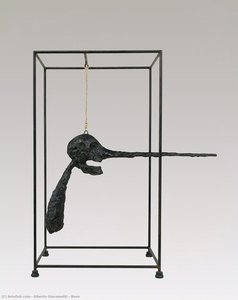
Solomon R. Guggenheim Museum, New YorkSolomon R. Guggenheim Museum New York 2 Woman with Her Throat Cut, Nose
Monnaie de Paris, PařížMonnaie de Paris Paříž 1 Femme égorgée
Detroit Institute of Arts, DetroitDetroit Institute of Arts Detroit 1 Standing Woman II
Metropolitan Museum of Art, New YorkMetropolitan Museum of Art New York 1 Still Life with an Apple
MAM Rio, Rio de JaneiroMAM Rio Rio de Janeiro 1 Quatre femmes sur socle [Four Women on a Base]

Alberto Giacometti napříč desetiletími: jeden unikátní originál pro každou dekádu

Díla podle dekád

Vyberte si dekádu a prohlédněte si originál, který ji definuje.

Obrazy umělce Alberto Giacometti: dotazy pro galerii

Kterým nejznámějším dílem je Alberto Giacometti?Odhalit odpověď

Femme égorgée (1940), Monnaie de Paris, Paříž. Následují Disagreeable Object (1931) a Caught Hand (1932).

V jakém věku vytvořil(a) Alberto Giacometti dílo Femme égorgée?Odhalit odpověď

39 let: dílo Femme égorgée pochází z roku 1940 a Alberto Giacometti se narodil/a v roce 1901.

Kterých deset obrazů autora Alberto Giacometti je nejznámějších?Odhalit odpověď

Femme égorgée, Disagreeable Object, Caught Hand, Point to the Eye, Spoon Woman, Project for a Passageway (Maquette), Flower in Danger, Standing Woman II, Woman with Her Throat Cut a Reclining Woman Who Dreams. Hodnocení výše uvádí rok a muzeum pro každé z nich.

Kolik známých děl má autor Alberto Giacometti?Odhalit odpověď

Náš katalog obsahuje 39 děl umělce Alberto Giacometti z let 1921 až 1965.

Kde lze vidět nejznámější originály umělce Alberto Giacometti?Odhalit odpověď

Většinou v Kunsthaus Zürich (Zürich), Solomon R. Guggenheim Museum (New York) a Monnaie de Paris (Paříž). V tabulce muzeí výše jsou vypsány všechny.

V jakém období vytvořil(a) Alberto Giacometti svá nejznámější obrazy?Odhalit odpověď

V období 1930s: 7 z celkem 38 děl na této stránce vzniklo právě tehdy, z toho Disagreeable Object z nich.

Který slavný obraz od Alberto Giacometti je nejstarší a který nejnovější?Odhalit odpověď

Na této stránce je nejstarší dílo z Self-Portrait (1921) a nejnovější z Carolina (1965).

Jakým tématům se Alberto Giacometti věnoval/a nejčastěji?Odhalit odpověď

Sculpture (10), Men (5) a Figure (4) napříč 38 díly na této stránce.

Jaké materiály používal(a) Alberto Giacometti nejčastěji?Odhalit odpověď

Bronze, u 4 z 38 děl na této stránce.

K kterému směru patří dílo umělce Alberto Giacometti?Odhalit odpověď

Surrealism, podle originálů na této stránce.

Jaká originální díla Alberto Giacometti mohu vidět v Kunsthaus Zürich?Odhalit odpověď

Disagreeable Object, Caught Hand a Point to the Eye: muzeum Kunsthaus Zürich, Zürich má v obsluze 7 děl z této stránky.

Alberto Giacometti: portrét umělce

A Life Sculpted by Existential Echoes

Alberto Giacometti, a name synonymous with the hauntingly elongated figures that define much of 20th-century sculpture, was born in 1901 amidst the breathtaking landscapes of Borgonovo, Switzerland. This alpine setting, nestled near the Italian border, instilled within him an early appreciation for form and space – qualities that would profoundly shape his artistic vision. He wasn’t simply entering a world of art; he was *born* into it. His father, Giovanni Giacometti, was a respected Post-Impressionist painter, and this familial immersion provided both encouragement and a foundation upon which young Alberto could build. The echoes of the Reformation resonated within his lineage too, as his family descended from Protestant refugees who had sought sanctuary from persecution, perhaps contributing to a lifelong exploration of isolation and the human condition. His brothers, Diego – himself a sculptor – and Bruno, an architect, further cemented art’s central role in their lives, creating a dynamic creative atmosphere that fostered experimentation and mutual influence.

From Cubism to the Void: A Shifting Artistic Landscape

Giacometti's formal artistic journey began at the Geneva School of Fine Arts, but it was his move to Paris in 1922 that truly ignited his creative fire. He entered the studio of Antoine Bourdelle, a former associate of Rodin, absorbing classical techniques while simultaneously being swept up by the avant-garde currents swirling through the city. The early years were marked by an exploration of Cubism, dismantling and reassembling forms in a manner reflective of the era’s intellectual ferment. However, Giacometti wasn’t content to merely mimic; he sought his own voice, moving towards a more personal style that focused intently on the human figure. This period saw him gravitating toward Surrealism, creating works imbued with dreamlike imagery and psychological depth, associating with luminaries like Miró, Ernst, and Picasso. Yet, even within this movement, Giacometti felt constrained. He ultimately rejected its purely subconscious approach, yearning for a more rigorous analysis of figurative composition – a desire to understand the essence of being through form. The late 1930s witnessed a dramatic shift in scale; he began producing incredibly small sculptures, often no larger than seven centimeters tall. These diminutive figures weren’t simply miniature representations but rather expressions of distance, both physical and emotional, reflecting a sense of detachment and loss that permeated his worldview.

The Post-War Silhouette: Fragility and the Human Condition

The devastation of World War II profoundly impacted Giacometti's work. Taking refuge in Switzerland during the conflict, he continued to sculpt, but it was after the war that he achieved his most iconic style – the tall, attenuated figures for which he is celebrated today. These weren’t portraits in the traditional sense; they were distillations of human presence, stripped down to their essential forms. Rough surfaces and elongated limbs conveyed a profound sense of fragility and isolation, mirroring the existential anxieties of the post-war era. They seem perpetually on the verge of dissolving into nothingness, embodying the precariousness of existence. These sculptures weren’t merely *of* people; they were explorations of what it meant to *be* human in a world grappling with trauma and uncertainty. The space surrounding these figures is as crucial as the forms themselves – an imaginary yet tangible realm that speaks to our own sense of alienation and longing. Simultaneously, Giacometti's painting gained prominence, mirroring the themes of isolation and attenuation found in his sculptures through almost monochromatic depictions of the human form.

Legacy of a Visionary

Giacometti’s artistic contributions were recognized with increasing acclaim throughout his career, culminating in the Grand Prize for Sculpture at the Venice Biennale in 1962. However, despite this success, he remained relentlessly self-critical, constantly reworking and sometimes even destroying sculptures that failed to meet his exacting standards. His unfinished commission for the Chase Manhattan Bank Building in New York – *Grande Femme Debout I–IV* – stands as a testament to his dissatisfaction with the relationship between art and its environment, highlighting his uncompromising artistic integrity. His work resonates deeply with existentialist philosophy, grappling with themes of human existence, mortality, and the search for meaning in an absurd world. He wasn’t simply creating aesthetically pleasing objects; he was posing fundamental questions about what it meant to be alive. Alberto Giacometti is rightfully considered one of the most important sculptors of the 20th century, his influence continuing to inspire artists and captivate audiences with its profound exploration of the human condition and its uniquely evocative visual language. His sculptures are not merely representations of figures; they are embodiments of our shared vulnerability and search for connection in an increasingly fragmented world.