Portrét Albert Anker

The 83 Most Famous Albert Anker Paintings, a Gallery Selection

Aktualizováno říjen 2026 · seřazeno podle našeho skóre popularity (vyhledávání, návštěvy a objednávky u každého díla) · 83 děl umělce Albert Anker v našem katalogu

In short

Of all the originals Albert Anker left, the most famous is Writing lessons (also known as Schreibunterricht) (1865). Close behind it come The Prodigal Son (1858) and Sunday afternoon (1862). Our catalog holds 83 works by Albert Anker; the gallery has kept the 83 the world admires most, each shown with its date, its museum and its story.

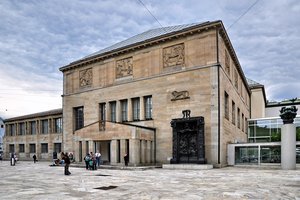
1831 – 1910, Ins Realism Nejvíce děl: Kunsthaus Zürich

Albert Anker's top 10 paintings: the gallery's choice

The Albert Anker selection continues, 11 to 83

11The Milk Soup at Kappel (1869) od Albert AnkerThe Milk Soup at Kappel1869 · Kunsthaus Zürich 12Bathers (1865) od Albert AnkerBathers1865 13The song of the homeland (1874) od Albert AnkerThe song of the homeland1874 14The little knitters (1875) od Albert AnkerThe little knitters1875 · Kunst Museum Winterthur | Reinhart am Stadtgarten 15Porträt der Emilie Weiss (1874) od Albert AnkerPorträt der Emilie Weiss1874 16An Old Huguenot (1875) od Albert AnkerAn Old Huguenot1875 17Young mother contemplating her sleeping child in candlelight (1875) od Albert AnkerYoung mother contemplating her sleeping child in candlelight1875 18The artist's daughter Louise (1874) od Albert AnkerThe artist's daughter Louise1874 · Kunst Museum Winterthur | Reinhart am Stadtgarten 19Queen Bertha and the Spinners (1881) od Albert AnkerQueen Bertha and the Spinners1881 · Musée cantonal des Beaux-Arts 20Children at Breakfast (1879) od Albert AnkerChildren at Breakfast1879 · Kunstmuseum Basel 21Girl with a cat (1881) od Albert AnkerGirl with a cat1881 22Boy in a red waistcoat (1885) od Albert AnkerBoy in a red waistcoat1885 23Knitting girl watching the toddler in a cradle (1885) od Albert AnkerKnitting girl watching the toddler in a cradle1885 24Portrait of a girl (1885) od Albert AnkerPortrait of a girl1885 25Schoolgirl doing homework (1879) od Albert AnkerSchoolgirl doing homework1879 26The Genius of Death (1890) od Albert AnkerThe Genius of Death1890 27Fleissig / Appliquée (1886) od Albert AnkerFleissig / Appliquée1886 28Knitting girl (1888) od Albert AnkerKnitting girl1888 29Girl playing with cat (1887) od Albert AnkerGirl playing with cat1887 30Girl peeling potatoes (1886) od Albert AnkerGirl peeling potatoes1886 31Girl Braiding Her Hair (1887) od Albert AnkerGirl Braiding Her Hair1887 32Civil marriage (1887) od Albert AnkerCivil marriage1887 · Kunsthaus Zürich 33Portrait of a Girl in Bernese Costume (1897) od Albert AnkerPortrait of a Girl in Bernese Costume1897 34The Poor Man's Soup (1893) od Albert AnkerThe Poor Man's Soup1893 · Kunstmuseum Bern 35Girl eating soup (1898) od Albert AnkerGirl eating soup1898 36Bertha Gugger with daughter (1898) od Albert AnkerBertha Gugger with daughter1898 37The Zaeslin siblings (1896) od Albert AnkerThe Zaeslin siblings1896 38Old Man drinking Herbal Tea (1895) od Albert AnkerOld Man drinking Herbal Tea1895 39Reading Girl (1905) od Albert AnkerReading Girl1905 40Old man eating Mid-Morning Snack (Gyp) (1901) od Albert AnkerOld man eating Mid-Morning Snack (Gyp)1901 41Boy with Slate Tablet (1910) od Albert AnkerBoy with Slate Tablet1910 42Girl with Loaf of Bread (1910) od Albert AnkerGirl with Loaf of Bread1910 43Reading Old Farmer (1910) od Albert AnkerReading Old Farmer1910 44Girl with Slate Tablet (1910) od Albert AnkerGirl with Slate Tablet1910 45The Convalescent (1908) od Albert AnkerThe Convalescent1908 46Boy with a hat eating (1910) od Albert AnkerBoy with a hat eating1910 47Old farmer at the table (22 April 1907) (1907) od Albert AnkerOld farmer at the table (22 April 1907)1907 48Still Life: Two Glass of Red Wine, a Bottle of Wine, a Corkscrew and a Plate of Biscuits on a Tray od Albert AnkerStill Life: Two Glass of Red Wine, a Bottle of Wine, a Corkscrew and a Plate of Biscuits on a Tray 49The LIttle Musician (1873) od Albert AnkerThe LIttle Musician1873 50The Whistle Carver (1858) od Albert AnkerThe Whistle Carver1858 51An Interior with Mother and Children (1870) od Albert AnkerAn Interior with Mother and Children1870 52Still-life: Tea and Melted Bread (1873) od Albert AnkerStill-life: Tea and Melted Bread1873 53Still life with coffee setting and cognac bottle (1882) od Albert AnkerStill life with coffee setting and cognac bottle1882 54Sierre (1880) od Albert AnkerSierre1880 55Farmhouse parlor with green stove (1883) od Albert AnkerFarmhouse parlor with green stove1883 56Portrait of a Young Boy (1890) od Albert AnkerPortrait of a Young Boy1890 57Still life: Tasteful tea (1897) od Albert AnkerStill life: Tasteful tea1897 58Still Life with Wine and Chestnuts (1897) od Albert AnkerStill Life with Wine and Chestnuts1897 59Still-Life with Coffee, Milk and Potatoes (1896) od Albert AnkerStill-Life with Coffee, Milk and Potatoes1896 · Kunstmuseum Bern 60Der alte Feissli mit Kind auf Ofenbank (1898) od Albert AnkerDer alte Feissli mit Kind auf Ofenbank1898 61Still life, herrings (1899) od Albert AnkerStill life, herrings1899 62Strickende junge Frau mit Blumenstrauss (1903) od Albert AnkerStrickende junge Frau mit Blumenstrauss1903 63Der Schaffner (1899) od Albert AnkerDer Schaffner1899 64At the cemetery od Albert AnkerAt the cemetery 65Knitting Bernese woman with child od Albert AnkerKnitting Bernese woman with child 66Sitting bioy peeling vegetables od Albert AnkerSitting bioy peeling vegetables 67Portrait of a Girl od Albert AnkerPortrait of a Girl 68Portrait of a girl od Albert AnkerPortrait of a girl 69Sleeping girl on a wooden bench od Albert AnkerSleeping girl on a wooden bench 70Farmer reading in Bed I od Albert AnkerFarmer reading in Bed I 71Unterwalden (traditional costumes after Josef Reinhart) od Albert AnkerUnterwalden (traditional costumes after Josef Reinhart) 72A Farmer's Wife, Sewing od Albert AnkerA Farmer's Wife, Sewing 73Portrait of boy od Albert AnkerPortrait of boy 74Farmer with his cap holding his pen in his mouth and reading a letter od Albert AnkerFarmer with his cap holding his pen in his mouth and reading a letter 75Portrait of a Young Girl od Albert AnkerPortrait of a Young Girl 76Child at a Table (1908) od Albert AnkerChild at a Table1908 77Portrait of a girl with red necklace od Albert AnkerPortrait of a girl with red necklace 78Two Girls on the Stove Bench (1895) od Albert AnkerTwo Girls on the Stove Bench1895 · Kunsthaus Zürich 79Corner of a Room with Laundry Basket od Albert AnkerCorner of a Room with Laundry Basket 80Peasant Woman od Albert AnkerPeasant Woman 81A Seated Farmer with a Pipe od Albert AnkerA Seated Farmer with a Pipe 82Portrait of a girl od Albert AnkerPortrait of a girl 83Creche (1890) od Albert AnkerCreche1890 · Kunst Museum Winterthur | Reinhart am Stadtgarten

The subjects that held Albert Anker's eye

The four subjects that come back most often in these originals, each with its finest example.

The museums that keep Albert Anker's originals

7 muzea, v nichž je umístěno nejvíce obrazů z této stránky.

Muzea Město Díla autora Albert Anker Obrazy z tohoto seznamu
Kunsthaus Zürich, ZürichKunsthaus Zürich Zürich 3 The Milk Soup at Kappel, Civil marriage, Two Girls on the Stove Bench
Kunst Museum Winterthur | Reinhart am Stadtgarten, WinterthurKunst Museum Winterthur | Reinhart am Stadtgarten Winterthur 3 The little knitters, The artist's daughter Louise, Creche
Musée d'art et d'histoire, NeuchâtelMusée d'art et d'histoire Neuchâtel 2 Sunday afternoon, The Bourbakis
Kunstmuseum Bern, BernKunstmuseum Bern Bern 2 The Poor Man's Soup, Still-Life with Coffee, Milk and Potatoes
Palais des Beaux-Arts de Lille, LillePalais des Beaux-Arts de Lille Lille 1 In the Woods
Musée cantonal des Beaux-Arts, LausannaMusée cantonal des Beaux-Arts Lausanna 1 Queen Bertha and the Spinners
Kunstmuseum Basel, BasilejKunstmuseum Basel Basilej 1 Children at Breakfast

Albert Anker decade by decade: the original that defines each

Díla podle dekád

Pick a decade to see the original that defines it.

Collectors' questions about Albert Anker's paintings

Which work is Albert Anker most famous for?Reveal the answer

Writing lessons (also known as Schreibunterricht) (1865). The Prodigal Son (1858) and Sunday afternoon (1862) come next.

What age was Albert Anker when Writing lessons (also known as Schreibunterricht) was made?Reveal the answer

34 years old: Writing lessons (also known as Schreibunterricht) dates from 1865, and Albert Anker was born in 1831.

What are the ten most famous Albert Anker paintings?Reveal the answer

Writing lessons (also known as Schreibunterricht), The Prodigal Son, Sunday afternoon, The Bourbakis, In the Woods, The Wine Festival, Betende im Beinhaus von Stans, Baptism, Boy at table II a Girl, drinking coffee. The ranking above gives each one's year and museum.

How many paintings did Albert Anker leave?Reveal the answer

Our catalog holds 83 works by Albert Anker, dated from 1858 to 1910.

In which museums do Albert Anker's masterpieces hang?Reveal the answer

Mostly in Kunsthaus Zürich (Zürich), Kunst Museum Winterthur | Reinhart am Stadtgarten (Winterthur) a Musée d'art et d'histoire (Neuchâtel). The museum table above lists them all.

In which years did Albert Anker paint the most famous works?Reveal the answer

In 1890s: 16 of the 83 works on this page were made then, The Genius of Death among them.

What are the first and the last famous originals of Albert Anker?Reveal the answer

On this page, the earliest is The Prodigal Son (1858) and the latest Boy with Slate Tablet (1910).

Which subjects did Albert Anker choose most often?Reveal the answer

Rural life (3), Swiss art (3) a Portraits (3), across the 83 works on this page.

To which art movement does Albert Anker belong?Reveal the answer

Realism a Contemporary realism, judging by the originals on this page.

Which Albert Anker works hang at the Kunsthaus Zürich?Reveal the answer

The Milk Soup at Kappel, Civil marriage a Two Girls on the Stove Bench: the Kunsthaus Zürich, Zürich holds 3 of the works on this page.

Can I commission a reproduction of a Albert Anker painting?Reveal the answer

Yes, as a reproduction: the original stays in its museum, but any painting on this page can be painted by hand for you, made to order one at a time, from the painting's own page.

Albert Anker: life and work

Raný život a umělecké začátky

Albert Samuel Anker, jméno spojené s idylickými švýcarskými scenériemi a srdečnými zobrazeními venkovského života, se narodil 1. dubna 1831 v malé obci Ins ve Švýcarsku. Jeho otec, Samuel Anker, byl uznávaným zvěrolékařem a zároveň politickým činitelem, členem zastupitelského shromáždění kantonu Bern. Tato kombinace praktické vědy a občanské angažovanosti subtilně ovlivnila i mladého Alberta. Rodina se v roce 1836 přestěhovala do Neuchâtelu, což poskytlo novou scenérii pro jeho rozvíjející se citlivost. Zde Anker poprvé projevil talent pro umění a pod vedením Friedricha-Wilhelma Moritze získal prvotní inspiraci, která definovala jeho životní dílo. Pokračoval ve formálním vzdělání společně s Augustem Bachelinem pod vedením Louise Wallingera od roku 1845 do 1848, čímž položil pevné základy v kreslení a pozorování. Ankerovy rané ambice nebyly však pouze umělecké; po dokončení Matury v roce 1851 studoval teologii na univerzitách v Bernu a Hállu v Německu. Během těchto akademických let, obklopen bohatými sbírkami umění, se jeho oddanost malířství upevnila a roku 1854 získal souhlas svého otce k profesi umělce.

Pařížské vlivy a formování vlastního stylu

Rozhodnutí věnovat se umění Alberta zavedlo do Paříže, epicentra umělecké inovace ve středu 19. století. Zapsal se na prestižní École nationale supérieure des Beaux-Arts, kde studoval pod vedením Charlese Gleyre. Tato etapa byla klíčová pro jeho rozvoj, představila ho současným francouzským trendům a upevnila jeho technické dovednosti. Zatímco absorboval vlivy realismu – reakce na romantismus, která zdůrazňovala zobrazování života takový, jaký je – Anker se neomezil pouhým napodobováním jeho principů. Vytvořil si odlišný styl charakterizovaný pečlivou detailností, subtilním emocionálním vyjádřením a neochvějnou pozorností věnovanou každodenním scénám švýcarského venkova. Nebyl zájem o grandiózní historické narativy nebo dramatické alegorie; jeho plátno se stalo oknem do tiché důstojnosti vesnického života. Ankerova díla odrážejí hluboké ocenění jednoduchosti a autenticity, zobrazují děti, farmáře a domácí interiéry s pozoruhodnou realističností a něhou. Vliv nizozemských mistrů, jako byl Johannes Vermeer, je patrný v jeho pozornosti k světlu, kompozici a intimnímu zobrazení vnitřních prostor – vlastnost, která propůjčuje jeho obrazům nadčasovou klidnost.

Témata, významná díla a umělecké dědictví

Albert Anker se stal oslavován pro zachycení podstaty 19. století švýcarského venkovského života, čímž si vysloužil láskyplný titul „národního malíře“ Švýcarska. Jeho plátna jsou osídlená scénami, které rezonují s pocitem nostalgie a upřímné náklonnosti k jeho postavám. Mezi jeho nejmilovanější díla patří "Malý hudebník," okouzlující zobrazení mladého chlapce ponořeného do hraní na housle – svědectví Ankerovy schopnosti zachytit dětskou nevinnost a soustředění. „Portrét mladé dívky“ podobně demonstruje jeho dovednost v zobrazování jemných rysů a vyjádření vnitřních emocí. "Sedlák při šití" je dojímavá studie domácího klidu, odhalující krásu v každodenních úkolech života. Kromě těchto ikonických obrazů je Ankerovo oddanost dokumentaci švýcarského kulturního dědictví patrná v dílech jako "Unterwalden (tradiční kostýmy po Josefovi Reinhart)," sérii akvarelů pečlivě zachycujících tradiční oděvy. Jeho umělecká produkce se rozšiřovala nad rámec obrazů a zahrnovala portréty, zátiší a žánrové scény, které odrážely hodnoty a estetiku jeho doby. I jeho kresba tužkou "Starý rolník u stolu (22. dubna 1907)" demonstruje jeho mistrovství linie a formy, vyjadřující bohatství charakteru minimálními prostředky. Opakující se témata v Ankerově díle – dětství, rodinný život, venkovské tradice a krása švýcarské krajiny – jsou propletena tak, aby vytvořily soudržnou vizi harmonického světa.

Uznání a trvalý význam

Během svého života si Albert Samuel Anker užíval značného uznání, vystavoval svá díla na mnoha národních i mezinárodních výstavách a získával kritické uznání. V roce 1878 byl jmenován rytířem Legie čestné, což upevnilo jeho pověst ve evropském uměleckém světě. Jeho obrazy hrály klíčovou roli při formování obrazu 19. století Švýcarska a nabízely jak romantizovaný, tak realistický pohled na venkovský život, který hluboce rezonoval s publikem. Ankerův přínos švýcarskému realismu byl významný a ovlivnil následující generace umělců, kteří se snažili zobrazit svou vlastní národní identitu a kulturní krajinu. Byl členem Švýcarské federální umělecké komise v letech 1889-1893 a znovu v letech 1895-1898, což dále demonstruje jeho závazek k podpoře uměleckého růstu ve své zemi. V roce 1900 obdržel čestný doktorát na Univerzitě Bernu. I když ho mrtvice omezila v malování v pozdějších letech, jeho odkaz zůstal neotřele pevný. Albert Samuel Anker zemřel 16. července 1910 v Insu ve Švýcarsku a zanechal po sobě dílo, které je dodnes obdivováno pro jeho technickou zdatnost, emocionální hloubku a trvalý historický význam – svědectví o síle umění zachytit ducha národa a krásu každodenního života.

Všechna díla od Albert Anker: 83 →