


1


Aktualizováno říjen 2026 · seřazeno podle našeho skóre popularity (vyhledávání, návštěvy a objednávky u každého díla) · 51 děl umělce Thorolf Holmboe v našem katalogu
Stručně řečeno
Self-portrait (1910) je obraz autora Thorolf Holmboe, který přitahuje nejvíce pohledů; originál se nachází v Nordnorsk Kunstmuseum, Tromsø. Poté se zrak přesouvá k Fishing Village, Lofoten a From Skjærgården (1885). Z 51 děl umělce Thorolf Holmboe v našem katalogu je těchto 51 těch nejznámějších; každé z nich je unikátním originálem s uvedením roku vzniku, muzea a důvodu jeho nesmrtelnosti.


 Graveyard in Lofoten1900 · Národní muzeum umění, architektury a designu
12
 Patches of Ice1902 · Národní muzeum umění, architektury a designu
13
 From Akerselven1902 · Národní muzeum umění, architektury a designu
14
 From the Old Kristiania1902 · Statens Museum for Kunst
15
 Girl at the Garden Table1905
16
 Landscape of the Midnight Sun1905
17
 Løkken Søholm1909 · Oslo Museum
18
 Weeping Willows by Akerselven1907 · Národní muzeum umění, architektury a designu
19
 Seascape1908 · Národní muzeum umění, architektury a designu
20
 Still life1907
21
 In a City (Bylandskap)1908
22
 Akerselva by Marselis gate1912 · Oslo Museum
23
 Gardening (Hagearbeid)1912
24
 Moonlight Landscape with House1914
25
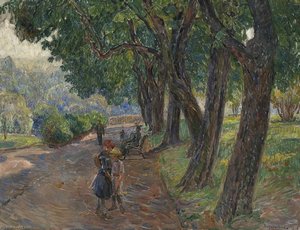 In the Park1914
26
 Garden with Hydrangeas in Pots1916
27
 Landscape from Åsgårdstrand1922 · Národní muzeum umění, architektury a designu
28
 Old Tree1922 · Nordnorsk Kunstmuseum
29
 Frognerkilen1924
30
 Landscape near Hvitsten1927
31
 The Coastal ExpressNordnorsk Kunstmuseum
32
 Fra en uthavn1905
33
 Evening Atmosphere in the ForestNordnorsk Kunstmuseum
34
 Nordland-boat in the midnight sun
35
 The Journey
36
 Longboats in a Fresh Breeze
37
 Landscape with House
38
 Evening Cruise
39
 From Hankø
40
 Lofoten
41
 Eider Ducks in the Midnight Sun
42
 In the Mountains
43
 Midnight Sun, Nordland
44
 Kallbadhuset
45
 Fra Bergens våg
46
 Commorants on Røst IslandNordnorsk Kunstmuseum
47
 Drying FishNordnorsk Kunstmuseum
48
 Winter ForestNordnorsk Kunstmuseum
49
 Seal Hunting in the IceNordnorsk Kunstmuseum
50
 Cormorants in the Midnight SunNordnorsk Kunstmuseum
51
 Ship in IceNordnorsk Kunstmuseum
Čtyři témata, která se v těchto originálech nejčastěji objevují, z nichž každé má svůj nejlepší příklad.
4 muzea, v nichž je umístěno nejvíce obrazů z této stránky.
| Muzeum | Město | Díla autora Thorolf Holmboe | Obrazy z tohoto seznamu |
|---|---|---|---|
 Nordnorsk Kunstmuseum |
Tromsø | 10 | Self-portrait, Old Tree, The Coastal Express |
 Národní muzeum umění, architektury a designu |
Oslo | 9 | Summer Night on the Sea, View over Akerselven, Pine Tree on the Coast in Moonlight |
 Oslo Museum |
Oslo | 5 | Lower Course of the Lågen, Justisplassen on Galgeberg, Løkken Gimle |
 Statens Museum for Kunst |
Kodaň | 1 | From the Old Kristiania |
Vyberte si dekádu a prohlédněte si originál, který ji definuje.

Self-portrait (1910), Nordnorsk Kunstmuseum, Tromsø. Následují Fishing Village, Lofoten a From Skjærgården (1885).
44 let: dílo Self-portrait pochází z roku 1910 a Thorolf Holmboe se narodil/a v roce 1866.
Self-portrait, Fishing Village, Lofoten, From Skjærgården, Lower Course of the Lågen, Justisplassen on Galgeberg, Summer Night on the Sea, Interior with Reclining Woman, Løkken Gimle, View over Akerselven a Pine Tree on the Coast in Moonlight. Hodnocení výše uvádí rok a muzeum pro každé z nich.
Náš katalog obsahuje 51 děl umělce Thorolf Holmboe z let 1885 až 1927.
Většinou v Nordnorsk Kunstmuseum (Tromsø), Národní muzeum umění, architektury a designu (Oslo) a Oslo Museum (Oslo). V tabulce muzeí výše jsou vypsány všechny.
V období 1900s: 15 z celkem 51 děl na této stránce vzniklo právě tehdy, z toho Løkken Gimle z nich.
Na této stránce je nejstarší dílo z From Skjærgården (1885) a nejnovější z Landscape near Hvitsten (1927).
Landscape (3), Norway (3) a Mountains (2) napříč 51 díly na této stránce.
Impressionism a Naturalism, podle originálů na této stránce.
Self-portrait, Old Tree a The Coastal Express: muzeum Nordnorsk Kunstmuseum, Tromsø má v obsluze 10 děl z této stránky.
Thorolf Holmboe (1866-1935) stands as a pivotal figure in late 19th and early 20th-century Norwegian art, a painter whose evocative landscapes and intimate portraits captured the spirit of his homeland – particularly its rugged northern regions. More than simply documenting scenery, Holmboe imbued his work with a profound sense of place, reflecting both the grandeur of nature and the quiet dignity of its inhabitants. His career spanned diverse styles, from early Naturalism and Impressionism to a mature aesthetic informed by Symbolism and a deep appreciation for traditional craftsmanship, ultimately establishing him as one of Norway’s most celebrated artists.
Born in Vefsn, Nordland county, Holmboe's artistic journey began under the tutelage of Hans Gude in Berlin and later with Fernand Cormon in Paris. These formative years exposed him to a broad range of European artistic currents, including the burgeoning Naturalist movement focused on depicting everyday life and the vibrant Impressionism that sought to capture fleeting moments of light and color. However, Holmboe’s true inspiration lay within Norway itself. He returned repeatedly to his native Nordland, drawn by its dramatic coastline, towering mountains, and the resilient communities who called it home. This connection fueled a distinctive artistic voice – one characterized by a meticulous attention to detail, a masterful use of light and shadow, and an undeniable affection for the region’s unique character.
Holmboe's early paintings reveal a strong influence from Naturalism. His depictions of rural life, particularly scenes of fishermen and farmers working the land, are rendered with remarkable realism and social awareness. These works demonstrate an engagement with contemporary issues and a desire to portray the lives of ordinary people. Simultaneously, he was deeply affected by Impressionistic techniques, evident in his use of broken brushstrokes and vibrant color palettes to capture the atmospheric effects of light on the Norwegian landscape. The influence of Symbolism is also apparent, particularly in his later works, where he employed muted tones and suggestive imagery to evoke a sense of mystery and emotional depth.
Crucially, Holmboe’s artistic development was shaped by his family history. His grandfather, Michael Wide Holmboe, was a bailiff involved in settling the Målselvdalen valley, an event that profoundly impacted the region's social and economic landscape. This historical context informed Holmboe’s interest in depicting the lives of those who had adapted to the challenging conditions of northern Norway. The legacy of his ancestors also instilled within him a deep respect for tradition and craftsmanship – values he would later champion through his work with Porsgrunds Porselænsfabrik, the renowned Norwegian porcelain manufacturer.
A significant turning point in Holmboe’s career came with his appointment as an artist at Porsgrunds Porselænsfabrik in 1906. This collaboration proved to be extraordinarily fruitful, allowing him to combine his artistic talents with a burgeoning interest in design and craftsmanship. Over the next two decades, he created a vast body of decorative work for the factory – intricate patterns, motifs inspired by nature, and elegant vignettes that adorned porcelain tableware, textiles, and other objects. These designs were not merely decorative; they possessed a profound sense of place and reflected Holmboe’s deep understanding of Norwegian folklore and artistic traditions.
His Porsgrund work demonstrated a shift towards a more stylized and symbolic approach to painting. He employed a distinctive “Düsseldorf” perspective, characterized by its meticulous detail and atmospheric effects, alongside the vibrant colors and decorative patterns that were hallmarks of the era. This period represents a remarkable synthesis of his artistic sensibilities – blending his earlier realism with a newfound appreciation for design and craftsmanship.
Thorolf Holmboe’s contribution to Norwegian art is undeniable. His paintings, particularly those depicting the landscapes and people of Nordland, are treasured works of national significance. He was recognized throughout his career with numerous awards and honors, including a Knight's Cross of the Order of St. Olav in 1900 and the Petter Dass Medalje in 1912 – an accolade bestowed upon artists who had contributed to the cultural heritage of Northern Norway. His work is prominently featured in the National Gallery of Norway, ensuring that his artistic legacy will continue to inspire generations of art lovers.
Beyond his individual achievements, Holmboe played a vital role in promoting Norwegian art and design both domestically and internationally. He was a respected teacher and mentor, nurturing the talents of younger artists, and his work helped to establish Norway as a center for decorative arts and craftsmanship. Thorolf Holmboe’s paintings remain powerful testaments to the beauty and resilience of the Norwegian landscape and its people – enduring symbols of national identity and artistic excellence.