Portrét Stanisław Żukowski

83 nejslavnějších obrazů autora Stanisław Żukowski, výběr z galerie

Aktualizováno listopad 2026 · seřazeno podle našeho skóre popularity (vyhledávání, návštěvy a objednávky u každého díla) · 83 děl umělce Stanisław Żukowski v našem katalogu

Stručně řečeno

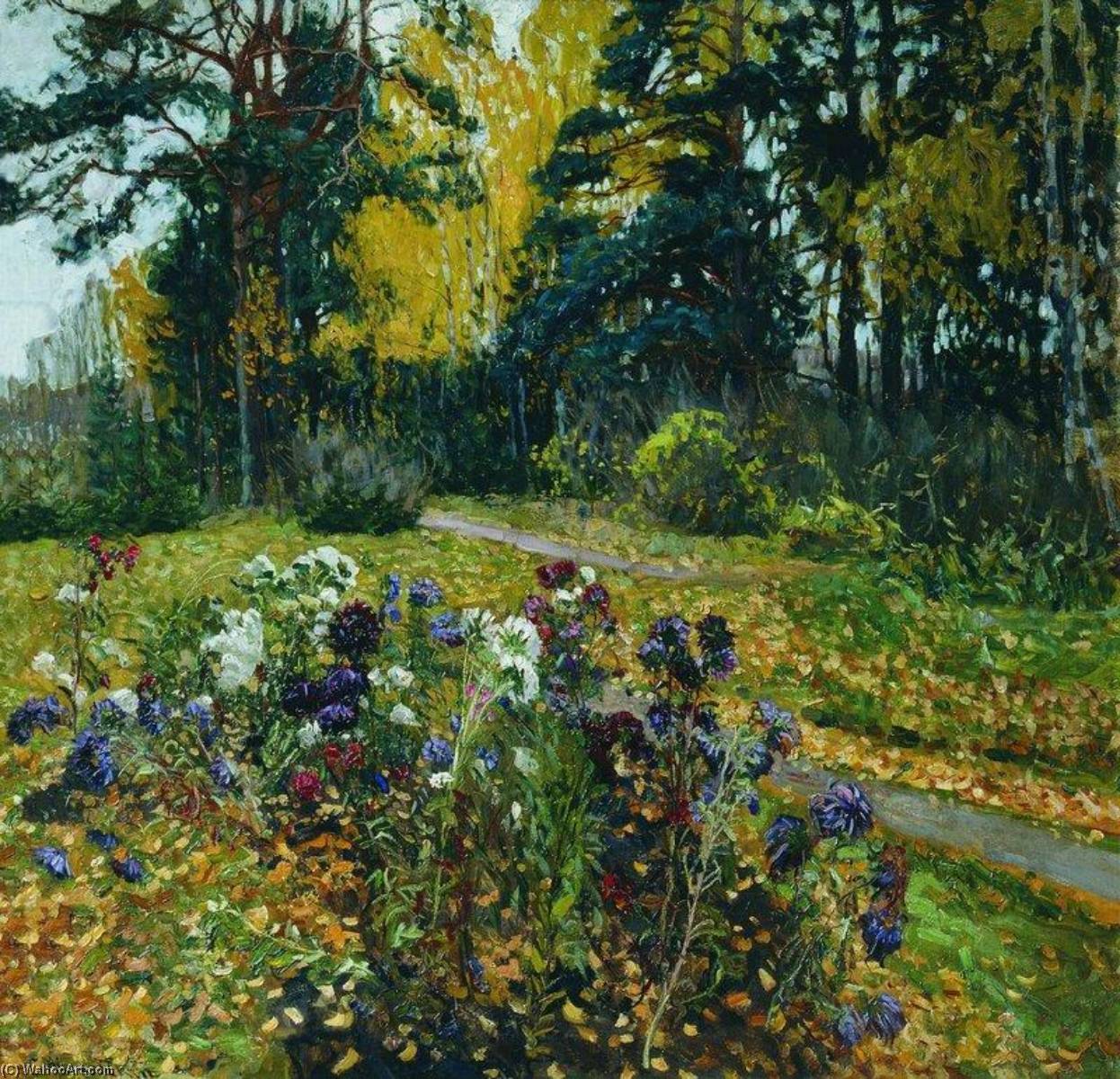
Z všech originálů, které Stanisław Żukowski zanechal, je nejslavnější The Last Asters (1912). Hned za ním následují Old Library (1916) a Before the masquerade (1923). Náš katalog obsahuje 83 děl umělce Stanisław Żukowski; galerie si zachovala 83 děl, která obdivuje celý svět, přičemž každé je znázorněno s datem vzniku, názevem muzea a jeho příběhem.

1873 – 1944, Jendrychaŭcy Impressionism Nejvíce děl: Národní muzeum ve Varšavě

10 nejlepších obrazů umělce Stanisław Żukowski: výběr galerie

1
The Last Asters (1912) od Stanisław Żukowski

The Last Asters

1912 · Oil

The air feels heavy with the scent of damp earth and the cooling breath of autumn. In this corner of a garden, the season is making its final, colorful protest. A path winds through a landscape of deepening shadows and soft light, leading the eye toward a cluster of trees that stand as silent sentinels against the changing sky. Near the center, a solitary bench sits empty, waiting for a…

2
Old Library (1916) od Stanisław Żukowski

Old Library

1916 · Oil · Národní muzeum v Krakově, Krakov

In this 1916 oil painting, we find ourselves standing at the threshold of a private sanctuary. The scene captures a spacious, classical library where the air feels heavy with the scent of aged paper and polished wood. Sunlight streams through high windows, cutting through the stillness to cast sharp, geometric patches of brilliance across a reflective floor. This interplay of light and shadow creates a profound sense of depth, drawing…

3
Before the masquerade (1923) od Stanisław Żukowski

Before the masquerade

1923 · Oil On Canvas · Národní muzeum ve Varšavě, Varšava

In Before the masquerade, Stanisław Żukowski presents a moment of preparation within an elegant, dimly lit interior. The composition centers on a woman in a red evening gown positioned before a tall, ornate red mirror. This arrangement directs the viewer's attention toward her reflection, creating a focal point that explores themes of vanity and anticipation. The scene is captured from a straight-on perspective, placing the observer directly within the quietude…

Výběr umělce Stanisław Żukowski pokračuje, od 11 do 83

11Midday (1905) od Stanisław ŻukowskiMidday1905 12Landscape with a Hut (1904) od Stanisław ŻukowskiLandscape with a Hut1904 13Forest River (1899) od Stanisław ŻukowskiForest River1899 14Evening in March (1904) od Stanisław ŻukowskiEvening in March1904 15Moonlit Night in Winter (1901) od Stanisław ŻukowskiMoonlit Night in Winter1901 16In the Park (1904) od Stanisław ŻukowskiIn the Park1904 17Evening in Autumn (study) (1905) od Stanisław ŻukowskiEvening in Autumn (study)1905 18In May (1899) od Stanisław ŻukowskiIn May1899 19The Mansion (1900) od Stanisław ŻukowskiThe Mansion1900 20Haystacks in the Field (1900) od Stanisław ŻukowskiHaystacks in the Field1900 21Evening in Autumn (1905) od Stanisław ŻukowskiEvening in Autumn1905 22The Homestead (1899) od Stanisław ŻukowskiThe Homestead1899 23Khotkovo (study) (1903) od Stanisław ŻukowskiKhotkovo (study)1903 24Moonlit Night (1899) od Stanisław ŻukowskiMoonlit Night1899 25Winter forest (1900) od Stanisław ŻukowskiWinter forest1900 · Dagestan Museum of Fine Arts named after P. S. Gamzatova 26Easter (1911) od Stanisław ŻukowskiEaster1911 27Lake Moldino (1909) od Stanisław ŻukowskiLake Moldino1909 28Garden with House (1906) od Stanisław ŻukowskiGarden with House1906 29Manor House in Autumn (1909) od Stanisław ŻukowskiManor House in Autumn1909 30Early Spring in the Park (1910) od Stanisław ŻukowskiEarly Spring in the Park1910 31The Last Flowers (1908) od Stanisław ŻukowskiThe Last Flowers1908 32Forest Lake (1910) od Stanisław ŻukowskiForest Lake1910 33Landscape (1916) od Stanisław ŻukowskiLandscape1916 · Národní muzeum ve Varšavě 34The First Frost (1912) od Stanisław ŻukowskiThe First Frost1912 35Interior with a Piano (1917) od Stanisław ŻukowskiInterior with a Piano1917 36The First Snow (1916) od Stanisław ŻukowskiThe First Snow1916 37Mountain Landscape (1914) od Stanisław ŻukowskiMountain Landscape1914 38Easter Still Life (1915) od Stanisław ŻukowskiEaster Still Life1915 39In Front of the Terrace (1913) od Stanisław ŻukowskiIn Front of the Terrace1913 40In the Old House (1912) od Stanisław ŻukowskiIn the Old House1912 41Interior in Brasovo (1916) od Stanisław ŻukowskiInterior in Brasovo1916 42Interior of an Old House (1912) od Stanisław ŻukowskiInterior of an Old House1912 43Winter landscape. Vyatka (1921) od Stanisław ŻukowskiWinter landscape. Vyatka1921 · Národní umělecké muzeum Republiky Bělorusko 44Midnight (1922) od Stanisław ŻukowskiMidnight1922 · Národní muzeum ve Varšavě 45Remote Russian north – Vyatka (1920) od Stanisław ŻukowskiRemote Russian north – Vyatka1920 · Národní muzeum ve Varšavě 46The Lake (1919) od Stanisław ŻukowskiThe Lake1919 47Mansion in Winter (1918) od Stanisław ŻukowskiMansion in Winter1918 48Lake at Night (1919) od Stanisław ŻukowskiLake at Night1919 49In the Room (1920) od Stanisław ŻukowskiIn the Room1920 50Interior (1920) od Stanisław ŻukowskiInterior1920 51Early Spring in the Forest (1925) od Stanisław ŻukowskiEarly Spring in the Forest1925 52Forest Clearing (1928) od Stanisław ŻukowskiForest Clearing1928 53Frost (1928) od Stanisław ŻukowskiFrost1928 54Landscape with Haystacks (1926) od Stanisław ŻukowskiLandscape with Haystacks1926 55Lilacs in the Park (1930) od Stanisław ŻukowskiLilacs in the Park1930 56Moonlit Night. Jasmine and Peonies (1929) od Stanisław ŻukowskiMoonlit Night. Jasmine and Peonies1929 57Garden Path (1938) od Stanisław ŻukowskiGarden Path1938 58Foxgloves in a Summer Garden (1941) od Stanisław ŻukowskiFoxgloves in a Summer Garden1941 59Interior of a Salon in Brasovo (1916) od Stanisław ŻukowskiInterior of a Salon in Brasovo1916 60Evening Interior (1909) od Stanisław ŻukowskiEvening Interior1909 61May (1912) od Stanisław ŻukowskiMay1912 62Easter Night od Stanisław ŻukowskiEaster Night 63Landscape with River od Stanisław ŻukowskiLandscape with River 64The Forest Stream od Stanisław ŻukowskiThe Forest Stream 65March od Stanisław ŻukowskiMarch 66Evening od Stanisław ŻukowskiEvening 67Grey Day od Stanisław ŻukowskiGrey Day 68Moonlit Interior od Stanisław ŻukowskiMoonlit Interior 69Forest od Stanisław ŻukowskiForest 70Landscape with a Church od Stanisław ŻukowskiLandscape with a Church 71Flooding of the Neiman River od Stanisław ŻukowskiFlooding of the Neiman River 72Interior of a Library od Stanisław ŻukowskiInterior of a Library 73Landscape od Stanisław ŻukowskiLandscapeTver Regional Picture Gallery 74Interior. Sunny Day od Stanisław ŻukowskiInterior. Sunny Day 75Ferns in the Forest (1895) od Stanisław ŻukowskiFerns in the Forest1895 76Fading Asters (1910) od Stanisław ŻukowskiFading Asters1910 77Early Spring (1902) od Stanisław ŻukowskiEarly Spring1902 78Interior with Samovar (1914) od Stanisław ŻukowskiInterior with Samovar1914 79The Fresh Snow (1912) od Stanisław ŻukowskiThe Fresh Snow1912 80Indian Summer (1899) od Stanisław ŻukowskiIndian Summer1899 81Lake Moldino od Stanisław ŻukowskiLake Moldino 82Interior of the Picture Gallery, Pavlovsk od Stanisław ŻukowskiInterior of the Picture Gallery, Pavlovsk 83Summer Meadow, Pobojka od Stanisław ŻukowskiSummer Meadow, Pobojka

Motivy, které zaujaly Stanisław Żukowski

Čtyři témata, která se v těchto originálech nejčastěji objevují, z nichž každé má svůj nejlepší příklad.

Muzea, v nichž jsou vystavena originálna umělce Stanisław Żukowski

5 muzea, v nichž je umístěno nejvíce obrazů z této stránky.

Muzeum Město Díla autora Stanisław Żukowski Obrazy z tohoto seznamu
Národní muzeum ve Varšavě, VaršavaNárodní muzeum ve Varšavě Varšava 5 Before the masquerade, Landscape, Landscape
Národní muzeum v Krakově, KrakovNárodní muzeum v Krakově Krakov 1 Old Library
Dagestan Museum of Fine Arts named after P. S. Gamzatova, MakhachkalaDagestan Museum of Fine Arts named after P. S. Gamzatova Makhachkala 1 Winter forest
Národní umělecké muzeum Republiky Bělorusko, MinskNárodní umělecké muzeum Republiky Bělorusko Minsk 1 Winter landscape. Vyatka
Tver Regional Picture Gallery, TverTver Regional Picture Gallery Tver 1 Landscape

Stanisław Żukowski dekáda po dekádě: originální díla, která definují každou z nich

Díla podle dekád

Vyberte si dekádu a prohlédněte si originál, který ji definuje.

Otázky sběratelů o obrazech umělce Stanisław Żukowski

Kterým dílem je Stanisław Żukowski nejznámější?Odhalit odpověď

The Last Asters (1912). Následují Old Library (1916) a Before the masquerade (1923).

Kolik let bylo Stanisław Żukowski, když bylo vytvořeno dílo The Last Asters?Odhalit odpověď

39 let: dílo The Last Asters pochází z roku 1912 a Stanisław Żukowski se narodil/a v roce 1873.

Kterých deset nejslavnějších obrazů má Stanisław Żukowski?Odhalit odpověď

The Last Asters, Old Library, Before the masquerade, Landscape, Landscape with a Road, Haystacks (study), The Monastery Wall, Melting Snow on the Slopes, Lilac Bushes a The Moonrise. Hodnocení výše uvádí rok a muzeum pro každé z nich.

Kolik obrazů zanechal(a) Stanisław Żukowski?Odhalit odpověď

Náš katalog obsahuje 83 děl umělce Stanisław Żukowski z let 1895 až 1941.

Ve kterých muzeích jsou vystavena díla mistrovská umělce Stanisław Żukowski?Odhalit odpověď

Většinou v Národní muzeum ve Varšavě (Varšava), Národní muzeum v Krakově (Krakov) a Dagestan Museum of Fine Arts named after P. S. Gamzatova (Makhachkala). V tabulce muzeí výše jsou vypsány všechny.

V jakých letech namaloval Stanisław Żukowski svá nejznámější díla?Odhalit odpověď

V období 1910s: 23 z celkem 83 děl na této stránce vzniklo právě tehdy, z toho The Last Asters z nich.

Jaká jsou první a poslední slavná originální díla umělce Stanisław Żukowski?Odhalit odpověď

Na této stránce je nejstarší dílo z Landscape (1895) a nejnovější z Foxgloves in a Summer Garden (1941).

Jaká témata si Stanisław Żukowski vybíral nejčastěji?Odhalit odpověď

Russian art (8), Rural landscape (5) a Flowers (4) napříč 83 díly na této stránce.

Kterou techniku používal(a) Stanisław Żukowski nejčastěji?Odhalit odpověď

Oil, u 2 z 83 děl na této stránce.

K kterému uměleckému směru patří Stanisław Żukowski?Odhalit odpověď

Impressionism, podle originálů na této stránce.

Která díla umělce Stanisław Żukowski jsou vystavena v Národní muzeum ve Varšavě?Odhalit odpověď

Before the masquerade, Landscape a Landscape: muzeum Národní muzeum ve Varšavě, Varšava má v obsluze 5 děl z této stránky.

Stanisław Żukowski: život a dílo

Stanislav Zhukovsky: Pioneer of Russian Abstract Expressionism

Stanislav Yulianovich Zhukovsky (1873–1944) stands as a singular figure in the annals of Russian art, recognized primarily for his contribution to Suprematism and Cubism – movements that fundamentally reshaped the visual landscape of the early 20th century. Born in Saint Petersburg, Zhukovsky’s artistic journey began amidst the intellectual ferment of the era, absorbing influences from Impressionism and Symbolism before decisively embracing radical abstraction. His work transcends mere representation; it delves into a realm of pure geometric forms and tonal harmonies, reflecting a profound engagement with philosophical concepts rooted in Russian Orthodox spirituality and Nietzschean thought.
  • Early Influences: Zhukovsky’s formative years coincided with the blossoming Impressionist movement in France, exposing him to artists like Monet and Sisley who championed capturing fleeting moments of light and color. Simultaneously, Symbolism captivated him with its exploration of inner psychological states and mythological narratives – a fascination evident in his initial canvases.
  • The Embrace of Cubism: Around 1910 Zhukovsky transitioned to Cubism, aligning himself with the avant-garde fervor sweeping across Europe. He adopted Picasso’s analytical approach, dissecting objects into fragmented planes and presenting multiple perspectives simultaneously. This stylistic shift signaled a rejection of traditional illusionistic techniques in favor of intellectual rigor and conceptual innovation.
  • Suprematism: Zhukovsky's most enduring legacy resides in his pioneering role as one of the founders of Suprematism, alongside Kazimir Malevich. Rejecting any reference to external reality, Suprematists sought to express pure spiritual concepts through geometric shapes – primarily squares and circles – arranged on a white background. Zhukovsky’s Suprematist compositions embody an uncompromising commitment to reducing art to its elemental essence.

Notable Works & Artistic Style

Zhukovsky's oeuvre comprises approximately 300 paintings, predominantly landscapes and interiors rendered in meticulous detail. However, his artistic brilliance truly shone through in his Suprematist masterpieces – “Black Square” (1915) and “White on White” (1918), which are considered seminal works of the movement. His technique involved layering thin washes of color onto primed canvas, achieving remarkable tonal gradations that conveyed depth and luminosity despite the absence of recognizable imagery. Zhukovsky’s meticulous observation of nature combined with his conceptual daring established him as a pivotal voice in Russian artistic discourse.
  • Key Paintings: Among his celebrated canvases are “Evening Interior,” depicting a tranquil domestic scene bathed in soft light; “May,” capturing the vibrant hues of springtime blossoms; and “The Fresh Snow,” portraying a serene winter landscape imbued with symbolic resonance. These works exemplify Zhukovsky’s masterful command of color and composition.
  • Theoretical Contributions: Zhukovsky actively participated in discussions surrounding artistic theory, advocating for the liberation of art from representational constraints. He championed Malevich's radical ideas about reducing painting to its fundamental geometric forms – a stance that profoundly impacted the trajectory of Suprematism.

Legacy & Historical Significance

Stanislav Zhukovsky’s influence extends far beyond his immediate artistic output. His unwavering belief in the transformative power of abstraction paved the way for subsequent generations of Russian artists to explore uncharted territories of visual expression. He remains a revered figure within Suprematist circles and is recognized as an indispensable contributor to the broader context of Russian Modernism. Zhukovsky’s uncompromising vision continues to inspire contemplation on the relationship between art, spirituality, and the human condition—a testament to his enduring artistic significance.