Portrét Ralston Crawford

20 nejslavnějších obrazů autora Ralston Crawford, každý naprosto unikátní

Aktualizováno listopad 2026 · seřazeno podle našeho skóre popularity (vyhledávání, návštěvy a objednávky u každého díla) · 23 děl umělce Ralston Crawford v našem katalogu

Stručně řečeno

Sanford Tanks 2 (1938) je obraz autora Ralston Crawford, který přitahuje nejvíce pohledů. Poté se zrak přesouvá k St. Petersburg to Tampa (1938) a Electrification (1936). Z 23 děl umělce Ralston Crawford v našem katalogu je těchto 20 těch nejznámějších; každé z nich je unikátním originálem s uvedením roku vzniku, muzea a důvodu jeho nesmrtelnosti.

1906 – 1978, St. Catharines Nejvíce děl: Art Institute of Chicago

Top 10 obrazů autora Ralston Crawford podle výběru galerie

Slavná díla umělce Ralston Crawford, čísla 11 až 20

Muzea, v nichž jsou vystavena originálna umělce Ralston Crawford

Muzeum s největším počtem obrazů na této stránce.

Muzeum Město Díla autora Ralston Crawford Obrazy z tohoto seznamu
Art Institute of Chicago, ChicagoArt Institute of Chicago Chicago 1 Kewalo Close-Up

Ralston Crawford napříč desetiletími: jeden unikátní originál pro každou dekádu

Díla podle dekád

Vyberte si dekádu a prohlédněte si originál, který ji definuje.

Obrazy umělce Ralston Crawford: dotazy pro galerii

Kterým nejznámějším dílem je Ralston Crawford?Odhalit odpověď

Sanford Tanks 2 (1938). Následují St. Petersburg to Tampa (1938) a Electrification (1936).

V jakém věku vytvořil(a) Ralston Crawford dílo Sanford Tanks 2?Odhalit odpověď

32 let: dílo Sanford Tanks 2 pochází z roku 1938 a Ralston Crawford se narodil/a v roce 1906.

Kterých deset obrazů autora Ralston Crawford je nejznámějších?Odhalit odpověď

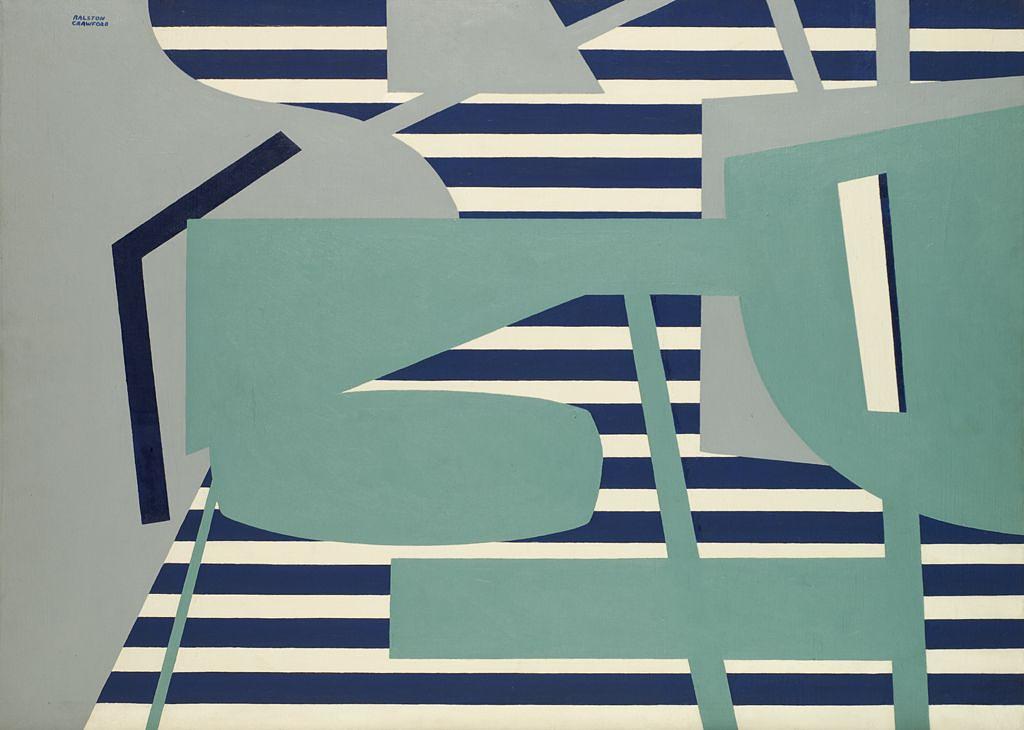
Sanford Tanks 2, St. Petersburg to Tampa, Electrification, Pawn Shop, 3rd Avenue 2, Poydras Street Coffee Wharf, Kewalo Close-Up, Factory with Lights, Blue And White, Lights in an Aircraft Plant a 3rd Avenue Elevated. Hodnocení výše uvádí rok a muzeum pro každé z nich.

Kolik známých děl má autor Ralston Crawford?Odhalit odpověď

Náš katalog obsahuje 23 děl umělce Ralston Crawford z let 1936 až 1973.

Kde lze vidět nejznámější originály umělce Ralston Crawford?Odhalit odpověď

Většinou v Art Institute of Chicago (Chicago). V tabulce muzeí výše jsou vypsány všechny.

V jakém období vytvořil(a) Ralston Crawford svá nejznámější obrazy?Odhalit odpověď

V období 1950s: 6 z celkem 20 děl na této stránce vzniklo právě tehdy, z toho 3rd Avenue Elevated z nich.

Který slavný obraz od Ralston Crawford je nejstarší a který nejnovější?Odhalit odpověď

Na této stránce je nejstarší dílo z Electrification (1936) a nejnovější z Croix De Vie Memories (1973).

Ralston Crawford: portrét umělce

Ralston Crawford: Pioneer of Geometric Abstraction

Ralston Crawford (1906-1978) stands as a pivotal figure in American abstract art, recognized for his masterful blend of precisionist observation and geometric exploration. Born September 5, 1906, in St. Catharines, Ontario, Canada, Crawford’s artistic journey began amidst the industrial landscapes of Buffalo, New York—a formative experience that would profoundly shape his visual vocabulary. His early studies at Otis Art Institute in California laid the groundwork for a distinctive style characterized by sharp realism alongside an increasingly sophisticated embrace of abstraction.
  • Early Influences: Crawford’s initial artistic endeavors mirrored the stylistic concerns of precisionist artists like Niles Spencer and Charles Sheeler, capturing the stark beauty of factories, bridges, and shipyards with meticulous detail. These works demonstrated a commitment to representing tangible realities with unwavering accuracy.
  • The Bauhaus Impact: A pivotal encounter with the Bauhaus school in Germany during his travels broadened Crawford’s artistic horizons. Exposure to the pioneering ideas of Piet Mondrian and Wassily Kandinsky instilled in him a fascination for geometric abstraction—a stylistic shift that would become central to his oeuvre.
  • Exploring Diverse Subjects: Beyond industrial scenes, Crawford pursued explorations into other realms of experience. His visits to Spain documented the fervor of bullfighting and the solemn rituals of Holy Week in Seville, while New Orleans captivated him with its vibrant jazz culture and distinctive cemeteries—subjects that demanded a new visual language beyond mere representation.

Geometric Abstraction and Nuclear Witness

Crawford’s artistic evolution culminated in his embrace of geometric abstraction during the mid-1940s, spurred by assignments from Fortune magazine to record the detonation of atomic weapons at Bikini Atoll. This experience served as a catalyst for rethinking visual representation altogether. As Crawford eloquently stated, “I don't feel obligated to reveal the forms. They may be totally absent to the viewer of the work, or even to myself, but what is there, however abstract, grows out of something i have seen.” He sought to distill essence into simplified geometric shapes—a deliberate departure from traditional realism—reflecting a profound engagement with the anxieties and transformations of the postwar era.
  • Notable Works: Among Crawford’s most celebrated pieces are “Electrification,” depicting an industrial plant bathed in stark light, and “Lights in an Aircraft Plant,” capturing the rhythmic repetition of machinery. These works exemplify his masterful manipulation of geometric forms to convey mood and atmosphere.
  • Recognition and Legacy: Crawford's artistic achievements garnered considerable acclaim throughout his career, securing his place within the pantheon of American abstract painters. His artworks are proudly displayed in prominent museums across the United States and beyond—including Honolulu Museum of Art, Metropolitan Museum of Art, Museum of Modern Art, Whitney Museum of American Art, Walker Art Center, and Toledo Museum of Art—testaments to the enduring power of his vision.

A Quiet Reflection on Place and Memory

Crawford’s artistic legacy extends beyond stylistic innovation; it encompasses a deep sensitivity to place and memory. His final resting place is St. Louis Cemetery No. 3 in New Orleans, alongside the graves of numerous Catholic saints—a location that served as inspiration for several paintings exploring themes of spirituality and decay. Crawford's work continues to resonate with viewers today, inviting contemplation on the relationship between observation, abstraction, and the human experience.