Pierre Joseph Dedreux-Dorcy (1789–1874): A Parisian Painter Caught Between Romanticism and Realism
Pierre Joseph Dedreux-Dorcy, born in Paris in 1789, was a French genre painter whose artistic career unfolded amidst the turbulent currents of the Romantic era. He emerged from the shadow of his architect brother, Pierre Anne Dedreux (a Prix de Rome laureate), and benefited from familial connections that fostered an environment conducive to artistic pursuits. Influenced by the stylistic rigor of Greuze—particularly evident in works like ‘Bajazet et le berger’ housed in Bordeaux—Dorcy skillfully blended classical elegance with psychological depth, establishing himself as a prominent figure within Parisian art circles.
- Early Life and Training:
Dedreux-Dorcy received his initial artistic education under Jean-Baptiste Guérin, a celebrated portraitist who championed the Neoclassical style.
Guérin’s influence profoundly shaped Dorcy's formative years, instilling in him a meticulous attention to detail and an appreciation for idealized beauty. This foundational training would prove crucial in shaping his subsequent artistic endeavors.
Collaboration with Géricault: A Shared Vision of Emotion
Dorcy’s artistic partnership with Eugène Louis Giracault—a relationship marked by mutual admiration and intellectual exchange—represents a cornerstone of his oeuvre. Their collaboration on ‘La Baigneuse,’ a monumental canvas depicting a nude bathing woman, exemplifies the Romantic preoccupation with capturing raw emotion and confronting societal taboos. Dorcy's contribution to this ambitious project underscored his commitment to portraying human experience with unflinching honesty and sensitivity.
- The Raft of the Medusa: A Triumph of Dramatic Narrative:
Perhaps Dorcy’s most celebrated achievement was his acquisition of Théodore Géricault's masterpiece, ‘The Raft of the Medusa,’ for the Louvre.
This momentous purchase—secured through a spirited bidding war—solidified Dorcy’s reputation as an astute collector and demonstrated his unwavering belief in the transformative power of art. He famously refused offers to resell the painting at triple its original price, prioritizing artistic integrity over financial gain.
Style and Technique: Balancing Idealization with Observation
Dorcy’s artistic style is characterized by a harmonious blend of Neoclassical refinement and Romantic expressive fervor. He meticulously rendered figures with anatomical accuracy—a hallmark of Greuze's influence—yet infused his compositions with palpable emotion, conveying psychological nuances that resonated deeply with audiences. Dorcy skillfully employed chiaroscuro—the dramatic interplay of light and shadow—to heighten visual impact and imbue his paintings with a sense of theatrical grandeur.
- Notable Works:
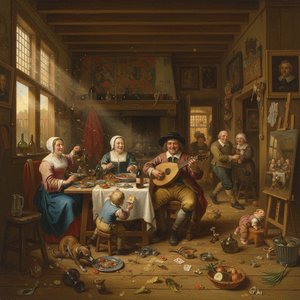
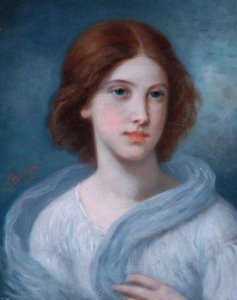
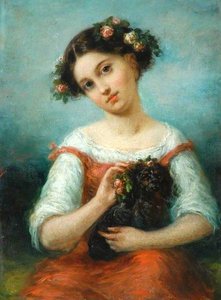
Among Dorcy’s prolific output are numerous portraits capturing the likenesses of prominent figures of his time, as well as genre scenes depicting everyday life with remarkable realism.
His paintings continue to captivate viewers today, offering glimpses into the artistic sensibilities of a bygone era and cementing his legacy as one of France’s most accomplished Romantic painters.
Legacy and Historical Significance
Pierre Joseph Dedreux-Dorcy's contribution to French art history extends beyond his individual masterpieces. He embodied the spirit of artistic innovation during a period marked by profound social and intellectual upheaval—a testament to the enduring power of creativity in confronting societal challenges. His unwavering devotion to portraying human emotion with compassion and integrity ensured that Dorcy’s work would resonate across generations, securing his place among the luminaries of Romantic painting.