


1


Aktualizováno listopad 2026 · seřazeno podle našeho skóre popularity (vyhledávání, návštěvy a objednávky u každého díla) · 8 děl umělce Philippe-Jacques van Bree v našem katalogu
Stručně řečeno
Z všech originálů, které Philippe-Jacques van Bree zanechal, je nejslavnější Mary Stuart at the Moment When She is Come to be Taken to Her Death (1819). Hned za ním následují Interior of the Studio of Van Dael and his students at the Sorbonne (1816) a Replica of 'Interior of the Studio of Van Dael and his students at the Sorbonne' (1816). Náš katalog obsahuje 8 děl umělce Philippe-Jacques van Bree; galerie si zachovala 8 děl, která obdivuje celý svět, přičemž každé je znázorněno s datem vzniku, názevem muzea a jeho příběhem.


5 muzea, v nichž je umístěno nejvíce obrazů z této stránky.
| Muzeum | Město | Díla autora Philippe-Jacques van Bree | Obrazy z tohoto seznamu |
|---|---|---|---|
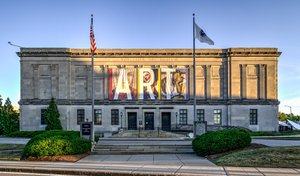 Worcester Art Museum |
Worcester | 2 | Interior of the Studio of Van Dael and his students at the Sorbonne, Replica of 'Interior of the Studio of Van Dael and his students at the Sorbonne' |
 Královské muzeum výtvarného umění Antverpy |
Antverpy | 2 | Abdiction of Charles V, Rubble of the burned-down Stapelhuis, former St.-Michielsabdij in Antwerpen |
 Rubens House |
Antverpy | 1 | Tribute from Antwerp to P.P. Rubens |
 Královské muzea krásných umění v Belgii |
Brusel | 1 | The Youth of future Pope Sixtus V |
 Museum of Fine Arts Ghent (MSK) |
Ghent | 1 | Child's Head |
Vyberte si dekádu a prohlédněte si originál, který ji definuje.
Mary Stuart at the Moment When She is Come to be Taken to Her Death (1819). Následují Interior of the Studio of Van Dael and his students at the Sorbonne (1816) a Replica of 'Interior of the Studio of Van Dael and his students at the Sorbonne' (1816).
33 let: dílo Mary Stuart at the Moment When She is Come to be Taken to Her Death pochází z roku 1819 a Philippe-Jacques van Bree se narodil/a v roce 1786.
Náš katalog obsahuje 8 děl umělce Philippe-Jacques van Bree z let 1816 až 1835.
Většinou v Worcester Art Museum (Worcester), Královské muzeum výtvarného umění Antverpy (Antverpy) a Rubens House (Antverpy). V tabulce muzeí výše jsou vypsány všechny.
V období 1810s: 3 z celkem 8 děl na této stránce vzniklo právě tehdy, z toho Mary Stuart at the Moment When She is Come to be Taken to Her Death z nich.
Na této stránce je nejstarší dílo z Interior of the Studio of Van Dael and his students at the Sorbonne (1816) a nejnovější z Tribute from Antwerp to P.P. Rubens (1835).
Interior of the Studio of Van Dael and his students at the Sorbonne a Replica of 'Interior of the Studio of Van Dael and his students at the Sorbonne': muzeum Worcester Art Museum, Worcester má v obsluze 2 děl z této stránky.
To look at the work of Philippe-Jacques van Bree is to see a man obsessed with structure. Born in Antwerp in 1786, he did not merely paint; he studied the bones of buildings and the weight of history. His training was rigorous and geographically wide, spanning from his beginnings in Antwerp to the studios of Paris and the ancient streets of Rome. In Paris, he worked under Anne-Louis Girodet de Roussy-Trioson, a connection that anchored his technical approach in a specific academic discipline. He did not rely on vague inspiration but on the hard lessons learned while traversing Germany and England.
His output was defined by a heavy focus on architectural subjects and historical scenes. There is a particular gravity in his View of the Interior of the Church of St. Peter at Rome, a work so precise that the Belgian Government purchased it and awarded him a gold medal. This was not art for the sake of decoration; it was an exercise in spatial accuracy. He understood how light interacts with stone and how scale dictates human emotion within a cathedral.
Van Bree’s importance extends beyond the canvas into the very preservation of Belgian art. His appointment as the conservator of the Royal Museums of Fine Arts in Brussels proves he possessed a technical eye capable of judging the work of others. He was a man of many disciplines, functioning as a painter, scholar, and architectural specialist. This multifaceted identity allowed him to navigate both the creative and the institutional worlds with equal authority.
His subject matter often drifted into the realm of the "fancy" or the historical, yet he maintained a disciplined hand. Some of his notable subjects included:
He died in Saint-Josse-ten-Noode in 1871. By then, he had left behind a legacy of institutional stability and a body of work that prioritized the physical reality of the subjects he chose to depict. He was not interested in the ephemeral; he painted what could be measured, documented, and preserved.