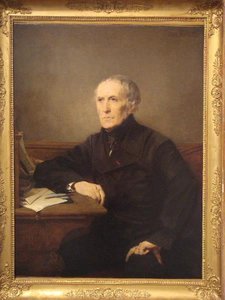
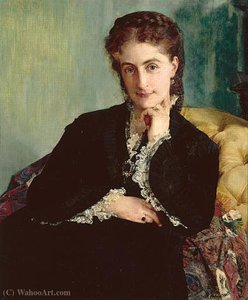
Portrét Paul-Jacques-Aimé Baudry

42 nejslavnějších obrazů autora Paul-Jacques-Aimé Baudry, každý naprosto unikátní

Aktualizováno listopad 2026 · seřazeno podle našeho skóre popularity (vyhledávání, návštěvy a objednávky u každého díla) · 46 děl umělce Paul-Jacques-Aimé Baudry v našem katalogu

Stručně řečeno

Young Saint John the Baptist (1860) je obraz autora Paul-Jacques-Aimé Baudry, který přitahuje nejvíce pohledů; originál se nachází v Musée d'Orsay, Paříž. Poté se zrak přesouvá k Zenobie retrouvee par les bergers sur les bords a The Vision of Saint Hubert (1882). Z 46 děl umělce Paul-Jacques-Aimé Baudry v našem katalogu je těchto 42 těch nejznámějších; každé z nich je unikátním originálem s uvedením roku vzniku, muzea a důvodu jeho nesmrtelnosti.

1828 – 1886, La Roche-sur-Yon Academic painting Nejvíce děl: Musée Condé

Top 10 obrazů autora Paul-Jacques-Aimé Baudry podle výběru galerie

1
Young Saint John the Baptist (1860) od Paul-Jacques-Aimé Baudry

Young Saint John the Baptist

1860 · Oil On Canvas · Musée d'Orsay, Paříž

A young child stands alone within the quiet embrace of a woodland glade, his small figure anchored by a sense of profound stillness. This is the young Saint John the Baptist, caught in a moment of soft, naturalistic solitude. He holds a wooden staff that cuts a diagonal path across the vertical composition, a structural element that guides the eye toward the small banner attached to it. On this scrap…

2
Zenobie retrouvee par les bergers sur les bords od Paul-Jacques-Aimé Baudry

Zenobie retrouvee par les bergers sur les bords

Oil On Canvas

Zenobie retrouvee par les bergers sur les bords is a painting by Paul-Jacques-Aimé Baudry. The work depicts Zenobia, a Queen of Armenia, in a moment of significant distress. Following a revolt, Zenobia was fleeing alongside her husband. The narrative captured in the scene centers on the moment she was found wounded by shepherds at the River Araxes. This discovery occurs after Zenobia had requested that her husband kill her to…

3
The Vision of Saint Hubert (1882) od Paul-Jacques-Aimé Baudry

The Vision of Saint Hubert

1882 · Oil On Canvas · Musée Condé, Chantilly

The scene unfolds in 1882, capturing a moment of divine interruption within a dense forest. In The Vision of Saint Hubert, the artist Paul-Jacques-Aimé Baudry presents the transformative encounter of Saint Hubert, a pagan hunter. The air seems to hold its breath as the hunter faces a stag, a creature marked by a luminous cross that pierces the shadows of the woods. This celestial sign marks the exact instant of…

4
Venus Playing with Cupid (1858) od Paul-Jacques-Aimé Baudry

Venus Playing with Cupid

1858 · Oil On Canvas · Musée Condé, Chantilly

Venus Playing with Cupid by Paul-Jacques-Aimé Baudry presents a mythological scene centered within an oval frame. In the foreground, the figure of Venus reclines, her form partially covered by blue fabric. A small Cupid is positioned near her upper body, engaging in direct interaction with her. To the left of the central figures, a white bird, likely a dove, is captured in flight above a wooden structure or chair. The…

6
Portrait of Charles Garnier (1868) od Paul-Jacques-Aimé Baudry

Portrait of Charles Garnier

1868 · Oil On Canvas · Musée d'Orsay, Paříž

Paul-Jacques-Aimé Baudry painted the Portrait of Charles Garnier in 1868. The work is an oil on canvas portrait of the architect Charles Garnier. It captures the subject in a three-quarter length view, presenting him as a figure of intellectual gravity.

7
The Coronation of the Woman (1883) od Paul-Jacques-Aimé Baudry

The Coronation of the Woman

1883 · Gouache · Musée Victor Hugo, Paříž

The Coronation of the Woman was executed by Paul-Jacques-Aimé Baudry around 1883. The artist, born in 1828 in La Roche-sur-Yon, France, was a prominent figure in the French academic tradition. His career spanned the transition between the Second Empire and the early Third Republic, a period marked by significant shifts in Parisian decorative arts and institutional painting.

8
Studies of Antique Horsemen, after Charles Le Brun (1886) od Paul-Jacques-Aimé Baudry

Studies of Antique Horsemen, after Charles Le Brun

1886 · Gouache · Musée Carnavalet, Paříž

This preparatory study, executed in 1886, captures a group of armored horsemen in a state of rapid, diagonal movement. The composition is tightly packed, focusing on the physical tension between the riders and their mounts. Several soldiers are depicted in Roman-style military attire, wearing crested helmets known as galea and heavy tunics. The horses are shown in mid-stride, their musculature defined by gestural lines that suggest the weight and power…

9
Study of a Horse and a Fallen Rider, after Le Brun (1886) od Paul-Jacques-Aimé Baudry

Study of a Horse and a Fallen Rider, after Le Brun

1886 · Oil On Board · Musée Carnavalet, Paříž

The scene unfolds in 1886, captured through the focused lens of an oil study titled Study of a Horse and a Fallen Rider, after Le Brun. In this moment of intense physical struggle, the artist Paul-Jacques-Aimé Baudry translates a sense of chaotic movement onto the surface. The work breathes with the tension of a sudden, violent descent, freezing a fragment of action that feels as though it might continue to…

Slavná díla umělce Paul-Jacques-Aimé Baudry, čísla 11 až 42

Slavná díla Paul-Jacques-Aimé Baudry podle jednotlivých období

Motivy, které zaujaly Paul-Jacques-Aimé Baudry

Čtyři témata, která se v těchto originálech nejčastěji objevují, z nichž každé má svůj nejlepší příklad.

Muzea, v nichž jsou vystavena originálna umělce Paul-Jacques-Aimé Baudry

8 muzea, v nichž je umístěno nejvíce obrazů z této stránky.

Muzeum Město Díla autora Paul-Jacques-Aimé Baudry Obrazy z tohoto seznamu
Musée Condé, ChantillyMusée Condé Chantilly 4 The Vision of Saint Hubert, Venus Playing with Cupid, Enlevement de Psyche
Musée d'Orsay, PařížMusée d'Orsay Paříž 3 Young Saint John the Baptist, Portrait of Charles Garnier, Wealth and young child
Musée Carnavalet, PařížMusée Carnavalet Paříž 3 Studies of Antique Horsemen, after Charles Le Brun, Study of a Horse and a Fallen Rider, after Le Brun, Study of a Horse for the Equestrian Portrait of Comte de Palikao
Petit Palais, PařížPetit Palais Paříž 2 Sketch for the Salle des Audiences of the Cour de Cassation of Paris: Glorification of the Law, Mrs. Louis Singer, born Theresa Stern
Musée d'Arts de Nantes, NantesMusée d'Arts de Nantes Nantes 2 Mrs. louis cézard, The penitent Madeleine
Museum of Fine Arts Ghent (MSK), GhentMuseum of Fine Arts Ghent (MSK) Ghent 1 Portrait of a Man
Musée Victor Hugo, PařížMusée Victor Hugo Paříž 1 The Coronation of the Woman
Indianapolis Museum of Art, IndianapolisIndianapolis Museum of Art Indianapolis 1 Study for an Architectural Decoration

Paul-Jacques-Aimé Baudry napříč desetiletími: jeden unikátní originál pro každou dekádu

Díla podle dekád

Vyberte si dekádu a prohlédněte si originál, který ji definuje.

Obrazy umělce Paul-Jacques-Aimé Baudry: dotazy pro galerii

Kterým nejznámějším dílem je Paul-Jacques-Aimé Baudry?Odhalit odpověď

Young Saint John the Baptist (1860), Musée d'Orsay, Paříž. Následují Zenobie retrouvee par les bergers sur les bords a The Vision of Saint Hubert (1882).

V jakém věku vytvořil(a) Paul-Jacques-Aimé Baudry dílo Young Saint John the Baptist?Odhalit odpověď

32 let: dílo Young Saint John the Baptist pochází z roku 1860 a Paul-Jacques-Aimé Baudry se narodil/a v roce 1828.

Kterých deset obrazů autora Paul-Jacques-Aimé Baudry je nejznámějších?Odhalit odpověď

Young Saint John the Baptist, Zenobie retrouvee par les bergers sur les bords, The Vision of Saint Hubert, Venus Playing with Cupid, Portrait of a Man, Portrait of Charles Garnier, The Coronation of the Woman, Studies of Antique Horsemen, after Charles Le Brun, Study of a Horse and a Fallen Rider, after Le Brun a Ships in the Harbor. Hodnocení výše uvádí rok a muzeum pro každé z nich.

Kolik známých děl má autor Paul-Jacques-Aimé Baudry?Odhalit odpověď

Náš katalog obsahuje 46 děl umělce Paul-Jacques-Aimé Baudry z let 1853 až 1886.

Kde lze vidět nejznámější originály umělce Paul-Jacques-Aimé Baudry?Odhalit odpověď

Většinou v Musée Condé (Chantilly), Musée d'Orsay (Paříž) a Musée Carnavalet (Paříž). V tabulce muzeí výše jsou vypsány všechny.

V jakém období vytvořil(a) Paul-Jacques-Aimé Baudry svá nejznámější obrazy?Odhalit odpověď

V období 1880s: 5 z celkem 42 děl na této stránce vzniklo právě tehdy, z toho The Vision of Saint Hubert z nich.

Který slavný obraz od Paul-Jacques-Aimé Baudry je nejstarší a který nejnovější?Odhalit odpověď

Na této stránce je nejstarší dílo z Ships in the Harbor (1853) a nejnovější z Studies of Antique Horsemen, after Charles Le Brun (1886).

Jakým tématům se Paul-Jacques-Aimé Baudry věnoval/a nejčastěji?Odhalit odpověď

Nude figure (5), Woman (3) a Landscape (3) napříč 42 díly na této stránce.

Jaké materiály používal(a) Paul-Jacques-Aimé Baudry nejčastěji?Odhalit odpověď

Oil On Canvas, u 7 z 42 děl na této stránce.

K kterému směru patří dílo umělce Paul-Jacques-Aimé Baudry?Odhalit odpověď

Academic painting, podle originálů na této stránce.

Jaká originální díla Paul-Jacques-Aimé Baudry mohu vidět v Musée Condé?Odhalit odpověď

The Vision of Saint Hubert, Venus Playing with Cupid a Enlevement de Psyche: muzeum Musée Condé, Chantilly má v obsluze 4 děl z této stránky.

Paul-Jacques-Aimé Baudry: portrét umělce

Paul-Jacques-Aimé Baudry: Elegance and Myth in the Heart of Paris

Paul-Jacques-Aimé Baudry, narozený 7. listopadu 1828 v klidném městečku La Roche-sur-Yon ve Francii, byl umělec, jehož život a dílo jsou plná elegance, klasického citu a fascinujícího spojení s italským uměním. Pocházel z rodiny řemeslníka – jeho otec byl kůrník – což mu poskytlo praktické vzdělání, ale zároveň jeho rodina rozpoznala a podporovala jeho umělecký talent, což se ukázalo jako klíčové pro jeho pozdější úspěch. Jeho rané roky strávil studiem lokálně, než v roce 1845 odcestoval do Paříže, rozhodující okamžik, který definoval jeho kariéru a vedl ho k mezinárodnímu uznání. Zapsal se na prestižní École des Beaux-Arts pod vedením Michela Martina Drollinga, kde se ponořil do náročných akademických tradic doby, což mu vštěpilo důraz na technickou zručnost a klasické ideály – principy, které zůstaly centrální pro jeho uměleckou praxi po celý život. Jeho největším úspěchem bylo získání Prix de Rome v roce 1850 za obraz *Zenobia Found by Shepherds on the Banks of the Araxes*. Tento prestižní titul mu zajistil stipendium k studiu na francouzské akademii v Římě, zkušenost, která hluboce ovlivnila jeho estetické cítění a uměleckou vizi.

Římská Reverence a Vznik Stylu

Řím se stal jeho坩lem, místem, kde absorboval pompéznost renesančního a barokního umění. Pečlivě studoval mistrovské díla – Titiana, Veronese a především Correggio – což umožnilo jejich vliv proniknout do jeho vlastního uměleckého zobrazení. Gráce a smyslnost charakteristické pro Correggiov styl rezonovaly s Baudryovým citem, manifestovaly se ve jemných formách a zářivých barvách, které se staly charakteristickými rysy jeho stylu. Tato italská exkurze nebyla jen o napodobování; byla to proces asimilace a zdokonalení. Syntetizoval klasické principy s vlastním vrozeným talentem, čímž vytvořil jedinečnou uměleckou řeč. Po návratu do Paříže začal vystavovat pravidelně na salonu, rychle získávaje uznání pro své mytologické a fantastické motivy. Jeho rané díla, jako *The Pearl and the Wave* (1862), ukazují jeho vyvíjející se styl – kombinaci akademické preciznosti a romantického vnímání. I když krátce experimentoval s historickými obrazy, jako je *Charlotte Corday after the Murder of Marat* (1861), Baudry se stále více přitahoval k mytologickým příběhům a portrétům, kde mohl plně vyjádřit své umělecké silné stránky.

Portréty, Fresky a Dědictví Dekorace

Baudryův talent však neskončil jen na plátnech; prokázal se v zachycení podobností významných osobností, vytvářel portréty lidí jako François Guizot a Charles Garnier, které odhalovaly nejen fyzické podobnost, ale také charakter a inteligenci. Jeho největším úspěchem však byly monumentální nástěnná malba, která mu zajistila pozici vedoucího umělce v 2. polovině 19. století a na začátku 30. let. Obdržel zakázky pro prestižní lokality po Paříži – Court of Cassation, Château de Chantilly, soukromé rezidence jako Hôtel Fould a hôtel Paiva. Ale to Opera Garnier poskytla Baudrymu největší příležitost. Po dobu deseti let se nechal zasvést do zdobení foyer s více než třicítí obrazů zobrazujících historii hudby. Tyto fresky jsou považovány za jeho mistrovské dílo – ohromující zobrazení umělecké dovednosti, imaginativní kompozice a zářivých barev. Přeobrazily prostor v oslavu samotného umění, etablují Baudryho jako mistra dekorativního malířství.

Uznání a Trvalý Vliv

Uznání, které Baudry získal, nebyla jen populární; bylo to institucionální – s jeho zvolením do Académie des Beaux-Arts, kde vystřídal Jean Victora Schnetze. Tento titul upevnil jeho pozici v francouzském uměleckém prostředí a uznal jeho významný přínos k uměleckému světu. Pokračoval ve své tvorbě až do své smrti v Paříži 17. ledna 1886. Pohřben byl v Père Lachaise Cemetery, kde je mu památná socha od Gérôme. Jeho dílo zůstává důležité pro pochopení uměleckého kontextu 19. století ve Francii. Představuje most mezi tradičním akademickým uměním a vzestupujícími moderními styly, ztělesňuje eleganci, technickou zručnost a narativní ambici, které charakterizovaly jeho éru. Jeho fresky v Oper Garnier pokračují inspirovat úžas a obdiv, slouží jako trvalý důkaz jeho dovedností a vize – živý odraz umělce, který zanechal jméno v srdci pařížského uměleckého dědictví.

Trvalý Dojem

  • Akademická Preciznost: Baudryho dílo exemplifikuje přísné školení a technickou zručnost charakteristické pro akademické malířství.
  • Klasické Motivy: Jeho témata často čerpala inspiraci z mytologie, historie a portrétů, což odráželo hluboké zapojení do klasických ideálů.
  • Dekorativní Grandeur: Jeho nástěnná malba, zejména ta v Oper Garnier, ukazuje jeho schopnost vytvářet pohlcující a vizuálně ohromující prostředí.
  • Italský Vliv: Vliv renesančního a barokního umění, zejména Correggio, je patrný ve jemných formách a zářivých barvách.
  • Historický Kontext: Baudryho kariéra se rozvíjela v období významné umělecké transformace, která most mezi tradičním akademickým uměním a vzestupujícími moderními styly.