A Pioneer of Industrial Textile Printing
Marie Christine Mathea Gudme Leth (October 5, 1895 – December 17, 1997) stands as a remarkable figure in Danish art history—a woman who fundamentally reshaped the landscape of textile printing and championed its transformation into an industrially viable craft. Born in Aarhus, Denmark, her artistic journey began with formal training at the Industrial Arts and Crafts School for Women before she pursued higher education at the Royal Danish Academy of Fine Arts, where she honed her skills in painting and design. However, Leth’s true legacy resides not merely in her artistic pursuits but in her groundbreaking contribution to industrial production techniques.
- Early Influences & Education:
Leth's formative years were marked by a fascination with craftsmanship and experimentation. She traveled extensively, immersing herself in diverse cultures and artistic traditions—a journey culminating in three years spent studying batik in Java, Indonesia. This experience profoundly impacted her aesthetic sensibilities, introducing her to the intricate patterns and techniques of Indonesian wax resist printing. Her ambition wasn’t simply to create beautiful textiles; it was to elevate textile printing to the same level of prestige accorded to other established crafts.
The Birth of Dansk Kattuntrykkeri & Artistic Innovation
Driven by her conviction that textile printing deserved greater recognition, Leth embarked on a transformative endeavor in 1935—the establishment of Dansk Kattuntrykkeri (Danish Calico Printing Factory), alongside fellow artist Rolf Middleboe. This collaborative venture represented a pivotal moment: it harnessed the power of industrial methods to revolutionize textile printing, overcoming traditional limitations and unlocking unprecedented possibilities for scale and efficiency. Leth’s studio flourished in 1940, fostering creativity and nurturing talent through instruction at the Arts and Crafts School, where she mentored artists like Dorte Raachou—individuals who would later become prominent figures in Danish art.
- Distinctive Artistic Style:
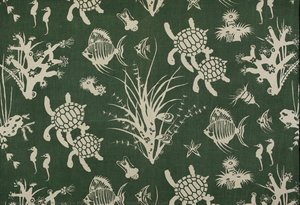
Leth’s artistic style was characterized by a deliberate simplicity—often employing two shades of a single color, predominantly blues and greens—to achieve striking visual impact. Her block print creations, such as “Jagten,” “Landsby,” and “Mexico,” reflected her deep connection to Danish landscapes and traditions. She skillfully blended influences from her travels abroad with her own artistic vision. Notably, she created garden animal prints featuring frogs, snails, and snakes—subjects imbued with symbolic significance reflecting the natural world. When utilizing screen printing, Leth expanded upon her block print patterns, transforming them into silhouette-like prints like “Orkidé,” which harmoniously combined Danish plant designs with motifs drawn from primeval forests.
Geometric Precision & Artistic Evolution
As Leth progressed in her artistic career, she moved away from freehand experimentation and embraced geometric patterns—a stylistic shift influenced by her visit to Ravenna, Italy, where she encountered ancient mosaics. These mosaics served as inspiration for her designs, demonstrating an appreciation for structured beauty and visual harmony. Her later explorations included influences from Turkey, furthering her artistic repertoire.
Legacy & Historical Significance
Marie Gudme Leth’s contribution to Danish art extends far beyond her individual artworks. She fundamentally altered the trajectory of textile printing, establishing it as a respected craft and paving the way for industrial production techniques. Her enduring influence can be seen in the work of subsequent generations of artists—a testament to her pioneering spirit and unwavering dedication to artistic innovation. Leth’s legacy continues to inspire designers and artisans today, cementing her place as one of Denmark's most influential textile artists.