


1


Aktualizováno listopad 2026 · seřazeno podle našeho skóre popularity (vyhledávání, návštěvy a objednávky u každého díla) · 7 děl umělce Madiha Omar v našem katalogu
Stručně řečeno
Letters Tell (1950) je obraz autora Madiha Omar, který přitahuje nejvíce pohledů; originál se nachází v Ibrahimi Collection, Ammán. Poté se zrak přesouvá k Fountain Of Tears (1979) a Colours at Sea. Z 7 děl umělce Madiha Omar v našem katalogu je těchto 7 těch nejznámějších; každé z nich je unikátním originálem s uvedením roku vzniku, muzea a důvodu jeho nesmrtelnosti.

In the hauntingly beautiful Fountain Of Tears, created in 1979 by the visionary Syrian-Iraqi artist madiha omar, we are invited to witness a seascape that defies the boundaries of reality. The artwork presents an unsettling yet mesmerizing dreamscape where the ocean is not merely water, but a living, breathing entity of myth and memory. At the heart of this composition lies a massive, octopus-like creature, its undulating limbs intertwining with…


The composition presents a nocturnal landscape under a sky filled with stars. In the foreground, a person stands positioned before a doorway that opens toward the exterior. Several other figures are distributed throughout the space, some located in the immediate foreground and others placed further into the distance. To the left, horses are situated near the edge of the frame, while cows occupy the central area of the scene. A…


Muzeum s největším počtem obrazů na této stránce.
| Muzeum | Město | Díla autora Madiha Omar | Obrazy z tohoto seznamu |
|---|---|---|---|
 Ibrahimi Collection |
Ammán | 7 | Letters Tell, Fountain Of Tears, Colours at Sea |
Vyberte si dekádu a prohlédněte si originál, který ji definuje.
In the hauntingly beautiful Fountain Of Tears, created in 1979 by the visionary Syrian-Iraqi artist madiha omar, we are invited to witness a seascape that defies the boundaries of reality. The artwork presents an unsettling yet mesmerizing dreamscape where the ocean is not merely water, but a living, breathing entity of myth and memory. At the heart of this composition lies a massive, octopus-like creature, its undulating limbs intertwining with…
Letters Tell (1950), Ibrahimi Collection, Ammán. Následují Fountain Of Tears (1979) a Colours at Sea.
42 let: dílo Letters Tell pochází z roku 1950 a Madiha Omar se narodil/a v roce 1908.
Náš katalog obsahuje 7 děl umělce Madiha Omar z let 1950 až 1985.
Většinou v Ibrahimi Collection (Ammán). V tabulce muzeí výše jsou vypsány všechny.
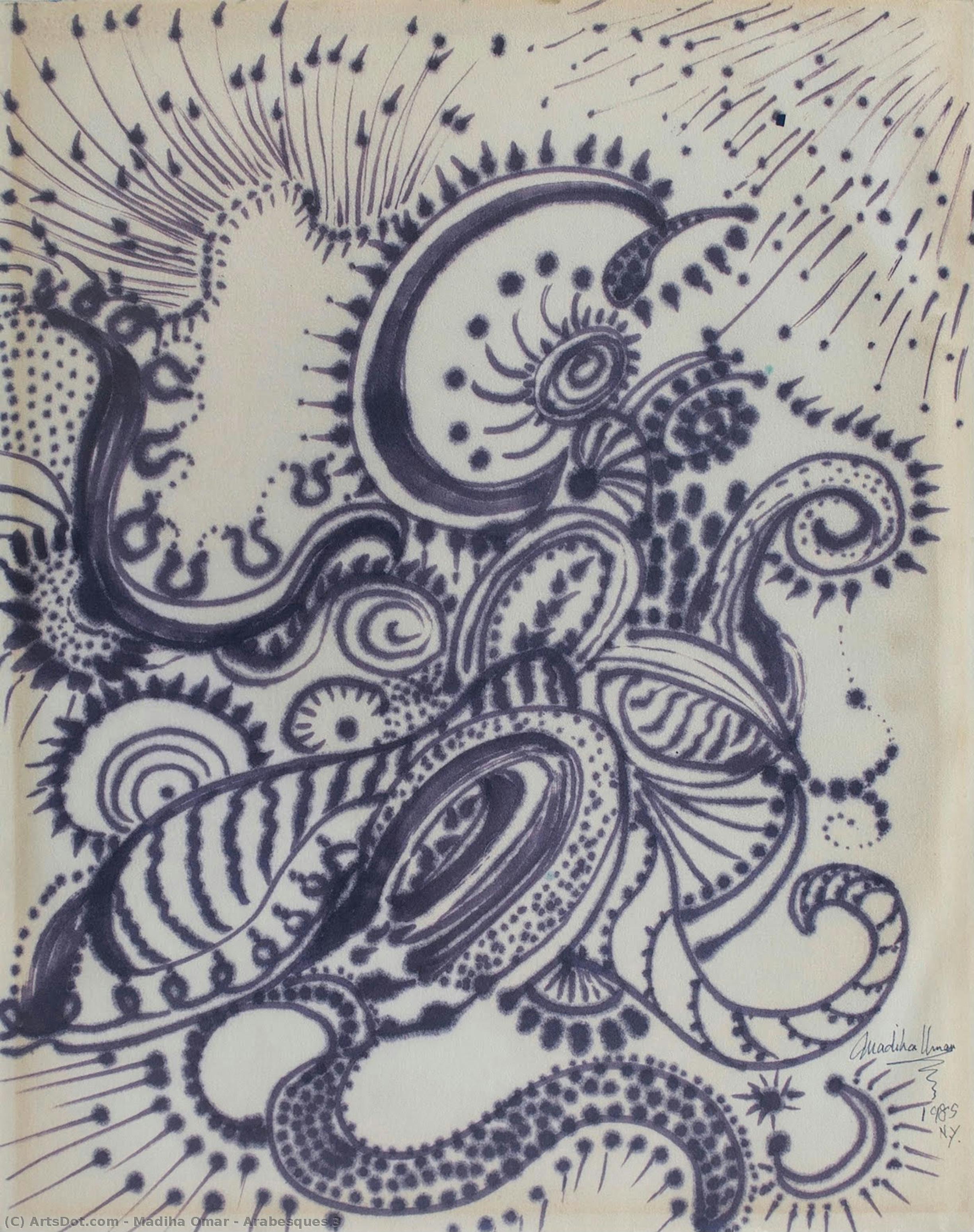
Na této stránce je nejstarší dílo z Letters Tell (1950) a nejnovější z Arabesques 3 (1985).
Letters Tell, Fountain Of Tears a Colours at Sea: muzeum Ibrahimi Collection, Ammán má v obsluze 7 děl z této stránky.
Madiha Omar stands as a monumental figure in the history of modern Arab art, a pioneer whose life and work bridged the cultural landscapes of the Levant, Europe, and America. Born in Aleppo, within the multicultural tapestry of the Ottoman Empire, her heritage was a rich blend of Circassian and Syrian roots. This early exposure to diverse traditions likely laid the foundation for an artistic language that would eventually transcend borders. Though her journey began in Syria, her family moved to Iraq during her childhood, a transition that would see her become a naturalized Iraqi citizen and a central figure in the burgeoning Mesopotamian art scene.
Her educational path was as cosmopolitan as her identity. From the Sultaniyya School in Istanbul to the Maria Grey Training College in London, Omar’s training was rigorous and international. She was a woman of remarkable distinction, becoming the first female recipient of a scholarship from the Iraqi government to study in Europe. This academic journey, which also included studies at George Washington University and the Corcoran School of Art in Washington, allowed her to absorb the nuances of Western technique while maintaining a profound connection to her Eastern roots.
Madiha Omar is most celebrated for her revolutionary approach to the canvas, specifically her role as a precursor to the Hurufiyya movement. She was among the first Arab artists to masterfully integrate the rhythmic beauty of Arabic calligraphy with the expressive freedom of abstract art. This innovation was not merely a stylistic choice but a profound exploration of identity and form. While living in Washington, inspired by the scholarly work of Nabia Abbott on Arabic calligraphy, she began to experiment with the possibilities of incorporating letters into her paintings, treating the script not just as language, and text, but as an organic, aesthetic element.
Her technical mastery often involved a captivating dialogue between texture and light. In works such as Fountain Of Tears, one can witness a descent into a surreal, dreamlike seascape where the ocean becomes a living entity of myth. Her use of the impasto technique—applying paint in thick, tactile layers—creates a rugged surface that mirrors the emotional complexity of her subjects. The interplay of vibrant oranges and golden yellows against melancholic blues evokes a sense of existential movement, where the boundaries between the marine world and the human psyche blur into a single, fluid expression.
The significance of Madiha Omar’s contribution to the art world extends far beyond her individual canvases. By synthesizing the ancient tradition of calligraphy with the modern language of abstraction, she provided a blueprint for generations of artists seeking to navigate the tension between heritage and modernity. Her career was marked by significant milestones, including:
Through her work, Omar transformed the alphabet into an abstract landscape, ensuring that the cultural echoes of her past would resonate within the modern movements of the future. Her legacy remains preserved through the Madiha Umar Estate Collection, continuing to inspire awe through its profound blend of memory, myth, and movement.