Portrét Kristian Møhl

3 nejslavnějších obrazů autora Kristian Møhl, výběr z galerie

Aktualizováno listopad 2026 · seřazeno podle našeho skóre popularity (vyhledávání, návštěvy a objednávky u každého díla) · 3 děl umělce Kristian Møhl v našem katalogu

Stručně řečeno

Z všech originálů, které Kristian Møhl zanechal, je nejslavnější The Strandmølle Lake (1906), který se nachází ve sbírce Statens Museum for Kunst, Kodaň. Hned za ním následují View of Gammel and Nytorv in Copenhagen (1924) a Cushion,. Náš katalog obsahuje 3 děl umělce Kristian Møhl; galerie si zachovala 3 děl, která obdivuje celý svět, přičemž každé je znázorněno s datem vzniku, názevem muzea a jeho příběhem.

1876 – 1962, Ibsker Nejvíce děl: Statens Museum for Kunst

10 nejlepších obrazů umělce Kristian Møhl: výběr galerie

3
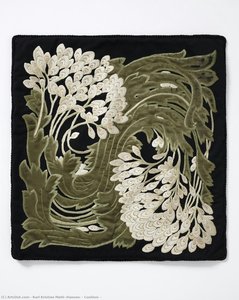
Cushion, od Kristian Møhl

Cushion,

Embroidery · Designmuseum Danmark, Kodaň

Karl Kristian Møhl-Hansen’s embroidered cushion offers a quiet departure from the dramatic, turbulent skies often found in his landscape paintings. While his canvases frequently capture the sweeping vistas of the Danish countryside, this textile work focuses on the intimate details of the natural world. The design features stylized leaves and flowers woven into complex geometric patterns, drawing heavily from Scandinavian mythology. These motifs act as symbols of fertility and the…

Muzea, v nichž jsou vystavena originálna umělce Kristian Møhl

2 muzea, v nichž je umístěno nejvíce obrazů z této stránky.

Muzeum Město Díla autora Kristian Møhl Obrazy z tohoto seznamu
Statens Museum for Kunst, KodaňStatens Museum for Kunst Kodaň 2 The Strandmølle Lake, View of Gammel and Nytorv in Copenhagen
Designmuseum Danmark, KodaňDesignmuseum Danmark Kodaň 1 Cushion,

Kristian Møhl rok po roce: originální díla, která definují každou éru

Od 1906 do 1924, Kristian Møhl tvořil po dobu 19 let: tato výběrová kolekce sleduje tuto dlouhou kariéru rok po roce prostřednictvím jeho nejlepších originálů.

Díla podle roku

Vyberte rok a prohlédněte si originály.

Otázky sběratelů o obrazech umělce Kristian Møhl

Kterým dílem je Kristian Møhl nejznámější?Odhalit odpověď

The Strandmølle Lake (1906), Statens Museum for Kunst, Kodaň. Následují View of Gammel and Nytorv in Copenhagen (1924) a Cushion,.

Kolik let bylo Kristian Møhl, když bylo vytvořeno dílo The Strandmølle Lake?Odhalit odpověď

30 let: dílo The Strandmølle Lake pochází z roku 1906 a Kristian Møhl se narodil/a v roce 1876.

Kolik obrazů zanechal(a) Kristian Møhl?Odhalit odpověď

Náš katalog obsahuje 3 děl umělce Kristian Møhl z let 1906 až 1924.

Ve kterých muzeích jsou vystavena díla mistrovská umělce Kristian Møhl?Odhalit odpověď

Většinou v Statens Museum for Kunst (Kodaň) a Designmuseum Danmark (Kodaň). V tabulce muzeí výše jsou vypsány všechny.

Jaká jsou první a poslední slavná originální díla umělce Kristian Møhl?Odhalit odpověď

Na této stránce je nejstarší dílo z The Strandmølle Lake (1906) a nejnovější z View of Gammel and Nytorv in Copenhagen (1924).

Která díla umělce Kristian Møhl jsou vystavena v Statens Museum for Kunst?Odhalit odpověď

The Strandmølle Lake a View of Gammel and Nytorv in Copenhagen: muzeum Statens Museum for Kunst, Kodaň má v obsluze 2 děl z této stránky.

Kristian Møhl: život a dílo

Karl Kristian Møhl(-Hansen) (1876-1962): A Danish Painter of Expressionist Landscapes and Decorative Arts

  • Born: Esbjerg, Denmark, 1876
  • Died: 1962
  • Other Names: Christian Møhl-Hansen, Karl Kristian M0hl(-Hansen), Christian M0hl-Hansen

Early Life and Artistic Training

  • Born Carl Christian Hansen, he later changed his name to Møhl-Hansen on February 23, 1929, and further simplified it to Møhl in 1957.
  • Brother of theologian Peter Olaf Ryberg Hansen.
  • Began as an apprentice building painter, demonstrating early practical skills.
  • Attended technical school before pursuing formal artistic training at the Royal Danish Academy of Fine Arts, enrolling on April 18, 1895. This foundational education provided him with a strong understanding of technique and composition.
  • Early career involved diverse experiences, laying groundwork for his later stylistic development.

Artistic Development and Influences

  • Møhl’s artistic journey was marked by extensive travel throughout Europe, including Italy, London, Spain, the Netherlands, and Paris. These travels exposed him to a wide range of artistic styles and cultural influences.
  • His work is generally categorized as Expressionist, characterized by its emotional intensity and subjective interpretation of reality. While influenced by broader European Expressionism, Møhl developed a distinct Danish sensibility in his landscapes.
  • While specific direct influences are not extensively documented, the prevalence of landscape painting within his oeuvre suggests an appreciation for artists depicting nature's power and beauty. The influence of the Danish Golden Age painters is also likely present, though he moved beyond their more classical approach.
  • His decorative art pieces demonstrate a keen eye for design and pattern, reflecting a broader interest in applied arts alongside fine art painting.

Major Works and Achievements

  • Møhl’s oeuvre primarily consists of landscapes, often depicting the Danish countryside with an expressive use of color and brushwork. These works capture not just the visual appearance but also the emotional atmosphere of the scenes.
  • He created decorative art pieces such as cushions, showcasing his versatility and talent for design.
  • While he didn't achieve widespread international fame during his lifetime, Møhl was a respected figure within the Danish art scene.
  • His work is represented in collections of museums like the Brücke Museum in Berlin, indicating recognition beyond Denmark.

Historical Significance and Legacy

  • Karl Kristian Møhl(-Hansen) contributes to understanding the development of Expressionism within a Scandinavian context. His landscapes offer a unique perspective on Danish nature through an emotionally charged lens.
  • His exploration of decorative arts highlights the interconnectedness between fine art and applied design in early 20th-century Denmark.
  • Møhl’s legacy lies in his ability to capture the essence of the Danish landscape with expressive power, contributing to a broader understanding of Expressionist aesthetics within Scandinavian art history. His work provides valuable insight into the artistic climate of Denmark during the first half of the 20th century.