Portrét Kchang-si

4 nejslavnějších obrazů autora Kchang-si, každý naprosto unikátní

Aktualizováno listopad 2026 · seřazeno podle našeho skóre popularity (vyhledávání, návštěvy a objednávky u každého díla) · 4 děl umělce Kchang-si v našem katalogu

Stručně řečeno

Two Figures of Ladies on Stands (1700) je obraz autora Kchang-si, který přitahuje nejvíce pohledů; originál se nachází v The Frick Collection, New York. Poté se zrak přesouvá k Portrait of the Kangxi Emperor in Informal Dress Holding a Brush (1700) a Dish with Broad Flat Rim (1722). Z 4 děl umělce Kchang-si v našem katalogu je těchto 4 těch nejznámějších; každé z nich je unikátním originálem s uvedením roku vzniku, muzea a důvodu jeho nesmrtelnosti.

1654 – 1722, Peking Nejvíce děl: The Frick Collection

Top 10 obrazů autora Kchang-si podle výběru galerie

1
Two Figures of Ladies on Stands (1700) od Kchang-si

Two Figures of Ladies on Stands

1700 · Ceramics · The Frick Collection, New York

To gaze upon these two porcelain figurines is to step directly into the refined elegance of early eighteenth-century Chinese artistry. They are not merely decorative objects; they are exquisite narratives cast in glazed ceramic, embodying an ideal vision of femininity and prosperity from a bygone era. The overall impression is one of breathtaking symmetry and meticulous craftsmanship. These figures, depicting elegant ladies poised upon ornate stands, invite the viewer into…

2
Portrait of the Kangxi Emperor in Informal Dress Holding a Brush (1700) od Kchang-si

Portrait of the Kangxi Emperor in Informal Dress Holding a Brush

1700 · Ink · Palácové muzeum, Peking

The Kangxi Emperor sits at a desk, captured in a moment of quiet intellectual engagement. Clad in a pale lavender or light grey garment, he eschews the heavy, ceremonial regalia typically associated with imperial portraiture. Instead, he holds a calligraphy brush, a gesture that emphasizes his identity as a scholar and a patron of the written word. His expression is steady, meeting the viewer with a sense of composed authority.…

3
Dish with Broad Flat Rim (1722) od Kchang-si

Dish with Broad Flat Rim

1722 · Acrylic On Canvas · The Frick Collection, New York

The “Dish with Broad Flat Rim,” a masterpiece from the reign of the Kangxi Emperor (1662–1722), transcends mere decorative artistry. It's a meticulously crafted window into the opulent world of 18th-century China, offering a glimpse into courtly life, philosophical contemplation, and the burgeoning artistic sensibilities of the Qing Dynasty. This exquisite porcelain dish, now housed in prestigious collections worldwide, is not simply an object; it’s a testament to imperial patronage,…

4
Four Covered Jars with Blue and White Decoration (1700) od Kchang-si

Four Covered Jars with Blue and White Decoration

1700 · The Frick Collection, New York

Beginning in the early eighteenth century, jars with plum-blossom decoration were made in China for export to Europe, where they were sought by early collectors of Chinese porcelain, among them, Augustus the Strong. The art dealer Henry Duveen acquired this jar and three similar jars (1915.8.02-04) in the late nineteenth century: the first in 1886, in England, at the Duke of Marlborough’s celebrated Blenheim Palace sale; the second in 1891,…

Motivy, které zaujaly Kchang-si

Čtyři témata, která se v těchto originálech nejčastěji objevují, z nichž každé má svůj nejlepší příklad.

Muzea, v nichž jsou vystavena originálna umělce Kchang-si

2 muzea, v nichž je umístěno nejvíce obrazů z této stránky.

Muzeum Město Díla autora Kchang-si Obrazy z tohoto seznamu
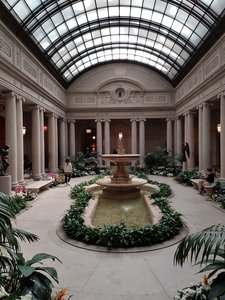
The Frick Collection, New YorkThe Frick Collection New York 3 Two Figures of Ladies on Stands, Dish with Broad Flat Rim, Four Covered Jars with Blue and White Decoration
Palácové muzeum, PekingPalácové muzeum Peking 1 Portrait of the Kangxi Emperor in Informal Dress Holding a Brush

Kchang-si v průběhu let: unikátní originály každého díla

Dlouhá kariéra trvající 23 let, od 1700 do 1722: nejznámější originály umělce Kchang-si představené rok po roce.

Díla podle roku

Vyberte rok a prohlédněte si originály.

Obrazy umělce Kchang-si: dotazy pro galerii

Kterým nejznámějším dílem je Kchang-si?Odhalit odpověď

Two Figures of Ladies on Stands (1700), The Frick Collection, New York. Následují Portrait of the Kangxi Emperor in Informal Dress Holding a Brush (1700) a Dish with Broad Flat Rim (1722).

V jakém věku vytvořil(a) Kchang-si dílo Two Figures of Ladies on Stands?Odhalit odpověď

46 let: dílo Two Figures of Ladies on Stands pochází z roku 1700 a Kchang-si se narodil/a v roce 1654.

Kolik známých děl má autor Kchang-si?Odhalit odpověď

Náš katalog obsahuje 4 děl umělce Kchang-si z let 1700 až 1722.

Kde lze vidět nejznámější originály umělce Kchang-si?Odhalit odpověď

Většinou v The Frick Collection (New York) a Palácové muzeum (Peking). V tabulce muzeí výše jsou vypsány všechny.

V jakém období vytvořil(a) Kchang-si svá nejznámější obrazy?Odhalit odpověď

V období 1700: 3 z celkem 4 děl na této stránce vzniklo právě tehdy, z toho Two Figures of Ladies on Stands z nich.

Který slavný obraz od Kchang-si je nejstarší a který nejnovější?Odhalit odpověď

Na této stránce je nejstarší dílo z Two Figures of Ladies on Stands (1700) a nejnovější z Dish with Broad Flat Rim (1722).

Jaká originální díla Kchang-si mohu vidět v The Frick Collection?Odhalit odpověď

Two Figures of Ladies on Stands, Dish with Broad Flat Rim a Four Covered Jars with Blue and White Decoration: muzeum The Frick Collection, New York má v obsluze 3 děl z této stránky.

Kchang-si: portrét umělce

The Sovereign of Art and Empire

The Kangxi Emperor was not a visual artist in the traditional sense, but rather a monumental figure of history whose imperial patronage and scholarly pursuits shaped the very fabric of Chinese aesthetic identity. As the third emperor of the Qing dynasty and the second to rule over China proper, his sixty-one-year reign stands as one of the most significant eras in the nation's history. Known by his temple name, Emperor Shengzu of Qing, and his personal name, Xuanye, he presided over a period of profound cultural flourishing. His influence was not found in the stroke of a brush on canvas, but in the meticulous direction of craftsmen, the standardization of language, and the cultivation of an imperial court that became a beacon of sophisticated design and philosophical depth.

A Legacy of Craftsmanship and Scholarly Pursuit

The era defined by his rule is often characterized by an unparalleled mastery of material and form, particularly in the realm of porcelain. Under his patronage, the artistry of the Qing Dynasty reached new heights of elegance and technical precision. The exquisite ceramics produced during this time, such as the breathtaking blue and white porcelain dishes and intricate figurines, serve as enduring testaments to the refined sensibilities of his court. These works often utilized precious pigments like cobalt blue, imported through vast trade networks, to create intricate patterns of bamboo, plum blossoms, and geometric harmonies that reflected a sophisticated understanding of spatial relationships. Beyond the physical beauty of decorative arts, the Emperor’s intellectual contributions left an indelible mark on Chinese civilization. He was a dedicated scholar-emperor who sought to foster a sense of cultural unity and Confucian orthodoxy. His commitment to the written word led to monumental achievements in linguistics and lexicography:
  • The compilation of the Kangxi Dictionary, a massive undertaking intended to improve upon previous works and standardize the Chinese writing system.
  • The establishment of the Kangxi radicals, a set of 214 radicals that provided a systematic method for categorizing characters, which remains a cornerstone of Chinese dictionary organization to this day.
  • The issuance of the Sacred Edict, a collection of moral maxims designed to instruct the citizenry in the fundamental principles of Confucianism.

Historical Significance and Cultural Impact

The historical significance of the Kangxi Emperor lies in his ability to blend political stability with cultural expansion. His reign provided the economic and social foundation upon which the subsequent prosperity of the Qing Dynasty was built. By patronizing both the fine arts and the scholarly disciplines, he ensured that the aesthetic and intellectual legacies of his era would transcend his lifetime. The objects created under his influence—from delicate porcelain to authoritative texts—continue to be studied and admired in prestigious collections worldwide, serving as a window into the opulent and intellectually vibrant world of 18th-century China. His life remains a profound study of how imperial power can be harnessed to cultivate a lasting cultural identity that resonates through the centuries.