Portrét John Guthrie Spence Smith

43 nejslavnějších obrazů autora John Guthrie Spence Smith, výběr z galerie

Aktualizováno listopad 2026 · seřazeno podle našeho skóre popularity (vyhledávání, návštěvy a objednávky u každého díla) · 43 děl umělce John Guthrie Spence Smith v našem katalogu

Stručně řečeno

Z všech originálů, které John Guthrie Spence Smith zanechal, je nejslavnější A Midlothian Farm (1925). Hned za ním následují Self Portrait (recto) (1917) a Standing Female Nude. Náš katalog obsahuje 43 děl umělce John Guthrie Spence Smith; galerie si zachovala 43 děl, která obdivuje celý svět, přičemž každé je znázorněno s datem vzniku, názevem muzea a jeho příběhem.

1880 – 1951, Perth Impressionism Nejvíce děl: Royal Scottish Academy of Art - Architecture

10 nejlepších obrazů umělce John Guthrie Spence Smith: výběr galerie

1
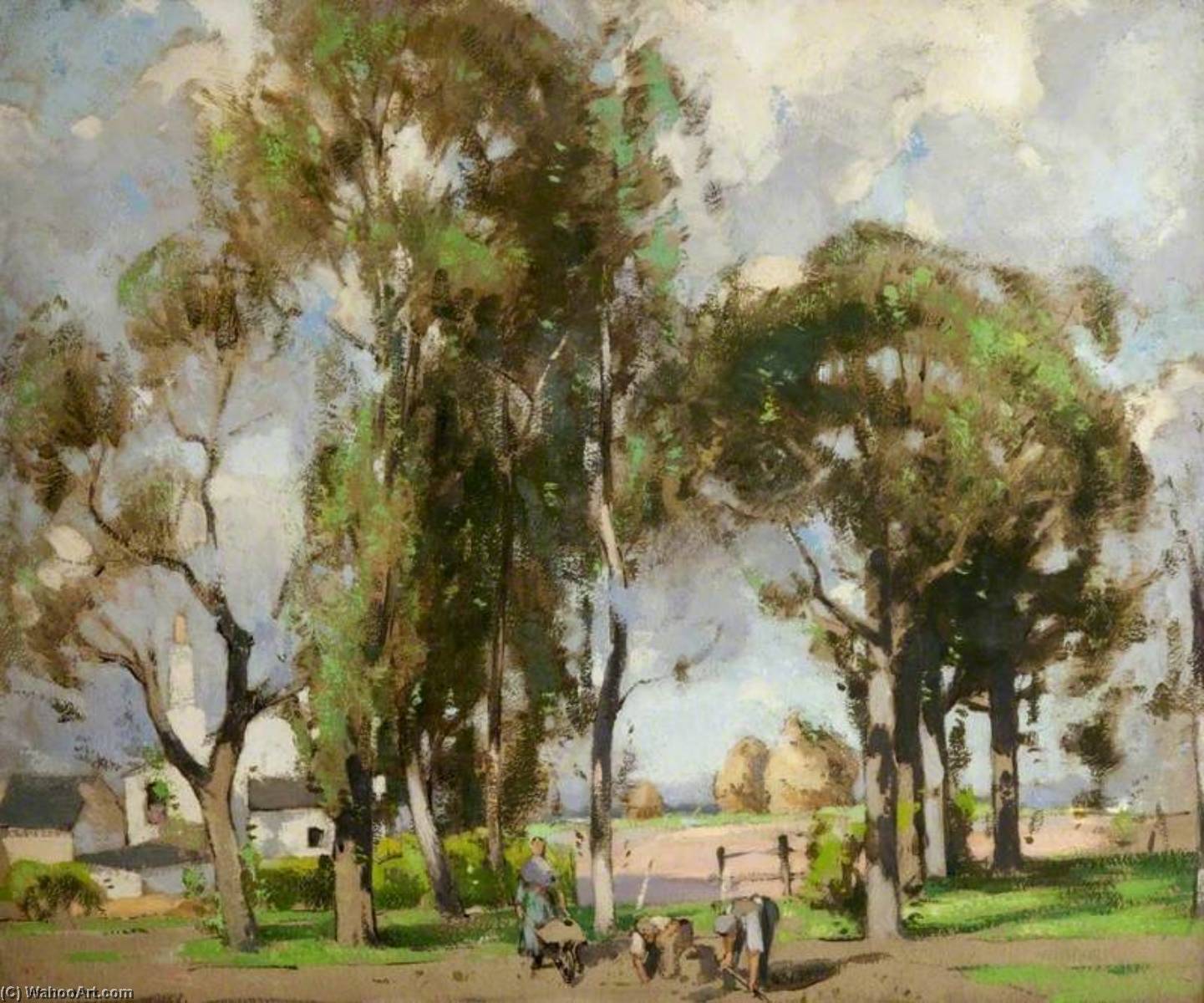
A Midlothian Farm (1925) od John Guthrie Spence Smith

A Midlothian Farm

1925 · Oil

A stillness settles over the Midlothian landscape in this 1925 work. Two men stand in the foreground, their figures anchored to the earth as they tend to the daily rhythms of the farm. A dog rests near them, a silent companion to the labor. Nearby, three horses occupy the space, their forms positioned with a natural, unforced grace. Trees rise in the background, framing the scene and creating a soft,…

2
Self Portrait (recto) (1917) od John Guthrie Spence Smith

Self Portrait (recto)

1917 · Oil On Canvas

The subject sits in a three-quarter view, his presence filling the space with a heavy, contemplative stillness. Light falls softly from the side, carving out the architecture of a face that seems to hold a lifetime of silent observation. There is a profound sense of introspection in his gaze, a look that suggests he is looking through the viewer rather than at them. The background is a soft arrangement of…

Výběr umělce John Guthrie Spence Smith pokračuje, od 11 do 43

Slavná díla John Guthrie Spence Smith podle jednotlivých období

Motivy, které zaujaly John Guthrie Spence Smith

Čtyři témata, která se v těchto originálech nejčastěji objevují, z nichž každé má svůj nejlepší příklad.

Muzea, v nichž jsou vystavena originálna umělce John Guthrie Spence Smith

3 muzea, v nichž je umístěno nejvíce obrazů z této stránky.

Muzeum Město Díla autora John Guthrie Spence Smith Obrazy z tohoto seznamu
Royal Scottish Academy of Art - Architecture, ÉdinRoyal Scottish Academy of Art - Architecture Édin 2 Canongate Kirk, Bakehouse Close
The Fleming Collection, LondýnThe Fleming Collection Londýn 2 St Monance Kirk, Ballachulish Quarries
Wolverhampton Art Gallery, WolverhamptonWolverhampton Art Gallery Wolverhampton 1 Red Roofs

John Guthrie Spence Smith dekáda po dekádě: originální díla, která definují každou z nich

Díla podle dekád

Vyberte si dekádu a prohlédněte si originál, který ji definuje.

Otázky sběratelů o obrazech umělce John Guthrie Spence Smith

Kterým dílem je John Guthrie Spence Smith nejznámější?Odhalit odpověď

A Midlothian Farm (1925). Následují Self Portrait (recto) (1917) a Standing Female Nude.

Kolik let bylo John Guthrie Spence Smith, když bylo vytvořeno dílo A Midlothian Farm?Odhalit odpověď

45 let: dílo A Midlothian Farm pochází z roku 1925 a John Guthrie Spence Smith se narodil/a v roce 1880.

Kterých deset nejslavnějších obrazů má John Guthrie Spence Smith?Odhalit odpověď

A Midlothian Farm, Self Portrait (recto), Standing Female Nude, French Farmyard near Étaples, Landscape (verso), Pasture near Craigmillar, Cottages with Red Tiles, Castle, The Croft, Anstruther a Preston Kirk. Hodnocení výše uvádí rok a muzeum pro každé z nich.

Kolik obrazů zanechal(a) John Guthrie Spence Smith?Odhalit odpověď

Náš katalog obsahuje 43 děl umělce John Guthrie Spence Smith z let 1911 až 1950.

Ve kterých muzeích jsou vystavena díla mistrovská umělce John Guthrie Spence Smith?Odhalit odpověď

Většinou v Royal Scottish Academy of Art - Architecture (Édin), The Fleming Collection (Londýn) a Wolverhampton Art Gallery (Wolverhampton). V tabulce muzeí výše jsou vypsány všechny.

V jakých letech namaloval John Guthrie Spence Smith svá nejznámější díla?Odhalit odpověď

V období 1920s: 9 z celkem 43 děl na této stránce vzniklo právě tehdy, z toho A Midlothian Farm z nich.

Jaká jsou první a poslední slavná originální díla umělce John Guthrie Spence Smith?Odhalit odpověď

Na této stránce je nejstarší dílo z French Farmyard near Étaples (1911) a nejnovější z Skinnergate, Perth (1950).

Jaká témata si John Guthrie Spence Smith vybíral nejčastěji?Odhalit odpověď

Early 20th century (2) a Rural landscape (2) napříč 43 díly na této stránce.

K kterému uměleckému směru patří John Guthrie Spence Smith?Odhalit odpověď

Impressionism, podle originálů na této stránce.

Která díla umělce John Guthrie Spence Smith jsou vystavena v Royal Scottish Academy of Art - Architecture?Odhalit odpověď

Canongate Kirk a Bakehouse Close: muzeum Royal Scottish Academy of Art - Architecture, Édin má v obsluze 2 děl z této stránky.

John Guthrie Spence Smith: život a dílo

John Guthrie Spence Smith: A Visionary of Scottish Landscapes

John Guthrie Spence Smith (1880-1951) remains a quietly significant figure in 20th-century British art, particularly within the rich tapestry of Scottish painting. Born in Perth, Scotland, into a family profoundly shaped by tragedy – his three older brothers succumbed to illness at young ages – Smith’s early life instilled a sensitivity and perhaps an unusual focus on observation. A childhood affliction robbed him of speech and hearing, a circumstance that arguably sharpened his visual perception and fostered a unique way of engaging with the world around him. This formative experience deeply influenced his artistic approach, imbuing his landscapes with a profound sense of stillness and quiet contemplation. Smith’s formal training began at Dundee College of Art, followed by studies at Edinburgh College of Art and the prestigious Royal Scottish Academy Life Drawing Classes under the tutelage of Robert Burns and Charles Hodge Mackie. These formative years exposed him to established artistic traditions while simultaneously nurturing his own distinctive style. He quickly distinguished himself as a talented artist, winning several prizes during his time at the RSA, demonstrating an early aptitude for capturing light, atmosphere, and the subtle nuances of the Scottish countryside. Crucially, he became involved with the Edinburgh Group, a collective of artists who challenged academic conventions and sought to forge a new path for modern art in Scotland. This association exposed him to innovative ideas and provided a platform for his work to be seen alongside other emerging talents.

A Distinctive Style: Landscape and Streetscapes

Smith’s artistic output is primarily characterized by meticulously rendered landscapes and evocative street scenes, predominantly depicting the familiar yet subtly transformed vistas of Perthshire, Angus, and the surrounding areas. He wasn't interested in dramatic, sweeping compositions; instead, he favored a measured approach, capturing the quiet dignity of rural life and the understated beauty of everyday settings. His palette was restrained, relying on muted earth tones – ochres, browns, greys, and blues – to create a sense of atmospheric depth and realism. He skillfully employed light and shadow to convey the changing moods of the Scottish weather, imbuing his paintings with a palpable sense of time and place. His work is often described as having a “colourist” quality, echoing the influence of artists like J.M. Whistler, though Smith’s approach was firmly rooted in his own unique vision.

Influences and Artistic Development

Smith's artistic journey reveals a complex interplay of influences. The traditional landscape painting of the Scottish Colourists – particularly their emphasis on capturing the essence of light and colour – undoubtedly shaped his early style. However, he also absorbed elements from Impressionism and Post-Impressionism, evident in his use of broken brushstrokes and his exploration of subjective perception. His time spent in France during World War I, though brief, provided a crucial opportunity to study the works of masters like Monet and Renoir, further expanding his artistic horizons. Following the war, he returned to Scotland, continuing to develop his distinctive style while maintaining close ties with the Edinburgh art community. His later work demonstrates an increasing confidence and maturity, reflecting a deeper understanding of both his subject matter and his own artistic voice.

Legacy and Recognition

Despite not achieving widespread fame during his lifetime, John Guthrie Spence Smith’s contribution to Scottish art is now increasingly recognized. His paintings are held in public collections across Scotland, including those of Glasgow, Paisley, Perth, and Greenock Museums, testament to the enduring quality of his work. His membership in the Royal Scottish Academy and his association with the Edinburgh Group cemented his place within a pivotal period of artistic innovation in Scotland. Smith’s legacy lies not only in his beautiful paintings but also in his quiet determination to pursue his artistic vision despite significant personal challenges. He represents a compelling example of an artist who found solace and expression through observation, capturing the essence of Scottish life with remarkable sensitivity and skill. His work continues to resonate with viewers today, offering a glimpse into a bygone era and a profound appreciation for the beauty of the Scottish landscape.

Further Resources