Portrét John Finnie

15 nejslavnějších obrazů autora John Finnie, výběr z galerie

Aktualizováno listopad 2026 · seřazeno podle našeho skóre popularity (vyhledávání, návštěvy a objednávky u každého díla) · 22 děl umělce John Finnie v našem katalogu

Stručně řečeno

Z všech originálů, které John Finnie zanechal, je nejslavnější Snowdon from Capel Curig (1870), který se nachází ve sbírce Walker Art Gallery, Liverpool. Hned za ním následují A Member of the Naval Reserve (1862) a Gathering Wild Flowers (1865). Náš katalog obsahuje 22 děl umělce John Finnie; galerie si zachovala 15 děl, která obdivuje celý svět, přičemž každé je znázorněno s datem vzniku, názevem muzea a jeho příběhem.

1829 – 1907, Aberdeen Nejvíce děl: Walker Art Gallery

10 nejlepších obrazů umělce John Finnie: výběr galerie

1
Snowdon from Capel Curig (1870) od John Finnie

Snowdon from Capel Curig

1870 · Oil On Canvas · Walker Art Gallery, Liverpool

The mountains rise from the earth with a heavy, silent permanence. In this 1870 oil on canvas, the peaks of Snowdon loom over the valley, their surfaces textured by the damp breath of the sky. Below the rugged heights, a body of water rests in the foreground, mirroring the stillness of the surrounding hills. Trees are scattered across the landscape, their dark forms anchoring the composition against the shifting light…

2
A Member of the Naval Reserve (1862) od John Finnie

A Member of the Naval Reserve

1862 · Oil On Canvas

In "A Member of the Naval Reserve", John Finnie presents a quiet, centered study of a young boy positioned against a vast coastal backdrop. The boy is the focal point of the composition, standing upon a beach with a sense of stillness. He is dressed in red clothing, specifically a shirt and trousers, and wears a brown hat. In his hands, he holds a long pole and a fishing net,…

3
Gathering Wild Flowers (1865) od John Finnie

Gathering Wild Flowers

1865 · Oil · Wolverhampton Art Gallery, Wolverhampton

Sunlight filters through a dense canopy, casting dappled patterns across a forest floor where time seems to slow. A woman and a child move through this verdant sanctuary, their presence a gentle part of the landscape rather than a disruption of it. The trees rise high, their branches creating a vertical rhythm that draws the eye upward into the shifting light. Every leaf and twig feels heavy with the moisture…

4
Sunshine and Cloud, View near Capel Curig (1876) od John Finnie

Sunshine and Cloud, View near Capel Curig

1876 · Oil On Canvas · Walker Art Gallery, Liverpool

In this work, titled Sunshine and Cloud, View near Capel Curig, the artist John Finnie presents a quiet, picturesque landscape inspired by the Welsh countryside. Painted about 1875–1876, the scene captures a specific moment of light and atmosphere within the Snowdonia region. It is a study of the natural world, focusing on the interplay between the land and the sky.

5
Moel Siabod, from Capel Curig (1860) od John Finnie

Moel Siabod, from Capel Curig

1860 · Oil

Moel Siabod, from Capel Curig is a landscape painting by the Scottish artist John Finnie. Executed about 1860, the work captures a rugged mountainous terrain characterized by the geological features of the Snowdonia region. A river flows through the center of the composition, cutting through the valley floor.

6
Maids of All Work (1865) od John Finnie

Maids of All Work

1865 · Oil On Canvas · The Geffrye, Londýn

The oil on canvas titled Maids of All Work is a work by the artist John Finnie. Created between 1864 and 1865, this piece measures 58 x 42.7 cm. It resides within the collection of the Museum of the Home.

7
Sunset at Pangbourne (1878) od John Finnie

Sunset at Pangbourne

1878 · Oil On Canvas

The evening light settles over the river in Sunset at Pangbourne, a work by the artist John Finnie. This oil on canvas captures a specific moment of transition, where the day begins to yield to the approaching dusk. The scene unfolds across a wide horizontal plane, measuring 90 x 151 cm, allowing the viewer to witness the quiet movement of the water and the sky in a singular, expansive view.

8
The Meeting of the Mersey and the Weaver (1874) od John Finnie

The Meeting of the Mersey and the Weaver

1874 · Oil On Canvas

The Meeting of the Mersey and the Weaver is an oil on canvas by the Scottish landscape painter and engraver John Finnie. Executed around 1874, the work captures a specific geographical confluence through the artist's characteristic attention to light and tonal depth.

9
The Heart of Nature (1898) od John Finnie

The Heart of Nature

1898 · Oil On Canvas · Walker Art Gallery, Liverpool

is an oil on canvas by the Scottish artist John Finnie. Executed around 1898, the work reflects the artist's long-standing engagement with the landscape traditions of the United Kingdom. Finnie, born in Aberdeen, developed a technical precision through his early training in japanning and his later mastery of mezzotint engraving, qualities that inform the handling of this large-scale composition.

10
The Close of a Stormy Day, Vale of Clwyd (1893) od John Finnie

The Close of a Stormy Day, Vale of Clwyd

1893 · Oil On Canvas · Walker Art Gallery, Liverpool

The Close of a Stormy Day, Vale of Clwyd is an oil on canvas by the Scottish landscape painter and engraver John Finnie. Created about 1893, the work belongs to a period in which the artist had established a profound connection to the Welsh terrain, particularly the regions surrounding Snowdonia.

Výběr umělce John Finnie pokračuje, od 11 do 15

Slavná díla John Finnie podle jednotlivých období

Motivy, které zaujaly John Finnie

Čtyři témata, která se v těchto originálech nejčastěji objevují, z nichž každé má svůj nejlepší příklad.

Muzea, v nichž jsou vystavena originálna umělce John Finnie

5 muzea, v nichž je umístěno nejvíce obrazů z této stránky.

Muzeum Město Díla autora John Finnie Obrazy z tohoto seznamu
Walker Art Gallery, LiverpoolWalker Art Gallery Liverpool 5 Snowdon from Capel Curig, Sunshine and Cloud, View near Capel Curig, The Heart of Nature
Wolverhampton Art Gallery, WolverhamptonWolverhampton Art Gallery Wolverhampton 1 Gathering Wild Flowers
The Geffrye, LondýnThe Geffrye Londýn 1 Maids of All Work
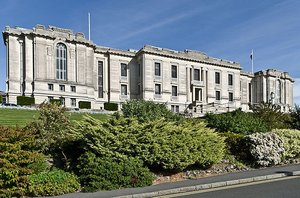
Llyfrgell Genedlaethol Cymru / The National Library of Wales, AberystwythLlyfrgell Genedlaethol Cymru / The National Library of Wales Aberystwyth 1 The Little Orme
Williamson Art Gallery - Museum, BirkenheadWilliamson Art Gallery - Museum Birkenhead 1 Landscape

John Finnie dekáda po dekádě: originální díla, která definují každou z nich

Díla podle dekád

Vyberte si dekádu a prohlédněte si originál, který ji definuje.

Otázky sběratelů o obrazech umělce John Finnie

Kterým dílem je John Finnie nejznámější?Odhalit odpověď

Snowdon from Capel Curig (1870), Walker Art Gallery, Liverpool. Následují A Member of the Naval Reserve (1862) a Gathering Wild Flowers (1865).

Kolik let bylo John Finnie, když bylo vytvořeno dílo Snowdon from Capel Curig?Odhalit odpověď

41 let: dílo Snowdon from Capel Curig pochází z roku 1870 a John Finnie se narodil/a v roce 1829.

Kterých deset nejslavnějších obrazů má John Finnie?Odhalit odpověď

Snowdon from Capel Curig, A Member of the Naval Reserve, Gathering Wild Flowers, Sunshine and Cloud, View near Capel Curig, Moel Siabod, from Capel Curig, Maids of All Work, Sunset at Pangbourne, The Meeting of the Mersey and the Weaver, The Heart of Nature a The Close of a Stormy Day, Vale of Clwyd. Hodnocení výše uvádí rok a muzeum pro každé z nich.

Kolik obrazů zanechal(a) John Finnie?Odhalit odpověď

Náš katalog obsahuje 22 děl umělce John Finnie z let 1860 až 1907.

Ve kterých muzeích jsou vystavena díla mistrovská umělce John Finnie?Odhalit odpověď

Většinou v Walker Art Gallery (Liverpool), Wolverhampton Art Gallery (Wolverhampton) a The Geffrye (Londýn). V tabulce muzeí výše jsou vypsány všechny.

V jakých letech namaloval John Finnie svá nejznámější díla?Odhalit odpověď

V období 1870s: 5 z celkem 15 děl na této stránce vzniklo právě tehdy, z toho Snowdon from Capel Curig z nich.

Jaká jsou první a poslední slavná originální díla umělce John Finnie?Odhalit odpověď

Na této stránce je nejstarší dílo z Moel Siabod, from Capel Curig (1860) a nejnovější z The River (1907).

Jaká témata si John Finnie vybíral nejčastěji?Odhalit odpověď

Trees (6), Sky (6) a Landscape (6) napříč 15 díly na této stránce.

Kterou techniku používal(a) John Finnie nejčastěji?Odhalit odpověď

Oil On Canvas, u 10 z 15 děl na této stránce.

Která díla umělce John Finnie jsou vystavena v Walker Art Gallery?Odhalit odpověď

Snowdon from Capel Curig, Sunshine and Cloud, View near Capel Curig a The Heart of Nature: muzeum Walker Art Gallery, Liverpool má v obsluze 5 děl z této stránky.

John Finnie: život a dílo

A Legacy of Light and Line: The Life of John Finnie

The history of British landscape art is enriched by the meticulous hand of John Finnie, a master whose work bridged the gap between the rugged realism of the Victorian era and the delicate precision of fine engraving. Born in Aberdeen in 1829, Finnie’s early life was steeped in the industrious spirit of Scotland. Before he became a celebrated figure in the London and Liverpool art scenes, his formative years were spent mastering the intricate craft of japanning—a process that required an extraordinary level of patience and attention to detail. This foundational discipline would later manifest in his unparalleled ability to capture the subtle textures of nature, from the damp moss of a Welsh valley to the atmospheric haze of a coastal storm.

Finnie’s artistic evolution was propelled by formal training in Edinburgh and Newcastle, most notably under the guidance of William Bell Scott at the School of Design. It was here that he immersed himself in the burgeoning realist movement, honing his skills in etching and developing a profound sensitivity to light. By 1853, Finnie had relocated to London, where his talent for mezzotint engraving began to garner significant acclaim. His ability to manipulate tonal depth through the mezzotint process allowed him to create prints of extraordinary emotional resonance, capturing the quiet majesty of the British landscape with a softness that felt almost tactile.

The Master of Welsh Landscapes and Educational Leadership

While his roots were Scottish, Finnie’s heart found a profound connection to the landscapes of Wales. Upon moving to Towyn in northern Wales, he became an observer of the sublime, particularly within the breathtaking terrain of Snowdonia. His paintings of the Capel Curig area, including the iconic peaks of Snowdon, are characterized by an unwavering dedication to accuracy and an evocative use of color. Whether through the sweeping vistas of his oil paintings or the intricate shadows of his engravings, Finnie sought to translate the raw, elemental beauty of the Welsh mountains into a visual language that spoke to the Romantic sensibilities of his time.

Beyond his personal creative output, Finnie played a monumental role in the institutional development of British art. For over four decades, from 1855 until his retirement in 1896, he served as the Headmaster of the Liverpool Mechanics Institute and School of Art. In this capacity, he was not merely an artist but a mentor, shaping the pedagogical landscape of the region and fostering a vibrant community of creators. His leadership extended to various prestigious organizations, including:

  • The Royal Academy: Where he was a frequent and respected exhibitor.
  • The Artists’ Club: Serving as President and promoting collaborative artistic discourse.
  • The Liverpool Sketching Club: Where he helped cultivate the local landscape tradition.
  • The Royal Society of Painters, Etchers, and Engravers: Demonstrating his mastery of printmaking.

Artistic Significance and Enduring Impression

The significance of John Finnie lies in his dual identity as both a painter of light and an engraver of shadow. His work serves as a vital historical record of the 19th-century British landscape, capturing a sense of place that is both geographically precise and deeply poetic. In works such as 'Gathering Wild Flowers' or his atmospheric coastal scenes like 'A Member of the Naval Reserve', one finds a seamless blend of technical mastery and emotional depth. He possessed the rare ability to make the viewer feel the temperature of the air and the stillness of the forest.

Today, Finnie’s legacy is preserved in the permanent collections of major institutions, including the Walker Art Gallery in Liverpool and the Portsmouth Museum. His contributions to the art of mezzotint engraving remain a benchmark for excellence in the medium, ensuring that his name remains synonymous with the golden age of British landscape realism. Through his eyes, the rugged beauty of Wales and the industrious spirit of his era continue to breathe with a life that transcends the passage of time.