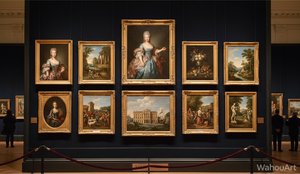
Johann Martin Fischer (1740-1820): A Pioneer of Allegorical Painting
Johann Martin Fischer, born in Füssen, Bavaria, Germany in 1740, stands as a pivotal figure in the history of German Romanticism and Biedermeier art. His artistic journey began amidst the burgeoning intellectual fervor of his time—a period marked by Enlightenment ideals colliding with burgeoning nationalist sentiment—influencing his stylistic choices and thematic preoccupations profoundly. While overshadowed by contemporaries like Friedrich Schiller and Goethe, Fischer’s contribution to European painting remains significant due to his masterful execution of classical allegorical and mythological subjects, particularly Hygieia, a symbol of health and purity that embodies the aspirations for moral reform prevalent in the era.
- Early Life & Training: Fischer's formative years were spent studying under Johann Georg Baumgartner in Munich, absorbing the principles of Baroque sculpture and honing his technical skills. This grounding in tradition provided a crucial counterbalance to the stylistic innovations emerging elsewhere in Europe.
- Academic Career & Patronage: He pursued further studies at Salzburg Academy and subsequently gained recognition as a sculptor for imperial commissions, securing patronage from Joseph II, Holy Roman Emperor. This association exposed him to Viennese artistic circles and fostered collaborations with prominent sculptors of the time.
- Notable Sculptures: Fischer’s sculptural output included monumental works celebrating Habsburg monarchs and commemorating significant historical events—most notably the statue of Saint Leopold I in Salzburg Cathedral, a masterpiece demonstrating his ability to convey emotion and grandeur through stone.
- Painting Style & Hygieia: Fischer transitioned into painting during his later years, adopting a refined style characterized by meticulous detail and luminous color palettes. His most celebrated artwork is undoubtedly ‘Hygieia,’ depicting the goddess of health as a radiant figure amidst flowing drapery—a testament to his command of classical composition and symbolism.
- Legacy & Influence: Fischer’s artistic vision resonated with subsequent generations of German painters, shaping the aesthetic sensibilities of Romanticism and establishing Hygieia as an enduring emblem of virtue and spiritual aspiration. His work continues to inspire admiration for its elegance and intellectual depth.
Key Influences: Fischer's artistic development was shaped by several influential figures and movements—including Baroque sculpture, Neoclassical ideals championed by Jacques-Germain Durande, and the burgeoning Romantic spirit fueled by Jean-Jacques Rousseau’s writings. These influences instilled in him a commitment to portraying idealized beauty and conveying moral messages through art.
Further Exploration: For deeper insights into Johann Martin Fischer's life and artistic achievements, consult scholarly biographies and examine reproductions of his sculptures and paintings housed in museums across Europe—particularly the Saint-Martin Museum in Colmar and Musée Baron Martin in Gray.