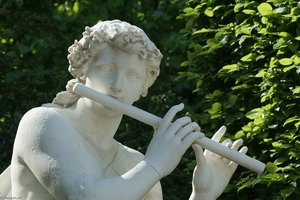
The Sculptor of Versailles: The Life and Legacy of Jean-Baptiste Tuby
In the golden age of the French Baroque, few names resonate with as much grandeur and architectural splendor as Jean-Baptiste Tuby. Born in Rome in 1635 as Giambattista Tubi, his very origins were steeped in the classical mastery of Italy. This Roman upbringing provided him with a profound foundation in the humanist ideals of antiquity, fostering an artistic sensibility that would later define the visual language of the French court. Trained under the legendary Alessandro Algardi, Tuby absorbed a technique rooted in meticulous observation and anatomical precision, qualities that allowed him to bridge the gap between Italian dynamism and the emerging French classicism.
His journey from the streets of Rome to the heart of the French monarchy is a testament to his extraordinary talent. Arriving in France after 1660, Tuby’s career was swiftly propelled by the patronage of Louis XIV. Initially engaged by the prestigious Gobelins Manufactory under the direction of Charles Le Brun, he transitioned from a decorative artist into a sculptor laureate of unparalleled influence. His naturalization as a French citizen in 1672 marked more than just a change in legal status; it signaled his total integration into the artistic engine that powered the Sun King’s vision of absolute power and eternal glory.
A Master of Motion and Mythological Grandeur
The true genius of Tuby lies in his ability to breathe life into cold stone and heavy bronze. His sculptural style is a breathtaking dialogue between the exuberant energy of the Baroque and the disciplined elegance of the Louis XIV style. Unlike many of his contemporaries who leaned toward rigid, stylized forms, Tuby pursued a rigorous realism. He possessed an uncanny ability to capture the subtle tension of a muscle, the fluid grace of a gesture, and the very essence of movement, imbuing his works with a palpable, living energy that seems to defy their material weight.
Nowhere is this mastery more evident than in the Gardens of Versailles. Tuby was instrumental in shaping the landscape of the most famous palace in the world, creating monumental works that served as allegorical extensions of the King's own divinity. His contributions include:
- The Basin of Apollo: A spectacular gilded lead sculpture of Apollo and his chariot, which serves as a centerpiece of mythological drama.
- The River Statues: The powerful bronze figures of the Saône and Rhône rivers, which anchor the central basin with their commanding presence.
- Mythological Allegories: A series of intricate sculptures featuring figures such as Flora, designed to populate the lush bouquets and enclosed gardens of the park.
Historical Significance and Artistic Enduring Spirit
Beyond the fountains of Versailles, Tuby’s reach extended into the sacred and the commemorative. He collaborated with other titans of the era, such as Antoine Coysevox, to execute profound works like the Tomb of Mazarin. His ability to navigate both the public, theatrical demands of royal gardens and the somber, intimate requirements of funerary monuments demonstrates a remarkable versatility. Whether carving marble vases or casting bronze statues for the funeral monument of Marshal Turenne, his hand remained consistent in its pursuit of perfection.
As he moved through the late seventeenth century, Tuby’s work became a cornerstone of French identity, helping to establish a national style that was both sophisticated and imposing. Though he passed away in Paris in 1700, his legacy remains etched into the very fabric of European history. To walk through the gardens of Versailles today is to encounter the ghost of Tuby’s imagination—a world where myth and reality intertwine through the precision of a master sculptor who knew exactly how to make the eternal appear momentary.