Portrét Jackson Pollock

100 nejslavnějších obrazů autora Jackson Pollock, každý naprosto unikátní

Aktualizováno říjen 2026 · seřazeno podle našeho skóre popularity (vyhledávání, návštěvy a objednávky u každého díla) · 186 děl umělce Jackson Pollock v našem katalogu

Stručně řečeno

Autunmový rytmus je obraz autora Jackson Pollock, který přitahuje nejvíce pohledů. Poté se zrak přesouvá k Číslo 1, 1949 (1950) a Sjednocení. Z 186 děl umělce Jackson Pollock v našem katalogu je těchto 100 těch nejznámějších; každé z nich je unikátním originálem s uvedením roku vzniku, muzea a důvodu jeho nesmrtelnosti.

1912 – 1956, Cody Abstract expressionism Nejvíce děl: MoMA - Museum of Modern Art

Top 10 obrazů autora Jackson Pollock podle výběru galerie

1
Autunmový rytmus od Jackson Pollock

Autunmový rytmus

Olej na plátně

Dílo „Autumn Rhythm. Number 30, 1950“ stojí jako klíčový pilíř v rámci průlomového přínosu Jacksona Pollocka k abstraktnímu expresionismu. Toto plátno monumentálních rozměrů není pouhou malbou; je to imerzivní zážitek – vizuální záznam energie, gesta a hluboce osobního zapojení umělce do samotného tvůrčího procesu.

2
Číslo 1, 1949 (1950) od Jackson Pollock

Číslo 1, 1949

1950 · Olej na plátně · Private collection, New York

Vznikl v roce 1950 a tento fascinující obraz ztělesňuje revolučního ducha abstraktního expresionismu a představuje vrcholný příklad ikonické „kapkové“ techniky Jacksona Pollocka. S působivými rozměry 240 x 120 cm upoutává pozornost nejen svým měřítkem, ale především energií vyzařující z jeho komplexního povrchu. Nejedná se o pouhou malbu; je to vizuální manifest spontánnosti a hloubky lidské zkušenosti.

3
Sjednocení od Jackson Pollock

Sjednocení

Olej na plátně

Pollockova Konvergence není pouhou malbou; je to viscerální zážitek – monumentální svědectví o síle abstraktního exprese a klíčové dílo poválečného amerického umění. Vzniklo v zásadním okamžiku dějin umění a ztělesňuje inovaci, která napadá tradiční představy o reprezentaci a zve зриatele do dynamického světa barvy a energie.

4
Číslo 1A od Jackson Pollock

Číslo 1A

Olej na plátně

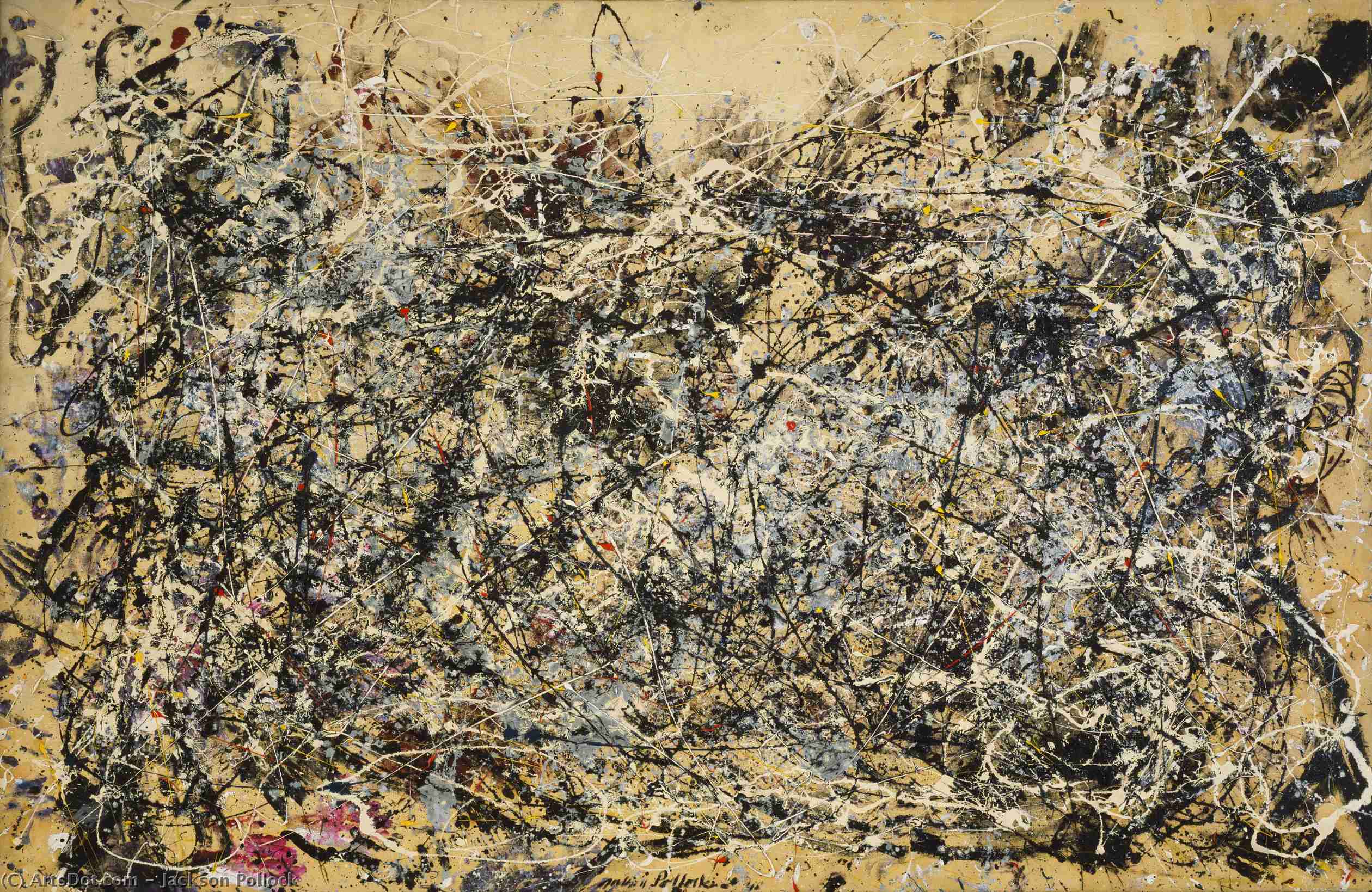
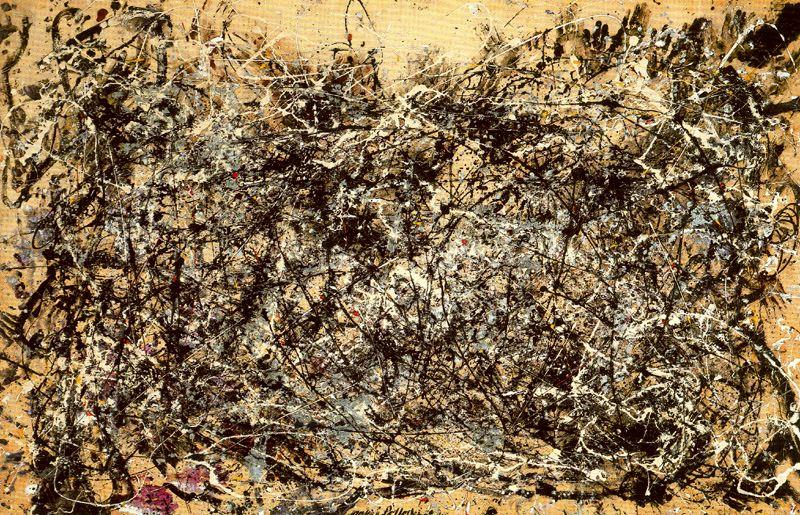
Podstata abstraktního expresionismu Dílo „Number 1A“ od Jacksona Pollocka je ryze dokonalým příkladem abstraktního expresionismu, směru, který v polovině 20. století zcela předefinoval americké umění. Toto fascinující plátno ztělesňuje syrovou energii a spontánnost, pro které je Pollock proslulý, což z něj činí nepostradatelný kousek pro jakoukoli sbírku současného umění nebo moderní interiér. Tanec chaosu a kontroly Obraz představuje abstraktní kompozici charakterizovanou chaotickými, energií nabitými tahy štětcem a hustým uspořádáním linií…

5
Bílé Světlo (1954) od Jackson Pollock

Bílé Světlo

1954 · Olej na plátně · MoMA - Museum of Modern Art, New York

„Bílá Světlo“ je fascinující dílo, které vás vtáhne do světa spontánního pohybu a intenzivních emocí charakteristických pro abstraktní expressionismus. Jedná se o dynamickou kompozici, která zjevně vyjadřuje složité vnitřní stavy umělce prostřednictvím explozivní kombinace barev, textury a gestických linií. Tato díla, s jejich chaotickým, ale zároveň harmonickým uspořádáním, jsou důkazem mistrovského zvládnutí techniky a schopnosti vyjadřovat hluboké emoce. Je to ideální centrální kus pro moderní interiér, který inspiruje k zamyšlení…

6
One. Number 31, 1950 od Jackson Pollock

One. Number 31, 1950

Painting

In the pantheon of modern art, few works command the room with such raw, unbridled intensity as Paul Jackson Pollock’s “One: Number 31, 1950.” To stand before this canvas is to witness a moment of pure, unfiltered creation captured in time. As a cornerstone of the Abstract Expressionist movement, this painting transcends the boundaries of traditional composition, offering instead a dense, rhythmic web of energy that seems to pulse with…

7
Number 5 (1948) od Jackson Pollock

Number 5

1948 · Oil On Canvas

A Universe Unfurled: Decoding Jackson Pollock’s No. 5, 1948 Jackson Pollock’s *No. 5, 1948* isn't simply a painting; it is an event frozen in time – a visual record of energy, gesture, and the very act of creation. This monumental work stands as perhaps the most iconic example of Abstract Expressionism, captivating viewers for decades with its complex layering and seemingly chaotic beauty. It’s a piece that demands attention, sparking…

8
Mural (1943) od Jackson Pollock

Mural

1943 · Acrylic On Canvas

Jackson Pollock's "Mural," completed in 1943, isn't merely a painting; it’s an immersive experience, a visceral embodiment of the burgeoning abstract expressionist movement. Commissioned by Peggy Guggenheim as a centerpiece for her Manhattan townhouse, this monumental work – measuring a commanding 247 x 605 cm – immediately announces Pollock’s arrival as a revolutionary force in the art world. The sheer scale invites contemplation, drawing the viewer into a swirling vortex…

9
Alchemy (1947) od Jackson Pollock

Alchemy

1947 · Acrylic On Canvas

A Dance of Chaos and Transformation: Exploring Jackson Pollock’s Alchemy The Genesis of Spontaneity Decoding the Drip Technique Historical Resonance and Symbolic Weight A Legacy of Innovation Jackson Pollock’s *Alchemy*, a monumental work from 1947, isn't merely a painting; it’s an immersive experience, a visceral embodiment of the burgeoning Abstract Expressionist movement. Created during a pivotal moment in American art history, this piece captures the raw energy and revolutionary spirit…

10
Reflection of the Big Dipper od Jackson Pollock

Reflection of the Big Dipper

Enamel

Created in 1947, Reflection of the Big Dipper is an abstract expressionist work by Jackson Pollock. The composition is dominated by a dynamic web of black paint streaks that create an intricate network across the canvas. Beneath this dark layer, the piece features vibrant colors including yellow, red, and purple, which provide depth and complexity. The surface is characterized by speckles of various colors that suggest frenetic energy, resulting from…

Slavná díla umělce Jackson Pollock, čísla 11 až 100

11Number 6 (1949) od Jackson PollockNumber 61949 12Number 23, 1951 od Jackson PollockNumber 23, 1951Chrysler Museum of Art 13Number 1 (1948) od Jackson PollockNumber 11948 · MoMA - Museum of Modern Art 14There Were Seven in Eight (1945) od Jackson PollockThere Were Seven in Eight1945 · MoMA - Museum of Modern Art 15Saint od Jackson PollockSaint 16The She Wolf (1943) od Jackson PollockThe She Wolf1943 17Composition with Pouring II (1943) od Jackson PollockComposition with Pouring II1943 18Blue poles (Number 11) (1952) od Jackson PollockBlue poles (Number 11)1952 19The Deep od Jackson PollockThe Deep 20Yellow Islands od Jackson PollockYellow Islands 21Black Pouring over Color od Jackson PollockBlack Pouring over Color 22The Flame (1938) od Jackson PollockThe Flame1938 23Portrait and a Dream od Jackson PollockPortrait and a Dream 24Number 3 (1948) od Jackson PollockNumber 31948 25Ocean Greyness od Jackson PollockOcean Greyness 26The Moon-Woman od Jackson PollockThe Moon-Woman 27Lucifer (1947) od Jackson PollockLucifer1947 28Woman od Jackson PollockWoman 29Untitled (Naked Man) od Jackson PollockUntitled (Naked Man) 30Lavender Mist_Number 1 od Jackson PollockLavender Mist_Number 1 31Birth od Jackson PollockBirth 32Blue (Moby Dick) od Jackson PollockBlue (Moby Dick) 33The key (1946) od Jackson PollockThe key1946 · Art Institute of Chicago 34Untitled II od Jackson PollockUntitled II 35Cathedral od Jackson PollockCathedral 36Out of the Web. Number 7 od Jackson PollockOut of the Web. Number 7 37Number 27, 1950 od Jackson PollockNumber 27, 1950 38Circumcision January (1946) od Jackson PollockCircumcision January1946 39Sheet of Studies (1941) od Jackson PollockSheet of Studies1941 40Number 12, 1949 od Jackson PollockNumber 12, 1949 41War od Jackson PollockWar 42Marrón y plata od Jackson PollockMarrón y plata 43Pattern (1945) od Jackson PollockPattern1945 44Number 10 (1949) od Jackson PollockNumber 101949 45Untitled 28 od Jackson PollockUntitled 28 46Number 25 (1950) od Jackson PollockNumber 251950 47Untitled (1939) od Jackson PollockUntitled1939 · Art Institute of Chicago 48Untitled 6 od Jackson PollockUntitled 6 49Full Fathom Five od Jackson PollockFull Fathom Five 50Figures in a Landscape (1937) od Jackson PollockFigures in a Landscape1937 51El inconsciente azul od Jackson PollockEl inconsciente azul 52Cut out od Jackson PollockCut out 53Masked Image od Jackson PollockMasked Image 54Untitled od Jackson PollockUntitled 55Portrait of H.M od Jackson PollockPortrait of H.M 56Summertime: Number 9A (1948) od Jackson PollockSummertime: Number 9A1948 · Tate Modern 57Untitled (1941) od Jackson PollockUntitled1941 58Untitled (Silkscreen I) od Jackson PollockUntitled (Silkscreen I) 59Grayed Rainbow od Jackson PollockGrayed RainbowArt Institute of Chicago 60The Water Bull (1946) od Jackson PollockThe Water Bull1946 · Stedelijk Museum Amsterdam 61Totem Lesson 2 (1945) od Jackson PollockTotem Lesson 21945 62Figure od Jackson PollockFigure 63Untitled 9 od Jackson PollockUntitled 9 64Stenographic Figure (1942) od Jackson PollockStenographic Figure1942 65Number 3 (1949) od Jackson PollockNumber 31949 66Untitled 8 od Jackson PollockUntitled 8 67Number 8 od Jackson PollockNumber 8 68Head od Jackson PollockHead 69Eyes in the Heat (1946) od Jackson PollockEyes in the Heat1946 70Circle (1941) od Jackson PollockCircle1941 71Untitled 23 od Jackson PollockUntitled 23 72Easter and the Totem (1953) od Jackson PollockEaster and the Totem1953 73Untitled (Composition with Pouring I) od Jackson PollockUntitled (Composition with Pouring I) 74Untitled 13 od Jackson PollockUntitled 13 75Ritmo de otoño od Jackson PollockRitmo de otoño 76Male and Female (1942) od Jackson PollockMale and Female1942 77Miners od Jackson PollockMiners 78GREETINGS od Jackson PollockGREETINGS 79Troubled Queen – Zmatená královna od Jackson PollockTroubled Queen – Zmatená královna 80Number 23 (1948) od Jackson PollockNumber 231948 81Untitled (Silkcreen no. VI) od Jackson PollockUntitled (Silkcreen no. VI) 82Untitled 27 od Jackson PollockUntitled 27 83Silver and Black I od Jackson PollockSilver and Black I 84Untitled 4 od Jackson PollockUntitled 4 85Shimmering Substance (1946) od Jackson PollockShimmering Substance1946 86Composition od Jackson PollockComposition 87Gothic od Jackson PollockGothic 88Search od Jackson PollockSearch 89Untitled (Cut-out) od Jackson PollockUntitled (Cut-out) 90Going West (1935) od Jackson PollockGoing West1935 91Number 2 (1951) od Jackson PollockNumber 21951 92Number 3, 1950 od Jackson PollockNumber 3, 1950 93Untitled 1 od Jackson PollockUntitled 1 94Echo od Jackson PollockEcho 95Composition with Woman od Jackson PollockComposition with Woman 96Untitled (1941) od Jackson PollockUntitled1941 97Oranžový Klobouk od Jackson PollockOranžový Klobouk 98Untitled (13) (1943) od Jackson PollockUntitled (13)1943 99The Moon-Woman Cuts the Circle od Jackson PollockThe Moon-Woman Cuts the Circle 100Galaxy od Jackson PollockGalaxy

Slavná díla Jackson Pollock podle jednotlivých období

Motivy, které zaujaly Jackson Pollock

Čtyři témata, která se v těchto originálech nejčastěji objevují, z nichž každé má svůj nejlepší příklad.

Muzea, v nichž jsou vystavena originálna umělce Jackson Pollock

6 muzea, v nichž je umístěno nejvíce obrazů z této stránky.

Muzea Město Díla autora Jackson Pollock Obrazy z tohoto seznamu
MoMA - Museum of Modern Art, New YorkMoMA - Museum of Modern Art New York 4 Bílé Světlo, Number 1, There Were Seven in Eight
Art Institute of Chicago, ChicagoArt Institute of Chicago Chicago 3 The key, Untitled, Grayed Rainbow
Private collection, New YorkPrivate collection New York 1 Číslo 1, 1949
Chrysler Museum of Art, NorfolkChrysler Museum of Art Norfolk 1 Number 23, 1951
Tate Modern, LondýnTate Modern Londýn 1 Summertime: Number 9A
Stedelijk Museum Amsterdam, AmsterdamStedelijk Museum Amsterdam Amsterdam 1 The Water Bull

Jackson Pollock napříč desetiletími: jeden unikátní originál pro každou dekádu

Díla podle dekád

Vyberte si dekádu a prohlédněte si originál, který ji definuje.

Obrazy umělce Jackson Pollock: dotazy pro galerii

Kterým nejznámějším dílem je Jackson Pollock?Odhalit odpověď

Autunmový rytmus. Následují Číslo 1, 1949 (1950) a Sjednocení.

Kterých deset obrazů autora Jackson Pollock je nejznámějších?Odhalit odpověď

Autunmový rytmus, Číslo 1, 1949, Sjednocení, Číslo 1A, Bílé Světlo, One. Number 31, 1950, Number 5, Mural, Alchemy a Reflection of the Big Dipper. Hodnocení výše uvádí rok a muzeum pro každé z nich.

Kolik známých děl má autor Jackson Pollock?Odhalit odpověď

Náš katalog obsahuje 186 děl umělce Jackson Pollock z let 1935 až 1954.

Kde lze vidět nejznámější originály umělce Jackson Pollock?Odhalit odpověď

Většinou v MoMA - Museum of Modern Art (New York), Art Institute of Chicago (Chicago) a Private collection (New York). V tabulce muzeí výše jsou vypsány všechny.

V jakém období vytvořil(a) Jackson Pollock svá nejznámější obrazy?Odhalit odpověď

V období 1940s: 28 z celkem 100 děl na této stránce vzniklo právě tehdy, z toho Number 5 z nich.

Který slavný obraz od Jackson Pollock je nejstarší a který nejnovější?Odhalit odpověď

Na této stránce je nejstarší dílo z Going West (1935) a nejnovější z Bílé Světlo (1954).

Jakým tématům se Jackson Pollock věnoval/a nejčastěji?Odhalit odpověď

Drip painting (44), Color field (31) a Chaos (26) napříč 100 díly na této stránce.

Jaké materiály používal(a) Jackson Pollock nejčastěji?Odhalit odpověď

Oil On Canvas, u 36 z 100 děl na této stránce.

K kterému směru patří dílo umělce Jackson Pollock?Odhalit odpověď

Abstract expressionism, podle originálů na této stránce.

Jaká originální díla Jackson Pollock mohu vidět v MoMA - Museum of Modern Art?Odhalit odpověď

Bílé Světlo, Number 1 a There Were Seven in Eight: muzeum MoMA - Museum of Modern Art, New York má v obsluze 3 děl z této stránky.

Jackson Pollock: portrét umělce

Early Life, Family and Training

The story of Paul Jackson Pollock begins in the rugged landscape of Cody, Wyoming, where he was born on January 28, 1912. He was the youngest of five brothers, born to Stella May McClure and LeRoy Pollock. His father worked as a land surveyor, a profession that required constant movement across the vast American West. This nomadic existence meant that the young boy's early years were defined by frequent relocations, a restlessness that seemed to mirror the shifting horizons of his father's work. These early travels through the West provided him with a direct, unmediated encounter with the natural world and the spiritual resonance of Native American art, impressions that would quietly settle into his subconscious long before he ever held a brush.

As he grew, the search for a sense of place led him toward the urban energy of the coast. He enrolled at Manual Arts High School in Los Angeles, seeking a formal structure for his burgeoning impulses. However, the true shaping of his hand occurred much later, when he moved to New York City. It was there, at the Art Students League, that he began a long and transformative period of study. From 1929 to 1942, he labored under the guidance of Thomas Hart Benton. While Benton emphasized rhythmic compositions and the narrative weight of American life, the young student was already beginning to drift toward his own, more abstract, internal truths.

The Development of a Unique Technique

By 1947, a profound shift had taken hold in the way he approached the canvas. He moved away from the traditional easel, choosing instead to lay his canvases directly upon the floor. This change allowed him to stand over his work, becoming part of the creative act itself. He did not merely apply paint; he dripped, splashed, and flung it from above, letting the liquid fall in unpredictable patterns. This method turned the act of painting into a physical performance, where gravity and gesture dictated the final form.

His tools were as unconventional as his methods. He reached for sticks, knives, and even syringes to manipulate the fluid medium. Sometimes he used trowels or dripping fluid paint to achieve specific textures. He would often scratch into the surface or use strange objects to build up a thick crust of paint, adding a tactile, sculptural quality to the work. This process was less about controlled brushwork and more about a rhythmic, almost primal release of energy onto the surface.

Key Works and Artistic Expressions

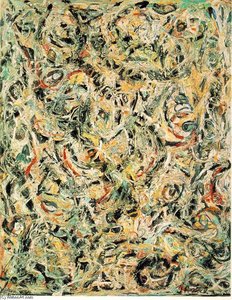
As he moved away from the constraints of the easel, his canvases began to reflect a more visceral engagement with the medium. In 1943, he produced Mural, a massive work measuring 8-by-20-foot (2.4 by 6.1 m), which demonstrated his ability to command a vast surface. During this period, his explorations into the subconscious and the act of painting itself led to works like Eyes in the Heat, created about 1946. These pieces were not merely images but records of a physical presence, where the movement of his whole body dictated the placement of every splatter and pool of color.

The years that followed saw him perfecting the rhythmic, all-over compositions that would define his reputation. He sought to create a sense of boundless space, where no single point held dominance over the rest. This approach is evident in Number 1, 1949, a work that captures a raw outpouring of energy, and in Lavender Mist, Number 1, 1950, which remains a significant piece of his output. In these works, the interplay between control and chance creates a delicate balance, as if the paint were released rather than applied.

His later experiments continued to push the boundaries of how paint could be manipulated on a horizontal surface. He often used sticks, knives, or even the cans themselves to fling pigment, resulting in complex networks of lines. This method is clearly seen in Blue Poles, Number 11, 1952 and in the energetic Convergence. Through these works, he achieved a state where the painting seemed to possess a life of its own, emerging from a deep immersion in his own imagination.

Patrons, Workshop and Commissions

The path of his career was shaped by both public necessity and the generosity of a few vital supporters. Between 1938 and 1942, he found steady work as a painter for the WPA Federal Art Project, a period that provided a necessary rhythm to his developing practice. This stability gave way to a more personal and transformative alliance when Peggy Guggenheim offered him a gallery contract in July 1943. Her support proved to be more than professional; in 1945, she provided a $2,000 down payment to help him secure a home, a gesture that deeply intertwined his personal life with his artistic survival.

His creative life eventually found its center in East Hampton, New York. There, within the Pollock-Krasner House and Studio, he lived and worked alongside his wife, Lee Krasner. The studio was a place of intense physical movement, where the boundaries between the artist and the canvas dissolved. He often moved away from the traditional easel, preferring to lay his canvases upon the floor to engage with the paint from all sides. This workspace was not merely a room for production but a site of profound, restless energy where his most radical experiments took place.

Later Years and Death

The personal life of the artist was deeply intertwined with his creative struggles. In 1945, he married the artist Lee Krasner, a union that provided a significant presence in his life during his most transformative years. Yet, beneath the surface of his professional ascent, a persistent shadow remained. He struggled with an alcohol addiction throughout his entire life, a battle that often complicated his existence and his ability to navigate the pressures of his growing fame.

This internal and external turbulence reached a tragic end in East Hampton, New York, USA. On August 11, 1956, at the age of 44, his life was cut short in a sudden, violent accident. While driving, he was involved in a single-car collision caused by alcohol. The crash proved fatal, leaving behind a legacy that was as tumultuous as the paint he flung across his canvases.

Legacy and Influence on Modern Art

The ripples of his radical methods reached far beyond the studio walls of East Hampton. By breaking the traditional bond between the brush and the easel, he became a central figure in the Abstract Expressionist movement, a shift that fundamentally altered the trajectory of American creativity. His presence helped solidify New York City's position as a global center for modern art, moving the heart of the avant-garde away from European dominance. He was among the first American painters to be recognized as a peer of the great 20th-century European masters, proving that a new, visceral language could emerge from the soil of the United States.

His influence acted as a catalyst for many subsequent art movements that followed in his wake. The way he engaged with the canvas—treating it as an arena for physical action rather than a mere surface for representation—opened doors for many who sought to express the subconscious through gesture. This emphasis on the process of creation itself left a permanent mark on the history of modern art, ensuring that the spontaneous and the unplanned would forever hold a place in the artist's toolkit.

Where to See the Works Today

To witness the physical traces of his movement, one must travel to the great institutions that preserved his radical energy. In New York City, the Museum of Modern Art holds several of his canvases, allowing viewers to stand before the sprawling, uncentered compositions that defined his era. The National Gallery of Art in Washington D.C. also maintains his works, offering a space to observe the intricate networks of color he achieved through his unique methods. Across the Atlantic, the Tate Gallery in London keeps his presence alive within its collections, ensuring his influence reaches far beyond American shores.

For those seeking a more intimate connection to his process, the Pollock-Krasner House and Studio in East Hampton offers a profound sense of place. This site, a National Historic Landmark, was the space where he and his wife, Lee Krasner, lived and worked. The property remains a vital link to his life, preserving the environment that nurtured his transition from traditional forms to the spontaneous, floor-based methods that changed the course of modern painting. Walking through these spaces provides a sense of the scale and the physical reality of his creative struggle.