Portrét Herbert Bayer

23 nejslavnějších obrazů autora Herbert Bayer, výběr z galerie

Aktualizováno listopad 2026 · seřazeno podle našeho skóre popularity (vyhledávání, návštěvy a objednávky u každého díla) · 33 děl umělce Herbert Bayer v našem katalogu

Stručně řečeno

Z všech originálů, které Herbert Bayer zanechal, je nejslavnější The News That's Never Read, from the Early Series (1939). Hned za ním následují Iron Winding Stair (1928) a The limits of my language mean the limits of my world. Ludwig Wittgenstein, Tractatus logigo philosphicus, 1922. From the series Great Ideas of Western Man (1979). Náš katalog obsahuje 33 děl umělce Herbert Bayer; galerie si zachovala 23 děl, která obdivuje celý svět, přičemž každé je znázorněno s datem vzniku, názevem muzea a jeho příběhem.

1900 – 1985, Haag am Hausruck Nejvíce děl: Städel Museum

10 nejlepších obrazů umělce Herbert Bayer: výběr galerie

1
The News That's Never Read, from the Early Series (1939) od Herbert Bayer

The News That's Never Read, from the Early Series

1939 · Painting

In this 1939 work from the early series, we find ourselves looking at a scene of profound stillness. The composition centers on a stack of newspapers, their headlines declaring "The News That's Never Read." It is a heavy, physical presence of paper, piled haphazardly, accompanied by a simple box of tissues. The monochromatic palette strips away the distractions of color, leaving us with a stark, almost clinical view of domestic…

2
Iron Winding Stair (1928) od Herbert Bayer

Iron Winding Stair

1928 · Gelatin Silver Print

In this work, titled Iron Winding Stair, we encounter a precise study of form and structure created by Herbert Bayer. The piece dates from about 1928, a period when the artist was deeply engaged with the principles of modern design. It captures a functional architectural element, transforming a simple winding staircase into a subject of geometric investigation.

3
The limits of my language mean the limits of my world. Ludwig Wittgenstein, Tractatus logigo philosphicus, 1922. From the series Great Ideas of Western Man (1979) od Herbert Bayer

The limits of my language mean the limits of my world. Ludwig Wittgenstein, Tractatus logigo philosphicus, 1922. From the series Great Ideas of Western Man

1979 · Painting

The work titled The limits of my language mean the limits of my world. Ludwig Wittgenstein, Tractatus logigo philosphicus, 1922. From the series Great Ideas of Western Man is a creation by the artist Herbert Bayer. It emerged from the Great Ideas of Western Man advertising campaign, a project spanning the years 1950 to 1975. This specific piece was created about 1979.

4
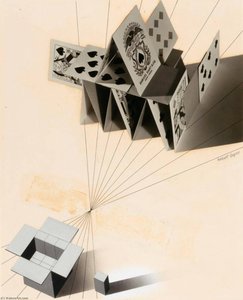
Paperboard Packs a Mighty Wallop, from the Early Series (1942) od Herbert Bayer

Paperboard Packs a Mighty Wallop, from the Early Series

1942 · Pencil

The scene unfolds within the lines of Paperboard Packs a Mighty Wallop, from the Early Series. This work emerges from the hand of Herbert Bayer, an artist whose origins trace back to Haag am Hausruck, Austria, in 1900. The image captures a moment of tension and logistical urgency, frozen in time as the world experiences the shifts of the early 1940s. It dates to about 1942, a period when the…

Výběr umělce Herbert Bayer pokračuje, od 11 do 23

11Ugly Duckling of the Office, from the Early Series (1939) od Herbert BayerUgly Duckling of the Office, from the Early Series1939 12Weakness into Strength, from the Early Series (1941) od Herbert BayerWeakness into Strength, from the Early Series1941 13Destiny of an Old Directory, from the Early Series (1939) od Herbert BayerDestiny of an Old Directory, from the Early Series1939 14Paperboard that goes to war is paper that wasn't burned. From the Early Series (1942) od Herbert BayerPaperboard that goes to war is paper that wasn't burned. From the Early Series1942 15Fire Steals Too Much of an Important Resource, from the Early Series (1942) od Herbert BayerFire Steals Too Much of an Important Resource, from the Early Series1942 16(Seven Convolutions, portfolio) (1948) od Herbert Bayer(Seven Convolutions, portfolio)1948 17I hold that while man exists it is his duty to improve not only his own condition but to assist in ameliorating mankind. Abraham Lincoln on Man's Responsibility. From the series Great Ideas of Western Man (1956) od Herbert BayerI hold that while man exists it is his duty to improve not only his own condition but to assist in ameliorating mankind. Abraham Lincoln on Man's Responsibility. From the series Great Ideas of Western Man1956 18Every new opinion, at its starting, is precisely in a minority of one. Thomas Carlyle, Heroes and Hero Worship, II, 1840, lecture in London, May 8. From the series Great Ideas of Western Man (1961) od Herbert BayerEvery new opinion, at its starting, is precisely in a minority of one. Thomas Carlyle, Heroes and Hero Worship, II, 1840, lecture in London, May 8. From the series Great Ideas of Western Man1961 19God made the world and all things therein.and has made of one blood all nations of men for to dwell on the face of the earth. St. Paul. Fromthe series Great Ideas of Western Man (1958) od Herbert BayerGod made the world and all things therein.and has made of one blood all nations of men for to dwell on the face of the earth. St. Paul. Fromthe series Great Ideas of Western Man1958 20The art of progress is to preserve order amid change and to preserve change amid order. Alfred North Whitehead (1861 1947). From the series Great Ideas of Western Man (1964) od Herbert BayerThe art of progress is to preserve order amid change and to preserve change amid order. Alfred North Whitehead (1861 1947). From the series Great Ideas of Western Man1964 21Reason Is Language, Logos. Johann Georg Hamann (1730 1738). From the series Great Ideas (1966) od Herbert BayerReason Is Language, Logos. Johann Georg Hamann (1730 1738). From the series Great Ideas1966 22Articulated Wall od Herbert BayerArticulated WallRuta de la Amistad Patronato Ruta de la Amistad A.C. 23The things that will destroy America are prosperity at any price, peace at any price, safety first instead of duty first, and love of soft living and the get rich quick theory of life. Theodore Roosevelt. From the series Great Ideas of Western Man (1959) od Herbert BayerThe things that will destroy America are prosperity at any price, peace at any price, safety first instead of duty first, and love of soft living and the get rich quick theory of life. Theodore Roosevelt. From the series Great Ideas of Western Man1959

Motivy, které zaujaly Herbert Bayer

Čtyři témata, která se v těchto originálech nejčastěji objevují, z nichž každé má svůj nejlepší příklad.

Muzea, v nichž jsou vystavena originálna umělce Herbert Bayer

3 muzea, v nichž je umístěno nejvíce obrazů z této stránky.

Muzeum Město Díla autora Herbert Bayer Obrazy z tohoto seznamu
Städel Museum, Frankfurt nad MohanemStädel Museum Frankfurt nad Mohanem 1 Sundeck
Lentos Kunstmuseum Linz, LinzLentos Kunstmuseum Linz Linz 1 Selfportrait
Ruta de la Amistad Patronato Ruta de la Amistad A.C., Mexico CityRuta de la Amistad Patronato Ruta de la Amistad A.C. Mexico City 1 Articulated Wall

Herbert Bayer dekáda po dekádě: originální díla, která definují každou z nich

Díla podle dekád

Vyberte si dekádu a prohlédněte si originál, který ji definuje.

Otázky sběratelů o obrazech umělce Herbert Bayer

Kterým dílem je Herbert Bayer nejznámější?Odhalit odpověď

The News That's Never Read, from the Early Series (1939). Následují Iron Winding Stair (1928) a The limits of my language mean the limits of my world. Ludwig Wittgenstein, Tractatus logigo philosphicus, 1922. From the series Great Ideas of Western Man (1979).

Kolik let bylo Herbert Bayer, když bylo vytvořeno dílo The News That's Never Read, from the Early Series?Odhalit odpověď

39 let: dílo The News That's Never Read, from the Early Series pochází z roku 1939 a Herbert Bayer se narodil/a v roce 1900.

Kterých deset nejslavnějších obrazů má Herbert Bayer?Odhalit odpověď

The News That's Never Read, from the Early Series, Iron Winding Stair, The limits of my language mean the limits of my world. Ludwig Wittgenstein, Tractatus logigo philosphicus, 1922. From the series Great Ideas of Western Man, Paperboard Packs a Mighty Wallop, from the Early Series, Sundeck, Selfportrait, Billions of Powdered Eggs, from the Early Series, Strength Out of Straw, from the Early Series, Waste Paper to Package, from the Early Series a Aim High from the Early Series. Hodnocení výše uvádí rok a muzeum pro každé z nich.

Kolik obrazů zanechal(a) Herbert Bayer?Odhalit odpověď

Náš katalog obsahuje 33 děl umělce Herbert Bayer z let 1928 až 1979.

Ve kterých muzeích jsou vystavena díla mistrovská umělce Herbert Bayer?Odhalit odpověď

Většinou v Städel Museum (Frankfurt nad Mohanem), Lentos Kunstmuseum Linz (Linz) a Ruta de la Amistad Patronato Ruta de la Amistad A.C. (Mexico City). V tabulce muzeí výše jsou vypsány všechny.

V jakých letech namaloval Herbert Bayer svá nejznámější díla?Odhalit odpověď

V období 1940s: 8 z celkem 23 děl na této stránce vzniklo právě tehdy, z toho Paperboard Packs a Mighty Wallop, from the Early Series z nich.

Jaká jsou první a poslední slavná originální díla umělce Herbert Bayer?Odhalit odpověď

Na této stránce je nejstarší dílo z Iron Winding Stair (1928) a nejnovější z The limits of my language mean the limits of my world. Ludwig Wittgenstein, Tractatus logigo philosphicus, 1922. From the series Great Ideas of Western Man (1979).

Jaká témata si Herbert Bayer vybíral nejčastěji?Odhalit odpověď

Black and white (3), Abstract composition (2) a Men (2) napříč 23 díly na této stránce.

Kterou techniku používal(a) Herbert Bayer nejčastěji?Odhalit odpověď

Painting, u 2 z 23 děl na této stránce.

Herbert Bayer: život a dílo

Herbert Bayer: Architekt minimalistické vize

Herbert Bayer (1900–1985) představuje singularní postavu 20. století v oblasti umění a designu, klíčový most mezi radikální experimentální činností školy Bauhaus a rostoucím modernismem, který formoval americkou kulturu. Narodil se ve Haag, v Chorvatsku (ačkoliv se později primárně identifikoval s Rakouskem), a jeho život byl svědectvím o umělecké proměně, poznačené neúnavnou snahou o zjednodušení a hlubokým dopadem na typografii, architekturu a firemní identitu. Jeho cesta od učedníka pod Georgem Schmidthammerem až po pozici ředitele tiskárny v Bauhaus, následně jako art director časopisu Vogue a nakonec jako klíčová postava formující vizuální jazyk společnosti Atlantic Richfield Company (ARCO), odhaluje příběh umělce, který neustále přizpůsožoval své schopnosti a posouval hranice svého řemesla.

Bayerovo rané vzdělávání v Weimarském Bauhaus bylo naprosto zásadní. Ponořen do filozofie školy, že „forma následuje funkci“, rychle vstřebal principy reduktivního designu prosazované Walterem Gropiusem. Jeho přístup však nebyl definován pouze dodržováním zavedené doktríny; Bayer disponoval jedinečným intuitivním smyslem pro vizuální komunikaci. Experimentoval s typografií, odmítal tradiční hierarchie a přijal odvážný styl bezpatkového písma složeného výhradně z malých písmen – což byl záměrný odklon od tehdejších konvencí. Tato „univerzální abeceda“, zhmotněná v roce 1925, ale nikdy plně neuskutečněná jako komerční písmo, zůstává pilířem jeho odkazu a ovlivňuje následné designéry typografie, jako jsou tvůrci ITC Bauhaus či Architype Bayer.

Odkaz Bauhausu: Typografie a mnohem více

Bayerova práce v rámci Bauhaus byla charakteristická neochvějným závazkem k jasnosti a efektivitě. Precizně přetvářel publikace pro školu s využitím čistého, geometrického bezpatkového písma, které upřednostňovalo čitelnost a eliminovalo vizuální chaos. Tento přístup však přesahoval samotnou typografii; Bayer zkoumal principy grafického designu a prosazoval minimalistickou estetiku zakořeněnou v geometrické abstrakci. Jeho návrhy nebyly pouze dekorativní, ale sloužily jako nástroje pro efektivní komunikaci – což byla filozofie hluboce zakořeněná v etosu Bauhausu.

V roce 1937 musel kvůli vzestupu nacismu opustit Německo, což mu otevřelo nové příležitosti v Berlíně a později v Americe. Přistoupil k práci v berlínské redakci časopisu Vogue, kde pokračoval ve svém průzkumu moderních designových principů. Jeho období v Spojených státech znamenalo posun směrem k firemní art direction, což vyvrcholilo jeho vlivnou rolí v ARCO. V tomto období dokázal transformovat vizuální identitu společnosti a vytvořit sofistikovanou a okamžitě rozpoznatelnou značku prostřednictvím kombinace výrazné typografie, architektonických návrhů a zapamatovatelných log.

ARCO a firemní sbírka umění

Bayerovo působení jako art director společnosti Atlantic Richfield Company (ARCO) představuje snad jeho nejvýznamnější a nejtrvalejší úspěch. Uvědomujíc si sílu vizuální komunikace při formování firemní kultury, sestavil jednu z největších a nejvlivnějších firemních sbírek umění na světě. Neobjednával však pouhá umělecká díla; kurátoroval prostředí, které odráželo hodnoty společnosti – inovaci, dynamismus a orientaci na budoucnost.

Jeho vliv se vymykal samotnému výběru děl; Bayer navrhl sídlo ARCO Plaza v Los Angeles, do jeho architektury včlenil svou charakteristickou minimalistickou estetiku. Vytvořil také ikonické vizuální prvky pro společnost, včetně jejího loga a propagačních materiálů. Fontána „Double Ascension“ umístěná mezi věžemi ARCO Plaza stojí jako živé svědectví jeho tvůrčí vize a trvalého odkazu v korporátním světě.

Trvalý vliv: Minimalismus a jeho odiny

Dopad Herberta Bayera na design 20. století je nepopiratelný. Jeho průkopnická práce v typografii, zejména vývoj bezpatkového písma s využitím pouze malých písmen, продовжуje inspirovat designéry i dnes. Jeho reduktivní estetika – definovaná jednoduchostí, jasností a geometrickou abstrakcí – položila základy pro směry jako minimalismus a švýcarský styl.

Kromě specifických technik zůstává Bayerův přístup k designu – zaměřený na funkčnost, komunikaci a vizuální dopad – překvapivě relevantní i v našem stále komplexnějším světě. Dokázal totiž, že kvalitní design není o zdobnosti, ale o vytváření smysluplných spojení mezi myšlenkami a jejich publikem. Jeho odkaz žije nejen skrze jeho ikonické návrhy, ale také jako inspirace pro generace umělců a designérů usilujících o utváření vizuálně poutavější budoucnosti.