Portrét Hendrick Berckman

Obrazy autora Hendrick Berckman: 10 nejznámějších díel podle pohledu galerie

Aktualizováno listopad 2026 · seřazeno podle našeho skóre popularity (vyhledávání, návštěvy a objednávky u každého díla) · 11 děl umělce Hendrick Berckman v našem katalogu

Stručně řečeno

Z pohledu galerie je nejslavnějším dílem Hendrick Berckman obrazem Portrait of an unknown woman (1656), jehož originál je vystaven v Museum Mayer van den Bergh v obci Antwerp. Portrait of an unknown man (1656) a Portrait of Anna van Gelder (1664) doplňují trio, které každé oko okamžitě pozná. Z 11 děl umělce Hendrick Berckman v našem katalogu představuje galerie níže 10 nejznámějších děl, z nichž každé je originálem s uvedením roku vzniku, muzea a toho, co jej činí jedinečným.

1629 – 1679, Klundert Nejvíce děl: Rijksmuseum

Top 10 obrazů umělce Hendrick Berckman v naší galerii

Muzea, v nichž jsou vystavena originálna umělce Hendrick Berckman

4 muzea, v nichž je umístěno nejvíce obrazů z této stránky.

Muzeum Město Díla autora Hendrick Berckman Obrazy z tohoto seznamu
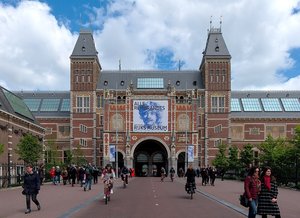
Rijksmuseum, AmsterdamRijksmuseum Amsterdam 3 Thomas Pots (1618-1689). Minister at Vlissingen, Hendrick Berckman, 1661, Adriaen Banckert (c 1620-1684), Vice Admiral of Zeeland, Hendrick Berckman, 1673, Portrait of Adriaen Banckert (c. 1620-1684), Vice Admiral of Zeeland, Hendrick Berckman, c. 1648 - c. 1670
Museum Mayer van den Bergh, AntwerpMuseum Mayer van den Bergh Antwerp 2 Portrait of an unknown woman, Portrait of an unknown man
National Maritime Museum, LondýnNational Maritime Museum Londýn 2 Portrait of Anna van Gelder, Michiel Adriaenszoon de Ruyter, 1607-76, Lieutenant-Admiral-General of the United Provinces
Het Scheepvaartmuseum, AmsterdamHet Scheepvaartmuseum Amsterdam 1 Portrait of Luitenant-Admiraal Adriaen Banckert

Hendrick Berckman, jeden ikonický obraz na každé desetiletí

Díla podle dekád

Vyberte si dekádu a prohlédněte si originál, který ji definuje.

Obrazy umělce Hendrick Berckman: odpovědi galerie

Který obraz autora Hendrick Berckman je nejslavnější ze všech?Odhalit odpověď

Portrait of an unknown woman (1656), Museum Mayer van den Bergh, Antwerp. Následují Portrait of an unknown man (1656) a Portrait of Anna van Gelder (1664).

Kolik let bylo Hendrick Berckman, když dokončil/a Portrait of an unknown woman?Odhalit odpověď

27 let: dílo Portrait of an unknown woman pochází z roku 1656 a Hendrick Berckman se narodil/a v roce 1629.

Kterých 10 nejlepších obrazů má Hendrick Berckman?Odhalit odpověď

Portrait of an unknown woman, Portrait of an unknown man, Portrait of Anna van Gelder, Michiel Adriaenszoon de Ruyter, 1607-76, Lieutenant-Admiral-General of the United Provinces, Portrait of Luitenant-Admiraal Adriaen Banckert, Portrait of Antonius Hulsius, Professor of Theology and Hebrew at Leiden, Thomas Pots (1618-1689). Minister at Vlissingen, Hendrick Berckman, 1661, Adriaen Banckert (c 1620-1684), Vice Admiral of Zeeland, Hendrick Berckman, 1673, Michiel Adriaensz de Ruyter (1607-1676). Vice Admiral, Hendrick Berckman (copy after), before 1893 a Portrait of Adriaen Banckert (c. 1620-1684), Vice Admiral of Zeeland, Hendrick Berckman, c. 1648 - c. 1670. Hodnocení výše uvádí rok a muzeum pro každé z nich.

Kolik děl vytvořil/a Hendrick Berckman?Odhalit odpověď

Náš katalog obsahuje 11 děl umělce Hendrick Berckman z let 1656 až 1675.

Kde jsou vystavena nejznámější originály umělce Hendrick Berckman?Odhalit odpověď

Většinou v Rijksmuseum (Amsterdam), Museum Mayer van den Bergh (Antwerp) a National Maritime Museum (Londýn). V tabulce muzeí výše jsou vypsány všechny.

Kdy Hendrick Berckman vytvořil své nejslavnější obrazy?Odhalit odpověď

V období 1670s: 4 z celkem 10 děl na této stránce vzniklo právě tehdy, z toho Portrait of Luitenant-Admiraal Adriaen Banckert z nich.

Která jsou nejstarší a nejnovější slavná díla umělce Hendrick Berckman?Odhalit odpověď

Na této stránce je nejstarší dílo z Portrait of an unknown woman (1656) a nejnovější z Portrait of Antonius Hulsius, Professor of Theology and Hebrew at Leiden (1675).

Jaká originální díla Hendrick Berckman má v obsluze Rijksmuseum?Odhalit odpověď

Thomas Pots (1618-1689). Minister at Vlissingen, Hendrick Berckman, 1661, Adriaen Banckert (c 1620-1684), Vice Admiral of Zeeland, Hendrick Berckman, 1673 a Portrait of Adriaen Banckert (c. 1620-1684), Vice Admiral of Zeeland, Hendrick Berckman, c. 1648 - c. 1670: muzeum Rijksmuseum, Amsterdam má v obsluze 3 děl z této stránky.

Hendrick Berckman: umělec

A Life Dedicated to Portraiture: Hendrick Berckman and the Dutch Golden Age

Hendrick Berckman, born in Klundert in 1629 and laid to rest in Middleburg in 1679, was a painter deeply embedded within the vibrant artistic landscape of the Dutch Golden Age. While initially trained as a landscape artist, his name became synonymous with compelling portraiture, capturing the essence of the elite society he served. Berckman’s journey began under the tutelage of two prominent Antwerp masters: Thomas Willeboirts Bosschaert and Jacob Jordaens. This early education instilled in him a meticulous attention to detail – characteristic of Bosschaert – coupled with a dynamic compositional sensibility inherited from Jordaens, known for his lively genre scenes and robust figures. A period spent in Haarlem further refined his skills under the guidance of Philip Wouwermans, renowned for his idyllic landscapes and battle paintings; however, it was not this path that ultimately defined Berckman’s artistic legacy.

From Landscapes to Likenesses: Artistic Development

Registered in Leiden between 1652 and 1654, Berckman began establishing his presence within the Dutch art world. It was in 1655 that he settled permanently in Middleburg, a thriving port city in Zeeland province. This relocation proved pivotal. Though possessing a foundation in landscape painting, Berckman increasingly focused on portraiture, responding to the demands of a burgeoning merchant class and regional nobility eager to immortalize their status and achievements. Contemporary accounts, notably those by Arnold Houbraken, reveal that Jordaens encouraged him to embrace larger-scale works, a suggestion Berckman readily adopted. This shift wasn’t merely pragmatic; it allowed him to explore the psychological depth of his subjects, moving beyond mere representation towards capturing character and social standing. His early work shows traces of Wouwermans' influence in the rendering of backgrounds and details, but quickly evolved into a more individualized style marked by refined elegance and subtle emotional nuance.

Patronage and Prominence: The Elite Circle

Berckman’s talent soon attracted significant patronage. He was appointed court painter to Count Hendrick of Nassau, Governor of Hulst, a position that solidified his reputation and opened doors to commissions from other prominent figures. His portraits weren't simply depictions; they were statements of power, wealth, and social connection. One of his most celebrated achievements lies in his repeated portrayals of Vice-Admiral Michiel Adriaenszoon de Ruyter, the legendary Dutch naval commander. Berckman captured De Ruyter not only as a military hero but also as a man – portraits that now reside in esteemed institutions like the National Maritime Museum in Greenwich and the Rijksmuseum in Amsterdam. Similarly, his depictions of De Ruyter’s wife, Anna van Gelder, showcase his ability to convey both dignity and grace. Beyond these iconic figures, Berckman immortalized ministers such as Thomas Pots of Vlissingen, further demonstrating his versatility and appeal across different segments of society.

A Lasting Legacy: Technique and Historical Significance

Berckman’s technique was characterized by a masterful use of light and shadow, creating depth and realism in his portraits. He employed a rich palette, favoring warm tones that lent a sense of sophistication to his subjects' attire and surroundings. His brushwork, while detailed, wasn’t overly fussy; it allowed for a naturalistic rendering of textures – the sheen of silk, the weight of velvet, the subtle contours of skin. While many of his large-scale militia portraits have been lost over time, those that remain—and the numerous individual commissions he fulfilled—offer invaluable insights into the social fabric of 17th-century Holland. He became Dean of the Middelburg Guild in 1679, a testament to his standing within the artistic community. Hendrick Berckman’s work stands as a compelling example of Dutch Golden Age portraiture, blending technical skill with an acute understanding of human character and social dynamics. His paintings are not merely historical records; they are windows into a world of ambition, prosperity, and enduring legacy.