Portrét Heinrich Zille

Obrazy autora Heinrich Zille: 53 nejznámějších díel podle pohledu galerie

Aktualizováno listopad 2026 · seřazeno podle našeho skóre popularity (vyhledávání, návštěvy a objednávky u každého díla) · 53 děl umělce Heinrich Zille v našem katalogu

Stručně řečeno

Z pohledu galerie je nejslavnějším dílem Heinrich Zille obraz Restoration (1910). Untitled (AQREDC) (1909) a Untitled (AQRECJ) (1919) doplňují trio, které každé oko okamžitě pozná. Z 53 děl umělce Heinrich Zille v našem katalogu představuje galerie níže 53 nejznámějších děl, z nichž každé je originálem s uvedením roku vzniku, muzea a toho, co jej činí jedinečným.

1859 – 1933, Kassel Contemporary realism Nejvíce děl: Augustiner Museum

Top 10 obrazů umělce Heinrich Zille v naší galerii

1
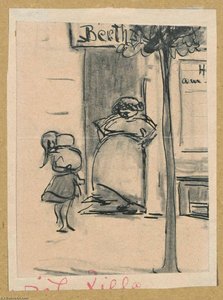
Restoration (1910) od Heinrich Zille

Restoration

1910 · Ink On Paper

Restoration is a black and white illustration created by Heinrich Hoffmann. The work dates to about 1910 and presents a monochromatic view of an urban environment. The scene focuses on a bustling city street, capturing a specific moment of daily activity within a metropolitan setting. The central subject involves a restaurant that is currently undergoing restoration work, providing a focal point for the surrounding movement.

2
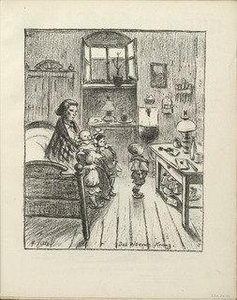
Untitled (AQREDC) (1909) od Heinrich Zille

Untitled (AQREDC)

1909 · Etching

Untitled (AQREDC) by Heinrich Hoffmann depicts a bustling scene within a modest, crowded living space. The composition is dynamic and somewhat chaotic, with figures clustered together to fill most of the frame. A central grouping of people is arranged around a table, while other individuals are scattered throughout the room. Some figures are standing, while others are seated or lying down. In the background, a window provides a glimpse of…

3
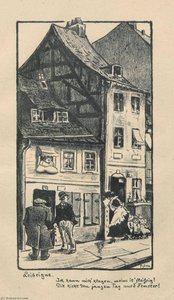
Untitled (AQRECJ) (1919) od Heinrich Zille

Untitled (AQRECJ)

1919 · Drawing

This black and white drawing, dated 1919, depicts a group of at least twelve children positioned in a shared space. The figures are arranged in layers, with several children standing in the immediate foreground while others are situated further back in the composition. These children appear to be engaged in conversation or play. Two teddy bears are placed within the scene: one is located near the center, and the other…

4
Untitled (AQREBC) (1917) od Heinrich Zille

Untitled (AQREBC)

1917 · Drawing

In this black and white drawing, Untitled (AQREBC) by Heinrich Hoffmann presents a quiet, domestic scene from about 1917. The composition centers on a woman seated in a chair, surrounded by her children. She holds a baby in her arms, while the other children settle onto her lap or gather closely around her. There is a palpable sense of intimacy in the way the figures are clustered together, creating a…

5
Untitled (AQREDE) (1884) od Heinrich Zille

Untitled (AQREDE)

1884 · Pencil

In this work from 1884, Heinrich Hoffmann invites us into the quiet, lived-in atmosphere of a traditional German tavern or beer hall. The scene captures a specific moment of social interaction and conviviality, focusing on a group of figures gathered around a long table. There is a sense of shared experience here, as patrons engage in conversation and drink within the interior space. It is a glimpse into a communal…

6
Going to Church in the Black Forest (1905) od Heinrich Zille

Going to Church in the Black Forest

1905 · Oil On Canvas · Augustiner Museum, Freiburg

In "Going to Church in the Black Forest" by Heinrich Hoffmann, we find ourselves observing a quiet moment of communal devotion. The scene, painted about 1905, centers on a group of women gathered at the entrance of a rustic stone church. They are dressed in traditional German folk costume, their attire providing a focal point of deep blues, blacks, and intricate patterns. This central gathering is framed by the environment:…

7
Untitled (AQREC6) (1900) od Heinrich Zille

Untitled (AQREC6)

1900 · Black and White Photography

Untitled (AQREC6) by Heinrich Hoffmann features a monochrome photographic study of a nude female figure. The composition is centered on the human subject, who is positioned in the foreground within an indoor studio setting. To the left of the central figure, a marble statue of a draped woman is placed, creating a juxtaposition between the living model and the carved stone. The background is composed of dark fabric draped over…

8
Untitled (AQREDJ) (1905) od Heinrich Zille

Untitled (AQREDJ)

1905 · Pencil

This 1905 pencil drawing on paper presents a spontaneous, quick sketch of two figures, appearing to be women, within a garden setting. The composition is asymmetrical and dynamic, with the figures positioned diagonally across the frame; one figure is taller than the other, and they seem to be engaged in conversation or a shared activity. The artwork is characterized by a loose, energetic quality, utilizing expressive lines, hatching, and cross-hatching…

9
Untitled (AQRECN) (1903) od Heinrich Zille

Untitled (AQRECN)

1903 · Etching

The scene unfolds within the lines of Untitled (AQRECN), an etching created by Heinrich Hoffmann. This work captures a specific, unvarnished moment from 1903, freezing a wrestling match in a state of constant motion. The figures strain against one another, caught in a struggle that feels immediate and raw. Onlookers gather around, their presence adding a layer of communal energy to the central conflict.

10
Untitled (AQREBN) (1905) od Heinrich Zille

Untitled (AQREBN)

1905 · Woodcut

This monochrome woodcut print, created in 1905, presents a densely packed and realistic portrayal of a crowded marketplace. The scene is set within an indoor environment, appearing to be a covered bazaar or market, where a multitude of figures are engaged in various activities such as buying, selling, and observing. The composition is tightly structured, utilizing strong, directional lines to define both the individual forms of the people and the…

Obrazy autora Heinrich Zille, seřazeny od 11 do 53

11Untitled (AQRECC) (1900) od Heinrich ZilleUntitled (AQRECC)1900 12Untitled (AQRECL) (1910) od Heinrich ZilleUntitled (AQRECL)1910 13Untitled (AQRECY) (1910) od Heinrich ZilleUntitled (AQRECY)1910 14Untitled (AQRECE) (1910) od Heinrich ZilleUntitled (AQRECE)1910 15The Iron Cross (Das eiserne Kreuz) (plate, folio 17) from the periodical Der Bildermann, vol. 1, no. 8 (June 1916) (1916) od Heinrich ZilleThe Iron Cross (Das eiserne Kreuz) (plate, folio 17) from the periodical Der Bildermann, vol. 1, no. 8 (June 1916)1916 16Standing in Line for Potatoes (Kartoffelstehen) (plate, folio 25) from the periodical Der Bildermann, vol. 1, no. 12 (September 1916) (1916) od Heinrich ZilleStanding in Line for Potatoes (Kartoffelstehen) (plate, folio 25) from the periodical Der Bildermann, vol. 1, no. 12 (September 1916)1916 17Untitled (AQREBW) (1919) od Heinrich ZilleUntitled (AQREBW)1919 18Untitled (AQRECA) (1919) od Heinrich ZilleUntitled (AQRECA)1919 19Untitled (AQREBE) (1930) od Heinrich ZilleUntitled (AQREBE)1930 20Untitled (AQREB6) (1898) od Heinrich ZilleUntitled (AQREB6)1898 21Untitled (AQREBL) (1905) od Heinrich ZilleUntitled (AQREBL)1905 22Untitled (AQRECU) (1902) od Heinrich ZilleUntitled (AQRECU)1902 23Untitled (AQRED4) (1903) od Heinrich ZilleUntitled (AQRED4)1903 24Untitled (AQREC4) (1901) od Heinrich ZilleUntitled (AQREC4)1901 25Spinning Room in the Black Forest od Heinrich ZilleSpinning Room in the Black ForestAugustiner Museum 26Untitled (AQREAU) (1910) od Heinrich ZilleUntitled (AQREAU)1910 27Untitled (AQREC2) (1909) od Heinrich ZilleUntitled (AQREC2)1909 28Untitled (AQREB2) (1910) od Heinrich ZilleUntitled (AQREB2)1910 29Untitled (AQRECS) (1911) od Heinrich ZilleUntitled (AQRECS)1911 30Untitled (AQREC8) (1910) od Heinrich ZilleUntitled (AQREC8)1910 31Untitled (AQREAS) (1910) od Heinrich ZilleUntitled (AQREAS)1910 32Untitled (AQRED2) (1916) od Heinrich ZilleUntitled (AQRED2)1916 33Untitled (AQRED6) (1913) od Heinrich ZilleUntitled (AQRED6)1913 34Untitled (AQREBA) (1914) od Heinrich ZilleUntitled (AQREBA)1914 35Untitled (AQRECW) (1916) od Heinrich ZilleUntitled (AQRECW)1916 36Untitled (AQREBJ) (1915) od Heinrich ZilleUntitled (AQREBJ)1915 37Untitled (AQREB4) (1915) od Heinrich ZilleUntitled (AQREB4)1915 38On Vacation (Auf Urlaub) (front cover, folio 26) from the periodical Der Bildermann, vol. 1, no. 13 (October 1916) (1916) od Heinrich ZilleOn Vacation (Auf Urlaub) (front cover, folio 26) from the periodical Der Bildermann, vol. 1, no. 13 (October 1916)1916 39Schnapps Saloon (Schnapsdestille) (plate, folio 33) from the periodical Der Bildermann, vol. 1, no. 16 (November 1916) (1916) od Heinrich ZilleSchnapps Saloon (Schnapsdestille) (plate, folio 33) from the periodical Der Bildermann, vol. 1, no. 16 (November 1916)1916 40Study with Singing Children (Studienblatt mit singenden Kindern) (plate, folio 11) from the periodical Der Bildermann, vol. 1, no. 5 (June 1916) (1916) od Heinrich ZilleStudy with Singing Children (Studienblatt mit singenden Kindern) (plate, folio 11) from the periodical Der Bildermann, vol. 1, no. 5 (June 1916)1916 41Untitled (AQREBU) (1919) od Heinrich ZilleUntitled (AQREBU)1919 42Untitled (AQREBQ) (1919) od Heinrich ZilleUntitled (AQREBQ)1919 43Untitled (AQRECG) (1919) od Heinrich ZilleUntitled (AQRECG)1919 44Untitled (AQREAW) (1919) od Heinrich ZilleUntitled (AQREAW)1919 45Untitled (AQREDA) (1919) od Heinrich ZilleUntitled (AQREDA)1919 46Untitled (AQRED8) (1919) od Heinrich ZilleUntitled (AQRED8)1919 47Untitled (AQRECQ) (1920) od Heinrich ZilleUntitled (AQRECQ)1920 48Untitled (AQREB8) (1919) od Heinrich ZilleUntitled (AQREB8)1919 49Untitled (AQREAY) (1924) od Heinrich ZilleUntitled (AQREAY)1924 50Untitled (AQREAQ) (1960) od Heinrich ZilleUntitled (AQREAQ)1960 51Alte Frau mit Hundefuhrwerk (1910) od Heinrich ZilleAlte Frau mit Hundefuhrwerk1910 52Untitled (AQREBY) od Heinrich ZilleUntitled (AQREBY) 53Untitled (AQREDG) od Heinrich ZilleUntitled (AQREDG)

Motivy, které zaujaly Heinrich Zille

Čtyři témata, která se v těchto originálech nejčastěji objevují, z nichž každé má svůj nejlepší příklad.

Muzea, v nichž jsou vystavena originálna umělce Heinrich Zille

Muzeum s největším počtem obrazů na této stránce.

Muzeum Město Díla autora Heinrich Zille Obrazy z tohoto seznamu
Augustiner Museum, FreiburgAugustiner Museum Freiburg 2 Going to Church in the Black Forest, Spinning Room in the Black Forest

Heinrich Zille, jeden ikonický obraz na každé desetiletí

Díla podle dekád

Vyberte si dekádu a prohlédněte si originál, který ji definuje.

Obrazy umělce Heinrich Zille: odpovědi galerie

Který obraz autora Heinrich Zille je nejslavnější ze všech?Odhalit odpověď

Restoration (1910). Následují Untitled (AQREDC) (1909) a Untitled (AQRECJ) (1919).

Kolik let bylo Heinrich Zille, když dokončil/a Restoration?Odhalit odpověď

51 let: dílo Restoration pochází z roku 1910 a Heinrich Zille se narodil/a v roce 1859.

Kterých 10 nejlepších obrazů má Heinrich Zille?Odhalit odpověď

Restoration, Untitled (AQREDC), Untitled (AQRECJ), Untitled (AQREBC), Untitled (AQREDE), Going to Church in the Black Forest, Untitled (AQREC6), Untitled (AQREDJ), Untitled (AQRECN) a Untitled (AQREBN). Hodnocení výše uvádí rok a muzeum pro každé z nich.

Kolik děl vytvořil/a Heinrich Zille?Odhalit odpověď

Náš katalog obsahuje 53 děl umělce Heinrich Zille z let 1884 až 1930.

Kde jsou vystavena nejznámější originály umělce Heinrich Zille?Odhalit odpověď

Většinou v Augustiner Museum (Freiburg). V tabulce muzeí výše jsou vypsány všechny.

Kdy Heinrich Zille vytvořil své nejslavnější obrazy?Odhalit odpověď

V období 1910s: 32 z celkem 53 děl na této stránce vzniklo právě tehdy, z toho Restoration z nich.

Která jsou nejstarší a nejnovější slavná díla umělce Heinrich Zille?Odhalit odpověď

Na této stránce je nejstarší dílo z Untitled (AQREDE) (1884) a nejnovější z Untitled (AQREBE) (1930).

Kterým tématům se Heinrich Zille věnoval(a) nejčastěji?Odhalit odpověď

People (7), Social commentary (6) a Figures (5) napříč 53 díly na této stránce.

V jaké technice tvořil(a) Heinrich Zille nejčastěji?Odhalit odpověď

Ink On Paper, u 3 z 53 děl na této stránce.

S jakým směrem je spojen(a) Heinrich Zille?Odhalit odpověď

Contemporary realism, podle originálů na této stránce.

Jaká originální díla Heinrich Zille má v obsluze Augustiner Museum?Odhalit odpověď

Going to Church in the Black Forest a Spinning Room in the Black Forest: muzeum Augustiner Museum, Freiburg má v obsluze 2 děl z této stránky.

Heinrich Zille: umělec

Heinrich Zille (1858-1929): A Chronicler of Berlin’s Soul

Rudolf Heinrich Zille, affectionately known as “Pinselheinrich” – Brush Heinrich – to the people of Berlin, wasn't merely an artist; he was a visual historian, a compassionate observer, and a satirical chronicler of a city undergoing seismic change. Born in 1858 in Radeburg, Germany, Zille’s life mirrored the burgeoning industrialization and social upheaval that defined late 19th and early 20th-century Berlin. His family's relocation to the capital in 1867 proved pivotal, immersing him in a world of stark contrasts – opulent growth alongside grinding poverty. This duality would become the defining characteristic of his artistic vision. Initially apprenticed as a lithographer in 1872, Zille’s early training instilled in him a mastery of line and form that would serve as the foundation for his later work. Though his father envisioned a more conventional trade – perhaps butchery – young Heinrich's passion for draughtsmanship was undeniable, nurtured by an encouraging teacher who recognized his burgeoning talent. This dedication to art, however, wasn’t immediate; it evolved from necessity after losing his job in 1910, with the encouragement of Max Liebermann, allowing him to fully embrace his artistic calling.

Early Life and Artistic Training

Heinrich Rudolf Zille was born on January 10th, 1858, in Radeburg near Dresden. His father, Johann Traugott Zille, was a watchmaker and precision toolmaker from Colditz, while his mother, Ernestine Louise Heinitz, descended from a family of silver miners from Erbisdorf in the Ore Mountains. From an early age, Zille experienced the hardships inherent in a working-class upbringing – a formative influence that would permeate his artistic sensibilities throughout his life. Recognizing Heinrich’s innate talent for drawing, his teacher instilled in him a love for visual representation and encouraged him to pursue artistic endeavors beyond mere vocational training. This dedication culminated in his enrollment at Darmstadt Art School where he honed his skills in lithography and graphic design—techniques that would become central to his distinctive style.

The Milljöh: Capturing Berlin’s Everyday Reality

Zille's enduring legacy rests upon his ability to capture the essence of Berlin’s “Milljöh” – a uniquely German term encompassing the everyday life, atmosphere, and social fabric of the city, particularly within its working-class neighborhoods. He didn’t romanticize or idealize; instead, he presented an unvarnished portrayal of tenement buildings ("Mietskaserne"), crowded streets, and the lives of those struggling to survive within them. His drawings weren't simply depictions of poverty; they were empathetic studies of human resilience, humor, and dignity in the face of hardship. Beggars, prostitutes, laborers, and their children populated his world, rendered with a keen eye for detail and an often-biting wit. He portrayed recognizable stereotypes, yes, but always with a sense of understanding, avoiding caricature that descended into cruelty. Zille’s preferred mediums – lithography, pencil sketches, and occasional woodcuts – lent themselves perfectly to this intimate style. His masterful use of hatching and cross-hatching created texture, depth, and a palpable sense of atmosphere in his monochromatic works, drawing the viewer directly into the heart of Berlin's underbelly.

A Career Dedicated to Observation and Artistic Expression

Zille’s professional life began with an apprenticeship as a lithographer in 1872, providing him with invaluable technical skills that would inform his subsequent artistic endeavors. Following graduation from Darmstadt Art School, he worked for various advertising agencies where he gained experience of commercial art production. However, it was his encounter with Max Liebermann and the Berlin Secession in 1903 that truly propelled him into the spotlight—a pivotal moment marking a shift towards more ambitious artistic projects. The Secession championed innovative approaches to artmaking, encouraging Zille to explore new themes and techniques. His work appeared prominently in publications like *Simplicissimus* and *Jugend*, reaching a wide audience eager for social commentary and visual storytelling. He skillfully blended humor with critique, capturing the complexities of Berlin society while simultaneously honoring its human element.

Recognition and Legacy

Zille’s artistic achievements were recognized by the Prussian Academy of Arts in 1924—a testament to his enduring influence on German art history. His drawings gained acclaim for their honesty and sensitivity, reflecting Zille's profound understanding of the human condition. Furthermore, Zille’s work resonated deeply with popular culture; *Die Verrufenen*, a film adaptation based on one of his illustrations, solidified his place as a beloved cultural icon—a symbol of Berlin’s spirit and artistic heritage. Heinrich Zille died August 9th, 1929 in Berlin. His legacy continues to inspire artists today who strive for authenticity and social responsibility.
  • Social Realism: Zille's unwavering commitment to depicting the realities of working-class life cemented his place as a pioneer of social realism.
  • Lithography Mastery: He achieved unparalleled technical proficiency in lithography, shaping his distinctive style and aesthetic sensibility.
  • Berlin’s Soul Captured: Above all, Zille succeeded in conveying the essence of Berlin—its contradictions, its humor, and its enduring human spirit—through his unforgettable drawings.