


1


Aktualizováno listopad 2026 · seřazeno podle našeho skóre popularity (vyhledávání, návštěvy a objednávky u každého díla) · 7 děl umělce Guillaume Taraval v našem katalogu
Stručně řečeno
Angels Looking up at the Eye of God. Study (1744) je obraz autora Guillaume Taraval, který přitahuje nejvíce pohledů; originál se nachází v Nationalmuseum, Stockholm. Poté se zrak přesouvá k Angels Carrying the Cross. Study (1744) a Three amorins playing with a bird's nest (1747). Z 7 děl umělce Guillaume Taraval v našem katalogu je těchto 7 těch nejznámějších; každé z nich je unikátním originálem s uvedením roku vzniku, muzea a důvodu jeho nesmrtelnosti.



4 muzea, v nichž je umístěno nejvíce obrazů z této stránky.
| Muzeum | Město | Díla autora Guillaume Taraval | Obrazy z tohoto seznamu |
|---|---|---|---|
 Nationalmuseum |
Stockholm | 3 | Angels Looking up at the Eye of God. Study, Angels Carrying the Cross. Study, Still Life with a Dead Bird and Hunting Gear |
 Uppsala Universitetsbibliotek |
Uppsala | 2 | Female Figures with Putti in a Landscape, Group of Angels |
 Finnish National Gallery |
Helsinki | 1 | Three amorins playing with a bird's nest |
 Sinebrychoffin Taidemuseo |
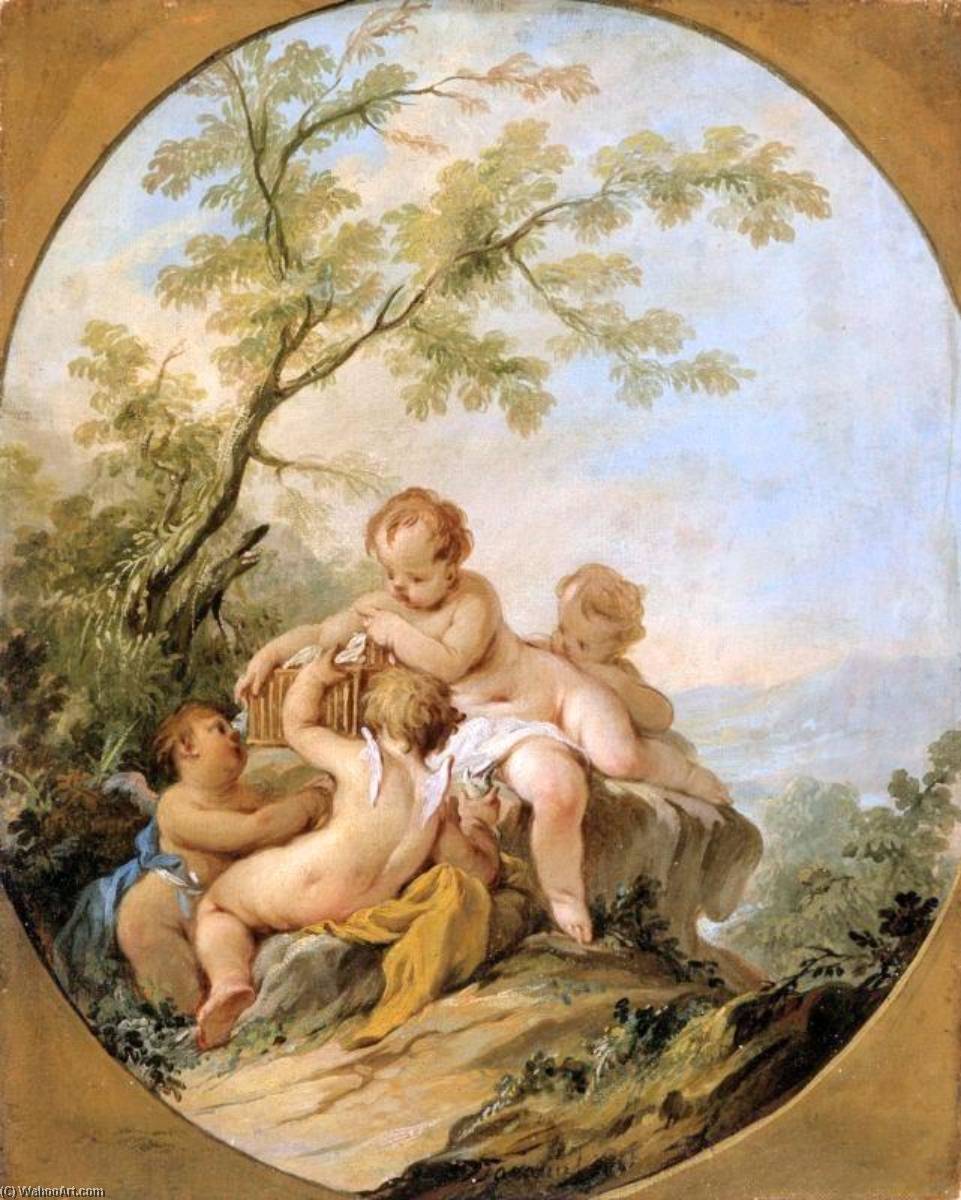
Helsinki | 1 | Four Putti Playing with a Birdcage |
Mezi lety 1744 a 1748, tedy celkem za 5 let, vytvořil Guillaume Taraval každý zobrazený zde původní datovaný obraz: krátké období, rok po roce.
Vyberte rok a prohlédněte si originály.
Angels Looking up at the Eye of God. Study (1744), Nationalmuseum, Stockholm. Následují Angels Carrying the Cross. Study (1744) a Three amorins playing with a bird's nest (1747).
43 let: dílo Angels Looking up at the Eye of God. Study pochází z roku 1744 a Guillaume Taraval se narodil/a v roce 1701.
Náš katalog obsahuje 7 děl umělce Guillaume Taraval z let 1744 až 1748.
Většinou v Nationalmuseum (Stockholm), Uppsala Universitetsbibliotek (Uppsala) a Finnish National Gallery (Helsinki). V tabulce muzeí výše jsou vypsány všechny.
V období 1744: 3 z celkem 7 děl na této stránce vzniklo právě tehdy, z toho Angels Looking up at the Eye of God. Study z nich.
Na této stránce je nejstarší dílo z Angels Looking up at the Eye of God. Study (1744) a nejnovější z Female Figures with Putti in a Landscape (1748).
Angels Looking up at the Eye of God. Study, Angels Carrying the Cross. Study a Still Life with a Dead Bird and Hunting Gear: muzeum Nationalmuseum, Stockholm má v obsluze 3 děl z této stránky.
In the grand, gilded corridors of eighteenth-century Europe, few artists possessed the transformative vision of Guillaume Thomas Taraval. Born in Paris in 1701 into a lineage steeped in the fine arts, Taraval’s early years were shaped by both profound loss and exceptional mentorship. Orphaned at a young age, he was raised by his foster-father, Henry Guillemard, who provided him with his first delicate lessons in the nuances of light and line. This foundational training, later refined under the tutelage of the esteemed Claude Audran, prepared Taraval for a career that would eventually bridge the cultural landscapes of France and Sweden, forever altering the aesthetic trajectory of the North.
Taraval’s arrival in Stockholm in 1732 marked the beginning of a profound artistic revolution. At a time when Swedish art was largely tethered to the heavy, somber traditions of the Baroque, Taraval introduced the airy, luminous, and playful spirit of the French Rococo. His presence in the capital was not merely that of a visiting painter but of a cultural pioneer. Within the opulent halls of the Stockholm Palace, he breathed new life into the ceilings and walls, replacing rigid structures with asymmetrical compositions, delicate pastel palettes, and an effortless sense of movement that seemed to defy the very architecture he adorned.
The brilliance of Taraval’s technique lay in his ability to marry monumental scale with intimate grace. He was a master of the ceiling painting, creating vast, ethereal vistas that invited the viewer to look upward into worlds of mythological splendor and pastoral tranquility. His work often featured:
Beyond these grand architectural commissions, Taraval demonstrated a remarkable versatility that allowed him to navigate various genres with equal finesse. His portraits captured the dignity and elegance of the Swedish nobility, while his still lifes showcased an exquisite, almost scientific devotion to botanical detail. Even in his more religious works, such as his altarpieces, one can sense the influence of his French training—a lightness of touch that brought a sense of divine grace through soft light and fluid forms.
Taraval’s significance extends far beyond the aesthetic beauty of his canvases; he was a foundational architect of Swedish art education. In 1735, he was appointed as the inaugural director of the Royal Swedish Academy of Arts, a position he held until his death in 1750. This was a watershed moment for the region, as it established a formal sanctuary for scholarship, experimentation, and the cultivation of new talent. Through this institution, Taraval ensured that the principles of excellence and humanist ideals would be passed down to future generations of Scandinavian artists.
Even as he sought to modernize Swedish taste, Taraval remained deeply connected to the pulse of Parisian innovation. His journey back to Paris in 1739 allowed him to study the latest developments in French art, a period of intellectual renewal that he brought back to Stockholm upon his return in 1740. This continuous dialogue between the established traditions of France and the emerging needs of Sweden defined his career. When he passed away in Stockholm, he left behind more than just a collection of beautiful paintings; he left a legacy of cultural sophistication and an institutional framework that would sustain the Swedish art world for centuries to come.
